


Is a discounted TV ever really a bargain, or does the lower price just hide a weaker screen? That question matters more than ever when big-box sales slap 50% off stickers on dozens of models at once. The good news is that some of these deals are genuinely excellent. The bad news is that a few of them are last year’s leftovers dressed up as savings.
This roundup cuts through the noise. Below are the specific TV types and named models that keep showing up in real sale coverage, who each one suits, and where each one falls short. If you want a shortlist rather than a lecture, you’re in the right place.
Quick Comparison: The Main TV Sale Options
| Option | Best for | Strong point | Real limitation | Price seen in coverage |
|---|---|---|---|---|
| LG B6E OLED (55-inch) | Movie lovers on a budget | OLED contrast at an entry price | Entry-level brightness | $700 |
| Samsung 65-inch OLED | Big-screen upgrades | Huge discount (57% off, $1,200 off) | Tizen interface divides people | Discounted, price varies |
| LG OLED C6 (55-inch) | All-round performance | Stunning picture, $700 off | Still a premium outlay | $700 off list |
| Samsung 75-inch U7900 4K | Living rooms on a budget | Big screen for very little | Basic panel tech | $400 |
| Samsung M70H 65-inch Mini LED | Mid-range shoppers | Mini LED at a low price | No local dimming | $430 |
| Toshiba 75C350NU | Flash-deal hunters | Lowest-ever price point | Stock disappears fast | $370 |
| Hisense QLED and ULED sets | Value seekers | Big discounts on large sizes | Model numbers confuse buyers | Varies by size |
| TCL and Roku budget sets | Second rooms | Very low entry prices | Fewer premium features | Varies |
LG B6E OLED: The Cheapest Real OLED Entry Point
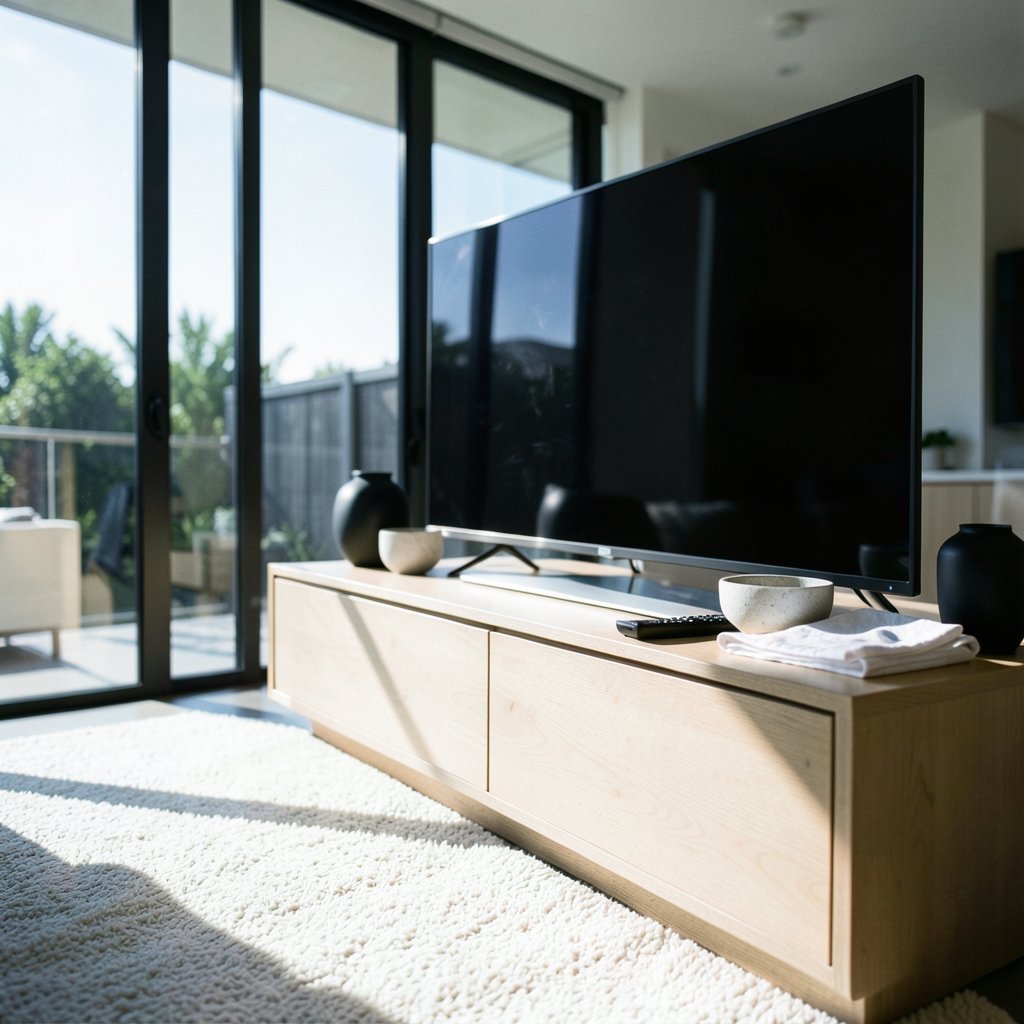
The B6E is an entry-level OLED, and it showed up in sale coverage at just $700 for the 55-inch size. That is a striking number for a panel where every pixel makes its own light. Deep blacks and strong contrast come standard, which is exactly why people chase OLED in the first place.
Who it suits: anyone who watches a lot of movies in a room they can darken. OLED shines when the lights go down.
The limitation is brightness. Entry-level OLED panels are not the brightest screens on the shelf, so a sun-drenched living room with big windows can wash out daytime viewing. If your TV faces a wall of glass, think twice.
One practical tip: check the model year before you buy. Entry-level OLEDs get recycled names, and a “B” series from one year is not the same panel as the next. The sticker price is only a deal if the panel matches what you actually need.
Samsung 65-Inch OLED: The Biggest Percentage Saving
This is the headline deal in most sale coverage: a 65-inch Samsung OLED marked down by $1,200, which works out to 57% off. That is the kind of cut that makes people click. It is also a genuinely good screen for sports and movies, with the size that most living rooms can actually accommodate.
Who it suits: buyers who want a large OLED and care about the discount more than the interface.
The limitation is the software. Samsung’s Tizen platform is not everyone’s cup of tea, and reviewers say so plainly. If you are picky about how a smart TV menu feels, spend ten minutes with it in a store before committing. The picture will not disappoint you; the remote might.
If you are stacking this against other big-box promotions, it helps to know how these events are structured. Our guide to the Best Buy Black Friday shop sale without getting played walks through how doorbuster pricing actually works.
LG OLED C6: The All-Rounder With a Serious Markdown
The C6 is the model reviewers tend to point to when someone asks for one great TV without caveats. In the 55-inch size it carried a $700 discount during the sale window, and the picture quality is hard to fault. Eight million self-lit pixels, vivid color, accurate blacks.
Who it suits: people who want one screen that handles movies, games, and streaming equally well.
The limitation is simple math. Even with $700 off, this is still a premium purchase. If your budget tops out in the low hundreds, this is not your set, and pretending otherwise wastes everyone’s time.
A common mistake here is buying the biggest size you can barely afford instead of the right size for your room. Sitting four feet from a 65-inch screen is uncomfortable. Measure the distance first, then pick the panel.
Samsung 75-Inch U7900: Big Screen, Small Price
Here is the deal that surprises people: a 75-inch Samsung 4K set at $400. That is a lot of glass for the money, and it explains why these listings sell out and reappear constantly.
Who it suits: families who want a big screen for the living room and do not need flagship picture quality.
The limitation is the panel tech. This is a standard LED set, so do not expect OLED-level blacks or the brightness of a high-end Mini LED. It is a workhorse, not a show pony.
Practical advice: at this price, buy for the room, not for the spec sheet. A 75-inch screen that fits your wall beats a 65-inch screen with better numbers that feels small from the couch.
Samsung M70H 65-Inch Mini LED: The Mid-Range Sweet Spot
The M70H landed at $430, roughly $100 off, and it packs Mini LED backlighting, HDR10+ support, the Tizen platform, and a gaming hub for console-free streaming. For a mid-range set, that is a strong feature list.
Who it suits: buyers who want better contrast than a basic LED without paying OLED money.
The limitation is the missing local dimming, which is exactly what makes contrast pop on pricier Mini LED sets. Colors stay vivid thanks to the panel’s color processing, but black levels are merely decent.
This is the classic “good, not great” purchase, and there is nothing wrong with that. Most people watching most content will be perfectly happy.
Toshiba 75C350NU: The Flash-Deal Wildcard
The 75C350NU dropped to $370 as a 24-hour flash deal, which was its lowest recorded price at the time. It is the kind of offer that exists to get you through the door.
Who it suits: bargain hunters who are flexible on timing and can buy the moment a deal goes live.
The limitation is availability. Flash deals vanish, and the same model often returns at a higher price days later. If you see it, decide fast.
This is also where a little preparation pays off. Knowing your target size and budget before the sale starts stops you from panic-buying the wrong screen. Our breakdown of how to spot real savings on Best Buy Black Friday deals covers the price-history checks that separate a genuine markdown from a cosmetic one.
Hisense QLED and ULED Sets: Value at Every Size
Hisense keeps appearing across sale coverage for one reason: aggressive pricing on large panels. A 75-inch QLED AI model was listed at $1,539 against a $2,299 list price, and a 100-inch Mini LED ULED set sat at $5,499 against $6,599.
Who it suits: buyers who want maximum screen size per dollar, especially in very large sizes.
The limitation is model-number soup. Hisense uses long alphanumeric codes that differ by a letter or two, and those letters matter. A Q7N is not a Q6Q. Write the exact code down before you shop.
If you are outfitting a whole home rather than one room, the same value-first logic applies to other categories. There is a useful parallel in how wholesale fashion trends retailers should buy 2026 frames buying decisions around timing and volume rather than sticker price alone.
TCL and Roku Budget Sets: Second-Room Champions
TCL and Roku models anchor the bottom of these sales, with entry prices that sometimes dip under $100 for small sizes. These are not cinema screens. They are the TV for the kitchen, the bedroom, or the kids’ room.
Who it suits: anyone who needs a working smart TV cheaply and does not care about perfect blacks.
The limitation is feature depth. Expect fewer dimming zones, simpler processors, and basic HDR handling. That is fine for background viewing and less fine for a dark-room movie night.
One mistake people make is buying a budget set for the main room and then upgrading within a year. Buy once, at the right tier, for the room that matters most.
Sony and Other Premium Brands: Worth Watching, Not Always Worth Rushing
Sony sets appear in sale coverage alongside LG and Samsung, usually with smaller percentage discounts. Premium brands tend to protect their pricing, so the markdowns are less dramatic even when the panels are excellent.
Who it suits: buyers who value processing quality and motion handling over raw discount percentages.
The limitation is the price gap. A 20% cut on a premium set can still leave it hundreds of dollars above a comparable mid-range model.
The honest advice: if you are choosing between a steeply discounted mid-tier set and a lightly discounted premium one, decide based on your room and your viewing habits, not the percentage on the tag.
How to Choose Without Getting Played
Start with the room, not the sale. Measure the viewing distance, note how much light hits the screen during the day, and write down your budget ceiling before you look at a single listing.
Then check the price history. Reviewers routinely verify discounts against tracking tools, and that step separates a real low from a fake one. A set marked “$200 off” that sold for less two months ago is not a deal.
Next, confirm the exact model number. Sales pages mix generations, and a single letter can mean an older panel. Copy the full code and compare it against the listing.
Finally, decide what you will do with the TV. Movies in a dark room point to OLED. Bright rooms and sports point to a brighter LED or Mini LED. A second room points to a budget set. Match the panel to the job.
If you are also shopping for accessories or comparing discount codes, our piece on the Best Buy discount code that actually saves you money explains which codes stack and which quietly fail at checkout.
Conclusion
The best TV sale is not the one with the biggest percentage on the sticker. It is the one where the panel fits your room, the price beats the recent history, and you are not paying for features you will never use. The LG B6E and C6 deliver real OLED quality at their lowest points. The Samsung 65-inch OLED offers the steepest markdown. The 75-inch Samsung U7900 and the Toshiba 75C350NU prove big screens can be cheap. Hisense, TCL, and Roku cover the value end, while Sony and other premium brands reward patience over urgency. Pick the room, pick the panel, then pick the deal.
FAQ
When is the best time to buy a TV on sale?
Holiday sales and major retail events consistently produce the lowest recorded prices, and price-tracking checks show many sets hitting all-time lows during those windows. Spring model transitions also create clearance pricing on outgoing premium sets.
Is an entry-level OLED like the LG B6E worth it?
Yes, if your room can be darkened. It delivers OLED contrast at the lowest entry price, but its brightness is modest, so a very bright room with heavy glare is a poor match.
Why is the Samsung 65-inch OLED discounted so heavily?
Large percentage cuts usually signal a model cycle change or a push to clear inventory. In this case the discount reached 57%, or $1,200 off, which is a genuine markdown rather than a cosmetic one.
What is the catch with cheap 75-inch TVs?
The catch is panel technology. Sets at the $370 to $400 level use standard LED backlights without advanced dimming, so black levels and brightness trail premium models. They are excellent value for the size, not for cinema-grade performance.
Should I buy Mini LED or OLED?
Choose Mini LED if you want higher brightness and watch in a bright room. Choose OLED if you want the deepest blacks and watch mostly in controlled lighting. The M70H shows Mini LED can be affordable, though it lacks local dimming.
How do I avoid fake discounts during a TV sale?
Check the price against a history tracker before buying, confirm the exact model number and year, and compare the sale price with the same set at other retailers. A discount is only real if the price is genuinely lower than recent norms.






