

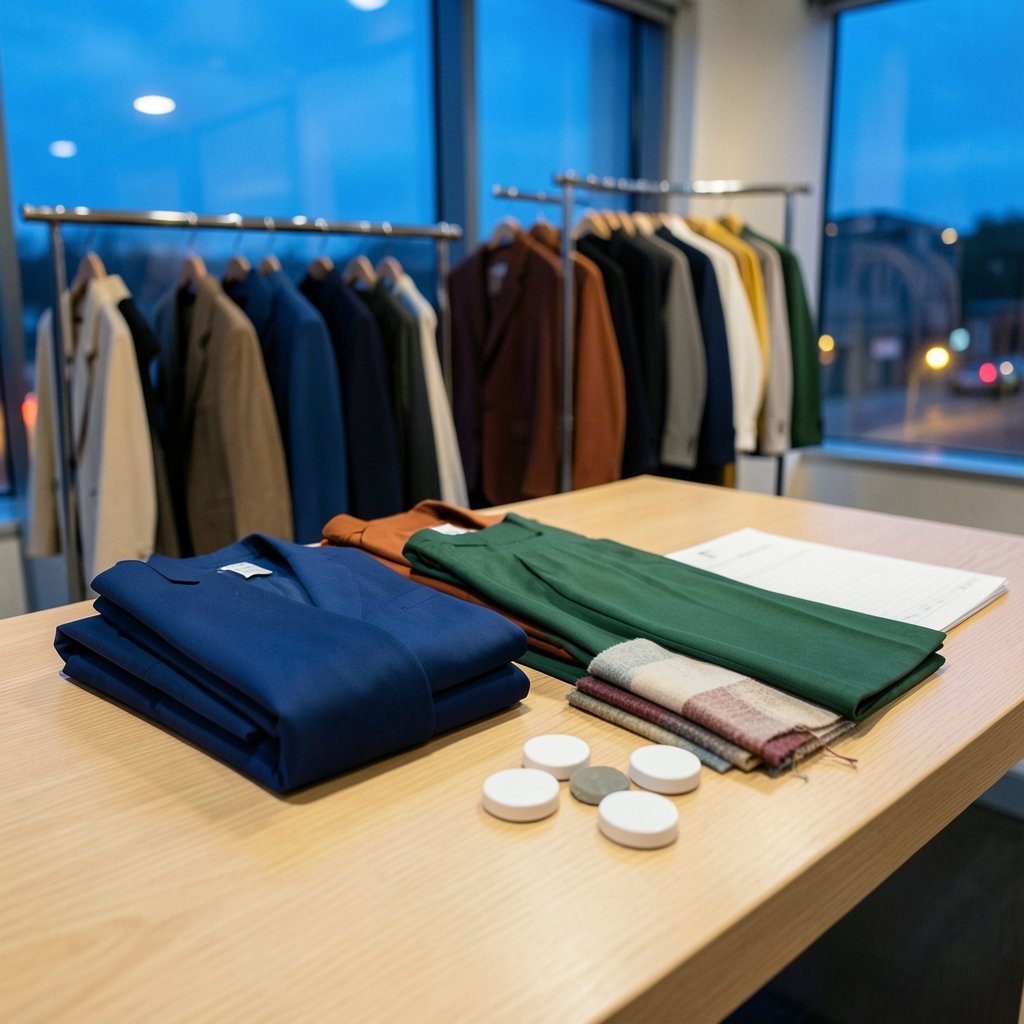
What separates a boutique that sells out of its spring order in three weeks from one that ends the season with racks of unsold stock? Often, it is not the store’s styling or its location. It is the buying decision made months earlier, at a wholesale showroom or on a B2B platform, when nobody knew yet what shoppers would actually want.
Wholesale fashion is a guessing game played with real money. Buyers commit to thousands of units before a single customer walks in. That makes trend intelligence less of a nice-to-have and more of a survival skill. This guide breaks down the wholesale trends shaping 2026 assortments, the sourcing realities behind them, and the practical mistakes that quietly eat into margins.
Why Wholesale Trends Move Differently Than Retail Trends
Retail trends get the headlines. Wholesale trends decide what actually shows up on the sales floor. The two run on different clocks. A runway look can go viral in a week, but a buyer needs a supplier, a sample, a price negotiation, a production slot, and a shipping window before that look reaches a shelf. By the time a trend is “everywhere” on social media, the wholesale window for it is usually closing.
This lag is why experienced buyers discuss lead times the way traders discuss interest rates. Shorten the lead time and you can chase trends. Lengthen it and you have to predict them. The rise of smaller minimum order quantities (MOQs) and faster replenishment through the 2010s, documented in annual industry reporting on the sector, gave independent retailers more flexibility than they had in the past. But flexibility costs money per unit, and that trade-off shapes every 2026 buying plan.
The practical takeaway: wholesale trend research should run roughly one season ahead of retail trend research. If you are reading a consumer trend report for inspiration, you are probably already late for your next buy.
The 2026 Wholesale Trends Shaping Assortments

The dominant theme for 2026 is quiet versatility. After several years of loud, fast-moving micro-trends, wholesale catalogs are tilting toward pieces that can be worn multiple ways, layered across seasons, and priced without apology. Retailers who understand this shift are ordering fewer statement pieces and more workhorse styles with visible quality cues.
For a deeper look at the consumer-side picture behind these buying decisions, the 2026 fashion trends guide maps what shoppers are actually searching for, while the roundup of top wholesale fashion trends for retailers digs into sourcing angles. Here are the categories drawing the most wholesale attention.
Soft Tailoring and Relaxed Structure
Blazers, wide-leg trousers, and longline waistcoats continue to outperform rigid suiting. The wholesale appeal is obvious: soft construction is cheaper to produce, easier to fit across body types, and less risky to stock in depth. Buyers report that relaxed tailoring sells through at full price far more reliably than sharp, formal cuts.
Texture Over Print
Prints are polarizing. Texture is not. Bouclé, brushed flannel, crinkle fabrics, and ribbed knits let a retailer offer visual interest without betting on a specific motif that might date in eight weeks. In wholesale terms, texture reduces markdown risk because it reads as “quality” rather than “trend.”
Transitional Layering Pieces
Lightweight dusters, cropped cardigans, and sleeveless knit vests sit in the sweet spot between seasons. They sell in spring and again in early autumn, which improves sell-through and reduces the amount of capital tied up in single-season stock.
Deliberate Color Stories
Instead of broad palettes, wholesalers are building tight, curated color ranges, often four to six shades that coordinate across a collection. This helps independent retailers build outfits on the floor and cross-sell without needing a huge inventory.
What Buyers Are Actually Ordering: A Practical Comparison
Trend talk is cheap. Order sheets are honest. The table below reflects the general direction of wholesale buying behavior heading into 2026, based on common trade patterns rather than a single dataset.
| Category | 2024–2025 Pattern | 2026 Direction | Buying Risk |
|---|---|---|---|
| Statement occasionwear | Deep buys, high markdown | Reduced depth, test quantities | High |
| Soft tailoring | Growing | Core stock, repeat orders | Low to medium |
| Heavy outerwear | Weather-dependent | Later commitments, replenishment | Medium |
| Knitwear and layering | Steady | Expanded color range | Low |
| Print-driven dresses | Volatile | Limited runs, fast reorder | High |
| Basic jersey and cotton | Consistent | Volume buys, price pressure | Low |
The pattern is clear: money is moving away from high-risk, high-reward buys and toward categories that reorder well. That does not mean wholesale fashion has become boring. It means buyers are pricing risk more carefully than they did during the trend-chasing years.
The Money Side: Markups, MOQs, and Margin Math
New buyers often walk into a showroom with a budget and no framework. That is a mistake. Understanding the numbers before you negotiate is the single biggest advantage you can give yourself.
The long-standing “keystone” convention holds that wholesale price is roughly half of retail price, a 2x markup. In practice, apparel markups are often cited in the 2.2x to 2.5x range. These are trade conventions, not measured statistics, and they vary by category, brand positioning, and channel. A retailer selling online with paid acquisition costs needs a different multiple than a market stall with low overhead.
Three numbers deserve attention before any order is placed:
- Landed cost. Wholesale price plus freight, duties, and payment fees. This is the number that matters, not the showroom price.
- Sell-through assumption. Be honest about what percentage of the order you expect to sell at full price. Most independent retailers overestimate this.
- Markdown reserve. Set aside a realistic budget for discounted stock. If you cannot absorb a 30 percent markdown on a category, you are ordering too deep.
A common mistake is treating MOQ as a target rather than a ceiling. Suppliers quote a minimum; buyers often order exactly that amount and then discover the style sells out in two weeks with no reorder path. Before committing, ask a simple question: if this sells, how fast can I get more? If the answer is “eight weeks,” order accordingly.
Sourcing Realities Every Wholesale Buyer Should Know
Trend forecasting gets the attention, but compliance and supply chain resilience decide whether a collection actually reaches the floor. Several practical realities shape wholesale sourcing in 2026.
Regulatory Compliance Is Not Optional
Textile goods sold in the EU must meet chemical restrictions under REACH, the EU regulation on hazardous substances that has applied to textile articles since 2007. Fibre composition labelling is also mandatory under EU rules that took effect in 2012. In the United States, the Textile Fiber Products Identification Act has required fibre-content and origin labelling since 1960, with the Wool Products Labeling Act dating back to 1939.
For wholesale buyers, this means supplier vetting should include documentation requests alongside price lists. Ask for test reports and label compliance confirmation before the purchase order is signed. Fixing a labelling error after goods land is far more expensive than verifying it beforehand.
Due Diligence Is Moving Up the Agenda
Sustainability-linked regulation is reshaping buyer-supplier relationships. The EU’s Corporate Sustainability Due Diligence Directive was adopted in 2024, with phased application beginning in 2027. Timelines have been politically contested, so buyers should confirm current status before building compliance plans. The direction of travel, however, is clear: large buyers will push supply-chain documentation requirements down to their wholesale partners, and smaller retailers will feel it through supplier questionnaires and audit requests.
Supply Chain Shocks Are a Planning Assumption
The COVID-19 pandemic, declared in March 2020, disrupted apparel supply chains globally, with factory closures across major sourcing countries causing cancellations and delays. The lesson was not that shocks are rare. It was that single-supplier dependency is dangerous. Buyers now routinely split orders across two or three vendors, even at slightly higher unit costs, to protect delivery dates.
The Rana Plaza collapse in April 2013, which killed more than 1,100 workers in Savar, Bangladesh, accelerated scrutiny of garment supply chains and led to the Accord on Fire and Building Safety in Bangladesh. Bangladesh remains one of the world’s largest apparel exporters, with ready-made garments accounting for the large majority of its export earnings. Buyers sourcing there should verify factory safety records as part of standard due diligence.
Reading the Consumer Signal Behind the Wholesale Order
Wholesale trends do not emerge from nowhere. They follow consumer behavior, usually with a delay. Two consumer-facing shifts matter most for 2026 buying.
First, shoppers are buying fewer, better pieces. That favors suppliers who can demonstrate fabric quality and construction. Second, style identity has fragmented. There is no single dominant look, which is why wholesale catalogs increasingly offer tight, coherent collections rather than sprawling ranges. Retailers who try to cover every aesthetic end up with a floor that confuses customers.
For a broader view of where women’s styles are heading, the 2026 fashion trends female tag collects relevant coverage, and the 2026 fashion trends female style guide goes deeper on silhouette and color direction. Buyers working on menswear or costume-adjacent categories will find useful context in the 1950s fashion trends for men, which shows how vintage references keep recycling into modern assortments, and in the Halloween fashion show runway ideas piece for seasonal event merchandising.
Mistakes That Quietly Cost Wholesale Buyers Money
Experience teaches these lessons the hard way. Here are the ones that come up again and again.
- Buying the sample, not the size range. A sample size 8 looks great on a hanger. Check how the style reads in the sizes that actually sell.
- Ignoring reorder logistics. A bestseller with no replenishment path is a missed season.
- Over-indexing on one trend. Trend pieces should be a seasoning, not the meal.
- Skipping the wash test. Cheap fabric that pills or shrinks after one wash turns into returns and bad reviews.
- Negotiating price but not terms. Payment windows and shipping splits often matter more than a few cents per unit.
- Forgetting the calendar. Orders placed late arrive late, and late arrivals get marked down.
What actually works is unglamorous: build a small, reliable supplier roster, test new categories in limited quantities, track sell-through by style, and reorder fast when something works. The retailers who do this consistently are the ones who survive trend cycles.
Conclusion
Wholesale fashion trends in 2026 reward discipline more than instinct. Soft tailoring, texture-led fabrics, transitional layering, and tight color stories are the categories drawing real order volume, while statement pieces are being bought in smaller, smarter quantities. Behind those choices sits a tougher set of realities: markup conventions that vary by channel, regulatory labelling requirements that carry real penalties, supply chains that can break without warning, and due diligence obligations moving steadily down the chain.
The buyers who thrive are not the ones with the best trend radar. They are the ones who pair trend awareness with landed-cost math, honest sell-through assumptions, and a supplier list they have actually vetted. Start with one category, test it properly, and let the order sheet tell you what to do next.
Frequently Asked Questions
What is the typical wholesale-to-retail markup in fashion?
The common “keystone” convention is a 2x markup, meaning wholesale price is roughly half of retail. In practice, apparel markups are often cited in the 2.2x to 2.5x range, though these are trade conventions rather than measured statistics. The right multiple depends on your overhead, channel, and return rate.
What MOQ should a small retailer expect?
Minimum order quantities vary widely by supplier and category, and the shift toward smaller MOQs through the 2010s made lower volumes more attainable for independent retailers. Always ask about reorder minimums separately from first-order minimums, because the reorder terms matter more once a style starts selling.
Do wholesale fashion goods need special labelling?
Yes. In the EU, textile fibre composition must be disclosed under labelling rules that took effect in 2012, and chemical restrictions under REACH apply to textile articles. In the US, the Textile Fiber Products Identification Act requires fibre-content and origin labelling. Confirm compliance with your supplier before ordering.
How far ahead should retailers buy wholesale fashion?
Most buyers work roughly one season ahead, but the exact lead time depends on your supplier’s production and shipping windows. A practical approach is to place core orders early and hold a portion of budget for in-season replenishment on proven styles.
Is sustainability regulation affecting wholesale buying?
It is starting to. The EU’s Corporate Sustainability Due Diligence Directive was adopted in 2024 with phased application from 2027, though timelines have been politically contested. Large buyers are already pushing documentation requests down to their suppliers, so smaller retailers should expect more compliance questions.
What is the biggest mistake new wholesale buyers make?
Ordering exactly the minimum quantity on unproven styles and then having no fast reorder path when something sells out. Test small, track sell-through by style, and build relationships with suppliers who can replenish quickly before you commit deeply to any single category.














