

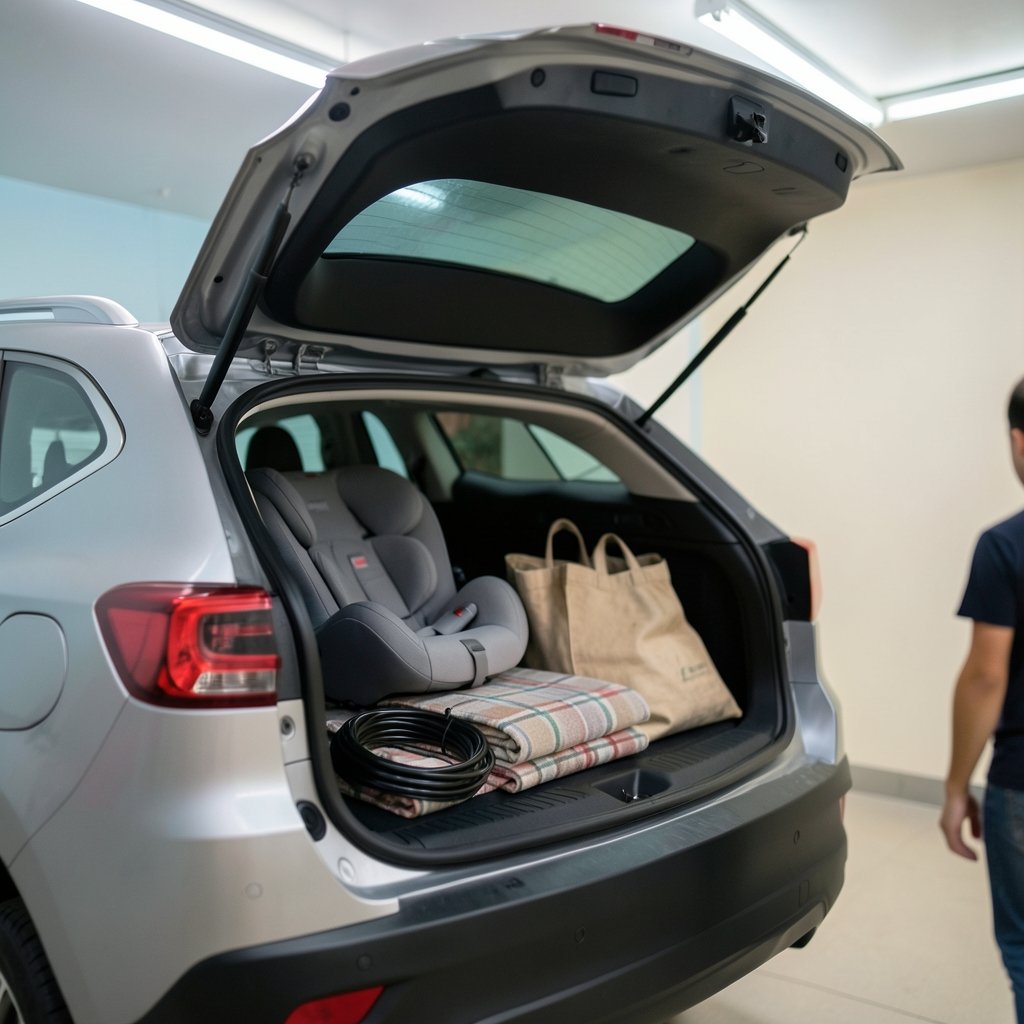
What if the biggest mistake people make when shopping for the best SUV in 2026 isn’t choosing the wrong model, but choosing it for the wrong reasons? A flashy test drive and a tempting lease offer can hide a lot. The truth is that the “best” SUV doesn’t exist in a vacuum. It exists relative to your driveway, your family, your commute, and your budget. This guide walks through the segments, the trade-offs, and the practical checks that separate a smart purchase from a five-year headache.
Why “Best SUV 2026” Has No Single Answer
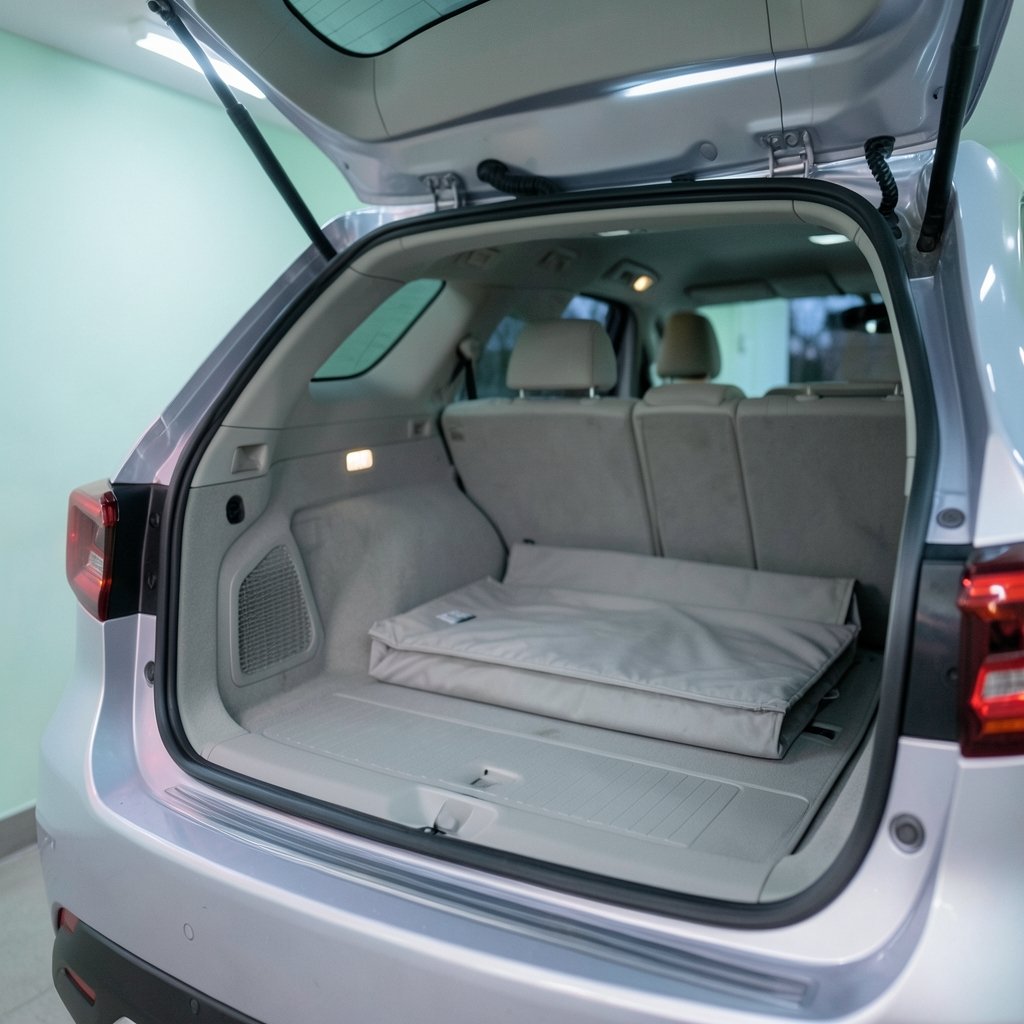
Ask ten people what makes the best SUV and you’ll get ten answers. A city dweller wants something easy to park. A parent of three wants third-row space and easy car seat access. A road-tripper cares about highway comfort and fuel costs. Someone with a long gravel driveway has different priorities entirely.
That’s why any honest recommendation starts with criteria, not a badge. Before comparing models, decide what you actually need:
- Seat count: five, six, or seven-plus
- Powertrain: gas, hybrid, plug-in hybrid, or full electric
- Driving environment: dense city, suburbs, rural roads, or mountains
- Budget: purchase price plus insurance, fuel, and maintenance
- Ownership length: a three-year lease rewards different traits than a ten-year keeper
Once you rank those, the shortlist shrinks fast. Practical shoppers often find that the segment matters more than the brand. A well-chosen midsize two-row SUV beats a poorly matched three-row for most couples, and a subcompact beats a full-size in tight urban parking every single day.
The Main SUV Segments in 2026, Explained
Subcompact and Compact SUVs
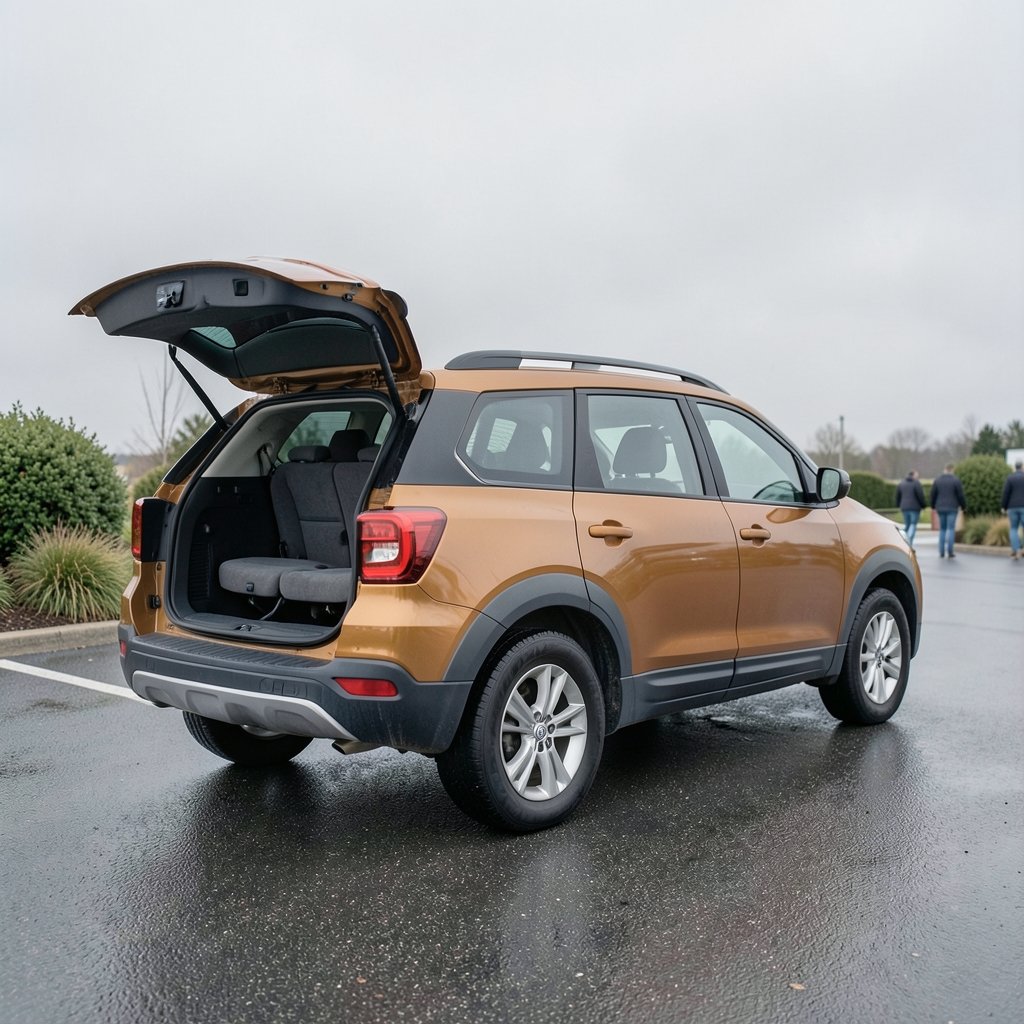
These are the entry points: easy to park, cheaper to insure, and usually the most fuel-efficient gas options. The trade-off is rear-seat space and cargo room. They suit singles, couples, and small families who mostly drive in town.
Midsize Two-Row SUVs
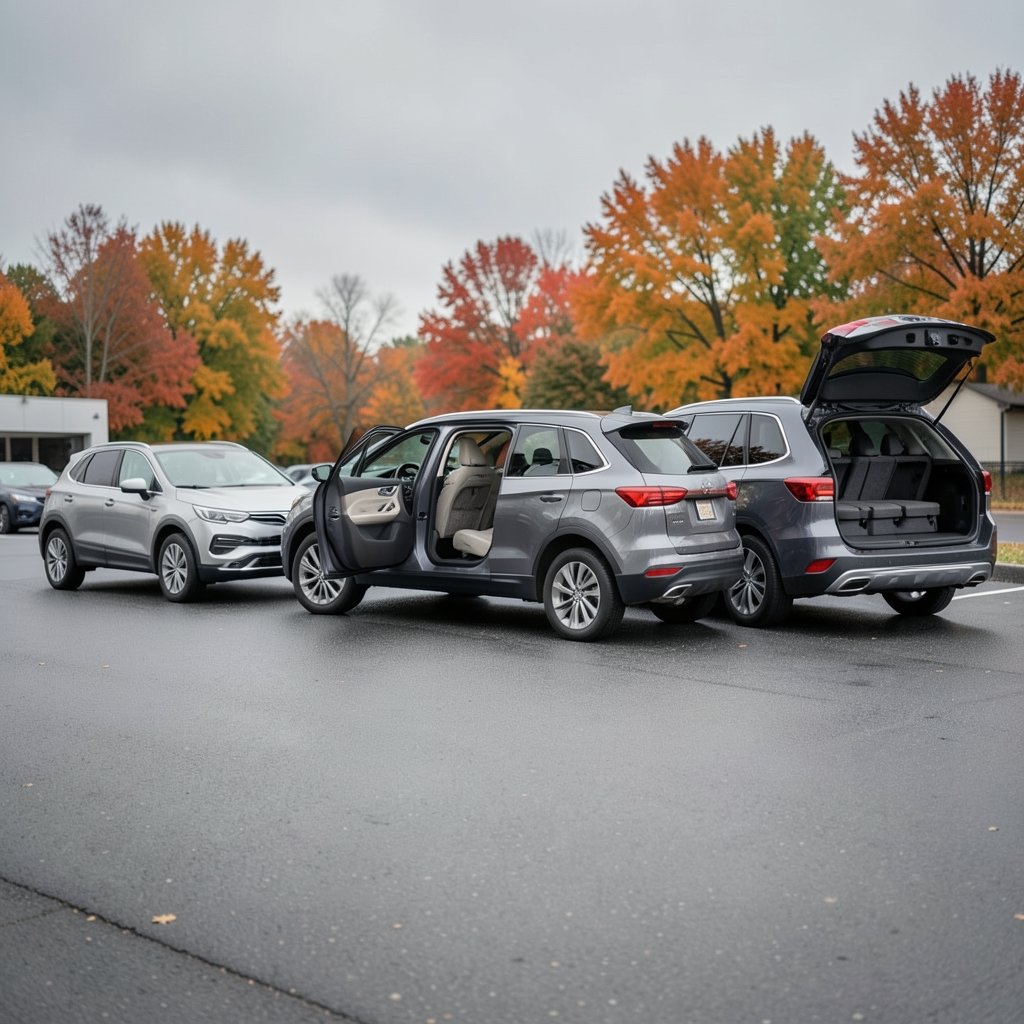
This is the sweet spot for many buyers. You get real cargo space, comfortable back seats, and a calmer highway ride without the bulk of a three-row. If you rarely carry more than four people, start here.
Three-Row and Full-Size SUVs
Family haulers and tow rigs. The third row is invaluable for school runs and grandparents, but check it honestly: some third rows are strictly for kids, and cargo space behind them can vanish. Fold-flat seats and easy second-row access matter more than brochure numbers suggest.
Luxury SUVs
Quiet cabins, stronger engines, and better materials, at a price. The hidden cost is maintenance and repairs once the warranty ends. Budget for that before you fall in love with the interior.
Electric and Hybrid SUVs
Electrification has moved from novelty to mainstream across nearly every segment, and the lineup keeps expanding. Honda’s own range now spans gas, hybrid, and fully electric models, which makes it a useful case study in how brands are hedging their bets. If you want a closer look at how one major brand is structuring its range, this breakdown of the Honda SUV lineup explained covers the CR-V, HR-V, ZR-V, and the electric e:Ny1 side by side.
Gas, Hybrid, Plug-In, or Electric: What Actually Works
The powertrain decision is where most buyers overthink and under-plan. Here’s the practical version.
Gas remains the simplest choice. Refueling is quick, upfront prices are lower, and you’re never hunting for a charger. For low-mileage drivers, it’s often the cheapest total cost.
Hybrids shine for high-mileage commuters. They need no plug, and city driving especially rewards them because the electric motor does more of the work in stop-and-go traffic. For many families, a conventional hybrid is the lowest-stress efficiency play.
Plug-in hybrids make sense only if you can charge at home or work. Without regular charging, you’re hauling a heavy battery for little benefit. With it, short daily trips can run mostly on electricity.
Full electric suits owners with home charging and predictable routes. The real-world lesson from experienced EV owners is blunt: charging access at home matters more than any spec sheet number. If you can’t charge where you park overnight, think hard before committing.
One more practical note: efficiency claims are tested under standardized conditions that rarely match real life. Cold weather, roof racks, highway speeds, and heavy air conditioning all pull numbers down. Treat official figures as a comparison tool between models, not a promise.
Safety: The Checks That Actually Matter
Safety is the one area where you should never rely on marketing. Two things do the heavy lifting: crash-test ratings and standard driver-assist features.
In the United States, the Insurance Institute for Highway Safety publishes crash-test ratings and its Top Safety Pick awards, with methodology published openly. The National Highway Traffic Safety Administration runs the 5-Star Safety Ratings program and a public recall database. In Europe, Euro NCAP performs similar independent testing. Before signing anything, look up the specific model and model year, because ratings can change between years even when the vehicle looks identical.
Then read the window sticker carefully. Automatic emergency braking, lane-keeping assistance, blind-spot monitoring, and adaptive cruise control are increasingly standard, but “available” is not “included.” On base trims, features are often locked behind packages. A mid-level trim with standard safety tech is frequently better value than a base model with an options bundle.
Also check the recall database for the exact model year. A clean record isn’t proof of perfection, but an open recall that was never fixed on a used example is a red flag worth catching early.
Cost of Ownership: The Part Nobody Advertises
The purchase price is the headline. The ownership cost is the story. Experienced buyers tend to weigh five things:
- Insurance premiums. Sports-tuned trims and expensive trim levels can cost noticeably more to insure than the same model in a lower trim.
- Fuel or electricity costs. Estimate your annual miles and do the math yourself rather than trusting a single economy figure.
- Tires and brakes. Larger wheels look great and cost more to replace. Bigger, heavier vehicles wear through consumables faster.
- Maintenance schedules. Compare service intervals and typical parts costs, rather than only the first free service.
- Depreciation. Some models hold value well; others drop sharply. If you plan to sell in five years, this is real money.
A useful habit: ask the dealer for a full out-the-door quote in writing, including taxes, fees, and any add-ons. The gap between the advertised price and the final number is where budgets quietly break.
Test Drive Like Someone Who Plans to Keep It
Most test drives are too short and too easy. They happen on smooth roads in good weather with a salesperson chatting. That tells you almost nothing about daily life with the vehicle.
Here’s a better routine that actually works in practice:
- Drive the exact trim you’d buy. Loaner cars and demo models are often top trims that hide how the base version feels.
- Bring the whole family. Install a car seat if you use one. Have the tallest household member sit in the back.
- Take it on a rough road and a highway ramp. Listen for wind and tire noise. Feel how the suspension handles bumps.
- Test the tech while parked and moving. Pair your phone, use the navigation, and check whether the climate controls are touchscreen-only. Physical knobs are easier to use without looking away from the road.
- Try parking it. Parallel park and reverse into a space. Camera quality and visibility vary a lot.
- Fold the seats. Bring a suitcase or two and see how the cargo area actually configures.
Common mistakes show up again and again: buying for the one road trip a year instead of the daily commute, choosing the biggest vehicle the budget allows rather than the right size, and skipping the insurance quote until after the deal is signed. Each one is avoidable with an hour of preparation.
Matching the SUV to Your Life, Not the Brochure
The most satisfied SUV owners tend to share a pattern. They bought for their actual week, not their imagined one. If your week is school drop-offs, grocery runs, and a highway commute, a compact hybrid or a well-equipped midsize two-row will likely serve you better than a three-row that’s half empty most days.
Lifestyle also shapes what feels right. Buyers who care about how a vehicle fits their personal style often coordinate it with the rest of their lives, and the same instinct that drives interest in 2026 fashion trends for women or fresh hairstyles for 2026 shows up in color and trim choices. Speaking of which: paint and interior colors follow trends too, and the 2026 color trends report is a handy reference if you’re deciding between a safe neutral and something bolder. A distinctive color can be a joy to own, but it can also narrow your resale audience later. There’s no wrong answer, only a trade-off worth knowing about.
For buyers who think of an SUV as a ticket to the open road, it helps to plan the trips too. If summer escapes are part of the dream, browsing places to visit in July or comparing the best islands to visit can sharpen what you need from a vehicle: cargo volume, roof rack options, towing capacity, or all-wheel drive for mountain roads. Even small details feed into the decision, like the spring nail colors and designs people bookmark while planning a getaway wardrobe. The point is simple: the best SUV is the one that fits the life you actually live, road trips included.
Quick Comparison: Matching Segment to Buyer
| Buyer profile | Best-fit segment | What to prioritize |
|---|---|---|
| City commuter, one or two people | Subcompact or compact | Parking ease, fuel economy, visibility |
| Small family, mostly local driving | Compact hybrid | Rear space, standard safety tech |
| Couple or family of four, frequent highway miles | Midsize two-row | Ride comfort, cargo room, efficiency |
| Family of five or more | Three-row | Third-row access, cargo behind row three |
| Home charger, predictable routes | Electric | Real-world range, charging speed |
| Long-distance commuter, no home charger | Conventional hybrid | Fuel savings without plugging in |
Conclusion
The best SUV for 2026 isn’t a single winner crowned by a magazine. It’s the vehicle that matches your seats, your parking, your charging situation, and your budget without forcing compromises you’ll resent in year three. Start with your real weekly routine, verify safety ratings for the exact model year, get an out-the-door quote in writing, and test drive the trim you can actually afford. Do that, and the shortlist practically builds itself. The buyers who end up happiest are rarely the ones who found the most hyped model. They’re the ones who asked better questions before they signed.
FAQ
What is the best SUV to buy in 2026?
There is no universal best SUV. The right pick depends on your seat needs, driving environment, powertrain preference, and budget. Rank those five factors first, then compare two or three models within the segment that fits. A compact hybrid suits city commuters, while a midsize two-row or three-row fits families better.
Is a hybrid SUV worth it in 2026?
For high-mileage drivers, usually yes. Hybrids need no plug and save the most fuel in stop-and-go city driving. For low-mileage drivers, the extra upfront cost can take years to recover, so run the math on your annual miles before deciding.
Should I buy an electric SUV or a plug-in hybrid?
Choose a full electric SUV only if you can charge where you park overnight and your routes are predictable. A plug-in hybrid makes sense if you can charge regularly but still want gas backup for long trips. Without home charging, a conventional hybrid is often the lower-stress choice.
How do I check an SUV’s safety rating?
Look up the specific model and model year in the Insurance Institute for Highway Safety ratings and the National Highway Traffic Safety Administration’s 5-Star Safety Ratings. Also check the recall database for that model year, and confirm which driver-assist features are standard versus optional on the trim you’re considering.
How long should a test drive last?
Longer than most people think. Aim for at least 20 to 30 minutes covering city streets, a rough patch of road, and a highway on-ramp. Drive the exact trim you plan to buy, bring the family, install a car seat if you use one, and practice parking. Short drives hide noise, ride harshness, and awkward controls.
What costs should I budget beyond the purchase price?
Plan for insurance premiums, fuel or electricity, tires, brakes, scheduled maintenance, and depreciation. Larger wheels and higher trims often raise insurance and replacement costs. Always ask for a written out-of-the-door quote that includes taxes, fees, and add-ons so the final number doesn’t surprise you.














