

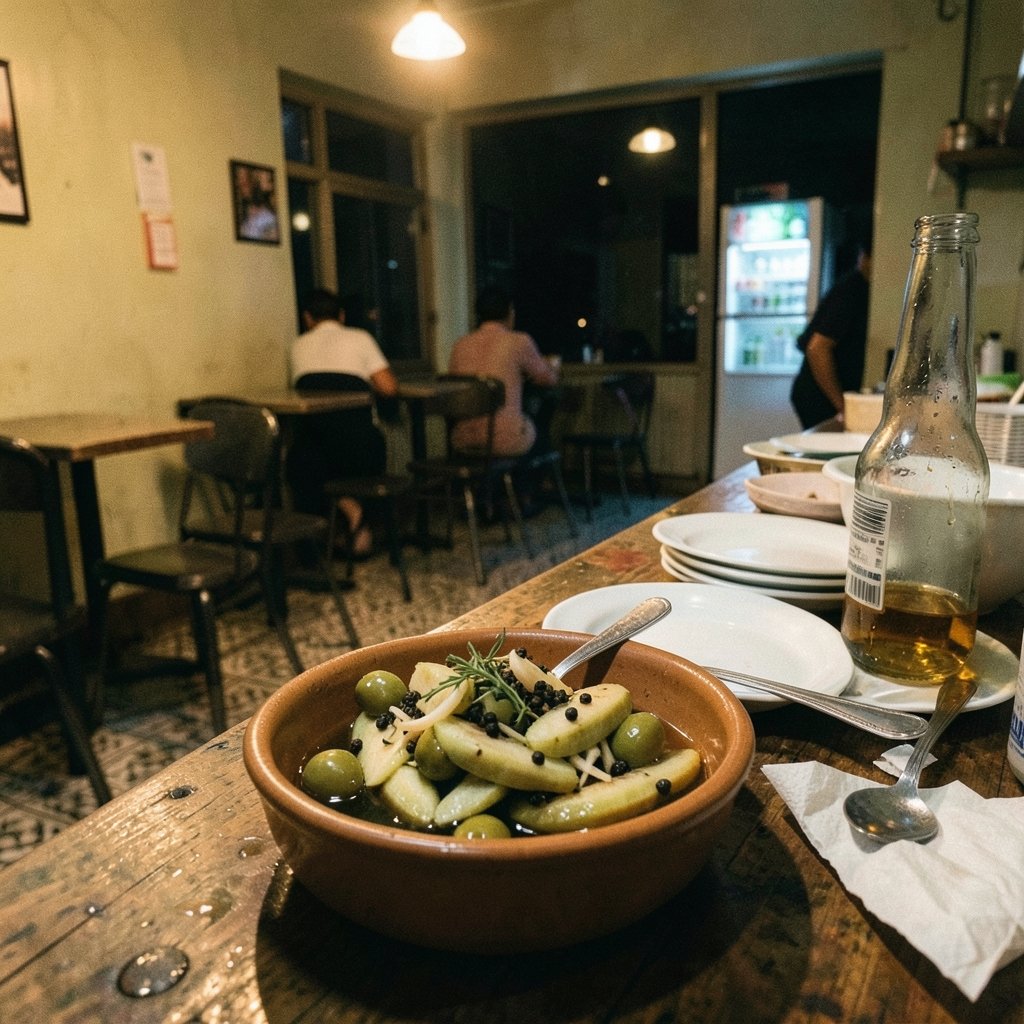
What if the best thing on a Puerto Rican menu isn’t the roast pork or the mofongo, but a humble bowl of green bananas soaked in vinegar, garlic, and oil? That’s exactly what happens with guineos en escabeche, a dish that looks plain and tastes anything but. If you’ve typed “best guineos en escabeche near me” into a search bar, you already know the frustration: the results are a jumble of delivery apps, generic Latin restaurants, and reviews that never mention the dish you actually want. This guide sorts out what the dish is, what separates a great version from a forgettable one, and how to track down a plate worth the trip.
What Guineos en Escabeche Actually Is
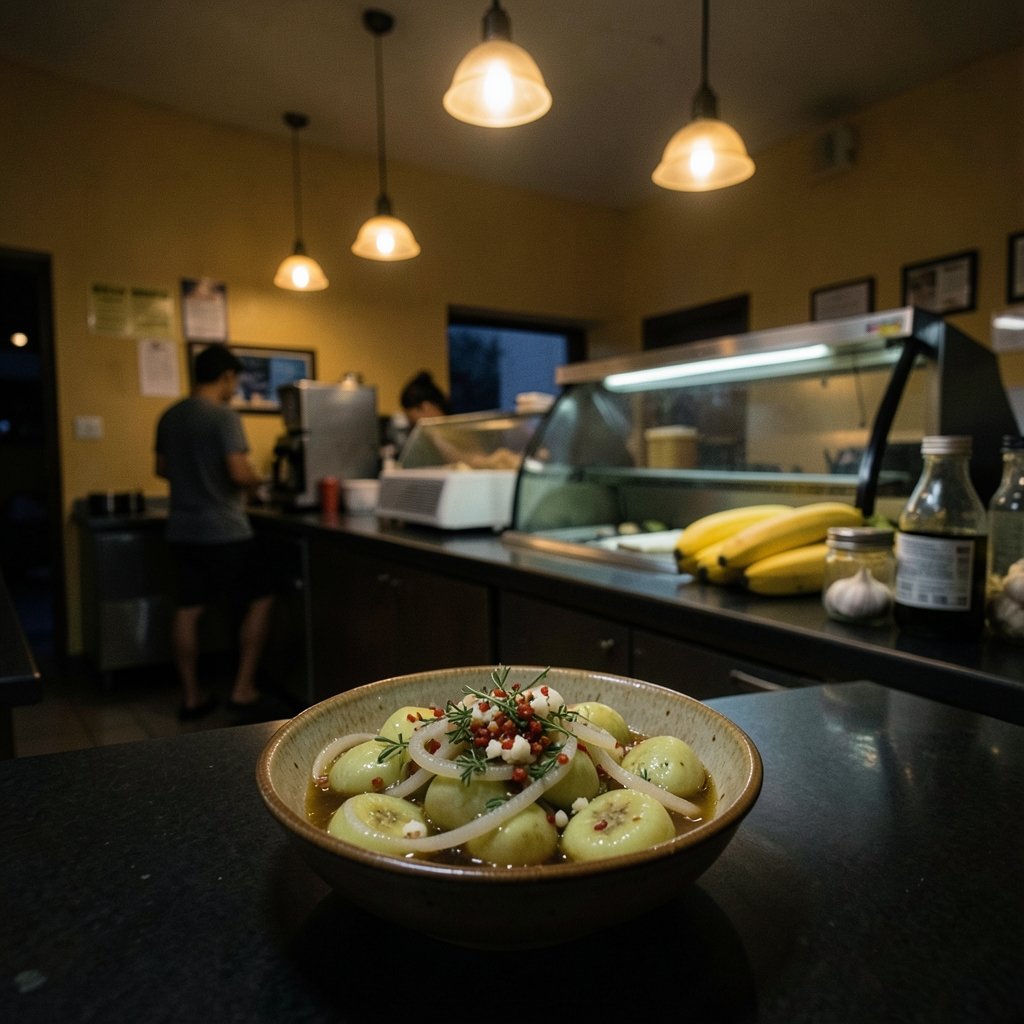
In Puerto Rican Spanish, guineos means bananas, and in this context it usually means green, unripe ones. The bananas are boiled or sometimes fried until tender, then dressed in an escabeche, a vinegar-based marinade with oil, garlic, onions, herbs, and often peppercorns or bay leaf. The dish is served cold or at room temperature, which makes it a natural side for roasted meats, rice and beans, or fried fish.
A quick word on the name, because it causes confusion. In the Dominican Republic and parts of the Spanish Caribbean, guineo typically refers to a ripe yellow banana, while the green cooking banana is called plátano verde or moro. In Puerto Rico, guineo covers both the fruit and the cooking banana depending on context. So when you search for guineos en escabeche, you’re looking at a specifically Puerto Rican preparation. If a restaurant’s menu says “plátanos en escabeche,” it may be the same idea with a different name, or it may be a pickled plantain dish with a firmer bite. Ask before you assume.
Escabeche itself is an old Iberian technique. It arrived in the Caribbean through Spanish cooking and took on local character, which is why you’ll find vinegar-forward pickled dishes across the region with different spices and different base ingredients. The Puerto Rican version tends to be gentle rather than sharp, with the vinegar balanced by oil and the sweetness of the banana coming through underneath.
Why “Near Me” Searches Fail for This Dish
Here’s the practical problem. Search engines and delivery apps index restaurant names and cuisine categories far better than individual side dishes. A restaurant can serve excellent guineos en escabeche every single day and never mention the phrase on its website. Meanwhile, a chain with a marketing budget can rank for terms it barely deserves.
There’s a second issue: local availability is uneven. In cities with large Puerto Rican communities, the dish can be found in home-style cafeterias, panaderías, food trucks, and grocery deli counters. In places without that community, you may find escabeche of a different kind entirely, such as pickled fish or pickled vegetables, which is a completely different dish. Knowing what you’re looking at saves a lot of disappointment.
The third issue is that “best” is genuinely subjective here. Some people want a bracing, sour escabeche that wakes up the palate. Others want something mellow, almost like a warm potato salad made from bananas. Neither is wrong, but a review that says “great escabeche” tells you nothing about which one you’re getting.
How to Judge a Good Plate Before You Order
The best way to find great guineos en escabeche is to learn what good looks like, then ask smart questions. These are the markers worth checking.
| What to Check | What Good Looks Like | Warning Sign |
|---|---|---|
| Banana texture | Tender but intact, holds its shape when cut | Mushy, falling apart, or watery |
| Marinade balance | Vinegar present but not harsh, oil rounds it out | Sharp enough to make you wince, or completely flat |
| Aromatics | Visible garlic, onion, peppercorns, bay leaf | No visible seasoning, just liquid |
| Temperature | Cool or room temperature, as intended | Served piping hot, which usually means it was rushed |
| Freshness | Bright flavor, clean finish | Sour in a spoiled way, or a dull, tired taste |
| Menu honesty | Named as guineos en escabeche or described plainly | Listed vaguely as “side dish” with no detail |
Texture is the single most reliable signal. Green bananas are starchy, and overcooking turns them into paste. A kitchen that cares will cook them just past firm so they slice cleanly and still have a little resistance. If the pieces collapse the moment your fork touches them, the kitchen either rushed the dish or held it too long.
The marinade is the second signal. A good escabeche tastes layered: vinegar up front, garlic and onion behind it, oil carrying everything. If the vinegar dominates to the point that you can’t taste the banana, the ratio is off. If there’s no tang at all, someone skipped the point of the dish.
Practical Steps to Find It in Your Area
Search engines are a starting point, not the answer. The most reliable method is a short sequence of steps that moves from broad to specific.
- Search your city plus the dish name. Try “guineos en escabeche” with your neighborhood or a nearby town, instead of only “near me.” Local food blogs and community forums often mention dishes that restaurant websites never list.
- Filter by cuisine, not by dish. Look for Puerto Rican restaurants specifically. Dominican and Cuban places may serve something similar, but the preparation and name will differ.
- Check grocery deli counters. In areas with Caribbean communities, supermarket delis and panaderías often carry escabeche by the pound, and the quality can beat restaurants at a fraction of the price.
- Look at food trucks and stands. Smaller operations with tight menus often do one dish extremely well, and they’re more likely to answer a direct question about how they make it.
- Call ahead. This is the step most people skip. A thirty-second phone call confirms whether the dish is on the menu today, whether it’s made in-house, and whether it’s the banana version or something else.
- Ask about the marinade. “Is it vinegary or mild?” is a question any good kitchen can answer instantly, and the answer tells you whether the cook actually makes it or buys it in.
- Read photos, not ratings. A picture of the actual plate reveals texture and color that a five-star average never will.
For a broader view of how to evaluate local food options without wasting a trip, the same instincts that help you find a good Chinese restaurant fast apply here: check menus for specifics, ignore generic praise, and trust photos over star counts.
Common Mistakes People Make
Most disappointing experiences with this dish come from a handful of avoidable errors.
Assuming every Latin restaurant has it. Guineos en escabeche is a Puerto Rican home-style dish, not a universal menu item. A taquería or a Cuban sandwich shop may have pickled vegetables, but that’s a different thing entirely.
Ordering it as a main. This is a side dish, and portion sizes reflect that. Expecting a full meal leads to disappointment, and ordering three sides to compensate leads to a strange table.
Judging it by the first bite. Escabeche is a marinated dish, and the flavors deepen as it sits. A version that tastes flat when it arrives may be excellent ten minutes later, once the dressing has had time to settle into the banana. Give it a moment before you decide.
Ignoring the temperature question. Some kitchens serve it slightly chilled, some at room temperature, and a few serve it warm. None of these is automatically wrong, but a version that arrives hot from the pot hasn’t been marinated properly. Ask which style the kitchen does before you order.
Skipping the deli counter. Restaurant reviews dominate search results, but in many neighborhoods the best version is sold by weight at a grocery store, made in the same kitchen every morning. It’s less glamorous and often better.
Not asking about the name. If you order “guineos en escabeche” and get a puzzled look, try “green banana escabeche” or ask whether they make plátanos en escabeche. The dish may be there under a name you didn’t search for.
What Actually Works in Practice
The people who consistently find great versions of this dish tend to share a few habits. They search by cuisine and neighborhood rather than by dish name alone. They call ahead rather than driving across town on a guess. They pay attention to texture and marinade balance instead of relying on reviews. And they build a short list of places that have delivered before, because a kitchen that makes good escabeche once usually makes it consistently.
It also helps to think about timing. Home-style Caribbean cooking often follows a daily rhythm, with certain sides made in the morning and sold until they run out. Arriving early in the day improves your odds considerably. Late in the evening, you’re more likely to get the bottom of the container, which is exactly where texture goes to die.
If your search keeps surfacing generic results, the same logic that applies to choosing a laser hair removal clinic near you applies to food: the businesses that rank highest are not always the ones that do the specific thing you want best. You have to read past the marketing and look for evidence of real, hands-on work. Browsing a tag page of related local searches can also surface smaller spots that never crack the top results, much like scanning laser hair removal near me listings reveals options a single search hides.
Making It at Home When the Search Comes Up Empty
Sometimes the honest answer is that no one near you makes it well, and the fastest route to a great plate is your own kitchen. The dish is forgiving. Boil peeled green bananas in salted water until tender but still firm, drain them, and dress them while they’re still warm so the marinade absorbs. The dressing is a simple mix of vinegar, oil, plenty of garlic, sliced onion, salt, peppercorns, and bay leaf. Let it sit for at least an hour, ideally longer, and taste it again before serving. The flavor will change noticeably as it rests.
The one mistake home cooks make is treating the vinegar as an afterthought. It’s the backbone of the dish, so use enough to taste it clearly, then let the oil and the sweetness of the banana bring it back into balance. If it’s too sharp, add oil and a pinch of salt rather than more sugar. If it’s flat, a splash more vinegar fixes it faster than anything else.
Conclusion
Finding the best guineos en escabeche near you is less about luck and more about knowing what you’re looking for. The dish is a Puerto Rican preparation of green bananas in a vinegar, garlic, and oil marinade, served cool as a side. It hides in plain sight on menus that never name it, sells by the pound at grocery delis, and shows up at food trucks with short menus and long lines. Judge it by texture and balance, call ahead to confirm it’s actually available, and don’t be afraid to ask how it’s made. The search term may be vague, but the dish itself is specific, and once you know its markers, you’ll spot a good version from across the room.
Frequently Asked Questions
What are guineos en escabeche made of?
They’re made from green, unripe bananas that are boiled or fried until tender, then dressed in an escabeche of vinegar, oil, garlic, onion, peppercorns, and bay leaf. The dish is served cool or at room temperature as a side, not as a main course.
Is guineos en escabeche the same as plátanos en escabeche?
Not exactly. Guineos refers to bananas, while plátanos refers to plantains, which are firmer and starchier. Some kitchens use the names loosely, so it’s worth asking which fruit they use and how they prepare it before you order.
Why can’t I find this dish at most Latin restaurants?
It’s a Puerto Rican home-style side rather than a universal menu item, and many restaurants simply don’t make it. It’s most commonly found at Puerto Rican cafeterias, panaderías, food trucks, and grocery deli counters in areas with Caribbean communities.
How do I know if the escabeche is good before ordering?
Ask about the marinade and the texture. A good version has tender bananas that hold their shape, a vinegar tang that’s present but balanced by oil, and visible garlic and onion. If the kitchen can’t describe it, that’s usually a sign it isn’t made in-house.
Should guineos en escabeche be served hot or cold?
It’s traditionally served cool or at room temperature, because the dish needs time to marinate. A version served piping hot straight from the pot hasn’t had time to absorb the dressing, and the flavor will be flat compared to one that’s rested.
Can I make guineos en escabeche at home?
Yes, and it’s simpler than it looks. Boil peeled green bananas in salted water until tender but firm, drain, and dress them warm with vinegar, oil, garlic, onion, salt, peppercorns, and bay leaf. Let the dish rest for at least an hour so the flavors settle before serving.














