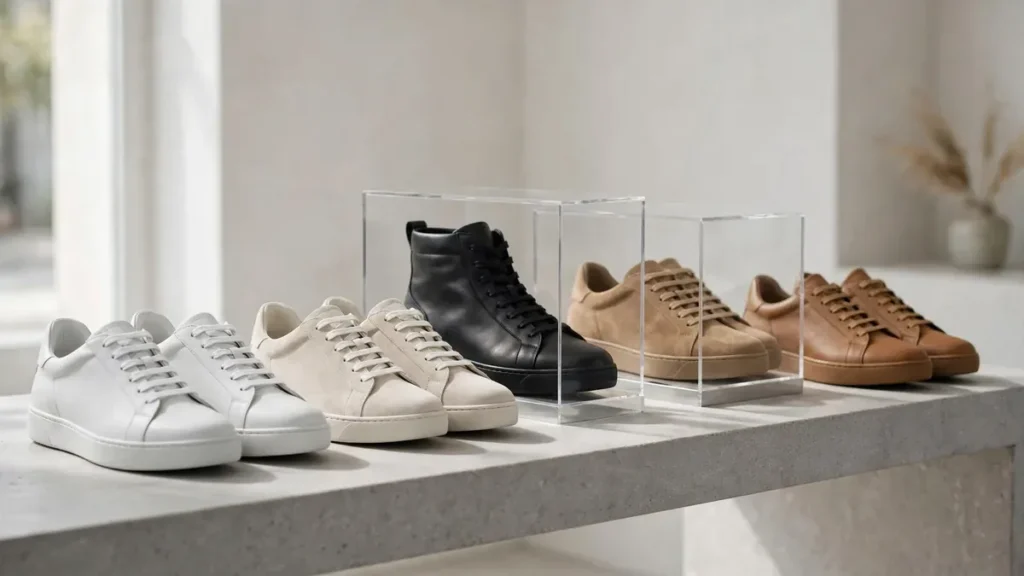
Best Luxury Sneaker Investment Brands sit at the meeting point of fashion, craft and collecting, where a well-chosen pair can hold its appeal for years while an ordinary pair fades into the back of the wardrobe. The idea is not about chasing every limited release or treating trainers as a shortcut to quick profit. It is about recognising which houses consistently produce sneakers that people want to wear, keep and eventually resell, and understanding why those pairs behave differently from the rest of the market.
The luxury sneaker world has changed a great deal in the past decade. What began as a niche interest among collectors has grown into a recognised part of the wider luxury market, with fashion houses, heritage sportswear labels and independent ateliers all competing for attention.
This guide looks at ten brands that stand out for their staying power, explains what drives their value, and shows how to tell a genuine investment-worthy sneaker from an everyday pair. Every statement here is general and indicative, offered as a brand guide rather than personal financial advice, and every brand is judged on the same measures: heritage, materials, design consistency, scarcity, resale behaviour and the quality of the buying experience.
Key Takeaways
- Investment sneakers combine strong design, quality materials and lasting demand, rather than relying on hype alone.
- Scarcity, collaboration and heritage are the three most reliable value drivers across the ten brands in this guide.
- Condition and original packaging matter as much as the shoe itself, so storage and care should be planned from day one.
- Classic silhouettes from established houses tend to hold their appeal longer than trend-led seasonal styles.
- Buy pairs you would genuinely enjoy wearing, because long-term appeal starts with a design that lasts.

The Ten Brands at a Glance
The table below gives a quick overview of the ten brands covered in this guide. It is a starting point for comparison, not a ranking, because the right choice depends on whether you value heritage, scarcity, wearability or resale behaviour most.
| Brand | Signature Models | Main Value Driver | Typical Price Range | Best For |
|---|---|---|---|---|
| Nike | Air Jordan 1, Dunk Low, Air Force 1 | Collaboration and scarcity | Mid to high | Iconic silhouettes with broad demand |
| Adidas | Samba, Gazelle, Yeezy 350 | Heritage revivals and collaborations | Mid to high | Classic styles with steady appeal |
| New Balance | 990v6, 550, 2002R | Craftsmanship and quiet quality | Mid to high | Understated pairs with loyal buyers |
| Louis Vuitton | LV Trainer, LV Skate | Luxury house prestige | High | Statement sneakers with house heritage |
| Gucci | Ace, Rhyton, Screener | Fashion-house identity | High | Recognisable designs with wide appeal |
| Dior | B27, B23, B30 | Couture craft and limited runs | High | Refined sneakers with strong detailing |
| Chanel | CC Runner, classic trainers | Exclusivity and house codes | High | Elegant pairs with enduring desirability |
| Balenciaga | Speed, Triple S, Defender | Bold design and cultural impact | High | Avant-garde styles that define eras |
| Saint Laurent | SL/10H, Court Classic | Minimalist Parisian elegance | High | Clean silhouettes for refined wardrobes |
| Common Projects | Achilles Low, Original Achilles | Minimalist craft and consistency | Mid to high | Timeless white sneakers done properly |
Brand Profiles
Each profile below follows the same structure so the brands can be compared fairly. Signature models show what the house is best known for, value drivers explain why demand persists, heritage sets the context, and the buying experience covers what it is actually like to acquire a pair.
Nike
Nike remains the most influential name in the sneaker world, and its investment appeal rests on a catalogue of silhouettes that have stayed relevant for decades. The Air Jordan 1 leads the conversation, followed by the Dunk Low and the Air Force 1, each of which has been reinterpreted through collaborations with designers, artists and athletes. Limited colourways and numbered releases create scarcity, while the sheer size of the collector community keeps demand broad and active across many markets.
The heritage behind the brand is unmatched in sportswear, stretching from running tracks to basketball courts and into street culture. Value drivers include collaboration, limited production and the cultural weight of the Jordan story, which continues to attract new buyers every year. For collectors, the lesson is to favour classic silhouettes in well-regarded colourways over short-lived seasonal experiments.
Adidas
Adidas brings a different kind of strength, built on heritage models that return to fashion in regular cycles. The Samba and Gazelle have moved from football terraces to fashion weeks without losing their identity, and the Yeezy 350 showed how a single collaboration could reshape an entire market. The brand pairs this with a deep archive, so even quieter models carry a story that buyers recognise and trust.
Heritage is central to the appeal, with decades of sport and street history behind the three stripes. Value drivers include heritage revivals, designer collaborations and the steady demand for clean, wearable classics that suit many outfits. Pairs that hold their appeal tend to be the archive silhouettes in original or near-original colourways, worn and stored with care.
New Balance
New Balance has moved from a respected running label to one of the most admired names in premium sneakers, largely by refusing to chase noise. The 990 series, led by the 990v6, is made with a level of craft that buyers notice immediately, while the 550 and 2002R show how archive basketball and running models can find a new audience. The brand appeals to people who value substance over spectacle, and that audience has grown steadily rather than in sudden bursts.
The heritage is rooted in American manufacturing and running performance, with the Made in USA and Made in UK lines carrying particular respect among collectors. Value drivers include craftsmanship, material quality and a reputation for consistency that makes older pairs easy to assess. For long-term appeal, the premium 990 line and well-made archive models are the natural focus.
Louis Vuitton
Louis Vuitton entered the sneaker conversation with the LV Trainer, a bold, richly detailed shoe that quickly became one of the most recognisable luxury trainers available. Later styles such as the LV Skate have kept the momentum going, and the house regularly refreshes the line with new materials, monogram treatments and collaborations. The result is a sneaker that reads unmistakably as Louis Vuitton from across a room, which is exactly what many buyers want.
Heritage comes from more than a century of leather goods and travel, giving the sneakers a sense of place within a much larger luxury story. Value drivers include house prestige, distinctive design and controlled distribution, since the shoes are sold mainly through the brand itself. Pairs in classic colourways and recognisable monogram finishes tend to attract the most lasting interest.
Gucci
Gucci made the luxury sneaker mainstream with the Ace, a clean white trainer with the green and red web stripe that became a wardrobe staple for a generation. The Rhyton and Screener added a chunkier, retro dimension, and the house continues to refresh its sneaker line with embroidery, prints and seasonal motifs.
The heritage is Italian, flamboyant and deeply tied to the house codes that have defined Gucci for decades. Value drivers include brand identity, wide recognition and a large global audience that keeps the secondary market active. For the strongest long-term appeal, the classic Ace in white leather remains the reference point, with more decorative seasonal styles better suited to wearing than to keeping.
Dior
Dior approaches sneakers with couture discipline, and the B27 has become the clearest expression of that approach. It pairs a refined silhouette with careful stitching, quality leather and subtle house detailing, while the B23 and B30 cover the high-top and runner ends of the range. The shoes feel considered rather than loud, which suits buyers who want luxury that reveals itself up close rather than from a distance.
Heritage draws on the Paris atelier tradition, and the sneaker line benefits from the same attention to finish that defines the house ready-to-wear. Value drivers include couture craft, limited production runs and a design language that ages gracefully. Classic colourways in smooth leather tend to hold their appeal best, especially when kept in excellent condition with their original packaging.
Chanel
Chanel sneakers carry the quiet confidence of the house, with the CC Runner and the classic trainers combining sporty shapes with instantly recognisable codes. The interlocking CC, the quilted touches and the careful choice of materials give the shoes a distinctly Chanel character without shouting. They appeal to buyers who already love the house and want a trainer that sits comfortably within a refined wardrobe.
Heritage is the strongest card here, with more than a century of Parisian elegance behind every pair. Value drivers include exclusivity, controlled availability and the enduring desirability of the house itself, which keeps demand steady across seasons. Pairs in neutral tones with classic house details are the ones most likely to keep their appeal over time.
Balenciaga
Balenciaga changed the shape of the luxury sneaker market with the Triple S and the Speed, two designs that defined an era of bold, oversized and sock-like trainers. The Defender has continued that spirit, and the house remains one of the few that can set a trend rather than follow one. These are statement shoes, and their appeal depends on the cultural moment as much as on the design itself.
The heritage is Parisian couture with a modern, experimental edge, and the brand has a long record of redefining silhouettes. Value drivers include bold design, cultural impact and the scarcity that comes with short production runs of the most talked-about styles. Because the designs are so distinctive, the most iconic models in their original colourways are the ones that tend to be remembered and sought after.
Saint Laurent
Saint Laurent offers the opposite of spectacle, with the Court Classic and SL/10H built around clean lines, slim profiles and a distinctly Parisian sense of ease. The shoes are designed to disappear into an outfit in the best possible way, adding polish without drawing attention to themselves. That restraint is the point, and it is why the brand appeals to buyers who prefer timeless design to seasonal drama.
Heritage comes from the Rive Gauche tradition of making luxury feel wearable and modern. Value drivers include minimalist elegance, consistent design and a loyal audience that returns to the same silhouettes year after year. For lasting appeal, the classic low-top styles in black or white leather are the natural choice, and they pair easily with the rest of a refined wardrobe.
Common Projects
Common Projects built its reputation on a single idea done exceptionally well, the Achilles Low, a minimalist white sneaker in Italian leather with a gold serial number stamped on the heel. There is little decoration and no visible logo, which is precisely why the shoe has endured while louder designs have come and gone. The brand proves that restraint, when executed with care, can be as distinctive as any statement design.
Heritage is short compared with the fashion houses in this guide, but the brand has earned its place through consistency since its founding. Value drivers include minimalist craft, premium materials and a design that has barely changed, which makes older pairs easy to recognise and trust. The Achilles Low in white remains the definitive choice, and its simplicity is the reason it continues to hold its place.
Investment Sneakers vs Everyday Sneakers
The difference between an investment sneaker and an everyday sneaker is not only the price tag. It is a combination of design, materials, scarcity and demand that determines whether a pair keeps its appeal after the first season. An everyday sneaker is bought to be worn hard and replaced when it wears out, while an investment sneaker is chosen with its longer life in mind, from the quality of the leather to the likelihood that someone else will want it later.
Materials are the first point of difference. Investment-worthy sneakers usually use full-grain leather, quality suede or carefully chosen technical fabrics, with stitching and finishing that stand up to close inspection. Everyday sneakers often use simpler materials and construction that look fine when new but age quickly.
Design is the second point of difference. Investment sneakers tend to rely on silhouettes that have already proved themselves over several seasons, whether that is a classic court shoe, a heritage runner or a recognisable house design. Everyday sneakers follow the trend of the moment, which means they can look dated as soon as the trend moves on.
Scarcity and demand form the third point of difference. Limited production, numbered releases and sought-after collaborations all reduce supply, while a large and active community of buyers keeps demand alive. Everyday sneakers are produced in large numbers and sold widely, so there is rarely a reason for anyone to seek out a used pair. Fit also plays a part, since a shoe that is comfortable and well made is more likely to be worn and cared for, and guidance on sneakers for women with wide feet shows how much the right fit matters to everyday comfort. When design, materials, scarcity and demand all point in the same direction, a sneaker has the makings of a lasting piece rather than a passing purchase.
Your Pre-Purchase Checklist
Use this checklist before buying any pair you hope will hold its appeal. It covers the practical steps that protect both the shoe and its longer-term prospects, and it takes only a few minutes to work through.
- Checklist item 1, authenticity: confirm the seller, the receipt and the details of the shoe itself, including stitching, materials, labelling and packaging, before you pay.
- Checklist item 2, condition: inspect the pair closely for marks, creasing, sole wear and odour, and favour pairs that are unworn or barely worn with their original box and accessories.
- Checklist item 3, silhouette: choose a proven design with a track record over a brand-new style, and check that the colourway is one the brand is known for rather than a one-off experiment.
- Checklist item 4, fit and rotation: make sure the size is right for comfortable wear, and plan a small rotation so no single pair carries all the wear, just as a pair of loafers for men can share the load in a smart wardrobe.
- Checklist item 5, storage: plan where the pair will live, keeping it away from damp, direct sunlight and crushing weight, and keep the original box, dust bag and spare laces together.
- Checklist item 6, weather and care: think about how the materials handle rain and wear, and set up a simple cleaning routine, since even sturdy footwear needs protection, as the advice on rain boots for men makes clear for wet-weather days.
Frequently Asked Questions
Do luxury sneakers really hold their value?
Some do and many do not, which is why selection matters so much. Pairs from the brands in this guide, in classic silhouettes and good condition, have a better record of holding their appeal than trend-led styles.
Which brand is the safest starting point?
There is no single safest brand, but the most reliable starting points are the houses with the longest track records and the clearest design identity. Nike and New Balance offer broad demand and proven silhouettes, while Common Projects and Saint Laurent offer quiet, timeless designs. Beginners often do best by starting with one classic pair from a brand they already like and learning the market from there.
Should I wear investment sneakers or keep them unworn?
This is a personal choice, and both approaches have merit. Wearing a pair carefully, with rotation and proper cleaning, still leaves it in good condition and lets you enjoy it. Keeping a pair unworn preserves its condition best, but only makes sense if you are comfortable storing it properly for a long time.
How important is the original box?
Very important. The original box, dust bag, spare laces and receipt all help confirm authenticity and show that the pair has been looked after. Buyers consistently prefer complete sets, and a missing box can reduce interest noticeably. Keep everything that came with the shoe together from the day it arrives.
Are collaborations worth more than regular releases?
Collaborations often attract more attention because they combine two audiences and are usually produced in smaller numbers. That said, not every collaboration holds its appeal, and some regular releases in classic colourways perform just as well over time.
How do I avoid buying a fake?
Buy from the brand, an authorised retailer or a reputable reseller with a clear authentication process. Check the stitching, materials, labelling and packaging against a known genuine pair, and be cautious of prices that seem far below the usual range. If anything feels uncertain, walk away, because a genuine pair bought later is always better than a questionable pair bought now.
The Bottom Line
The best luxury sneaker investment brands share a simple quality: they make shoes that people still want years after the release date. Nike and Adidas bring heritage and collaboration, New Balance and Common Projects bring craft and restraint, and the fashion houses bring prestige, design and exclusivity. A collection built on those principles is far more likely to reward you, whether that reward is the pleasure of wearing the shoes or the interest they attract later.