
A nose bar that fits well is easy to forget you are wearing. A nose bar that does not fit catches on towels, presses into the skin when you smile, or slides around so much that you keep checking it in the mirror. The difference between the two is sizing, and sizing a nose bar is simpler than it looks once you know the three numbers that matter: gauge, length, and end size.
Gauge is the thickness of the post, length is the distance between the two ends, and end size is how large the balls or discs on the ends are. Get any one of them wrong and the bar will either feel tight, look bulky, or work its way loose. Most sizing problems come from guessing rather than measuring.
This guide explains the nine sizing facts that matter for a nose bar in 2027, from gauge and post length to how to measure what you already own and when a size feels wrong. It is general guidance, not medical advice, and it assumes a healed piercing. If your piercing is still healing, or you are unsure about a size, a piercer can measure it in a few seconds.
Key takeaways
- The three numbers that matter are gauge, post length, and end size, and all three should be measured rather than guessed.
- Most nostril piercings take an 18 gauge bar, with 20 gauge for a finer look and 16 gauge for a bolder one.
- Length should leave a little room to move but not so much that the bar slides around or catches.
- Do not change to a shorter bar until the piercing is fully healed, usually four to six months.
- If a size feels wrong, change one measurement at a time, and see a piercer if the bar will not sit comfortably.
What nose bar sizing actually means
Nose bar sizing is the measurement of the jewellery, not the piercing, although the two are closely linked. The gauge is the thickness of the post, measured in a system where a smaller number means a thicker post. An 18 gauge bar is thinner than a 16 gauge bar, and a 20 gauge bar is thinner still. The length is the straight distance between the two ends, measured in millimetres, and it decides how much the bar can move. The end size is the diameter of the balls or discs, and it decides how visible the bar is and how easily it stays in place.
These three numbers work together. A short bar with large ends can press into the skin, while a long bar with small ends can slide around and catch on things. The right combination depends on your piercing, your nose, and what you find comfortable, which is why measuring matters more than copying someone else’s size.
Sizing also changes over time. A fresh piercing needs a longer bar to allow for swelling, and once the swelling has gone, a shorter bar usually fits better. That is the most common sizing change people make, and the one that causes the most problems when it is done too early. Wait until the piercing is fully healed before shortening the bar.
What you need and what to look for
You need very little to size a nose bar: the bar you are wearing now, a ruler or a caliper, and a mirror. A digital caliper is the most accurate tool, and it costs little, but a ruler with millimetre markings is good enough for length. If you do not have either, a piercer can measure your piercing and your current bar in a few seconds, and that measurement is worth having before you order anything new.
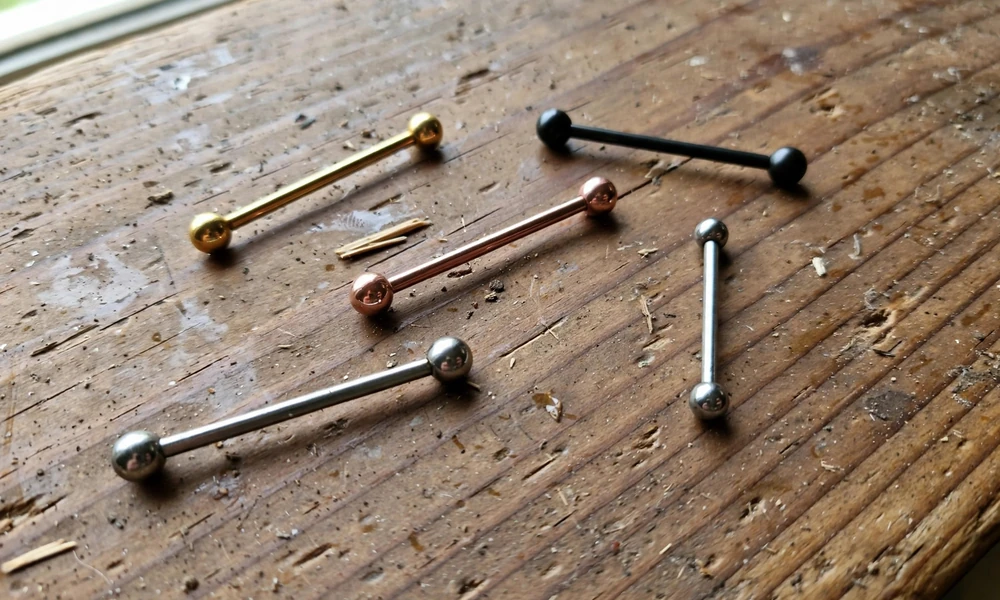
Look at the bar you are wearing and note three things: the gauge, the length, and the end size. If you bought the bar yourself, the packaging or the listing should state them. If a piercer fitted it, ask them what size it is, or have them measure it. Our nose stud sizing guide explains the same measuring ideas for studs, which is useful because the gauge system is the same, even though the lengths are different.
Look at the metal as well. Implant-grade titanium and 14k gold are the safest choices for most people, and they are available in every common gauge and length. Surgical steel is widely sold, but it contains nickel, so anyone with a nickel sensitivity should avoid it. A bar in the wrong metal can feel like a sizing problem when it is actually a reaction.
The 9 nose bar sizing facts that matter
The gauge
What it shows: The thickness of the post, which decides how the bar feels in the piercing and how visible it is. What to consider: Most nostril piercings take 18 gauge, with 20 gauge for a finer look and 16 gauge for a bolder one. Best for: Anyone buying their first replacement bar. Material: Available in titanium, gold, and steel at every common gauge. Price range: About $10 to $40 for a plain bar, more for gold or gem ends. Standout feature: Gauge is the one measurement you should not change without a piercer, because a thicker post needs the channel to stretch.
The post length
What it shows: The distance between the two ends, which decides how much the bar can move and how close it sits to the nose. What to consider: Most nostril bars are 6 to 8 millimetres long, with 6 millimetres suiting a snug fit and 8 millimetres suiting a thicker nostril. Best for: Anyone whose bar catches on towels or clothing. Material: Length is the same across metals, so the metal does not change the measurement. Price range: About $10 to $40, with length making little difference to price. Standout feature: A bar that is one or two millimetres shorter than the one you have now is usually the right next step.
The end size
What it shows: The diameter of the balls or discs on the ends, which decides how visible the bar is and how securely it stays in place. What to consider: Ends of 2 to 3 millimetres are the most common, with smaller ends looking subtler and larger ends staying put more securely. Best for: Anyone who has lost an end, or whose bar keeps working loose. Material: Ends come in the same metal as the post, or with a gem set into them. Price range: About $10 to $50, with gem ends costing more. Standout feature: A slightly larger end on the inside is a simple fix for a bar that slips out.
The fit for your nostril thickness
What it shows: How the length of the bar relates to the thickness of the nostril it passes through. What to consider: A thicker nostril needs a longer bar, and a thinner nostril needs a shorter one, even at the same gauge. Best for: Anyone whose bar feels tight on one side and loose on the other. Material: Thickness is about your nose, not the metal, so it applies to every bar. Price range: Measuring costs nothing; a new bar in the right length is about $10 to $40. Standout feature: Nostril thickness varies more than people expect, which is why a friend’s size is rarely your size.
The L-shape and the curve
What it shows: Some nose bars have a straight post, while others have a slight bend or a curved end that helps them stay in place. What to consider: A straight bar is the standard choice, and a curved or L-shaped bar suits people whose straight bars keep slipping out. Best for: Anyone whose bar will not stay put. Material: Available in titanium and gold, in the same gauges as straight bars. Price range: About $12 to $45. Standout feature: A gentle curve adds security without changing the gauge or the length.
Sizing for a new piercing vs a healed one
What it shows: A new piercing needs a longer bar to allow for swelling, while a healed piercing usually suits a shorter bar. What to consider: Do not shorten the bar until the piercing is fully healed, usually four to six months. Best for: Anyone with a recent piercing who is tempted to change the bar early. Material: The metal matters more than the size at this stage, so stick to implant-grade titanium or gold. Price range: A shorter replacement bar is about $10 to $40. Standout feature: Waiting is the cheapest sizing decision you will make, and the one that saves the most trouble.
How to measure what you already own
What it shows: Measuring your current bar gives you the gauge, length, and end size to copy or adjust. What to consider: Measure the post length between the two ends, not including the ends themselves, and check the gauge against a sizing card or a caliper. Best for: Anyone ordering a replacement online. Material: Measuring works the same for every metal. Price range: A digital caliper costs a few dollars; a ruler is free. Standout feature: A measurement you take yourself is more reliable than a size you remember from a listing.
The head and end style
What it shows: The ends of a nose bar can be plain balls, flat discs, or gem-set heads, and each one changes how the bar looks and feels. What to consider: A flat disc sits closer to the skin and catches less, while a ball is easier to grip when you change the bar. Best for: Anyone who finds their bar catches on clothing or bedding. Material: Ends are available in matching metal or with a small gem. Price range: About $10 to $60, with gem ends at the higher end. Standout feature: A flat inside end is the simplest fix for a bar that presses into the skin.
When a size feels wrong and what to change
What it shows: A bar that is too long slides around, a bar that is too short presses into the skin, and a bar that is the wrong gauge moves too much or feels tight. What to consider: Change one measurement at a time, so you know which change fixed the problem. Best for: Anyone who has bought a bar that does not feel right. Material: Keep the metal the same while you adjust the size, so you are not changing two things at once. Price range: A single replacement bar is about $10 to $40. Standout feature: One change at a time is the fastest way to find the right size, because it tells you what worked.
Which nose bar size is right for you
The most common starting point is 18 gauge, 6 to 7 millimetres long, with 2 to 3 millimetre ends. That combination suits most nostril piercings. From there, adjust one measurement at a time. If the bar slides around, shorten it by a millimetre. If it presses, lengthen it by a millimetre. If it feels loose in the channel, talk to a piercer about the gauge. Our guide to buying a nose bar explains what to check in a listing, so the size you order is the size you receive.
Your nose matters as much as the numbers. A thicker nostril needs a longer bar, a thinner nostril needs a shorter one, and the piercing placement decides how much of the bar shows. None of this is visible in a listing, which is why measuring your own bar is worth more than any general size chart.
Comfort is the final test. A bar that fits well should feel like nothing after a few minutes. Change one measurement, wear the new bar for a week, and judge it on how it feels at the end of the week rather than in the first hour, because a new bar always feels strange at first.
The caveats that matter
Sizing a nose bar is straightforward, but there are a few mistakes that cause most of the problems. The first is changing the gauge without advice. A thicker post stretches the channel, and a thinner post can let the channel shrink, and neither is easy to undo. The second is shortening the bar before the piercing has healed, which can press the ends into skin that is still settling. The third is changing the metal and the size at the same time, so you cannot tell which one caused a problem.
| Detail | What is known |
|---|---|
| Most common gauge | 18 gauge, about 1.0 millimetre thick, suits most nostril piercings |
| Common lengths | 6 to 8 millimetres, with 6 millimetres snug and 8 millimetres for thicker nostrils |
| Common end sizes | 2 to 3 millimetres, with larger ends more secure and smaller ends subtler |
| When to shorten | Only once fully healed, usually four to six months after piercing |
| How to measure | Post length between the inner faces of the ends, gauge with a caliper |
| Best metals | Implant-grade titanium and 14k gold suit most people |
| Metal to avoid if sensitive | Surgical steel contains nickel and can irritate sensitive skin |
| When to see a piercer | If the gauge needs changing, or a bar will not sit comfortably |
If a bar will not sit comfortably no matter what size you try, the problem may be the placement of the piercing, the shape of the bar, or the metal. A piercer can look at all three in a few minutes and tell you which one is the cause. A comparison of gold and silver nose bars is a useful read here too, because the metal you choose affects how the bar feels as much as the size does.
Checklist: sizing a nose bar honestly
Use these checks before you order a new bar, and again once it arrives.
- Measure the bar you already wear: gauge, post length, and end size, and write them down.
- Check the piercing is fully healed before shortening the bar.
- Change one measurement at a time, so you know which change fixed the problem.
- Keep the metal the same while you adjust the size, to avoid confusing a reaction with a fit problem.
- Check the ends are secure once the bar is in, and check them again the next day.
- If a size feels wrong after a week, or the gauge needs changing, see a piercer.
Frequently asked questions
What size nose bar should I get?
Most people start with 18 gauge, 6 to 7 millimetres long, with 2 to 3 millimetre ends. Measure the bar you wear now and adjust one measurement at a time from there, rather than guessing a new size from a chart.
How do I measure my nose bar?
Measure the post length between the inner faces of the two ends with a ruler or caliper, measure the post thickness for the gauge, and measure the diameter of the ends. Write all three numbers down before you order.
Can I wear a shorter bar in a new piercing?
Not until it is fully healed, usually four to six months. A new piercing needs a longer bar to allow for swelling.
What gauge is a nose bar?
Most nostril piercings take 18 gauge, about 1.0 millimetre thick. 20 gauge is finer and 16 gauge is bolder. Do not change gauge without a piercer, because a thicker post stretches the channel.
Why does my nose bar keep falling out?
It is usually too long, or the ends are too small. Try a bar one millimetre shorter, or a slightly larger inside end. If it still falls out, a bar with a gentle bend may stay put better.
How tight should a nose bar feel?
It should feel like nothing after a few minutes. It should sit close to the nose with a little room to move, and it should not press into the skin when you smile or touch your nose. If you are aware of it all day, the length is probably wrong.
The bottom line
The right nose bar size is the one you forget you are wearing. For most people that is 18 gauge, 6 to 7 millimetres long, with 2 to 3 millimetre ends, in implant-grade titanium or 14k gold. Measure the bar you already wear, change one measurement at a time, and give each new size a week before you judge it.
Do not shorten a bar until the piercing is fully healed, do not change the gauge without a piercer, and do not change the metal and the size at the same time. A few minutes with a ruler will save you the cost of several bars that almost fit.