

A nose cuff is the easiest way to wear nose jewellery without a piercing. It clips onto the side of the nostril, sits there comfortably for a few hours, and comes off just as easily at the end of the day. There is no healing time, no commitment, and no needle. For everyday wear, that freedom is the whole point: you can try a look on Monday, skip it on Tuesday, and wear a different cuff on Wednesday.
The problem is that not every cuff is made for daily wear. Some are stiff, some pinch, and some slide around the moment you laugh or talk. A cuff that looks perfect in a product photo can feel like a small clamp after an hour. The ones that work every day share a few quiet qualities: a gentle, flexible grip, a light weight, smooth edges, and a finish that does not tarnish after a week of wear.
Below are nine nose cuffs that suit everyday wear in 2027, from a slim gold-tone cuff to a matte black minimal one. Each is described by what it does well, what to watch for, and who it suits best, so you can pick one that feels as good at six in the evening as it looked at eight in the morning.
Key takeaways
- Nose cuffs are clip-on, so no piercing is needed and you can take them off whenever you like.
- For everyday wear, choose a light, flexible cuff with smooth edges and a secure but gentle grip.
- Titanium, sterling silver and implant-grade steel are the most comfortable choices for sensitive skin.
- A cuff should feel barely there after ten minutes; if it pinches or slips, the fit is wrong, not your nose.
- Cheap cuffs with rough edges or flaking plating can irritate skin, so check the finish before you commit to wearing one all day.
What everyday nose cuffs actually are
A nose cuff is a small open ring or band that clips onto the outside of the nostril. It does not go through the skin. Most designs use a gentle spring tension or a slightly flexible metal band that hugs the curve of the nose, and many have a small decorative end, a crystal, a bead, or a polished ball, that sits on the outside where it can be seen. Some cuffs are plain and minimal. Others are more decorative, with tiny stones or a double-band design.
For everyday wear, the cuff has to do two things at once: stay put and stay comfortable. A cuff that is too loose will slide down and need constant adjusting, which is annoying and draws attention to it. A cuff that is too tight will pinch, leave a mark, and make you want to take it off within the hour. The right one sits snugly without pressure, and after a few minutes you forget it is there. That is the test that matters most.
Material matters more than it looks. Nose cuffs touch skin for hours at a time, so a cuff made from a skin-friendly metal is worth choosing over a mystery alloy, especially if your skin reacts easily. Titanium and sterling silver are reliable everyday choices. Gold-tone and rose gold-tone cuffs are usually plated, which is fine, but the plating should be smooth and even, with no rough spots or sharp edges where it meets the skin.
How we chose these nose cuffs and what to look for
Look first at the fit. A good everyday cuff has a gentle, even grip and a shape that follows the curve of the nostril. Adjustable cuffs are useful because no two noses are the same, but the adjustment should be small and careful: bend it a fraction at a time, and stop as soon as it sits comfortably. A cuff that needs constant bending will weaken and eventually snap.
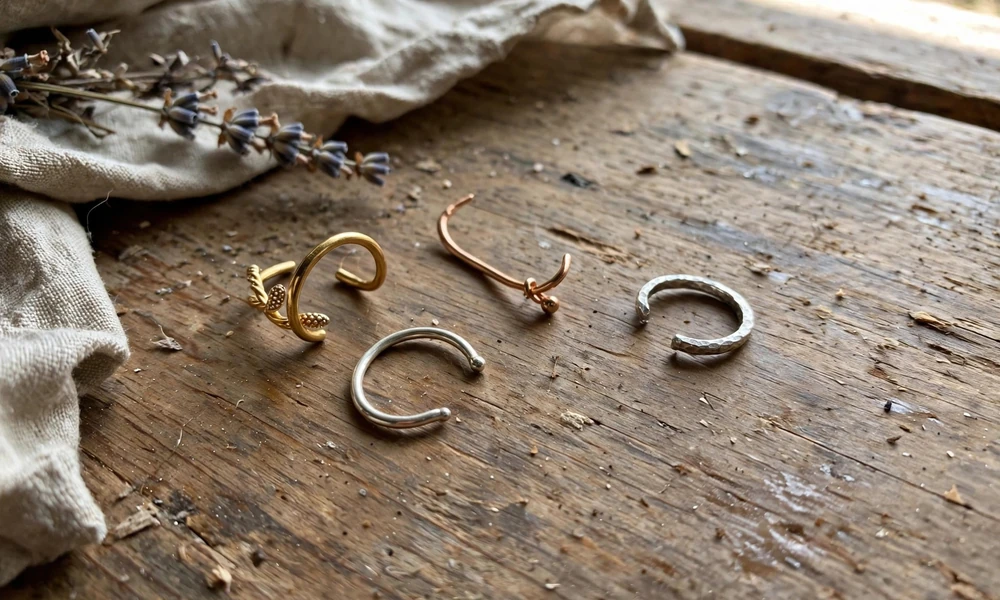
Look next at weight and finish. A light cuff is easier to wear for hours than a heavy one, and a smooth, polished finish is less likely to catch on clothing or irritate skin. Our roundup of the best nose cuffs for women covers the wider range, but for everyday wear the simplest designs usually win: a slim band, a small stone, or a single polished bead.
Finally, look at how the cuff is made. A cuff with a clean, rounded edge is comfortable. A cuff with a rough or sharp edge is not, however pretty it looks. Check the clasp or opening too. If it is a clip-on style, the clip should close smoothly and stay closed. If it is a simple open band, the ends should be rounded, not pointed. These small details are what separate a cuff you wear daily from one that sits in a drawer.
The 9 best nose cuffs for everyday wear of 2027
The Classic Polished Steel Cuff
What we like: A slim, polished steel band with a clean shine, a gentle grip, and a price that makes it easy to try. What to consider: Steel can feel cool at first and the plain finish is not for everyone. Best for: First-time cuff wearers. Material: Stainless steel. Price range: Under $15. Standout feature: A smooth, rounded edge that sits comfortably for hours.
This is the cuff to start with if you have never worn one: simple, light, and easy to live with. Wear it for a few hours first to check the fit before a full day out.
The Slim Gold-Tone Seamless Cuff
What we like: A thin gold-tone band that looks like a fine ring on the nose, warm in colour, and light enough to forget. What to consider: The plating will wear with daily use, so it needs gentle handling. Best for: Everyday outfits and work. Material: Gold-tone plated steel. Price range: $15 to $25. Standout feature: A seamless look with no visible join.
Gold-tone cuffs are the most versatile choice for daily wear because they sit well with both warm and neutral outfits. This one is slim enough to look delicate, and the seamless design means there is no obvious gap or join to catch the eye.
The Tiny Crystal Cuff
What we like: A small crystal set on a slim band, catching the light without looking flashy. What to consider: The stone needs occasional cleaning to keep its sparkle. Best for: Adding a little sparkle to a plain outfit. Material: Crystal on steel. Price range: $20 to $30. Standout feature: A single small stone that reads as jewellery, not costume.
The Titanium Everyday Cuff
What we like: Implant-grade titanium, very light, very smooth, and the most skin-friendly option in this list. What to consider: A higher price than steel, and fewer colour choices. Best for: Sensitive skin and all-day wear. Material: Implant-grade titanium. Price range: $25 to $40. Standout feature: Feather-light with a hypoallergenic finish.
If your skin reacts to jewellery, titanium is the material to choose. It is light, it does not tarnish, and it rarely causes irritation. This cuff is plain and practical, which is exactly what everyday wear calls for.
The Sterling Silver Hinged Cuff
What we like: Solid sterling silver with a small hinge that opens and closes smoothly, giving a secure fit. What to consider: Silver tarnishes over time and needs occasional polishing. Best for: People who want a real-metal cuff. Material: Sterling silver. Price range: $30 to $50. Standout feature: A hinged design that clips on and off in seconds.
The hinge is what makes this cuff practical. It opens wide enough to slip on easily, then closes with a small, satisfying click. Sterling silver suits cool skin tones particularly well, and it ages gracefully if you polish it now and then.
The Rose Gold-Tone Cuff with a Pearl
What we like: A warm rose gold-tone band with a tiny pearl, soft and romantic without being fussy. What to consider: The pearl is delicate, so it should not be knocked or soaked. Best for: Softer, feminine everyday looks. Material: Rose gold-tone plated steel, faux pearl. Price range: $20 to $35. Standout feature: A small pearl that adds warmth to the face.
Rose gold has a warmth that suits many skin tones, and the tiny pearl keeps the design gentle rather than showy. This is a good choice if you like jewellery that feels soft and pretty rather than sharp and modern.
The Black Steel Minimal Cuff
What we like: A matte black steel band, modern and understated, with a slim profile. What to consider: The black coating can wear at the edges with daily use. Best for: Minimal and edgy everyday styles. Material: Black-coated stainless steel. Price range: $15 to $25. Standout feature: A matte finish that looks quiet and deliberate.
The Opal-Topped Cuff
What we like: A small opal with a soft, shifting colour, set on a slim silver-tone band. What to consider: Opal is a soft stone, so handle it gently and keep it dry. Best for: Adding colour without a big statement. Material: Opal on silver-tone steel. Price range: $25 to $40. Standout feature: A stone that changes colour as the light moves.
Opal is a good choice if you want colour but not sparkle. The stone has a soft, milky glow that shifts between blue, green and pink, and it looks different in every light. It is a quiet way to add personality to an everyday look.
The Tiny Two-Tone Cuff
What we like: A slim band in two tones, gold and silver together, so it matches any other jewellery you wear. What to consider: Two-tone designs can look busy if the band is too wide, so keep it slim. Best for: People who mix metals. Material: Two-tone plated steel. Price range: $20 to $30. Standout feature: Two metals in one slim band, so it goes with everything.
If you wear a gold ring and a silver watch, a two-tone cuff solves the matching problem in one piece. The slim band keeps the two metals from competing, and the result is a cuff that works with whatever else you are wearing that day.
Which nose cuff is right for you
Start with your skin. If your skin is sensitive or reacts easily to jewellery, choose titanium or sterling silver, and avoid cuffs made from unknown alloys. If your skin is not sensitive, steel and plated designs are fine for everyday wear, and they give you more choice at a lower price. Our guide to buying a nose cuff explains the materials in more detail, including what to check before you buy.
Next, think about your routine. If you work in an office or meet people all day, a slim, simple cuff in gold, silver or steel is the safest choice. If your days are more casual, a crystal, opal or two-tone cuff adds a little more character. And if you are active, choose a light cuff with a secure grip, because a heavy or loose cuff will need adjusting every time you move quickly.
Finally, think about fit. A cuff that is slightly adjustable is the most forgiving, because you can tune it to your nose. Try it for an hour at home before you wear it out for a full day. If it pinches, loosen it a fraction. If it slips, tighten it a fraction. A cuff that feels comfortable after an hour at home will feel comfortable all day.
The caveats that matter
Nose cuffs are low-risk, but they are not foolproof. A cuff that is too tight can leave a mark or cause soreness, especially if you wear it for many hours. A cuff with rough edges can irritate the skin where it grips. And a cuff made from a cheap alloy can cause a reaction in sensitive skin, even if it looks fine. None of this means you should avoid cuffs. It means you should choose carefully, check the fit, and take the cuff off if your skin feels sore.
| Detail | What is known |
|---|---|
| What a nose cuff is | A clip-on band that sits on the outside of the nostril; no piercing is needed |
| Best materials for daily wear | Titanium, sterling silver, and smooth stainless steel |
| How long to wear it at first | A few hours at home, to check the fit before a full day out |
| Signs the fit is wrong | Pinching, slipping, redness, or a mark that stays after you take it off |
| What to avoid | Rough edges, flaking plating, and unknown alloys on sensitive skin |
| Cleaning | Wipe with a soft cloth after wear; keep it dry and store it separately |
| When to take it off | Before sleeping, swimming, or heavy exercise, and if skin feels sore |
| What it does not do | It does not pierce the nose, and it cannot be worn like a stud or ring |
If your skin becomes red, sore or swollen where a cuff sits, take the cuff off and leave it off until the skin calms. If the soreness does not settle, or if you are unsure, speak to a professional piercer or a clinician. That is a sensible precaution, not a reason to worry, but it is worth taking seriously.
Checklist: choosing a nose cuff honestly
Use these checks before you buy, and again after your first few hours of wear.
- Check the edges: they should be smooth and rounded, with no sharp or rough spots.
- Check the grip: it should sit snugly without pinching, and stay put when you talk and laugh.
- Check the material: titanium or sterling silver for sensitive skin, smooth steel for everyone else.
- Check the weight: a light cuff is easier to wear all day than a heavy one.
- Try it at home first: wear it for an hour or two before you commit to a full day out.
- Store it well: keep it dry, wipe it after wear, and store it separately so it does not scratch.
Frequently asked questions
Do I need a piercing to wear a nose cuff?
No. A nose cuff clips onto the outside of the nostril, so no piercing is needed at all. That is the main reason people choose cuffs: you get the look without the commitment, and you can take it off whenever you like.
Will a nose cuff fall off during the day?
A well-fitted cuff should stay put through talking, laughing and normal movement. If yours slips, tighten it a fraction at a time until it sits snugly. If it still slips, the design may not suit your nose shape, and a different style will fit better.
Can I wear a nose cuff every day?
Yes, if it fits well and your skin is comfortable. Take it off at night, and give your skin a break if it ever feels sore. A cuff that pinches or leaves a mark is not a good everyday choice, however pretty it is.
Which metal is best for sensitive skin?
Titanium and sterling silver are the safest everyday choices for sensitive skin. They are smooth, stable, and rarely cause reactions. If you are unsure about a plated cuff, wear it for an hour first and check your skin afterwards. The difference between gold and silver nose cuffs is mostly about colour and skin tone, not safety, as long as the base metal is skin-friendly.
How do I clean a nose cuff?
Wipe it with a soft, dry cloth after each wear, and wash it occasionally with warm water and a drop of mild soap, then dry it fully. Keep it in a small pouch or a separate compartment so it does not scratch against other jewellery.
Can I wear a nose cuff to work?
Yes, if your workplace allows jewellery. A slim, simple cuff in gold, silver or steel looks neat and professional. Save larger or more decorative cuffs for outside work, and keep the everyday one understated.
The bottom line
The best nose cuff for everyday wear in 2027 is the one you forget you are wearing. For most people that means a slim, light cuff in titanium, sterling silver or smooth steel, with a gentle grip and a simple design. Start with a plain cuff, check the fit at home, and build from there once you know what suits your nose and your routine.
Choose for comfort first and looks second, because a cuff that pinches will spend its life in a drawer no matter how pretty it is. Pick one that sits well, feels light, and matches the way you actually dress, and it will become the piece you reach for without thinking.