

A nose cuff is the easiest way to wear nose jewellery without a piercing. It clips on, it comes off in seconds, and it lets you try a look before you commit to anything permanent. The catch is that a cuff sits against your skin all day, so the material matters more than the design. For anyone with sensitive or reactive skin, a hypoallergenic nose cuff is not a luxury. It is the difference between a piece you wear happily and one that leaves your nose red and sore by evening.
Hypoallergenic, in plain terms, means made from a metal that rarely causes a reaction: implant-grade titanium, niobium, solid 14k gold, or high-quality surgical steel. These metals are used in body jewellery precisely because most skin tolerates them. The cuffs in this guide are all made from one of those materials, with no mystery alloys and no nickel-heavy base metals hiding under a coating.
Below are nine hypoallergenic nose cuffs worth considering in 2027, from a plain titanium cuff to a pearl-topped one, each described by what it does well, what to watch for, and who it suits best. Every one of them is clip-on, with no piercing needed, so you can try them, swap them, and take them off whenever you like.
Key takeaways
- Hypoallergenic nose cuffs are made from implant-grade titanium, niobium, solid 14k gold, or surgical steel, and they rarely irritate skin.
- Cuffs are clip-on, so no piercing is needed, and they can be removed in seconds if your skin feels uncomfortable.
- A cuff should grip firmly enough to stay put but not so tightly that it pinches or leaves a mark.
- Coated cuffs can lose their finish over time, so solid metal is a better long-term choice for sensitive skin.
- No cuff is guaranteed to suit everyone, and sore or swollen skin is a sign to stop wearing it and speak to a professional.
What hypoallergenic nose cuffs actually are
A nose cuff is a small piece of jewellery that clips onto the side of the nose, usually the nostril, without going through the skin. Most cuffs are a slim, curved band that grips gently, and some have a decorative head, a stone, or a small charm on the outside. Because there is no piercing, there is no healing time, no commitment, and no reason you cannot try several styles in a single afternoon.
Hypoallergenic refers to the metal, not the design. Nickel is the most common cause of jewellery reactions, and it turns up in cheap base metals and in some plated finishes. Implant-grade titanium and niobium contain no nickel and are the safest choices for reactive skin. Solid 14k gold is also well tolerated. Surgical steel is generally safe, but only when it is a named grade, because low-quality steel can still contain enough nickel to bother sensitive skin.
The other thing to know is that a cuff works by pressure. It has to grip to stay on, and that grip is what makes fit so important. A cuff that is too tight will pinch, leave a mark, and irritate the skin underneath. A cuff that is too loose will slide off and get lost. The best hypoallergenic cuffs are adjustable, with a band you can gently open or close until the fit feels secure but comfortable.
How we chose these nose cuffs and what to look for
Look first at the material, because it decides whether a cuff is kind to your skin. Implant-grade titanium, often labelled ASTM F136, is the safest starting point. Niobium is equally gentle and slightly softer, which makes it easy to adjust. Solid 14k gold is a good choice if you want warmth and a precious metal. Surgical steel is fine when the grade is stated, but avoid any cuff that lists no material, or that only says “alloy” or “fashion metal”.
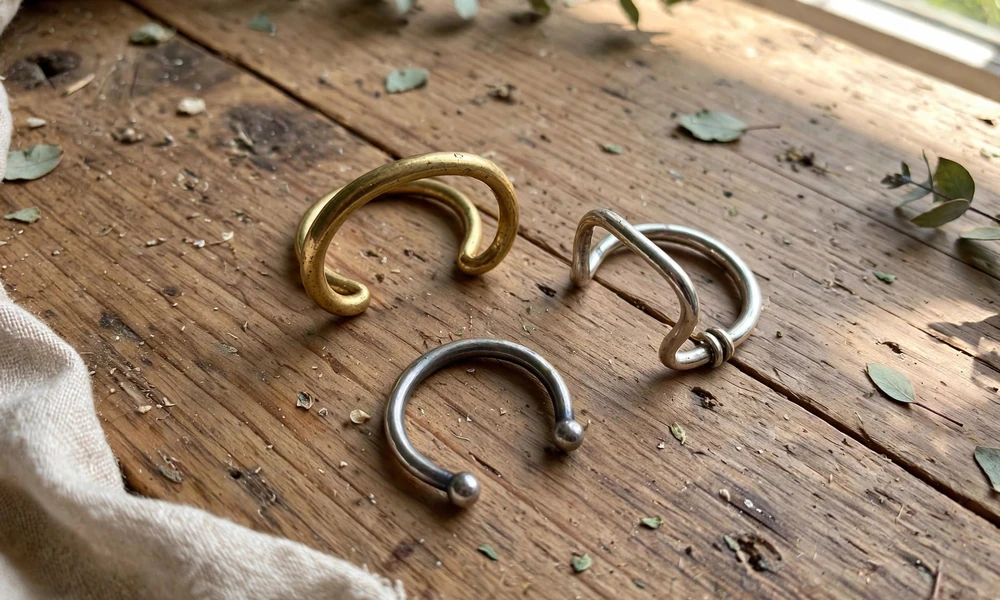
Look next at the fit and the grip. A good cuff should stay in place when you talk, laugh, and turn your head, and it should come off easily when you want it to. If you are new to cuffs, our guide to the best nose cuffs for women explains how to try one on and adjust the band, because a minute spent getting the fit right is what turns a cuff from an annoyance into a favourite. Adjustable bands are worth seeking out, especially if you are buying online.
Finally, look at the finish and the setting. The metal should be smooth, with no rough edges, and any stone should sit straight and feel secure. Coated finishes look lovely when new, but the coating wears, and the metal underneath is what touches your skin, so solid metal is the better long-term choice for sensitive skin. A plain, well-made cuff in titanium will outlast a coated cuff that looks fancier in the photograph.
The 9 best hypoallergenic nose cuffs of 2027
The Classic Implant-Grade Titanium Cuff
What we like: Light, smooth, and made from implant-grade titanium, so it suits the most sensitive skin. What to consider: Plain by design, with no stone and a simple polished band. Best for: Sensitive skin and first-time cuff wearers. Material: Implant-grade titanium. Price range: $15 to $28. Standout feature: The safest cuff in this guide for reactive skin.
This is the cuff to buy first if your skin reacts to jewellery. It is understated, it does not irritate, and it stays put without pinching. If you only buy one hypoallergenic cuff, make it this one.
The Slim Gold-Tone Seamless Cuff
What we like: A slim, seamless band in a warm gold tone, elegant and barely there. What to consider: The gold tone is a finish over titanium, so it needs gentle handling to keep its colour. Best for: Warm skin tones and minimal everyday looks. Material: Titanium with a gold-tone finish. Price range: $18 to $32. Standout feature: The most discreet gold cuff in this guide.
Seamless cuffs look like a thin line of gold across the nostril, which is exactly the effect most people want. Wear it, enjoy it, and handle it gently when you take it off.
The Tiny Crystal Cuff
What we like: A small crystal on a slim titanium band, bright without being flashy. What to consider: The crystal is small, usually 2 millimetres, and needs gentle cleaning to stay bright. Best for: Everyday sparkle and special occasions alike. Material: Titanium with a cubic zirconia crystal. Price range: $20 to $35. Standout feature: The brightest sparkle in this guide.
A tiny crystal is the right scale for a nose cuff. It catches the light when you move, without looking like costume jewellery, and the titanium band keeps it comfortable all day.
The Sterling Silver Hinged Cuff
What we like: A polished sterling silver cuff with a hinged band that adjusts easily and sits securely. What to consider: Silver tarnishes and is best for short, occasional wear if your skin is very reactive. Best for: Cool skin tones and adjustable fit. Material: Sterling silver. Price range: $22 to $38. Standout feature: The easiest cuff in this guide to adjust.
The hinge is what makes this cuff work. It opens smoothly, closes securely, and lets you fine-tune the fit without bending the metal back and forth.
The Rose Gold-Tone Cuff with a Pearl
What we like: A soft rose gold tone with a small pearl, romantic and understated. What to consider: The pearl is delicate and should be kept dry, and the rose gold tone is a finish that will wear over time. Best for: Warm and neutral skin tones. Material: Titanium with a rose gold-tone finish and a freshwater pearl. Price range: $25 to $42. Standout feature: The prettiest cuff in this guide.
Pearls and nose cuffs are a lovely combination, as long as you treat the pearl gently. Wipe it after wearing, store it separately, and it will keep its lustre.
The Black Steel Minimal Cuff
What we like: A matte black finish on a slim surgical steel band, modern and understated. What to consider: The black coating can wear at the edges with daily use, and it is not the best choice for very sensitive skin. Best for: Minimal and edgy everyday looks. Material: Surgical steel with a black coating. Price range: $14 to $24. Standout feature: The boldest look in this guide for the lowest price.
Black cuffs divide opinion, but worn well they are striking. Keep one in your collection for days when you want your nose jewellery to say something.
The Opal-Topped Cuff
What we like: A small opal on a slim titanium band, with a soft, shifting colour that changes in the light. What to consider: Opal is a soft stone, so it needs gentle handling and should be kept away from harsh cleaners. Best for: Cool and neutral skin tones. Material: Titanium with an opal. Price range: $28 to $45. Standout feature: The most unusual stone in this guide.
Opal cuffs look different every time you catch them in the light, which is their charm. Handle the stone kindly and it will reward you for years.
The Tiny Two-Tone Cuff
What we like: A small two-tone band, gold and silver together, that works with any other jewellery you are wearing. What to consider: The two-tone effect is subtle, so it reads as one warm metal at a distance. Best for: Mixed-metal jewellery lovers. Material: Titanium with gold and silver tones. Price range: $20 to $34. Standout feature: The most versatile cuff in this guide.
If your earrings are gold and your rings are silver, this cuff bridges the gap. It is a small detail, but it makes an outfit feel considered rather than accidental.
The Niobium Cuff
What we like: Made from niobium, one of the gentlest metals for reactive skin, with a soft, smooth band that adjusts easily. What to consider: Niobium is less widely available, so there are fewer designs to choose from, and it is usually plain. Best for: Very sensitive skin and people who react to almost everything. Material: Niobium. Price range: $18 to $30. Standout feature: The gentlest metal in this guide for reactive skin.
Niobium is the quiet hero of hypoallergenic jewellery. It is rarely the prettiest option in the photograph, but for skin that reacts to everything else, it is often the only one that works.
Which nose cuff is right for you
Start with your skin. If you react to most jewellery, choose implant-grade titanium or niobium, and keep the design plain. The classic titanium cuff and the niobium cuff are both safe first buys. If your skin tolerates most metals, gold and sterling silver open up, and the hinged silver cuff is the best choice for an adjustable fit.
Then think about how you will wear it. If you want a cuff for every day, a slim, seamless band in titanium is the most comfortable and the least likely to catch on clothing. If you want a cuff for evenings and special occasions, a crystal or opal-topped cuff adds sparkle without needing a piercing. Our guide to buying a nose cuff explains how to measure your nostril and choose a band width, because a cuff that fits well is a cuff you will actually wear.
Finally, match the cuff to your other jewellery. A gold cuff suits gold earrings, a silver cuff suits silver rings, and a two-tone cuff suits both. And remember the practical advantage of a cuff: you can take it off at any moment. If your skin feels sore, if the fit is wrong, or if you simply change your mind, remove it, let your skin rest, and try again another day.
The caveats that matter
Hypoallergenic does not mean guaranteed. No metal suits absolutely everyone, and a cuff that is perfect for one person can still irritate another. The word means the metal rarely causes a reaction, not that it never does. If your skin becomes red, sore, or swollen where a cuff sits, stop wearing it, let the skin settle, and speak to a professional, such as a dermatologist or a piercer, before trying another metal.
| Detail | What is known |
|---|---|
| Safest metals | Implant-grade titanium and niobium, both nickel-free and rarely reactive |
| Other good choices | Solid 14k gold and named-grade surgical steel, for most skin |
| What to avoid | Unnamed metals, vague “alloy” listings, and nickel-heavy base metals |
| Fit | Secure but not tight, adjustable bands are best, no pinching or marks |
| Piercing needed | None, cuffs clip on and can be removed in seconds |
| Coated finishes | Look lovely when new but wear over time, solid metal lasts longer |
| Care | Clean gently with warm water and mild soap, dry fully, store separately |
| When to stop wearing | If skin becomes red, sore, or swollen, remove the cuff and seek advice |
Fit is the other caveat that matters. A cuff that pinches will irritate your skin even if the metal is perfect, because constant pressure is itself an irritant. Adjust the band gently, a little at a time, until it grips without pressing. And never force a cuff onto a sore or swollen nose. Wait until the skin is calm, then try again, or choose a lighter, looser style.
Checklist: buying a hypoallergenic nose cuff honestly
Use these checks before you buy, and again when the cuff arrives.
- Check the material: implant-grade titanium, niobium, solid 14k gold, or a named grade of surgical steel.
- Check the fit: it should grip firmly enough to stay put, without pinching or leaving a mark.
- Check the band: adjustable is best, especially if you are buying online and cannot try it on first.
- Check the finish: smooth edges, no rough spots, no visible glue, and a stone that sits straight.
- Check the metal underneath: solid metal is better than a coating for sensitive skin in the long term.
- Check your skin: if it becomes red, sore, or swollen, remove the cuff and speak to a professional.
Frequently asked questions
What metal is best for a hypoallergenic nose cuff?
Implant-grade titanium and niobium are the safest choices, because both are nickel-free and rarely cause reactions. Solid 14k gold is also well tolerated. Avoid cuffs that list no material or only say “alloy”.
Do nose cuffs need a piercing?
No. Nose cuffs clip onto the nostril without going through the skin, so no piercing is needed, and they can be removed in seconds. That is what makes them a good way to try a look before committing to anything permanent.
How tight should a nose cuff be?
Secure but not tight. It should stay in place when you talk and turn your head, without pinching or leaving a mark. Adjustable bands are the easiest way to get the fit right, a little at a time.
Can I wear a nose cuff every day?
Yes, if the material suits your skin and the fit is comfortable. Give your skin a rest if it feels sore, and remove the cuff at night if you find it uncomfortable to sleep in.
Is gold or silver better for a hypoallergenic nose cuff?
Both can be good choices, but the metal matters more than the colour. Solid 14k gold is well tolerated, and sterling silver suits most skin for short wear. Our guide to gold vs silver nose cuffs compares the two in detail, including which suits sensitive skin best.
What should I do if a nose cuff irritates my skin?
Take it off, let the skin settle, and do not keep wearing it in the hope that your skin will get used to it. If redness or swelling does not settle, or if the skin is sore, speak to a professional, such as a dermatologist or a piercer, before trying another cuff.
The bottom line
The best hypoallergenic nose cuff is not the fanciest one. It is the cuff in the right metal, with a fit that grips without pinching, that you forget you are wearing. For most people with sensitive skin, that means an implant-grade titanium or niobium cuff, plain or with a tiny stone, bought for $15 to $35 and worn whenever you like.
Choose the metal first and the design second, adjust the fit gently until it feels secure but comfortable, and remember that a cuff comes off in seconds. That freedom, to try a look, change your mind, and let your skin rest, is the real advantage of a nose cuff, and it is why a good hypoallergenic one is worth finding.