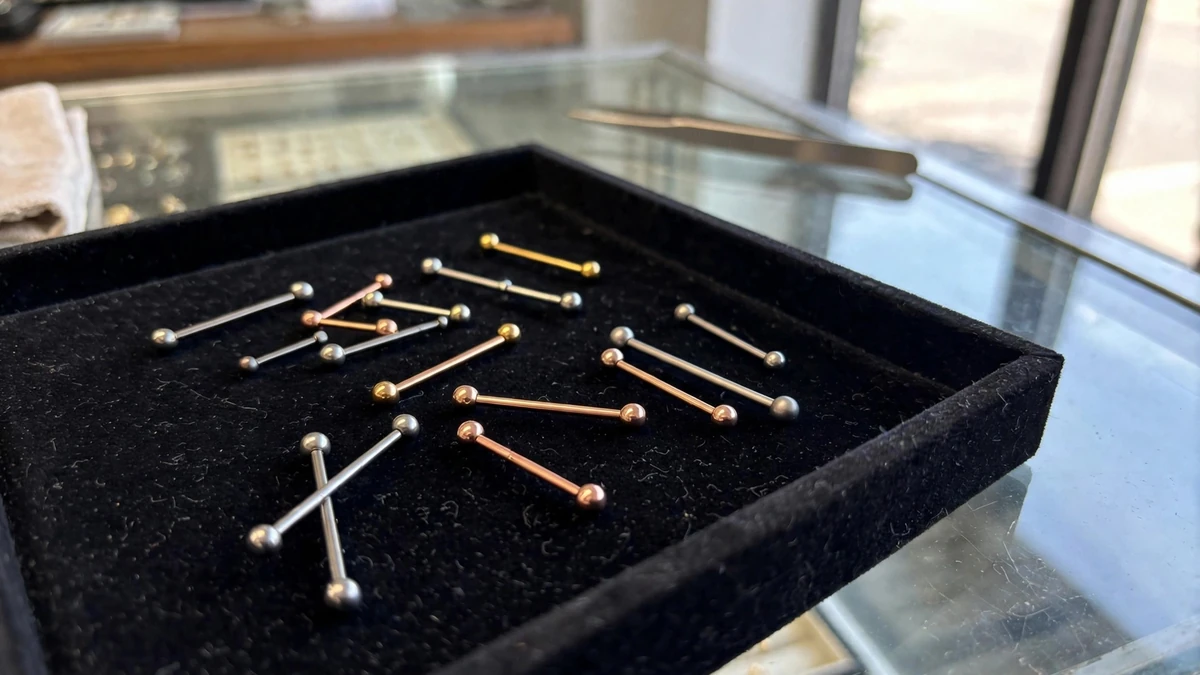

A Guide to Buying a Nose Bar 2027
Buying a nose bar sounds simple. It is a small piece of jewellery, it costs less than most rings, and it comes in a handful of styles. In practice, a nose bar is one of the easiest pieces of jewellery to get wrong, because it has to match a piercing exactly: the right length, the right thickness, the right metal, and the right ends. Get one of those wrong and the bar will snag, irritate, or fall out.
That is why this guide is organised as nine steps, in the order you should actually follow them. It starts with your piercing, not with a shop window, because a healed piercing and a measured fit decide almost everything else. It then works through metal, size, style, and price, so that by the last step you are choosing between good options, not guessing between bad ones.
Whether this is your first nose bar or your fifth, the steps below will help you buy one that fits, feels comfortable, and lasts.
Key takeaways
- A nose bar must match your piercing exactly, so check healing, length, and thickness before you think about style.
- Implant-grade titanium and solid gold are the safest metals, while cheap mixed alloys are the most likely to irritate skin.
- A standard nostril bar is usually 6 to 8 millimetres long and 1 to 1.2 millimetres thick, but every piercing is different.
- Check the ends, the finish, and the return policy before you pay, and try the bar on at home first.
- No guide replaces a professional piercer, and a piercing that is sore, swollen, or discharging needs advice, not a new bar.
What buying a nose bar actually involves
Buying a nose bar involves more than picking a colour you like. A nose bar is a piece of body jewellery, which means it sits inside living tissue, and the piercing it goes into has its own shape, angle, and healing history. A bar that looks perfect in a photo can be the wrong length for your nostril, the wrong thickness for your piercing, or the wrong metal for your skin.
The good news is that the checks are simple and quick. A piercer can confirm that a piercing is healed and measure its length and thickness in under a minute. Once you know those two numbers, most of the risk disappears.
This guide treats buying as a process, not a single decision. Follow the steps in order, and you will end up with a bar that fits, feels comfortable, and suits the way you actually live, rather than a bar that looked good online and spends its life in a drawer.
How we chose these steps and what to look for
These steps are ordered by what matters most. Healing comes first, because no bar belongs in a fresh piercing. Metal comes second, because it decides whether your skin will stay calm. Size comes third, because a bar that does not fit cannot be comfortable, however pretty it is. Style and price come last, because they are choices you can enjoy once the practical questions are settled.

Look for sellers who give real measurements, not just a photo. A good listing will state the length, the thickness, the metal, and the type of ends. If a listing gives none of those, treat it as a warning sign. A seller who knows their product will be happy to tell you exactly what it is made of, and a seller who will not answer probably does not know.
Finally, look for a return policy that covers fit. Even with careful measuring, a bar can feel wrong once it is in, and a seller who accepts returns is a seller who stands behind their jewellery. Our guide to nose studs for women makes the same point, because studs and bars share the same fitting rules, and a good return policy protects you with both.
The 9 steps to buying a nose bar in 2027
Check your piercing is fully healed
What we like: A healed piercing accepts new jewellery easily and stays calm afterwards. What to consider: Healing usually takes several months, and changing jewellery too early can set it back. Best for: Anyone buying their first nose bar. Cost: Free if you check yourself, or a short visit to a piercer. Time needed: A few minutes to check, months to heal.
Before you buy anything, confirm that your piercing is fully healed. It should feel comfortable, look calm, and have no soreness, swelling, or discharge. If you are unsure, ask a professional piercer. They can check it in seconds, and it is far better to wait a month than to irritate a piercing that was almost ready.
Choose the right metal for your skin
What we like: Titanium and solid gold are kind to most skin and rarely cause a reaction. What to consider: Cheap mixed alloys often contain nickel and can irritate even skin that is usually calm. Best for: Anyone with sensitive skin or a history of reactions. Cost: Titanium from around £8, solid gold from around £40. Time needed: A few minutes to decide.
Implant-grade titanium is the safest choice for most people, and it is also one of the cheapest. Solid gold is a good next step if you want warmth and a more polished finish. Surgical steel suits many people, but check the grade.
Measure the length you need
What we like: A measured bar sits close to the nostril, stays put, and rarely snags. What to consider: Guessing the length is the most common buying mistake, and a bar that is too long will move constantly. Best for: Every buyer, without exception. Cost: Free with a piercer, or a few pounds for a measuring card. Time needed: Under a minute with a piercer.
Most nostril bars are 6 to 8 millimetres long, but every piercing is different. A piercer can measure yours in seconds, and that one number will save you from buying the wrong size. If you are choosing between two lengths and cannot get measured, pick the shorter one, as long as it does not press into the skin.
Pick a thickness that suits your piercing
What we like: The right thickness feels secure without feeling tight, and it will not bend during normal wear. What to consider: A bar that is too thin can bend, and a bar that is too thick will feel uncomfortable. Best for: Everyday wear, where comfort matters most. Cost: No extra cost, it is a choice, not an upgrade. Time needed: A few minutes.
Most nostril piercings take a bar 1 to 1.2 millimetres thick. If your piercing was made with a thicker bar, stay with that thickness. If you are unsure, a piercer can tell you in a moment. Do not try to force a thicker bar into a piercing that was made for a thinner one.
Decide between a straight and a curved bar
What we like: A straight bar is simple and neat, while a curved bar follows the shape of the nostril and can feel more secure. What to consider: The curve must match your piercing angle, so a curved bar needs a proper fit. Best for: Anyone whose straight bar keeps shifting or rotating. Cost: About the same as a straight bar. Time needed: A few minutes to try both.
Try a straight bar first if you are unsure. If it moves around or feels awkward, a curved bar is often the answer, and a piercer can fit one for you.
Pick a closure you can manage
What we like: Ball ends are simple and secure, disc ends sit flat, and crystal ends add sparkle. What to consider: A closure you cannot manage one-handed will be a daily frustration. Best for: Anyone who changes jewellery at home. Cost: No extra cost for ball or disc ends; crystal ends cost a little more. Time needed: A few minutes to test.
Think about how you will put the bar in and take it out. Ball ends screw on firmly and are easy to handle. Disc ends sit neatly and rarely snag, which makes them a good choice for everyday wear. Crystal ends look lovely, but check the setting regularly. A guide to anklets for women makes a similar point about clasps: the best closure is the one you can manage without a struggle, and the same is true of a nose bar.
Match the bar to your other jewellery
What we like: A bar that matches your rings, earrings, and necklaces makes your whole look feel deliberate. What to consider: Mixing metals can work, but it is easier to start with one metal and build from there. Best for: Anyone who wears jewellery every day. Cost: No extra cost if you choose the metal you already wear. Time needed: A few minutes.
Look at the jewellery you already wear most. If your rings and earrings are gold, a gold bar will fit in naturally. If they are silver, a silver or titanium bar is the easy choice.
Check the finish before you wear it
What we like: A smooth, well-finished bar feels comfortable and is easy to clean. What to consider: Rough edges, sharp threads, or a patchy coating can irritate skin and trap dirt. Best for: Every buyer, before the bar goes in. Cost: Free, it is a visual check. Time needed: A minute.
Before you put a new bar in, look at it closely. The surface should be smooth, the ends should screw on cleanly, and there should be no rough spots, sharp edges, or flaking coating. If anything looks wrong, do not wear it. Send it back and choose another, because a rough finish will only cause problems once it is in your piercing.
Set a budget and compare like with like
What we like: A clear budget stops you overpaying for a simple bar or underpaying for a metal that will irritate your skin. What to consider: Price is a poor guide on its own, and the cheapest bar is often the most expensive mistake. Best for: Anyone buying online, where prices vary widely. Cost: Titanium from around £8, solid gold from around £40. Time needed: Ten minutes to compare.
Decide what you are willing to spend, then compare bars of the same metal, length, and thickness. A titanium bar at £10 and a titanium bar at £30 are often the same piece with a different label. A solid gold bar at £40 and a plated bar at £15 are not the same thing at all.
Which nose bar is right for you
Start with your piercing and your skin, not with a style. A healed piercing, a measured length, and a safe metal will narrow your choices to a small set of good bars, and from there the decision is about taste. If you want a neat everyday piece, choose a plain titanium or gold bar with a ball or disc end. If you want sparkle, choose a crystal or pearl end for special days and keep a plain bar for the week.
Then think about your day. A bar with a flat disc end is the best choice for sport and for changing clothes often, because it is the least likely to snag. A curved bar is the best choice if a straight bar keeps moving. A gold bar is the best choice if you want a warmer finish that matches the rest of your jewellery. There is no single right answer, only the right answer for your piercing and your life.
Finally, remember that a nose bar is not a permanent decision. You can change it when your style changes, when your piercing settles further, or when you simply fancy something different. The only rule that does not change is to buy a bar that fits, in a metal your skin likes, from a seller you trust.
The caveats that matter
| Detail | What is known |
|---|---|
| First step | Confirm the piercing is fully healed, usually after several months |
| Safest metal | Implant-grade titanium, followed by solid gold |
| Typical length | 6 to 8 millimetres, measured to suit your piercing |
| Typical thickness | 1 to 1.2 millimetres for most nostril piercings |
| What to check before paying | Length, thickness, metal, ends, finish, and return policy |
| How to clean it | Saline solution and clean hands, never alcohol or harsh soap |
| Who should check first | Anyone with a fresh piercing, sensitive skin, or a history of reactions |
| What it does not do | A new bar does not heal a piercing or fix a piercing that was placed badly |
If you are under 18, a parent or guardian usually needs to be involved, and piercing rules vary by place. A professional piercer will know the local rules, check your piercing, and fit the bar properly, which is worth far more than any online guide.
Checklist: buying a nose bar honestly
Use these checks before you buy, and again after a week of wear.
- Check your piercing is fully healed before you change jewellery, and ask a piercer if you are unsure.
- Check the metal: implant-grade titanium or solid gold for sensitive skin, and avoid cheap mixed alloys.
- Check the length and thickness: measure your piercing or ask a piercer to measure it for you.
- Check the ends and the finish: they should be smooth, firm, and free of rough edges or flaking.
- Check the return policy before you pay, in case the fit is wrong.
- Try it on at home first, clean it with saline, and check the ends each week for looseness.
Frequently asked questions
How much should a nose bar cost?
A titanium bar usually costs around £8 to £25, and a solid gold bar usually costs around £40 to £120. Price depends on the metal, the size, and whether the ends are plain or set with stones. A very cheap bar is often made from a mixed alloy, which is the most likely to irritate skin.
Where is the best place to buy a nose bar?
A professional piercing studio is the safest choice, because the piercer can check your piercing, measure it, and fit the bar for you. Reputable online sellers are a good second choice, as long as they give real measurements and accept returns.
Can I buy a nose bar online?
Yes, as long as you know your length, thickness, and metal, and the seller gives real measurements and a clear return policy. If you do not know your measurements, visit a piercer first. Guessing the size online is the most common buying mistake.
How do I know if a nose bar will fit?
It should sit close to the nostril without pressing into the skin, and it should not slide around freely. If it moves a lot, snags often, or feels tight, the length or thickness is probably wrong, and a piercer can measure it in seconds.
What is the difference between a nose bar and a nose stud?
A nose bar is a straight or curved bar that sits across the nostril, while a stud is a small post with a decorative end that sits in the piercing. Both are worn in nostril piercings, and the choice is mostly about look and comfort. A bar tends to sit flatter, while a stud can be easier to change.
How often should I clean my nose bar?
Clean it gently with a saline solution and clean hands, especially in the first weeks after changing jewellery. Do not use alcohol or harsh soaps. A luxury watch needs regular gentle cleaning to stay in good condition, and a nose bar is no different: a little care keeps it comfortable and looking its best.
The bottom line
Buying a nose bar is simple once you follow the steps in order. Check that your piercing is healed, choose a safe metal, measure the length and thickness, and only then think about style and price. A bar that fits, in titanium or solid gold, will feel comfortable from the first day and last for years.
Buy from a seller who gives real measurements and accepts returns, check the finish before you wear it, and ask a piercer if you are ever unsure. That is the honest way to buy a nose bar, and it is the cheapest way too, because you only buy it once.