

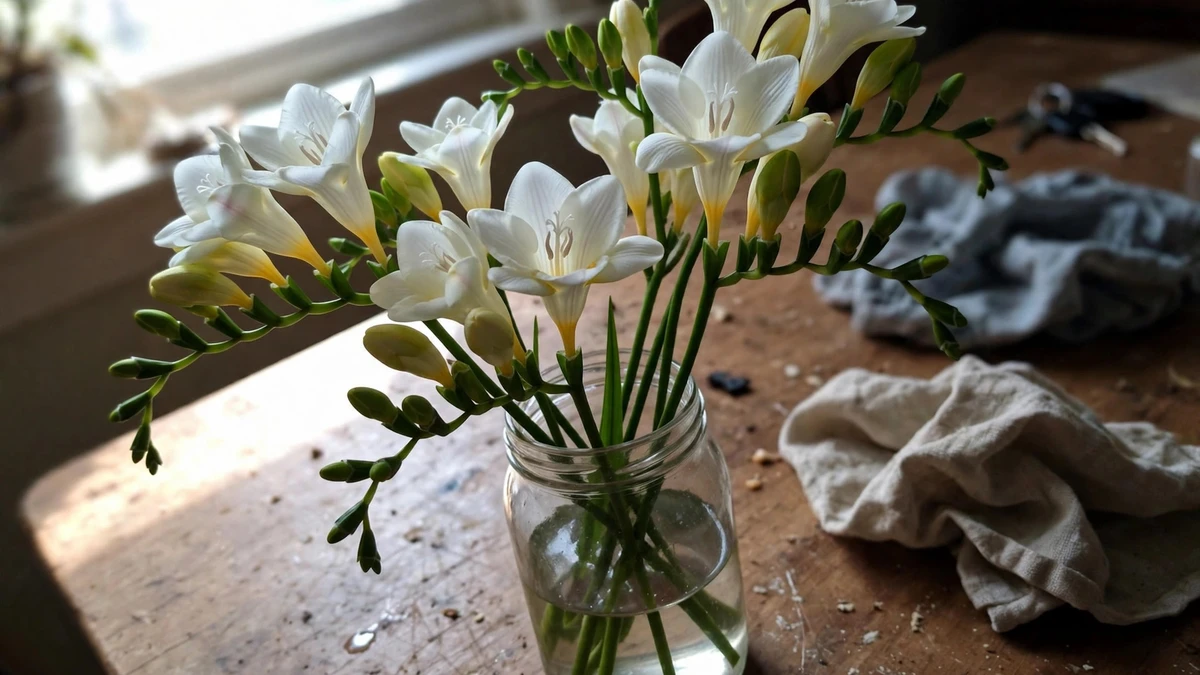

A freesia perfume is a perfume built around the scent of freesia, a small trumpet-shaped flower with a fresh, lightly peppery smell. It is one of the most common floral notes in perfumery, and also one of the least understood, because freesia rarely takes top billing. It usually works in the middle of a perfume, lifting the other flowers and adding a clean, green freshness that keeps a floral from feeling heavy.
The confusion starts with the flower itself. Freesia has no natural extract. You cannot distil freesia flowers into an oil the way you can with rose or lavender, so every freesia perfume is built from a recreated accord, a blend of aroma chemicals that imitates the flower.
This guide explains what a freesia perfume is, how perfumers use the note, what it smells like on skin, and how to choose one that suits you.
Key takeaways
- A freesia perfume is built around a recreated freesia accord, because the flower has no natural extract to distil.
- Freesia smells fresh, green, lightly peppery, and softly sweet, and it usually appears as a heart note.
- It pairs best with pear, peony, lily of the valley, and soft musk, and it works best in spring and summer.
- Most freesia perfumes are light to moderate in strength, lasting four to six hours on skin.
- No freesia perfume is a heavy evening scent by nature, and the same flower can smell different across brands, so test on skin before buying a full bottle.
What a freesia perfume actually is
A freesia perfume is any perfume in which freesia is a named and noticeable note, usually in the heart of the composition. It can be the star, as in a single-note freesia cologne, or it can be one flower among several, as in a classic floral built around peony, rose, and freesia together.
The flower behind the name is a South African bulb plant, and the garden varieties most people know come in white, yellow, pink, and purple. White and yellow freesia are the ones perfumers usually imitate, because they are the freshest and the least sweet.
Because freesia has no natural extract, a freesia perfume is always a piece of perfumery craft rather than a simple distillation. A perfumer builds the freesia accord from ingredients that together suggest the flower, often including linalool for freshness, a touch of green leaf character, and a soft floral sweetness.
How freesia is used in perfumery
Perfumers use freesia in three main ways. The first is as a fresh lift in a floral bouquet, where it brightens heavier flowers like rose or peony and stops the composition from feeling rich or powdery. The second is as a partner to fruit, especially pear, where the green freshness of freesia keeps the fruit from smelling too sweet.

The concentration matters as much as the composition. Most freesia perfumes are eau de toilette, which is the lighter of the two common concentrations, and that suits the note. Eau de parfum versions exist, and they are usually richer and longer lasting, but they can also make freesia feel heavier than it should. Our explainer on what a gardenia perfume is is a useful comparison, because gardenia is a rich flower that suits a stronger concentration.
Perfumers also use freesia to solve a practical problem. White florals can smell heavy, creamy, or even a little stale in warm weather, and a touch of freesia freshens them without changing their character.
9 facts about freesia perfume
Freesia has no natural extract
What it shows: Every freesia perfume is built from a recreated accord, not from distilled freesia oil, which means the scent is a perfumer’s interpretation of the flower rather than a direct copy of it.
What to consider: Because the accord is recreated, freesia can smell slightly different in every perfume, and a freesia you love in one bottle may read differently in another. Best for: Anyone curious about how perfumery works. Material: A blend of aroma chemicals, usually built around linalool and green floral notes. Price range: Around £20 to £120 depending on the brand. Standout feature: A flower that exists in perfume only because perfumers learned to imitate it.
This is the single most useful fact about freesia perfume, because it explains why the note varies so much between brands.
Freesia smells peppery, fresh, and slightly sweet
What it shows: The scent of freesia is green and lightly peppery at first, with a soft clean sweetness underneath, and that combination is what makes it feel fresh rather than rich.
What to consider: The peppery edge can read as sharp on some skin, especially in the first minutes, so give it time before judging it. Best for: People who like fresh florals rather than heavy ones. Material: White and yellow freesia accords, usually paired with green leaf notes. Price range: Around £20 to £120 depending on the brand. Standout feature: The peppery freshness that sets freesia apart from other white florals.
Think of freesia as the opposite of tuberose: rich, creamy, and heady versus light, green, and peppery.
It is a heart note, not a top or base
What it shows: Freesia usually appears in the middle of a perfume’s life, after the bright opening notes fade and before the warm base settles in, which means it is the part of the scent you live with for most of the day.
What to consider: A freesia perfume can smell mostly of fruit or citrus in the first minute, and that is normal. The freesia arrives later. Best for: Anyone who judges a perfume by how it smells at noon, not in the first minute. Material: A heart-note accord, supported by top notes of pear or citrus and a base of musk or woods. Price range: Around £20 to £120 depending on the brand. Standout feature: A middle note that carries the character of the perfume for hours.
This is why testing a freesia perfume on a paper strip tells you very little. Test it on skin, wait ten minutes, and then decide.
Freesia pairs best with pear, peony, and soft musk
What it shows: The classic partners for freesia are pear, which adds a ripe sweetness, peony, which adds a soft floral fullness, and musk, which gives the scent a clean base to rest on.
What to consider: Freesia with heavy vanilla or amber can lose its freshness, so the best pairings are light ones. Best for: People who like a soft, balanced floral rather than a single-note scent. Material: Pear, peony, lily of the valley, and white musk accords. Price range: Around £40 to £120 for the best-known pairings. Standout feature: A note that makes its partners smell fresher without changing them.
The most famous freesia pairing is pear, because the two notes share a fresh, slightly green sweetness.
It is a warm-weather note
What it shows: Freesia perfumes are at their best in spring and summer, when their freshness matches the weather, and they are usually too light to carry a cold winter day on their own.
What to consider: In cold weather, a freesia perfume can fade very fast, so it is better as a spring and summer scent or layered under something warmer. Best for: Spring and summer days, holidays, and warm offices. Material: Light floral accords with citrus or green top notes. Price range: Around £20 to £120 depending on the brand. Standout feature: A floral that feels like fresh air in warm weather.
In cold weather, expect it to be a quiet, close-to-the-skin scent, and you may want to reapply it in the afternoon.
Freesia perfumes are usually light to moderate in strength
What it shows: Most freesia perfumes last four to six hours on skin and stay close to the body, which makes them easy daytime and office scents but poor evening ones.
What to consider: If you want a freesia perfume to last longer, look for one with musk or sandalwood in the base, and spray it on moisturised skin or on clothes. Best for: Work, daytime events, and anyone who prefers a subtle scent. Material: Eau de toilette is the most common concentration for freesia. Price range: Around £20 to £120 depending on the brand. Standout feature: A light, wearable strength that never overwhelms a room.
Lightness is not a flaw in a freesia perfume. It is the point, because the flower itself is a quiet scent.
The same name can smell very different across brands
What it shows: Because freesia is a recreated accord, every brand builds it slightly differently, so two perfumes that both list freesia can smell noticeably different from each other.
What to consider: Do not buy a freesia perfume on the strength of the note list alone. Test the actual bottle, on skin, before you commit to a full size. Best for: Anyone who has been disappointed by a perfume bought on its description. Material: Different freesia accords, built from different blends of aroma chemicals. Price range: Around £20 to £120 depending on the brand. Standout feature: A note that proves how much perfumery is interpretation, not just ingredients.
One brand’s freesia is greener, another’s is sweeter, and a third’s is more peppery, and all three can be honest attempts at the same flower.
Freesia is often confused with lily of the valley and jasmine
What it shows: Freesia, lily of the valley, and jasmine are all white florals, but they smell different. Lily of the valley is greener and more dewy, jasmine is richer and warmer, and freesia sits between them, fresh and lightly peppery.
What to consider: If you like lily of the valley but find it too green, or jasmine but find it too rich, freesia is often the middle ground that suits you. Best for: People choosing between white florals. Material: White floral accords, each built around a different character. Price range: Around £20 to £120 depending on the brand. Standout feature: A white floral that is neither as green as lily of the valley nor as rich as jasmine.
Our explainer on what a lily perfume is is a useful next read, because lily is the white floral most often confused with freesia, and the differences between them are worth knowing before you buy.
Freesia suits sensitive noses better than heavy florals
What it shows: Because freesia is light and fresh, it is less likely to feel overwhelming than tuberose, gardenia, or jasmine, and it is a good choice for people who find heavy florals tiring.
What to consider: A perfume is a whole composition, so the other notes in the bottle matter as much as the freesia, and a strong citrus opening can still irritate a sensitive nose. Best for: Sensitive noses, office wear, and anyone who prefers a light scent. Material: Light floral accords with soft musk bases. Price range: Around £20 to £120 depending on the brand. Standout feature: A floral that stays gentle even when worn all day.
If heavy florals give you a headache, freesia is one of the first notes to try instead.
How freesia compares with other white florals
White florals are often grouped together, but they are not interchangeable. Jasmine is the richest and warmest, and gardenia is creamy and lush, with a tropical character that suits evening and warm weather. Lily of the valley is green and dewy, like a flower picked in the rain. Freesia is the freshest of the group, green and lightly peppery, with a clean sweetness that never turns heavy.
That difference decides when each one works best. Jasmine and gardenia suit evenings, special occasions, and colder weather, because their richness carries. Freesia and lily of the valley suit daytime, work, and warm weather, because their freshness does not compete with the day.
The other difference is lasting power. Richer florals like jasmine and tuberose last longer on skin, because their heavier molecules linger. Freesia fades faster, which is why freesia perfumes often need a musk or woody base to hold them. Peony is a useful middle case: our roundup of peony perfumes shows a floral softer and fuller than freesia but lighter than jasmine.
The caveats that matter
Freesia perfume is a gentle, honest category, but it has limits worth knowing before you buy. It will not last all day on its own, it will not project across a room, and it will not smell the same on every person who wears it. Skin chemistry changes how freesia reads, and on some people it turns a little soapy or sharp, especially in a perfume with a strong citrus opening.
| Detail | What is known |
|---|---|
| What it is | A perfume built around a recreated freesia accord, since the flower has no natural extract |
| What it smells like | Fresh, green, lightly peppery, with a soft clean sweetness |
| Where it sits | Usually a heart note, appearing after the opening and before the base |
| How long it lasts | Light to moderate, typically four to six hours on skin |
| Best season | Spring and summer, with lighter versions suiting mild autumn days too |
| Best pairings | Pear, peony, lily of the valley, soft musk, and light woods |
| Who should test first | Anyone whose skin turns florals soapy or sharp, and anyone sensitive to citrus openings |
| What it does not do | It does not project strongly, last all day on its own, or suit heavy evening wear |
If you are pregnant, breastfeeding, or have a known fragrance sensitivity, patch-test any new perfume on your inner arm first and wait a day before wearing it fully.
Checklist: choosing a freesia perfume honestly
Use these checks before you buy, and again after a week of wear.
- Check where freesia sits: star note for a clear freesia scent, supporting note for a fresh floral lift.
- Check the base: musk or light woods underneath will hold the scent longer than freesia alone.
- Check the concentration: eau de toilette is usually enough for freesia, and it keeps the scent light.
- Test on skin, not paper: freesia changes on skin, and paper strips make it smell sharper than it is.
- Wait ten minutes: the freesia heart appears after the opening notes fade, so do not judge it in the first minute.
- Compare with a close white floral: peony is freesia’s softest and fullest partner, and trying the two side by side shows the difference clearly.
Frequently asked questions
What is a freesia perfume?
A perfume built around the scent of freesia, a small flower with a fresh, green, lightly peppery smell. Freesia usually appears as a heart note, and because the flower has no natural extract, every freesia perfume is built from a recreated accord.
Does freesia perfume smell like real freesia?
Close, but not identical. A good freesia accord captures the fresh, peppery sweetness of the flower.
Is freesia a top, heart, or base note?
Usually a heart note. It appears after the bright opening notes fade and before the warm base settles in, which means it is the part of the scent you live with for most of the day.
How long does a freesia perfume last?
Most last four to six hours on skin, and a musk or woody base helps it last longer.
What does freesia pair well with?
Pear, peony, lily of the valley, and soft musk are the classic partners. Light woods and sandalwood help it last, while citrus in the opening gives it a bright start.
Is freesia perfume good for everyday wear?
Yes, it is one of the best white florals for everyday wear. It is light, fresh, and unlikely to overwhelm a room, which makes it a good choice for work, daytime events, and warm weather.
The bottom line
A freesia perfume is a quiet, fresh floral built around a flower that has no natural extract, which means every bottle is a perfumer’s interpretation rather than a copy. That is what makes freesia interesting. It is not the loudest white floral or the longest lasting, but it is one of the most wearable, and it suits the days when you want to smell like fresh flowers rather than like a perfume.
If you are new to freesia, start with a well-known example, wear it for a week, and judge it at noon rather than in the first minute.


