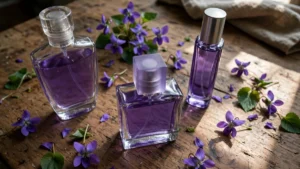
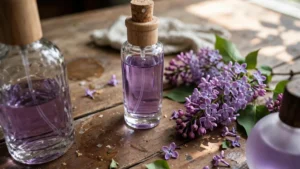
Hyacinth is the flower that gives itself away before you see it. Walk past a pot of hyacinths in spring and the whole hallway smells green, sweet and a little peppery, as if someone had crushed fresh leaves into a glass of cold water.
That is the first thing to understand about a hyacinth perfume. There is no natural hyacinth extract in perfumery. Two perfumers can build it two different ways, which is why the same note can smell crisp and green in one perfume and warm and honeyed in another.
This guide explains what a hyacinth perfume is, how the note is built, where it sits in a composition, and how to tell a good one from a perfume that only borrows the name. It covers the nine facts that matter most, from the chemistry of the accord to the way it behaves on skin, so you can buy and wear hyacinth with confidence instead of guessing.
Key takeaways
- A hyacinth perfume is built around a reconstructed hyacinth accord, because no natural extract of the flower exists.
- Hyacinth smells green, fresh and slightly peppery, with a sweet, honeyed edge and a cool, watery finish.
- It usually works as a heart note, bridging sharp green top notes and softer white florals.
- Its character changes with its company: crisp with galbanum, cool with iris, warm with vanilla and balsams.
- Hyacinth is potent and heady, and the same note can smell very different across brands, so sample on skin before buying.
What a hyacinth perfume is
A hyacinth perfume is a fragrance in which hyacinth is a named and noticeable note, usually in the heart of the composition. The best versions make you think of the flower at once. The weaker ones only hint at it.
Most hyacinth perfumes belong to one of two families. The first is the classic green floral, led by Guerlain Chamade and Chanel No. 19, where hyacinth sits with galbanum, green leaves and a chypre base, and the whole perfume smells like spring in a garden.
The word hyacinth on a note list does not guarantee you will smell it clearly. That is normal for a reconstruction. Learning to spot those choices is the point of this guide.
How perfumers build a hyacinth accord
A hyacinth accord is usually built in three layers. The first layer is green: materials that smell of crushed leaves, fresh stems and cut grass, which give the accord its crisp, vegetal opening.

The balance between those layers is what makes one hyacinth different from another. A perfumer who leans on the green layer makes a crisp, almost bitter hyacinth, like the one in Chanel Cristalle. A perfumer who leans on the sweet layer makes a softer, more honeyed hyacinth, like the one in Annick Goutal’s Grand Amour. Neither is wrong, and neither is more real than the other, because there is no natural reference to compare them against. The flower itself is the only reference, and even that changes with the variety, the weather and the time of day. A freesia perfume offers a useful comparison, because freesia is also rebuilt rather than extracted, and it shows the same pattern: a light, sweet floral that perfumers can tune in different directions.
The materials used are rarely named on a bottle, and brands are not required to list them, so you cannot learn the accord from an ingredient list. What you can do is learn it by smelling.
9 facts about hyacinth in perfume
Hyacinth has no natural extract
What it shows: Every hyacinth note in perfumery is a reconstruction, because the flower cannot be processed into a usable essence. What to consider: A perfume that claims to contain natural hyacinth oil is stretching the truth, so judge it by smell, not by the claim. Best For: Anyone who wants to understand why hyacinth varies so much between brands. Material: A rebuilt accord of green, floral and spicy materials. Price Range: Reconstructed notes cost no more than other florals, so price is not a guide. Standout Feature: Hyacinth is one of the few major floral notes that is always, by necessity, an invention.
This fact explains almost everything else about hyacinth. That is why a hyacinth in a 1969 classic and a hyacinth in a 2010 fruity floral can smell like distant cousins rather than siblings.
It smells green first, then sweet
What it shows: The first impression of hyacinth is green and slightly peppery, and the sweetness arrives a moment later. What to consider: If a perfume smells sweet first and green second, the hyacinth may be a minor note, or the sweetness may come from another flower. Best For: People who like green florals and want to tell hyacinth apart from softer flowers. Material: Green leaf materials layered over a honeyed floral heart. Price Range: Green-first hyacinths appear at every price, from Demeter to Guerlain. Standout Feature: The green-to-sweet sequence is the most reliable way to recognise hyacinth on skin.
That sequence matters because it is how you tell hyacinth from its neighbours. Lily is soft and powdery from the start. Freesia is sweet and light from the start. Hyacinth starts green, almost sharp, and then warms up.
It is a heart note, not a top or base
What it shows: Hyacinth usually sits in the heart of a perfume, arriving after the citrus or green opening and before the woody or musky base. What to consider: Judging a hyacinth perfume in the first minute will mislead you, because the note has not arrived yet. Best For: Patient testers who give a perfume twenty minutes on skin. Material: A heart-note accord, designed to last for hours rather than minutes. Price Range: Heart-note strength is not tied to price, so a modest perfume can show it well. Standout Feature: Hyacinth is the bridge of a green floral, connecting the opening to the base.
Because it is a heart note, hyacinth does its best work in the middle of a wearing. That is why sampling on paper is so misleading with this note: paper shows the opening and hides the heart.
It pairs best with galbanum, iris and soft musk
What it shows: The three classic partners of hyacinth are galbanum for crispness, iris for coolness, and soft musk for comfort. What to consider: A hyacinth paired with heavy vanilla or amber will smell warmer and richer, and the green side will be harder to find. Best For: Anyone building a shortlist of hyacinth perfumes to sample. Material: Galbanum resin, iris butter and white musk, the three usual companions. Price Range: These pairings appear across the price range, so budget is not a barrier. Standout Feature: The pairing changes the hyacinth more than the hyacinth changes the pairing.
Think of it as three different hyacinths. With galbanum, it is crisp and green, like Chanel No. 19. With iris, it is cool and cosmetic, like Serge Lutens Bas de Soie. With musk, it is soft and skin-like, like the drydown of many modern florals. Knowing which partner you like is the fastest way to find your hyacinth, and a lily perfume is a good test case, because lily pairs with the same three partners but smells softer and more powdery in each one.
It is a spring note, but it works year-round
What it shows: Hyacinth is associated with spring, when the flower blooms, but the note itself has no season. What to consider: In hot weather it can turn heady, so lighter concentrations and fewer sprays work better in summer. Best For: Spring and autumn, when cool air keeps the green side fresh. Material: The accord itself does not change with the season, only the way it behaves on warm skin. Price Range: Seasonal wear costs nothing extra, since the same bottle works all year. Standout Feature: A spring note that survives winter because its warmth comes from the base, not the flower.
The spring label is about the flower, not the perfume. Wear the perfume for its weight and warmth, not for the month on the calendar.
Concentration changes it more than most notes
What it shows: The same hyacinth perfume can smell greener as an eau de toilette and warmer as an eau de parfum. What to consider: If you love a hyacinth in one concentration and dislike it in another, you are not imagining it, the balance really has changed. Best For: Shoppers choosing between concentrations of the same perfume. Material: The same accord, rebalanced, with more or less of the green and sweet layers. Price Range: Eau de parfum usually costs more, but it is not automatically the better hyacinth. Standout Feature: Hyacinth is one of the most concentration-sensitive floral notes.
This is especially true of the classics. Sample the concentration you intend to buy, not a different one, and give it the same twenty minutes on skin.
Bluebell and hyacinth are cousins, not twins
What it shows: Bluebell and hyacinth share a cool, green floral character, but hyacinth is sweeter and more peppery, while bluebell is greener and more watery. What to consider: A bluebell perfume is the clearest way to learn hyacinth, but it is not the same note, so do not expect them to be identical. Best For: Beginners learning to recognise the note. Material: Two related accords, built from similar green and floral materials. Price Range: Bluebell perfumes sit in a similar price range to hyacinth perfumes. Standout Feature: The bluebell family is the best training ground for the hyacinth nose.
Perfume writers recommend Penhaligon’s Bluebell as the clearest hyacinth to learn from, and they are right, but the comparison has a limit. Bluebell is the cleaner, simpler version. Hyacinth adds sweetness, spice and a little earthiness on top.
The same name can smell very different across brands
What it shows: Because hyacinth is always reconstructed, two perfumes that both list it can smell almost unrelated. What to consider: Do not buy a hyacinth perfume on the note list alone, and do not assume a brand you like will make a hyacinth you like. Best For: Cautious buyers and anyone shopping online without a sample. Material: Different accords from different perfumers, all honestly called hyacinth. Price Range: Price does not predict which version you will prefer. Standout Feature: Hyacinth varies more between brands than almost any other floral note.
This is the single most useful fact in this guide. A peony perfume from one brand will usually smell recognisably like a peony perfume from another, because peony has a clearer, softer character. Hyacinth has no such anchor, so the perfumer’s choices matter more. The only defence is sampling, and the only shortcut is knowing which family, green, cool or warm, you prefer. A peony perfume makes a good control sample here, because peony is steadier across brands, and comparing the two shows how much more hyacinth moves.
It smells stronger on skin than on a paper strip
What it shows: Hyacinth blooms on warm skin, so a perfume that seems quiet on paper can be loud on a wrist. What to consider: Always test on skin, and wait at least twenty minutes, before deciding a hyacinth perfume is too soft or too strong. Best For: Anyone who has been misled by a paper strip before. Material: The same accord, warmed and amplified by skin heat. Price Range: Skin behaviour is free to test, and it is the most valuable test there is. Standout Feature: Hyacinth is one of the most skin-dependent floral notes.
Paper strips are useful for a first sniff, but they lie about hyacinth. On skin, the warmth brings the sweetness forward, the green softens, and the whole accord becomes rounder and stronger.
How hyacinth behaves on skin
On skin, hyacinth follows a clear arc. Then, over the next twenty to thirty minutes, the sweetness arrives, the green softens, and the floral heart takes over. How long each stage lasts depends on the concentration, the base, and your skin.
Warm skin amplifies hyacinth, and dry skin can make it fade faster. Neither trick changes the perfume, but both change how much of it you actually get to smell.
Hyacinth also changes with the weather. In cool, damp air, the green side stays crisp and the perfume smells fresh for longer. That is not a fault in the perfume.
The caveats that matter
The biggest caveat with hyacinth is over-application. One or two sprays, placed where the perfume can breathe rather than where it will sit against warm skin all day, is usually enough.
| Detail | What is known |
|---|---|
| What it is | A reconstructed floral accord, since no natural hyacinth extract exists |
| What it smells like | Green, fresh and slightly peppery, with a sweet, honeyed edge and a cool, watery finish |
| Where it sits | Usually a heart note, arriving after the opening and lasting into the drydown |
| Best pairings | Galbanum for crispness, iris for coolness, soft musk for comfort |
| How it behaves on skin | Stronger and sweeter on warm skin than on a paper strip, so test on skin |
| Best season | Spring and cool weather, though the note itself has no season |
| What to avoid | Heavy application in hot weather or in a small, closed room |
| What it does not do | It does not smell soft or powdery on its own, and it is never a natural extract |
The second caveat is availability. Many of the best hyacinth perfumes are old, and formulations change. Sample a current bottle before you replace an old favourite, and buy from a seller you trust.
Checklist: understanding a hyacinth perfume honestly
Use these checks when you sample, and again after a week of wearing.
- Sample on skin, not just on paper, and wait at least twenty minutes before you judge it.
- Ask which family it belongs to: green and crisp, cool and cosmetic, or warm and enveloping.
- Notice the sequence: green first, then sweet, is the signature of a real hyacinth accord.
- Compare it with a bluebell perfume, so you can tell the sweeter, peppery edge apart.
- Wear it lightly at first, because hyacinth is heady and more sprays will not make it last longer.
- Check the concentration you are buying, since the same perfume can smell different as an eau de toilette or an eau de parfum.
Frequently asked questions
What is a hyacinth perfume?
A perfume in which hyacinth is a named and noticeable note, usually in the heart of the composition. Because there is no natural hyacinth extract, the note is always a perfumer’s reconstruction of the flower’s scent.
What does hyacinth smell like?
Green, fresh and slightly peppery, with a sweet, honeyed edge and a cool, watery finish. It smells like crushed green stems and spring flowers, and it is stronger and more pungent than the flower looks.
Is hyacinth the same as bluebell in perfume?
No, though they are close cousins. Hyacinth is usually sweeter and more peppery, while bluebell is greener and more watery.
Why does hyacinth smell different in different perfumes?
Because it is always reconstructed, and each perfumer builds the accord differently, emphasising the green side, the sweet side, or the spice. The pairing also matters: galbanum makes it crisp, iris makes it cool, and vanilla makes it warm.
How long does a hyacinth perfume last?
It varies widely. Light colognes may last only a few hours, while the classics can last a full day.
Is hyacinth perfume suitable for sensitive noses?
Often yes in lighter concentrations, because it is a fresh, green floral rather than a heavy, powdery one. Start with a soft version like Jo Malone Wild Bluebell, wear one spray, and see how it feels before trying the bolder classics.
The bottom line
A hyacinth perfume is a perfumer’s answer to a flower that refuses to be bottled. There is no natural extract, so every version is an interpretation, and that is what makes the note interesting.
Learn the note first, with a single-note cologne or a bluebell perfume on one wrist and a classic on the other, and give it twenty minutes on skin before you judge it. Once you can recognise the green-to-sweet sequence, you will start noticing hyacinth everywhere, and a whole family of green florals that once looked the same will open up into distinct, recognisable perfumes.