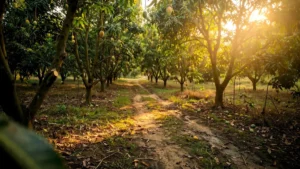
A mango grove retreat is a different kind of luxury escape. Instead of a manicured garden or a strip of beach, the setting is a working grove of mango trees, heavy with fruit in season, shading the paths between villas, pools and open-air restaurants. The air smells faintly sweet, the light filters through broad green leaves, and the pace of the day is set by the shade moving across the ground rather than by a schedule of activities.
The appeal is partly sensory and partly practical. Mango trees grow in warm places, so these retreats sit in the tropics and subtropics, in Bali, northern Thailand, the Riviera Maya, the Maldives and the Caribbean. A stay in one is usually warm, green and slow, with fruit picked steps from your door when the season is right. It is a good fit for travellers who want nature without roughing it, and for anyone who likes the idea of a resort that grows something real.
Below are nine mango grove retreats worth considering in 2027, from island villas in Bali to jungle lodges in the Caribbean. Each one is described by what it does well, what to watch for, and who it suits best, so you can choose a grove that matches how you actually like to travel, not just a photograph.
Key takeaways
- Mango grove retreats are tropical stays set among working mango trees, usually with villas, pools and open-air dining under the canopy.
- The best time to visit depends on the mango season where you are going, which varies by region and usually falls in the warmer months.
- Shade is the main luxury here: grove stays run cooler than open beach resorts, but they also attract more insects, so pack accordingly.
- Most of these retreats are remote or semi-remote, so transfers, meal plans and activity booking need arranging in advance.
- Prices below are broad indications, not quotes, and mango fruiting is seasonal, so a grove visit does not guarantee ripe fruit on the trees.
What a mango grove retreat actually is
A mango grove retreat is a luxury stay built in or around a grove of mango trees, rather than a resort that happens to have a few trees in the garden. The grove is the setting. Paths run between the trees, villas sit in clearings, and the restaurant, pool and spa are shaded by the canopy. Some groves are working orchards that still harvest fruit. Others are older plantings kept for shade and beauty, with fruit as a seasonal bonus rather than a crop.
What makes the experience different from a beach resort is the rhythm of it. The shade moves, the temperature stays a few degrees cooler under the trees, and the sounds are birdsong and leaves rather than waves and music. Days tend to be slower. Guests read, swim, walk the grove paths, take a cooking class built around the fruit, and eat dinner outdoors as the light fades through the leaves.
It is not the right choice for everyone. If you want nightlife, a long beach, or a resort with dozens of restaurants, a grove retreat will feel quiet. If you want green shade, warm air, fruit in season, and a stay that feels grown rather than built, it is one of the most relaxing ways to travel in the tropics. Our guide to the best luxury palm grove retreats of 2027 covers a similar kind of stay, with palms instead of mango trees, if you want to compare the two.
How we chose these retreats and what to look for
Look first at the grove itself. A real mango grove retreat should have mature trees that shade the stay, not a handful of young saplings around a new building. Ask when the mangoes fruit where you are going, because the season varies by region, and a visit timed to the harvest is a different trip from a visit outside it. In Bali and Thailand the fruiting season often falls in the warmer, drier months. In the Caribbean it is usually late spring into summer.

Look next at how the stay is laid out. Villas spread through a grove give privacy and shade, but they also mean walking between your room, the restaurant and the pool, often on uneven paths. That is part of the charm for most guests, but it matters if mobility is a concern. Check whether the retreat offers buggies or golf carts, and whether the main facilities are close together or spread across the property.
Finally, look at what is included. Remote grove retreats often price rooms, meals and transfers separately, and the total can be much higher than the room rate suggests. Check whether breakfast is included, whether the restaurant is the only place to eat nearby, and how transfers from the airport work. A retreat that arranges everything in advance is usually the easier, and often the cheaper, choice once the extras are added up.
The 9 best luxury mango grove retreats of 2027
Amankila, Bali
What we like: Hillside suites set among mango and coconut trees above the Lombok Strait, with a three-tiered pool and open-air dining that makes the most of the grove shade. What to consider: It is a quiet, adults-leaning stay, and the hillside setting means steps and slopes between suites and facilities. Best for: Couples who want a calm, scenic Bali stay. Style: Hillside suites in a tropical grove. Price range: Around $800 to $1,500 per night, broad indication. Standout feature: The tiered pool framed by mango and coconut trees.
Four Seasons Resort Chiang Mai, Thailand
What we like: Rice paddies and mango trees around pavilions and residences, with a strong spa, cooking school and a calm, green setting outside the city. What to consider: It is outside Chiang Mai itself, so a trip into town needs a car or a transfer. Best for: Travellers who want northern Thailand at a slow pace. Style: Garden pavilions in a working landscape. Price range: Around $500 to $1,000 per night, broad indication. Standout feature: The rice-paddy setting with mango trees and mountain views.
Six Senses Yao Noi, Thailand
What we like: Island villas among mango and tropical trees with views across Phang Nga Bay, plus a well-regarded spa and a strong focus on local food. What to consider: Reaching the island takes a boat transfer, and the resort is spread out, so allow time to move between villa and facilities. Best for: Couples and wellness-focused travellers. Style: Island villas in a tropical grove. Price range: Around $600 to $1,200 per night, broad indication. Standout feature: Bay views from villas shaded by mango trees.
The Datai Langkawi, Malaysia
What we like: A rainforest resort where mango trees grow among much older forest, with villas in the canopy, a private beach, and a nature centre that runs guided walks. What to consider: The rainforest setting means humidity and insects, and the beach is a walk or a buggy ride from the main buildings. Best for: Nature lovers who want forest and beach in one stay. Style: Rainforest villas with a private beach. Price range: Around $500 to $1,100 per night, broad indication. Standout feature: The rainforest canopy walk and the nature centre.
The Datai is one of the best-known rainforest resorts in Asia, and the mango trees are one layer in a much older forest. Guided walks are the highlight here, and they are worth booking early, because the naturalists explain what you are looking at in a way that changes the whole stay.
Amanpulo, Pamalican Island, Philippines
What we like: A private island where mango trees grow across the grounds, with beach casitas, a lagoon for snorkelling, and a famously calm atmosphere. What to consider: It is reached by a private flight from Manila, which adds cost and planning, and the island is small, so it suits a stay of a few days rather than a long one. Best for: Travellers who want a true private-island escape. Style: Beach casitas on a private island. Price range: Around $1,000 to $2,000 per night, broad indication. Standout feature: The private island setting with mango trees and a clear lagoon.
Rosewood Mayakoba, Riviera Maya, Mexico
What we like: Lagoon suites set among mango trees and jungle, with boat transfers along the waterways, a strong spa, and a beach club a short ride away. What to consider: The property is large and spread out, so moving between suite, restaurant and beach takes time, and the jungle setting brings mosquitoes in the evening. Best for: Couples and families who want jungle and beach together. Style: Lagoon suites in a jungle grove. Price range: Around $700 to $1,400 per night, broad indication. Standout feature: Boat transfers along the lagoon waterways.
One&Only Reethi Rah, Maldives
What we like: A large island resort with mango trees planted across the grounds, overwater and beach villas, and a wide choice of restaurants and water activities. What to consider: It is one of the larger Maldives resorts, so it feels less private than a small island, and transfers are by seaplane or speedboat. Best for: Families and travellers who want variety in the Maldives. Style: Beach and overwater villas on a large island. Price range: Around $1,000 to $2,500 per night, broad indication. Standout feature: The range of dining and water activities on one island.
Alila Villas Uluwatu, Bali
What we like: Cliff-top villas with mango trees in the gardens, a striking infinity pool, and a quiet location on the Bukit Peninsula away from the crowds. What to consider: It is a drive from the main sights of south Bali, and the cliff-top setting means the beach is reached by a shuttle. Best for: Design-minded couples who want a calm Bali base. Style: Cliff-top villas with private pools. Price range: Around $600 to $1,300 per night, broad indication. Standout feature: The cliff-edge infinity pool with ocean views.
Belmond Maroma, Riviera Maya, Mexico
What we like: A beachfront resort with mango trees across the gardens, spacious suites, a well-regarded spa, and a long, quiet stretch of beach. What to consider: It is a larger resort than some on this list, and the best suites book up early in the winter season. Best for: Travellers who want a classic Riviera Maya beach stay with a green garden setting. Style: Garden suites on a white-sand beach. Price range: Around $600 to $1,200 per night, broad indication. Standout feature: The long white-sand beach backed by mango trees.
Which mango grove retreat suits you
For a first mango grove stay, Bali or northern Thailand is the easiest choice. The groves are mature, the food is excellent, and the resorts are used to guests who want a slow, green holiday. Amankila and the Four Seasons Chiang Mai are both good starting points, and they suit couples and solo travellers equally well.
For a private-island feeling, Amanpulo is the standout, with Reethi Rah as the more varied alternative. Both are expensive and both need planning, but they offer the kind of seclusion that a mainland resort cannot match. For families, Rosewood Mayakoba and Reethi Rah work best, because they have more space, more dining, and more activities for different ages.
For nature lovers, the Datai is the clearest pick, because the rainforest setting adds a layer that a simple grove cannot. And for travellers who want a beach as well as a grove, Maroma and Alila Uluwatu both give you the trees and the sea, with a very different atmosphere in each case. The best luxury olive grove retreats of 2027 cover a similar idea in a Mediterranean setting, if you prefer cooler air and older trees, while the best luxury bamboo grove retreats of 2027 offer a cooler, greener alternative in the tropics.
The caveats that matter
Mango groves are beautiful, but they are also working nature. Fruiting seasons vary, insects are part of a tropical garden, and rain can arrive suddenly in the wet season. None of that should put you off, but it should shape what you pack and when you go. The table below covers the points that matter most.
| Detail | What is known |
|---|---|
| Mango season | Varies by region; usually the warmer months, often late spring into summer |
| Best weather window | Dry season in each region; check local rainfall before booking |
| Insects | More common under tree cover; pack repellent and cover up at dusk |
| Getting around | Grove resorts are often spread out; check for buggies and path surfaces |
| Transfers | Remote stays need pre-booked airport transfers, boats or short flights |
| Meals | Many grove retreats have one main restaurant; check meal plans and prices |
| Who should be careful | Anyone with a mango or latex allergy should check with the resort first |
| What is not guaranteed | Ripe fruit on the trees, dry weather, or a quiet stay in peak season |
If you have a mango allergy, or a latex allergy, which can be linked to mango, tell the resort before you arrive and ask how the kitchen handles fruit. Most luxury resorts are used to allergy requests, but a grove stay where fruit is picked and served on site is worth a clear conversation in advance.
Checklist: planning a mango grove escape
Use these checks before you book, and again before you pack.
- Check the mango season for your destination, and time your visit to it if fruit matters to you.
- Check the transfer: how you get from the airport to the retreat, and whether it is included.
- Check what meals cost, and whether a meal plan or half-board option is better value.
- Pack insect repellent, light long sleeves for the evening, and shoes that cope with uneven paths.
- Book spa treatments, cooking classes and guided walks early, because small resorts fill up fast.
- Tell the resort about allergies, mobility needs or dietary requirements before you arrive.
Frequently asked questions
When is mango season?
It depends on the region. In much of Southeast Asia the fruiting season falls in the warmer months, often from spring into early summer. In the Caribbean it is usually late spring into summer. Check the season for your specific destination, because it varies by a month or more between regions.
Will there be ripe mangoes on the trees when I visit?
Not necessarily. Mango trees fruit for a limited window each year, and the exact timing shifts with the weather. A grove stay outside the season is still shaded and green, but you may not see or taste fresh fruit from the trees.
Are mango grove retreats suitable for children?
Many are, especially the larger resorts with family villas and activities. Smaller, quieter grove stays tend to suit adults better. Check the resort’s policy and the layout before booking, because spread-out groves with uneven paths can be hard work with small children.
Do I need insect repellent?
Yes. Tree cover means more insects than an open beach, especially at dusk. Pack a good repellent, wear light long sleeves in the evening, and ask the resort whether rooms have nets or screens.
How far in advance should I book?
For the dry season and for mango season, three to six months ahead is sensible for the best-known retreats. Smaller grove stays have fewer rooms, so the best villas go early, and flights and transfers need arranging too.
Are mango grove retreats expensive?
Usually yes, because they are small, remote and labour-intensive. Room rates on this list start around $500 a night and rise well above $1,000 at the top end, before meals and transfers. A meal plan can make the total easier to predict.
The bottom line
A mango grove retreat is one of the most relaxing ways to spend time in the tropics. The shade, the fruit in season, the slow days and the green setting add up to a holiday that feels grown rather than built, and the nine retreats above cover the best of it, from Bali and Thailand to the Caribbean and the Maldives.
Choose by season and by setting, not just by price. Time your visit to the mango season if the fruit matters to you, check the transfers and the meal plan before you book, and pack for a tropical garden rather than a beach. Done that way, a mango grove stay is a trip you will want to repeat.