



A bamboo grove has a sound and a light that no other landscape quite manages. The stalks filter the sun into thin green lines, the leaves move in a soft rush overhead, and the air stays cool even on a warm afternoon. It is no surprise that travellers now plan whole escapes around these places, from the famous grove at Arashiyama in Kyoto to the bamboo forests of Anji in China and the bamboo-built retreats of Bali.
The appeal is not only the scenery. A good bamboo grove retreat slows everything down. Walks replace schedules, meals are taken slowly, and the evening is quiet enough to hear the grove itself. But not every stay that uses the word bamboo is the same. Knowing which is which matters before you book, because the price difference between a genuine grove stay and a themed hotel can be large.
Below are nine luxury bamboo grove retreats worth considering in 2027, from forest ryokans in Kyoto to bamboo houses in the Balinese jungle.
Key takeaways
- A real bamboo grove retreat sits in or beside a living bamboo forest, with paths through the grove, not just bamboo decoration in the rooms.
- Kyoto, Bali, Anji in China, Taiwan and Damyang in South Korea offer the strongest bamboo grove stays, each with a different mood and season.
- Go early in the morning or late in the afternoon for the quietest grove walks, and book grove-side rooms well ahead in spring and autumn.
- Check whether the grove is private, shared with day visitors, or a short walk away, because that changes the experience more than the room size does.
- No bamboo stay guarantees silence or solitude in peak season, and a grove can be closed or crowded after storms, so keep your plans flexible.
What a bamboo grove retreat actually is
A bamboo grove retreat is a stay built around a living bamboo forest. The grove is part of the experience, not a backdrop. Guests walk through it, eat beside it, sleep within earshot of it, and often wake to its sound. The best retreats treat the grove gently, with raised paths, limited numbers of guests, and buildings that sit lightly on the land. The worst ones simply borrow the name.
Bamboo grows fast and dense, which is why it suits a retreat so well. A mature grove creates natural shade, holds moisture in the air, and muffles the noise of the world outside.
The season changes the grove. In spring, new shoots push up quickly and the paths are fresh and green. In summer, the grove is at its coolest and shadiest. In autumn, the light turns softer and the air is clearer.
How we chose these retreats and what to look for
Look first at the grove itself. A retreat should say clearly whether its bamboo is on the property, beside it, or a drive away. Shared groves, such as the public path at Arashiyama, can be wonderful at dawn and crowded by mid-morning, so a stay that gives you early access or a private path is a real advantage. Our guide to luxury tea plantation retreats follows the same logic, because a plantation stay is only as good as its access to the land it is named for.
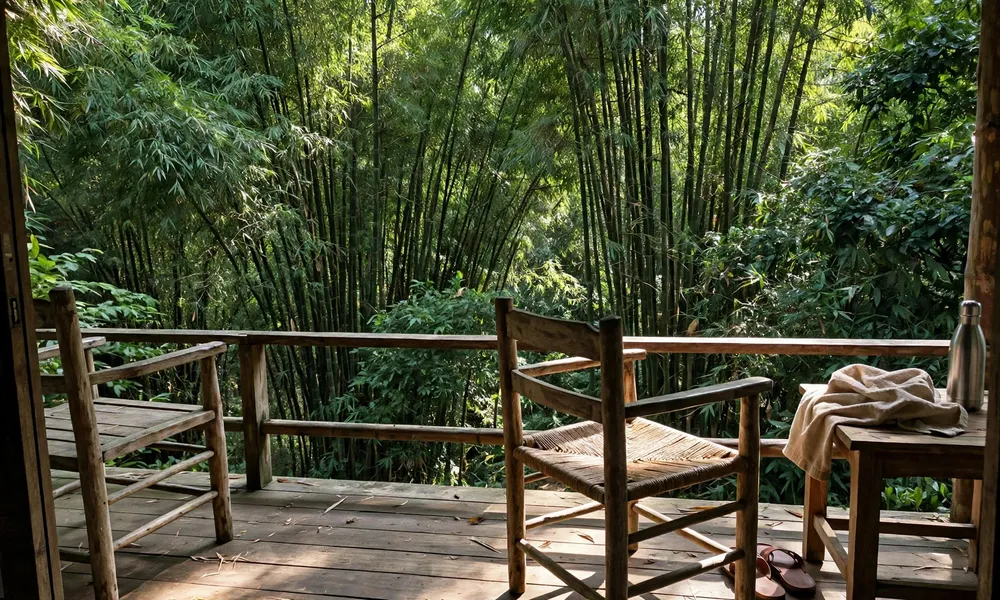
Look next at how the stay is built. Bamboo houses breathe differently from concrete hotels, which is part of their charm and part of their trade-off. Rooms may be open to the air, with outdoor showers and mosquito nets rather than sealed windows. A good retreat will explain this plainly on its own pages, and that honesty is a good sign.
Finally, look at the size and the pace. Small retreats with a handful of rooms feel calm and personal, but they book out early and may have set meal times. Larger resorts offer more choice and more facilities, but the grove can feel like one attraction among many rather than the heart of the stay.
The 9 best luxury bamboo grove retreats of 2027
Aman Kyoto, Japan
What we like: A forested valley setting close to the Arashiyama bamboo grove, with stone paths, moss gardens and a calm, unhurried atmosphere. What to consider: Premium pricing, and the famous public grove nearby is busy by mid-morning, so plan early walks. Best for: Travellers who want Kyoto’s groves with deep quiet. Style: Minimalist forest ryokan. Price range: High, roughly $1,000 to $2,000 a night. Standout feature: Private garden paths through moss and maple.
This is the closest thing to a private grove stay in Kyoto. The property sits in a wooded valley, and the feeling on arrival is of stepping out of the city entirely, even though the temples and the bamboo path are a short distance away. It suits a traveller who wants the grove as a daily ritual rather than a single photograph.
Hoshinoya Kyoto, Japan
What we like: A riverside ryokan reached by boat, with bamboo grove walks close by and a strong sense of old Kyoto. What to consider: Rooms are traditional, with tatami and futon bedding, which not every traveller prefers. Best for: A classic ryokan stay with grove walks. Style: Traditional riverside ryokan. Price range: High, roughly $700 to $1,400 a night. Standout feature: Arrival by boat along the Oi River.
Getting here is part of the stay. A boat carries you up the river to a quiet landing, and from there the ryokan feels removed from the city in a way few Kyoto hotels manage. The bamboo groves of Arashiyama are nearby, and an early walk from the property is one of the best ways to see them before the crowds arrive.
Bambu Indah, Bali, Indonesia
What we like: Bamboo houses in a jungle setting, each one different, with natural pools and a strong eco ethos. What to consider: Open-air living means insects and humidity, and the houses are reached by steps and paths. Best for: Travellers who want to sleep inside bamboo architecture. Style: Bamboo eco retreat. Price range: Mid to high, roughly $300 to $700 a night. Standout feature: Hand-built bamboo houses with jungle views.
This is the most literal bamboo stay on the list. The houses are built from bamboo, the paths run through the jungle, and the whole place feels handmade in the best sense. It suits travellers who want something unusual and are happy to trade some polish for character.
Zen Hideaway, Bali, Indonesia
What we like: A single bamboo house in the jungle with a famous open deck and wide views over the valley. What to consider: It is a small, simple stay, so facilities are limited and it books out far ahead. Best for: A short, quiet escape for two. Style: Bamboo jungle house. Price range: Mid, roughly $150 to $350 a night. Standout feature: The open bamboo deck above the jungle.
Zen Hideaway is small and specific, and that is its strength. One bamboo house, one deck, and a view that has made it one of the most photographed stays in Bali. The jungle around it is dense and green, with bamboo close at hand, and the pace is entirely your own.
Capella Ubud, Bali, Indonesia
What we like: Tented camps in a rainforest valley, with bamboo and jungle all around and a strong sense of place. What to consider: It is a large, well-known resort, so it feels less hidden than smaller bamboo stays. Best for: Luxury camping with rainforest character. Style: Tented rainforest camp. Price range: High, roughly $700 to $1,500 a night. Standout feature: Private plunge pools beside the jungle.
Capella Ubud is a tented camp rather than a bamboo house, but the rainforest setting, with bamboo among the trees, earns its place here. The tents are large and comfortable, with deep baths and private pools, and the valley below is thick with green.
Alila Ubud, Bali, Indonesia
What we like: A hillside retreat above the Ayung River valley, with jungle, bamboo and a calm, grown-up atmosphere. What to consider: The setting is steep, so walking between areas involves steps and slopes. Best for: A relaxed valley stay with easy jungle walks. Style: Hillside jungle resort. Price range: Mid to high, roughly $300 to $800 a night. Standout feature: The infinity pool above the river valley.
Alila Ubud sits on a hillside with the river valley below, and the jungle around it is dense with bamboo and palms. It is quieter than the busy centre of Ubud, and the walks from the property lead into rice fields and forest rather than shops.
Anji Bamboo Sea Stays, China
What we like: A vast bamboo forest, sometimes called a bamboo sea, with guesthouses and small retreats tucked among the groves. What to consider: English is limited in the area, and the best stays are small, so plan transport and booking carefully. Best for: Travellers who want the largest bamboo landscape of all. Style: Forest guesthouses and small retreats. Price range: Low to mid, roughly $80 to $300 a night. Standout feature: Endless bamboo hills in every direction.
Anji is the scale of bamboo that makes other groves feel like gardens. The forest stretches across hills for as far as you can see, and the stays here are simple guesthouses and small retreats rather than grand resorts. Walks can last for hours without leaving the bamboo, and the villages nearby are quiet and unhurried.
Hoshinoya Guguan, Taiwan
What we like: A mountain valley retreat with hot springs, forested slopes and bamboo close by, in a quiet part of central Taiwan. What to consider: It is remote, so reaching it takes planning, and the area is best explored with a car or a booked transfer. Best for: Hot springs and mountain bamboo in one stay. Style: Mountain hot spring resort. Price range: High, roughly $500 to $1,000 a night. Standout feature: Outdoor hot spring baths in the valley.
Guguan is a valley of hot springs surrounded by steep, forested mountains, and bamboo grows thickly on the slopes. The stay here is built around water and quiet, with outdoor baths, forest walks and long, unhurried meals.
Damyang Juknokwon Stays, South Korea
What we like: Guesthouses and small hotels beside Juknokwon, the famous bamboo forest of Damyang, with easy forest walks and a gentle pace. What to consider: The forest is popular with day visitors, so mornings are much quieter than afternoons. Best for: A gentle first bamboo forest trip. Style: Forest guesthouses and small hotels. Price range: Low to mid, roughly $70 to $250 a night. Standout feature: The shaded bamboo forest paths of Juknokwon.
Damyang is the easiest bamboo forest to enjoy well. The paths are flat and shaded, the forest is large enough to feel lost in, and the town around it is small and friendly, with bamboo food, bamboo crafts and a slow rhythm.
Which bamboo grove retreat is right for you
Start with the feeling you want. If you want deep quiet and a sense of occasion, Kyoto is the strongest choice, with Aman Kyoto and Hoshinoya Kyoto offering the most considered stays. If you want to sleep inside bamboo itself, Bali is the place, with Bambu Indah and Zen Hideaway offering the most direct experience.
Then think about how you travel. Couples who want a short, romantic pause will be happiest in a small stay with a deck or a pool and little else to do. Families and groups may prefer a larger resort with more rooms, more dining options and more to do beyond the grove.
Budget matters too, and the range on this list is wide. A night beside the bamboo in Damyang or Anji can cost less than a single dinner in Kyoto, and the forest itself is just as beautiful. Price buys privacy, service and polish, not a better grove. The best luxury forest retreats make the same point, because the trees matter more than the thread count.
The caveats that matter
Bamboo groves are living landscapes, and they change. A storm can close paths, a dry season can thin the green, and a popular grove can be crowded even at dawn in cherry blossom season or a holiday week. Build in a second plan, such as a temple, a river walk or a tea house, so the day holds up even if the grove is busy.
| Detail | What is known |
|---|---|
| Best groves for quiet | Private or early-morning groves in Kyoto, Anji and Guguan, before day visitors arrive |
| Best seasons | Spring and autumn for light and colour; summer for shade; winter for stillness |
| Who should book early | Anyone travelling in cherry blossom season, autumn colours, or a holiday week |
| What to check before booking | Whether the grove is on the property, beside it, or a drive away |
| Open-air rooms | Common in Bali bamboo houses; expect insects, humidity and outdoor showers |
| Walking and steps | Many grove stays involve steep paths, steps and uneven ground |
| What it does not guarantee | Silence, solitude or perfect weather, especially in peak season |
| When to be flexible | After storms, in very hot or wet weather, or when a grove is partly closed |
If you have limited mobility, check the paths before you book. Grove stays often involve steps, slopes and uneven ground, and some bamboo houses are reached only on foot. A good retreat will answer plainly about access, and a vague answer is a reason to choose somewhere else.
Checklist: choosing a bamboo grove retreat honestly
Use these checks before you book, and again before you travel.
- Check the grove: is it on the property, beside it, or a drive away, and is it private or shared?
- Check the room: open-air bamboo house or sealed hotel room, and what that means for insects and weather.
- Check the season: spring and autumn are busiest, summer is shadiest, winter is quietest.
- Check the walking: steps, slopes and uneven paths, and whether the stay suits your mobility.
- Check the timing: plan grove walks for early morning or late afternoon, and book grove-side rooms early.
- Check the backup plan: a temple, river walk or tea house nearby, in case the grove is crowded or closed.
Frequently asked questions
What is the best bamboo grove in the world?
Arashiyama in Kyoto is the most famous, and its scale and setting are hard to beat. The best grove depends on whether you want a famous walk, a vast forest, or a place to sleep inside bamboo itself.
When is the best time to visit a bamboo grove?
Spring and autumn give the best light and colour, and summer gives the deepest shade. Early morning is the quietest time in any season, and the grove is at its best in the first hour after opening, before day visitors arrive.
Are bamboo grove retreats suitable for families?
Often yes, especially larger resorts with pools and dining options, but open-air bamboo houses suit older children better than toddlers, because of steps, insects and uneven paths.
Do I need to book a bamboo grove retreat far ahead?
For small stays, yes, often months ahead in spring and autumn. Larger resorts have more rooms and more flexibility, but grove-side rooms and the best dates still go early.
Is it worth staying in a bamboo house in Bali?
If you want a memorable, unusual stay, yes. Bamboo houses are beautiful and atmospheric, with open decks and jungle sounds.
Can I visit a bamboo grove without staying overnight?
Yes, most famous groves are public and can be visited on a day trip, and a good day visit at dawn can be wonderful. Our guide to the best luxury olive grove retreats makes the same case for staying put rather than passing through.
The bottom line
The best luxury bamboo grove retreat in 2027 is not the most expensive or the most photographed. It is the one whose grove you can walk in quietly, whose room suits how you actually sleep, and whose pace matches the trip you want.
Choose one grove, book early if the stay is small, walk it at dawn, and leave room in the day for the grove to surprise you. That is the honest way to enjoy a bamboo forest, without expecting it to be silent, empty or perfect, and it is usually the trip that stays with you longest.


