A cheap yoga mat does its job for a while, then starts to argue with you. It slides across a wooden floor and bunches under your knees. A luxury mat ends that argument: it stays put, grips when your hands get damp, and feels like proper equipment years later.
The luxury part is not about a logo. The best mats earn their prices with denser materials, better grip and construction that survives daily use. A Manduka PRO carries a lifetime guarantee because its dense surface barely compresses. A Liforme prints alignment guides onto the mat. Cork gets grippier as it gets wetter, the opposite of cheap foam in a hot class.
Each pick lists thickness, size, weight, material and price, with what we like and what to consider. Prices are approximate late-2026 figures and move with sales. A good mat also shapes the room you practise in, as our look at celebrity home decor shows.
Key takeaways
- A luxury mat pays off when you practise weekly: dense materials, reliable grip and a long guarantee beat yearly replacement.
- Manduka PRO leads on durability, Liforme on alignment, Lululemon and Alo on grip once you sweat.
- Four to five millimetres is the sweet spot; six cushions knees better but makes balances less steady.
- Natural rubber grips beautifully but needs gentle cleaning and hates sun; closed-cell PVC is easiest to keep clean.
- Prices are approximate, and no mat can fix an uneven floor or a space that is too small.
The best luxury yoga mats of 2027 at a glance
| Mat | Best for | Approx. price | Thickness and size |
|---|---|---|---|
| Manduka PRO | Overall durability | About $144 | 6 mm; 71 by 26 in; 7.5 lb |
| Liforme Original | Alignment guidance | About $150 | 4.2 mm; 185 by 68 cm; about 5.5 lb |
| Lululemon The Mat 5mm | Sweaty flow classes | About $98 | 5 mm; 71 by 26 in |
| Alo Warrior Mat | Taller practitioners | About $148 | 5 mm; about 74 by 26 in; about 8 lb |
| JadeYoga Harmony | Natural rubber grip | About $90 | About 4.8 mm; 68 in; about 5 lb |
| B Yoga B MAT Cork | Hot yoga and cork grip | About $94 | About 4 mm; cork top, rubber base |
| Manduka eKO Lite | A lighter everyday carry | About $72 | 4 mm; 68 in; about 4 lb |
How we chose these mats
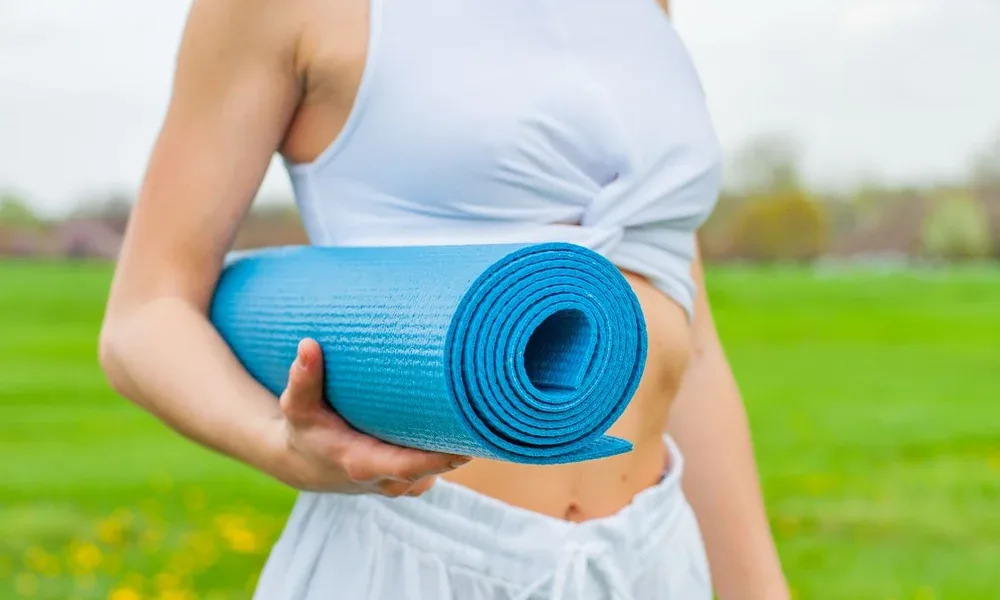
We started with the mats yoga teachers keep recommending, then asked the same questions of each. Does it grip dry and damp? Does it cushion knees without wobbling? How heavy is it, and how long for taller bodies? What is it made from, and what does the maker promise if it wears out?
Thickness came first. Under three millimetres feels honest underfoot but punishes knees on a hard floor. Over six is kind to joints but turns tree pose into a balancing act on a sponge. Four to five millimetres is where most of the best mats sit. Material came second: polyurethane tops grip better as moisture builds, open-cell rubber grips immediately but absorbs moisture, cork gets grippier when damp, and closed-cell PVC seals out sweat, so the PRO is easiest to keep fresh.
The best luxury yoga mats of 2027
Seven mats made the final list, each leading in a different area, so the right choice depends on how and where you practise.
Manduka PRO: Best overall
The PRO is the mat other luxury mats are measured against. Its dense six-millimetre closed-cell PVC surface seals out sweat and bacteria, resists compression, and carries a lifetime guarantee. At about $144 and 7.5 pounds it is heavy, but it is the mat most likely to be in use a decade from now.
What we like: Outstanding durability and cushioning, a surface that stays flat, and a lifetime guarantee.
What to consider: It needs a break-in period, it is heavy to carry daily, and it has no alignment guides.
Liforme Original: Best for alignment
Liforme built its reputation on one idea: print the alignment guide onto the mat. The Original carries the AlignForMe system, etched lines showing where hands, feet and hips should sit, over a natural rubber base with a polyurethane top. It is 4.2 millimetres thick, about 185 centimetres long, roughly 2.5 kilograms, and about $150.
What we like: The markers help newer practitioners place their feet consistently, and grip is excellent dry and sweaty.
What to consider: Cleaning is strict, water or the maker’s spray only; anything harsher can void the warranty. It is heavy for a daily commute.
Lululemon The Mat 5mm: Best for sweaty flow
Lululemon’s five-millimetre mat uses a polyurethane top that activates its grip as moisture builds, exactly what a fast vinyasa class demands. At about $98 it is one of the more affordable luxury mats here, cushioning knees while keeping enough ground feel for standing balances.
What we like: Grip that improves as you sweat, balanced cushioning, and a smooth top that is easy to wipe down.
What to consider: No alignment markers, and the smooth surface can feel slippery in the first few dry practices.
Alo Warrior Mat: Best for taller practitioners
The Alo Warrior is the largest mat here, about 74 by 26 inches, with a matte polyurethane top over rubber and five millimetres of cushioning. It costs about $148, weighs roughly eight pounds, and comes in black, gravel, espresso and smoky quartz.
What we like: The extra length gives tall practitioners room in a full stretch, and the matte top stays grippy when sweaty.
What to consider: At about eight pounds it suits home practice far better than a studio commute, and Alo lists no alignment markers or warranty.
JadeYoga Harmony: Best natural rubber grip
The Harmony is a single-material mat: open-cell natural rubber all the way through, about 4.8 millimetres thick and 68 inches long, at about $90. It grips immediately, dry or damp, and feels warmer underfoot than any synthetic top.
What we like: Immediate, reliable dry grip with no break-in, and a price well below the other premium mats.
What to consider: Open-cell rubber absorbs moisture, so it needs gentle cleaning and time to air dry, and it should be kept out of direct sunlight.
B Yoga B MAT Cork: Best cork mat for hot yoga
Cork is the contrarian choice here: the B MAT Cork pairs an all-natural cork top with an all-natural rubber base, at about $94, and its grip improves as it gets damp. For hot yoga, that is a genuine advantage.
What we like: Grip that gets stronger with sweat, a quick-drying cork surface that is naturally antibacterial, and a base that holds the floor.
What to consider: In a dry, gentle practice the cork can feel slick at first; the maker suggests a light spray of water before you start.
Manduka eKO Lite: Best lighter everyday carry
The eKO Lite is the PRO’s lighter sibling: four millimetres of dense natural rubber, 68 inches long, about four pounds, and about $72. It grips well from the first use and is the easiest mat here to carry to a studio.
What we like: Strong dry grip at about half the PRO’s weight, and the lowest price among the serious luxury mats here.
What to consider: Natural rubber smells when new, needs gentle cleaning and sun care, and at four millimetres cushions less than the PRO.
Materials explained: rubber, polyurethane, PVC and cork
Most of the difference between luxury mats comes down to four materials. Natural rubber is the grippiest dry surface and the most renewable, but it is heavy, smells when new, and degrades in sun and with harsh cleaners. Polyurethane is a thin top layer bonded to rubber, and it is why Liforme, Lululemon and Alo mats grip better as they get damp. Closed-cell PVC, used by the PRO, absorbs no moisture, making it the easiest surface to keep clean and the most durable over a decade, though it needs a break-in. Cork, a natural top over rubber, gets grippier when wet and dries quickly. Cheaper mats are usually TPE or foam: light and cheap, but they compress, slide when damp, and rarely last a year.
The caveats that matter
Three caveats decide more purchases than any specification. First, latex: natural rubber mats contain latex, so anyone with a latex allergy should choose PVC or TPE instead. Second, weight: a seven-to-eight-pound mat is a pleasure at home and a burden on a twenty-minute walk to a studio. Third, cleaning rules are not suggestions: Liforme’s warranty can be voided by the wrong cleaner, rubber is damaged by alcohol and vinegar, and every mat lasts longer rolled rather than folded, away from radiators and sunny windows. On a very hard surface, even six millimetres will not fully protect sore knees. For ideas on a dedicated practice space, our guide to the best luxury hotels in the Maldives shows how the best wellness hotels set one up.
Before you buy checklist
- Measure your space: you need the mat’s full length plus an arm’s reach each side, and six feet of clear floor.
- Match thickness to your body: six millimetres for sore knees, four to five for balances and flow.
- Check the weight: under five pounds if you carry it to a studio; at home, weight barely matters.
- Test grip with damp hands: a mat that only grips dry will let you down in a hot class.
- Read the cleaning rules before you buy: strict water-only care suits some and irritates others.
- Confirm the guarantee: a lifetime or two-year warranty is worth real money on a mat used weekly.
Frequently asked questions
How thick should a luxury yoga mat be?
Four to five millimetres suits most people, cushioning knees while keeping enough ground feel for balances. Choose six for sore knees or restorative yoga.
Which luxury yoga mat is best for hot yoga?
Cork and polyurethane-top mats are best for hot yoga, because both grip better as they get damp. The B Yoga B MAT Cork is the standout.
Are natural rubber yoga mats safe for people with latex allergies?
No. Natural rubber contains latex, so anyone with a latex allergy should avoid the Liforme, JadeYoga and eKO mats here. A closed-cell PVC mat such as the PRO is safer; check the maker’s allergen statement first.
How do I clean a luxury yoga mat?
Wipe it with a damp cloth after practice and let it air dry flat before rolling it up. Use water only, or the maker’s own spray, on rubber mats. Never use alcohol or vinegar on rubber or polyurethane tops.
How long does a luxury yoga mat last?
A well-made mat lasts five to ten years with regular use. The PRO is the longest-lived here, with a lifetime guarantee and a surface that barely compresses. Rubber mats last several years with gentle care, but wear faster in sun.
Is a $150 yoga mat worth it?
It is worth it if you practise weekly. A $150 mat lasting seven years costs about $21 a year, while a $30 mat replaced yearly costs more and grips worse. If you practise monthly, the eKO Lite at $72 is the smarter buy.
The bottom line
The best luxury yoga mat of 2027 is the Manduka PRO for most people: nothing else here matches its durability, cushioning and lifetime guarantee. Buy the Liforme if alignment is what your teacher keeps correcting, the Lululemon mat or Alo Warrior if you sweat heavily, the JadeYoga Harmony for natural rubber, the B Yoga cork mat for hot yoga, and the eKO Lite if you carry your mat daily.
Buy for the practice you actually do, not the one you imagine. A mat that grips when you sweat, cushions your knees and still lies flat after a year is worth far more than a prettier mat that slides. Once the mat is sorted, the small rituals around it matter too, which is where a good luxury body butter earns its place.
Note: Prices and specifications are approximate, based on late-2026 listings, and change with sales and regional pricing, so confirm the current figure with the maker before ordering. If you have a latex allergy, check the material of any rubber mat before buying.
Meet our experts
Our editors cover luxury lifestyle, home design and wellness, and each guide is checked against the makers’ published specifications and owner reviews.
Why trust BrassSmile
We compare products on published specifications, materials, weight, size, warranty and price, and say plainly where each pick falls short. We take no payment for placement.
Sources
Manufacturer pages for Manduka, Liforme, Lululemon, Alo Yoga, JadeYoga and B Yoga; Yoga Journal on cork mats; independent mat comparisons.