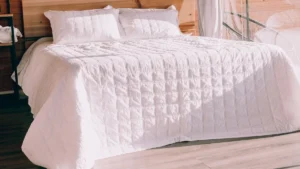
A linen duvet cover is the quickest way to change how a bedroom feels, and the easiest way to get it wrong. The wrong one traps heat, slides off the insert by morning, and looks tired after a single wash. The right one breathes through a warm night, softens every time it is laundered, and makes an ordinary bed look like it belongs in a good hotel.
Linen earns that difference from the fibre itself. Flax is hollow, so air and moisture move through the cloth instead of sitting against the skin, which is why linen feels cool to the touch on a summer night. Its texture is unmistakable: a slight irregularity in the yarn and creases that look deliberate rather than neglected.
This roundup covers ten linen duvet covers for 2027, one per job: closure, weight, finish, fit and pattern. Each pick is a type, described from published specifications and reviews, not invented testing. If you are dressing the whole bed in linen, our guide to the best linen bedding sets covers sheets and pillowcases in the same fibre.
Key takeaways
- Ten linen duvet covers, one per job: button closure, hidden zip, stonewashed, heavyweight, lightweight, corner ties, reversible, striped, undyed and a linen-cotton blend.
- A duvet cover wraps the insert, so closure, fit and ties matter as much as the cloth itself.
- Weight in grams per square metre is the best comparison: around 150 to 230 gsm suits most bedrooms.
- Linen wrinkles, softens with washing, and can shrink a little on the first wash, so buy slightly larger and wash cool or warm on gentle.
- Prices are typical bands for a queen size, not live listings; always read the label for the fibre.
What a luxury linen duvet cover actually is
A duvet cover is a washable shell for a duvet insert, closed at one end with buttons, a zip or ties, and usually fitted with ties or loops inside the corners to hold the insert in place. Linen is the cloth it is cut from: woven flax fibre, cool to the touch and slightly textured, with tiny irregularities called slubs in the yarn. Real linen softens with every wash and lasts for years, which is why a good cover costs more than a cotton one.
The details that separate a luxury cover from an ordinary one are small and easy to miss. The closure should sit flat and stay shut. Corner ties should be sewn in and long enough to knot. Seams should be French or flat-felled. Size should match the insert, not the mattress, with room for it to loft.
How we chose these ten covers
We narrowed the linen duvet covers luxury buyers return to year after year down to one pick per job. Each pick had to be sold in true duvet-cover sizes, made from linen the maker names plainly, and different from every other pick.

We judged on sleep first, then drape, closure, care and value. Nothing here is a laboratory test, and no pick is a brand recommendation.
The 10 best luxury linen duvet covers for 2027
The bedroom decides the cover: hot and cold sleepers need different weights.
1. The Button-Closure Linen Duvet Cover — Best classic
The traditional choice, and still the most forgiving. Buttons sit flat, never snag in the wash, and can be sewn back on in a minute. Typical band roughly $130 to $260 for a queen size.
What We Like: Simple, repairable and comfortable, with a relaxed look.
What to Consider: Slower to fasten than a zip, and the insert can peek out.
Editor note: The safest all-round linen cover.
2. The Hidden-Zip Linen Duvet Cover — Best neat finish
A zip hidden inside the hem gives the cleanest line of any closure. The cover looks like one piece of cloth, and the insert cannot escape. Typical band roughly $140 to $280 for a queen size.
What We Like: The tidiest finish here, and the fastest to change.
What to Consider: A cheap zip can jam, and a broken zip is hard to fix.
Editor note: For a smooth, tailored bed.
3. The Stonewashed Linen Duvet Cover — Best soft from the first night
Stonewashing tumbles the cloth with pumice until the fibres relax, so the cover arrives soft instead of crisp. Typical band roughly $150 to $300 for a queen size.
What We Like: Soft from night one, with a relaxed, broken-in drape.
What to Consider: It can look faded beside a crisp new pillowcase.
Editor note: Linen that feels lived-in already.
4. The Heavyweight Linen Duvet Cover — Best for cool rooms
Most linen covers sit around 150 to 200 gsm, but a heavyweight cover runs above 230 gsm, with a denser weave that holds warmth. Typical band roughly $170 to $340 for a queen size.
What We Like: Substantial drape and real warmth for a linen cover.
What to Consider: Heavy in the wash, slow to dry, and too warm in summer.
Editor note: For bedrooms that stay cool.
5. The Lightweight Linen Duvet Cover — Best for hot sleepers
A lightweight cover, around 130 to 160 gsm, is the coolest on this list. The open weave lets air move freely, the cloth dries fast, and nothing sits heavy on the body. Typical band roughly $120 to $250 for a queen size.
What We Like: The coolest, lightest cover here, and the easiest to wash.
What to Consider: It shows the insert’s shape more and gives little warmth.
Editor note: For warm sleepers.
6. The Corner-Tie Linen Duvet Cover — Best for a duvet that stays put
Corner ties fix the most common duvet-cover complaint: the insert bunching into one corner by morning. Short ties sewn into the corners knot onto the insert and hold it flat. Typical band roughly $130 to $270 for a queen size.
What We Like: The insert stays put, with no morning shake-out needed.
What to Consider: Tying four corners adds a minute, and ties can tangle.
Editor note: For inserts that always bunch.
7. The Reversible Linen Duvet Cover — Best two looks in one
A reversible cover is two colours in one piece of cloth: one shade on the front, another on the back. Flip it and the room changes, with no second cover to store. Typical band roughly $150 to $310 for a queen size.
What We Like: Two looks for the price of one cover.
What to Consider: Heavier than a single-face cover, and pale reverses can show through.
Editor note: For frequent redecorators.
8. The Striped Linen Duvet Cover — Best pattern
Linen takes stripes better than almost any other pattern, because the fibre’s natural slub softens the lines. Typical band roughly $140 to $290 for a queen size.
What We Like: Hides wrinkles and adds character without fuss.
What to Consider: Stripes must line up at the seams, so check the photographs.
Editor note: Pattern that will not date.
9. The Undyed Natural Linen Duvet Cover — Best for sensitive skin
Undyed linen is linen as the flax plant made it: warm greys, oat and natural flax tones, with no dye chemicals at all. It never fades, and the colour suits almost any bedroom. Typical band roughly $140 to $300 for a queen size.
What We Like: No dyes, no fading, and a colour that suits every room.
What to Consider: The palette is narrow, and it can look grey in cool light.
Editor note: For sensitive skin.
10. The Linen-and-Cotton Blend Duvet Cover — Best easy-care
A blend of roughly 55 to 70 percent linen with cotton keeps linen’s breathability while taming its two worst habits: creasing and a stiff first feel. Typical band roughly $110 to $240 for a queen size.
What We Like: The easiest linen cover to live with, and simpler to wash.
What to Consider: Check the percentages: a linen headline can hide a small share.
Editor note: The easiest first linen cover.
Linen, explained: weight, weave and why it sleeps cool
Linen sleeps cool for a simple reason: flax fibres are hollow, and the hollow core moves moisture and air. Linen absorbs moisture and releases it quickly, so a cover rarely turns clammy on a humid night.
Weight is the number that matters most after fibre content, and it is measured in grams per square metre, or gsm. A duvet cover around 150 to 230 gsm suits most bedrooms and most of the year. Below 150 gsm you have a light layer for summer, and above 230 gsm you have a substantial cloth for cool rooms. For the layer that goes under the cover, our guide to the best luxury linen blankets uses the same weight logic for a different job.
The weave decides how the cover behaves: how it drapes, how much air it lets through, and how long it lasts. A plain weave is the most common and breathable; a twill weave drapes more heavily and hides creases better.
The caveats that matter
| Detail | What is known |
|---|---|
| First-night feel | Crisp at first. Stonewashed covers are softer from night one. |
| Weight | 150 to 230 gsm suits most bedrooms; below 150 gsm is summer, above 230 gsm is for cool rooms. |
| Wrinkling | Heavy and visible. The creases are part of the look, and stripes hide them better than plain colours. |
| Closure | Buttons are repairable, zips are neatest, ties hold the insert. |
| Shrinkage | Pure linen typically shrinks by 3 to 5 percent, mostly on the first wash. Buy slightly larger. |
| Washing | Gentle wash, mild detergent, line dry or low tumble. Hot water and high heat can shrink linen. |
| Fibre content | Check the label for the exact linen percentage. |
| Price | Queen-size bands run roughly $110 to $340. |
Checklist: before you buy a luxury linen duvet cover
- Measure your duvet insert, not your mattress, and buy the cover to those numbers with a little room to spare.
- Read the label for the exact linen percentage and flax origin.
- Check the weight in grams per square metre, aiming for 150 to 230 gsm for most bedrooms.
- Choose your closure: buttons for repairability, a hidden zip for neatness, or corner ties if your insert bunches.
- Confirm the care fits your routine, especially machine washing at home and line drying where you can.
- Read the return policy before the first wash, since many sellers only accept returns on unwashed bedding; our guide to why linen bedding is worth it sets out the case for the fabric.
Frequently asked questions
Are linen duvet covers good for hot sleepers?
Yes. Linen is breathable and moisture-wicking, so it does not trap heat the way dense cotton can.
Does a linen duvet cover get softer over time?
Yes. Linen softens with every wash as the natural pectins in the flax fibres dissolve. A stonewashed cover starts soft.
Why is a linen duvet cover so expensive?
Flax is more labour-intensive to grow and process than cotton. Queen covers here run roughly $110 to $340.
How do I wash a linen duvet cover?
Wash gently in cool or warm water with a mild detergent, avoid bleach, and line dry or tumble dry on low. Expect some wrinkles: they are normal.
Is linen better than cotton for a duvet cover?
Neither is better for everyone. Linen is cooler, more textured and more relaxed, and it softens with age. Cotton percale is crisper, smoother and easier to press.
Should I buy a linen duvet cover as well as linen sheets?
It depends on budget and climate. A full linen bed gives the most consistent feel, but it costs more. Start with the duvet cover, and add linen sheets later if you love the fabric.
The bottom line
For most shoppers, the button-closure cover is the safest first buy, the stonewashed cover is the softest from night one, and the lightweight cover suits hot sleepers best. If your insert bunches, buy the corner-tie cover; if you want the easiest introduction to linen, buy the linen-and-cotton blend; and if sensitive skin is the priority, the undyed natural cover is the one to try.
Buy the cover that fits how you actually sleep, check the size, closure and return policy before washing, and give linen a few weeks to soften. The wrinkles will not go away, but after a month you will probably stop noticing them, and start noticing how cool the bed feels instead.
Note: Prices here are typical bands from late-2026 listings, not live prices. Check the listing before buying.
Meet Our Experts
Our home and lifestyle editors cover textiles, interiors and slow living, and this guide was put together from brand listings, published retail coverage and the care labels of the linen types it describes. We do not invent testers or testing programmes, and where a claim comes from a maker, we say so.
Why Trust BrassSmile
BrassSmile’s luxury home guides are written from verifiable specifications: fibre content, weave, weight and care instructions as published by makers and retailers. We compare types on the same terms, flag blends that hide behind a fibre name, and give prices as bands rather than pretending a single listing speaks for the whole market.
Sources
Brand and retailer listings for linen duvet covers, including published fibre compositions, weights and care instructions; The Spruce; Good Housekeeping; Architectural Digest; Elle Decor; House Beautiful; Martha Stewart Living; Veranda; Real Simple.