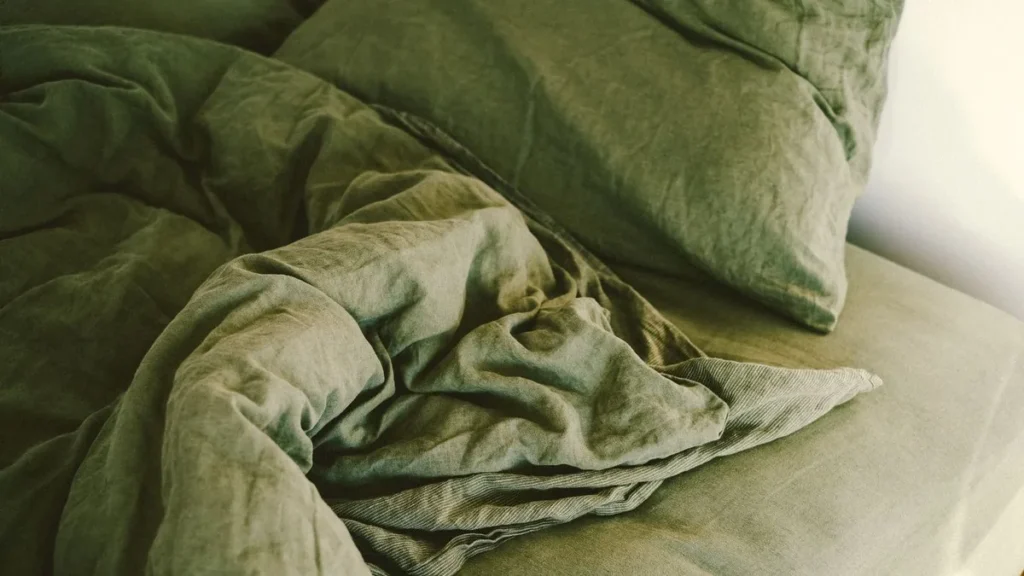
A linen blanket is the most misunderstood piece of bedding a luxury buyer can own. It looks too thin to keep you warm, too wrinkled to look expensive, and too plain to justify its price. Then you sleep under one on a warm night, and the argument ends.
The catch is that the words on the label tell you almost nothing on their own. A blanket sold as linen can be mostly viscose, a blend can hide behind a flax headline, and a throw can wear a blanket’s name while covering barely half the mattress. This roundup keeps it to linen bed blankets only: pieces sized to cover a bed and meant to be slept under night after night.
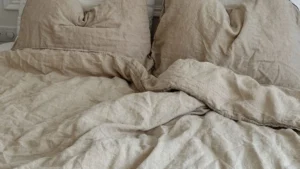
A new pure linen blanket can feel crisp on the first night, but after a handful of washes the fibres relax and the cloth drapes instead of standing up. For the smaller sofa-sized pieces, our guide to the best luxury linen throws covers them in the same fibre.
Key takeaways
- Ten linen bed blankets, one per construction: herringbone, waffle, double-layer, lyocell blend, certified flax, leno, hand-loomed, yarn-dyed, extra-long and guest-room.
- A blanket is not a throw: a true bed blanket covers the mattress edge to edge, with a queen running about 90 by 90 inches.
- Weight in grams per square metre matters more than thickness: around 200 to 280 gsm suits most bedrooms, while 300 gsm and above is for cool rooms and layering.
- Linen sleeps cooler than cotton, wool or silk, but it gives less insulation than wool, and a linen blanket alone will not carry a cold night.
- Prices below are general bands for a queen size, not listings, and a blanket sold as linen can be mostly another fibre, so check the label.
What a luxury linen blanket actually is
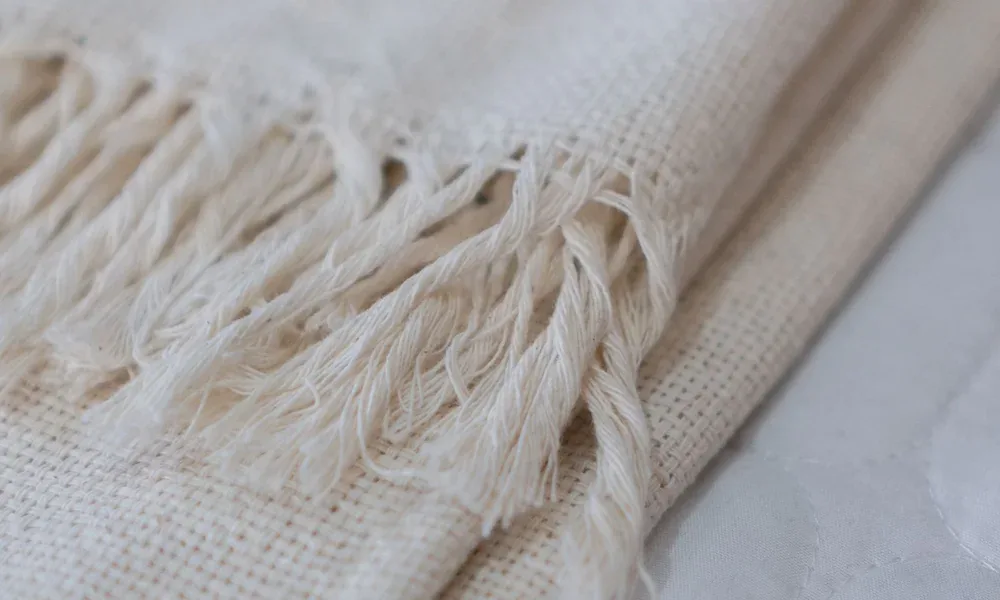
A linen blanket is a bed blanket woven from flax fibre, the long, strong fibre inside the stem of the flax plant. Real linen is cool to the touch, slightly textured, with tiny irregularities called slubs in the yarn, and it softens with every wash.
Size is what separates a blanket from a throw, and makers blur the line on purpose. A throw is about 50 by 60 inches, made for one person on a sofa. A bed blanket is wider and longer: a twin runs about 66 by 90 inches, a queen about 90 by 90, and a king about 108 by 90. If a piece labelled a blanket barely covers half the mattress, it is a throw with a grander name.
The weave decides almost everything about how a blanket behaves: how it drapes, how much air it lets through, how it washes, and how long it lasts. A herringbone weave lies flat, a waffle weave traps air in small pockets, and a double layer holds warmth without weight.
How we chose these ten blankets
We started with the linen constructions luxury buyers return to year after year, then narrowed the list to one pick per job. Each pick had to be a type sold in a true bed size, made from linen the maker names plainly on the label, and different in construction from every other pick on the list.
We judged on sleep first, then on drape, breathability, care and value. Nothing here is a laboratory test, and no pick is a brand recommendation.
The ten linen blankets worth buying
One note before the list: the bedroom decides the blanket.
1. The Herringbone Linen Bed Blanket
What we like: The most tailored blanket on this list. A herringbone weave lies flat and drapes cleanly over the mattress edge. Typical band roughly $140 to $280 for a queen size.
What to consider: The tight weave breathes less freely than an open one.
2. The Waffle-Weave Linen Bed Blanket
What we like: The cleverest construction here. A waffle weave traps air in small squares, so the blanket feels warmer than its weight suggests. Typical band roughly $110 to $230 for a queen size.
What to consider: The raised squares can catch on rough skin, and the texture reads casual.
3. The Double-Layer Linen Bed Blanket
What we like: Two thin layers of linen stitched together at the edges, with air held between them: the warmest pure-linen blanket here without extra weight. Typical band roughly $150 to $300 for a queen size.
What to consider: Two layers take longer to dry, and a cheaply stitched pair can shift.
4. The Linen-and-Lyocell Blend Bed Blanket
What we like: Lyocell softens linen’s crispness and tames its creasing, while linen keeps the blend breathable. A blend of roughly 55 to 70 percent linen is the smoothest here against bare skin. Typical band roughly $120 to $250 for a queen size.
What to consider: Check the percentages: a linen headline can hide a small share inside.
5. The European Flax-Certified Linen Bed Blanket
What we like: The provenance pick. European Flax certification traces the fibre to flax grown in Western Europe, with no irrigation beyond rain and no chemical retting. The certificate is the point: you are paying for a supply chain you can check. Typical band roughly $160 to $320 for a queen size.
What to consider: Certification adds cost without changing the feel, so look for the certificate number.
6. The Leno-Weave Linen Bed Blanket
What we like: The airiest blanket here. A leno weave twists pairs of warp yarns around the weft, locking an open structure in place. It lets air move freely and folds down to almost nothing. Typical band roughly $100 to $210 for a queen size.
What to consider: It is a layer, not a cold-night blanket, and the open structure can snag.
7. The Hand-Loomed Linen Bed Blanket
What we like: The most characterful blanket on this list. Hand-loomed linen carries small variations no machine reproduces, and the cloth has a soft, irregular hand from the first wash. Typical band roughly $180 to $380 for a queen size.
What to consider: Each piece varies, so the blanket you receive may not match the photograph.
8. The Yarn-Dyed Linen Bed Blanket
What we like: The colour pick. Yarn-dyed linen is dyed before weaving, so the colour runs through the yarn and fades far more slowly than piece-dyed cloth. Typical band roughly $130 to $260 for a queen size.
What to consider: Dark yarn-dyed linen can transfer colour onto pale sheets in the first wash, so wash it alone.
9. The Extra-Long Linen Bed Blanket
What we like: The practical pick for tall sleepers and deep mattresses. An extra-long blanket runs several inches longer than standard, so it stays tucked at the foot while covering the shoulders. Typical band roughly $140 to $280 for a queen size.
What to consider: The extra length adds weight and bulk, so check your machine can take it.
10. The Linen Bed Blanket for Guest Rooms
What we like: The sensible pick. A midweight, plain-weave linen blanket in a neutral shade suits almost any guest, washes easily and dries fast between visits. Typical band roughly $90 to $190 for a queen size.
What to consider: It is a compromise by design, so it will not be your warmest or softest blanket.
Linen, explained: weight, weave and why it sleeps cool
Linen sleeps cool for a simple reason: flax fibres are hollow, and the hollow core moves moisture and air. Linen absorbs moisture and releases it quickly, which is why a linen blanket rarely turns clammy on a humid night.
Weight is the number that matters most after fibre content, and it is measured in grams per square metre, or gsm. A linen blanket around 200 to 280 gsm suits most bedrooms and most of the year. Below 200 gsm you have a light layer for summer, and above 300 gsm you have a substantial cloth for cool rooms and layering. Gsm is still the best single comparison you have. For the wider linen picture at home, our guide to the best linen bedding sets covers sheets and duvets in the same fibre, with the same weight logic.
The caveats that matter
Linen softens with washing, resists pilling and lasts for years, but it creases, it can shrink if washed hot, and it will not keep you warm on a cold night on its own. If you sleep cold, layer it over a warmer blanket: our guide to the best luxury wool blankets covers the fibre that does the warming job best.
| Detail | What is known |
|---|---|
| Warmth | Light to moderate. Linen releases heat, so it suits warm sleepers, not cold ones. |
| Weight | 200 to 280 gsm suits most bedrooms; below 200 gsm is summer, above 300 gsm is for cool rooms. |
| First feel | Crisp on night one. Expect several washes before the cloth relaxes. |
| Wrinkling | Heavy and visible; the creases are part of the look. |
| Washing | Cold or warm gentle wash, mild detergent, line dry or low tumble. Hot water can shrink linen. |
| Sunlight | Strong sun fades dyed linen. Keep coloured blankets out of sun-facing windows. |
| Sensitive skin | Usually gentle once washed, with no prickle. Undyed linen suits sensitive skin best. |
| Price | Queen-size bands run roughly $90 to $380. Below $70, check the fibre percentage. |
Checklist: before you buy a luxury linen blanket
- Measure the mattress, add the drop you want on each side, and buy to those numbers.
- Read the label for the exact linen percentage; be wary of linen without a number.
- Check the weight in grams per square metre, aiming for 200 to 280 gsm.
- Feel the weave: check it drapes rather than standing stiff.
- Confirm the care fits your routine, especially machine washing at home.
- Buy the colour last, and wash dark colours alone the first time.
Frequently asked questions
Can a linen blanket replace a duvet?
Not on its own in a cold room. In summer it can be all you need; in winter it works best over a duvet or a warmer blanket, while the blanket underneath does the insulating.
Why does a new linen blanket feel stiff?
New flax fibres are coated in natural pectins that make the cloth feel crisp. Washing dissolves them gradually, which is why linen softens with every wash. Three to five gentle washes usually take the stiffness away.
Does linen shrink when washed?
Yes, a little, and mostly on the first wash. Pure linen typically shrinks by 3 to 5 percent, more if washed hot or dried on high heat. Buy slightly larger, wash cold or warm on gentle, and line dry or tumble on low.
Which linen blanket weight suits a warm bedroom?
Around 200 gsm or below, in an open weave such as leno or a light waffle. The open structure lets air move through, and the low weight means nothing sits heavy on you.
How do I keep a linen blanket from wrinkling on the bed?
You cannot stop linen wrinkling, and ironing it flat every day will wear the cloth out. Smooth it by hand when you make the bed, and choose a weave that hides creases, such as waffle.
Is a linen blanket good for allergy sufferers?
Linen is generally a good choice: it does not prickle, it resists dust mites because it dries fast, and undyed linen carries no dye chemicals. Wash before first use and keep it out of damp storage.
The bottom line
If you buy one linen blanket, buy for the room you actually sleep in. A herringbone blanket is the safest first buy, a waffle-weave blanket suits a bedroom that runs cool in the morning and warm by evening, and a double-layer blanket suits sleepers who want more warmth from linen.
Start with size and weight, then choose the weave, and let colour come last. Check the label, check the grams per square metre, and buy the linen, not the story on the tag.
Note: Prices in this guide are typical bands from brand listings and published retail coverage in late 2026, not live prices. Check the listing before buying, because makers change prices and care instructions.
Meet Our Experts
Our home and lifestyle editors cover textiles, interiors and slow living, and this guide was put together from brand listings, published retail coverage and the care labels of the linen types it describes. We do not invent testers or testing programmes, and where a claim comes from a maker, we say so.
Why Trust BrassSmile
BrassSmile’s luxury home guides are written from verifiable specifications: fibre content, weave, weight and care instructions as published by makers and retailers. We compare types on the same terms, flag blends that hide behind a fibre name, and update prices as bands rather than pretending a single listing speaks for the whole market.
Sources
Brand and retailer listings for linen bed blankets, including published fibre compositions, weights and care instructions; The Spruce; Good Housekeeping; Architectural Digest; Elle Decor; House Beautiful; Martha Stewart Living; Veranda.