A kamut farm escape is not a holiday with a wheat theme. It is a working farm stay built around a single crop, an old wheat with amber berries and a buttery flavour, grown on dry plains and stone-milled on the farm that grew it. You arrive for the harvest, sleep in a farmhouse room, and eat pasta and bread made from grain cut that same week.
Planning it takes more care than booking a hotel, because the farm runs on the weather, not on a calendar. The cutting week moves with the rain, the mill runs when the grain is dry, and the kitchen cooks what the farm grew. Get the timing right and you will stand in a gold field at dusk with a bowl of kamut pasta in your hands. Get it wrong and you will watch green wheat from a farmhouse window.
Below are the nine steps that make a kamut farm escape work, from settling the name of the grain to booking flights only once the farm names its dates.
Key takeaways
- Kamut is a trademark for Khorasan wheat, and only certified organic Khorasan wheat carries the name, so confirm the variety before you book.
- Kamut contains gluten, so a coeliac traveller or anyone with a wheat allergy cannot eat from the farm kitchen.
- The northern harvest runs July to August, and the cutting week is fixed only days ahead, so keep your dates loose until the farm confirms.
- Stone milling on the farm is the mark of a real kamut stay, and a farm that mills elsewhere is a farm that buys its flour in.
- No booking is safe until the farm names its cutting week in writing, and a trip built on a guessed date can leave you with green fields.
What a kamut farm escape involves
A kamut farm escape is a stay of three to five nights on a working kamut farm, timed to the harvest. You sleep in a farmhouse room or a barn conversion, join the farm day at dawn, and eat from the farm kitchen, where the pasta is rolled in the afternoon and the bread comes out of the oven warm.
The grain is the point of the trip. Kamut berries are large, amber and nutty, and they are cooked whole in soups, ground into golden flour for pasta, and baked into dense, fragrant bread. The farm will show you the fields, the threshing floor and the stone mill, and the best stays let you roll pasta yourself and take a sack of berries home.
A farm day starts early, with porridge at dawn and the first walk before the heat, and it ends at the table, with bread from the oven and whatever the garden gave that day. Between the two comes the real work of the season: the combines in the field, the mill turning in the barn, and the kitchen rolling pasta for supper. You are a guest in that rhythm, not a customer of it, and the farms that say so plainly are the ones worth booking.
The food is simple and it is the point. Breakfast is kamut porridge with honey or yoghurt, lunch is soup with beans and bread, and supper is pasta with whatever the garden and the season provide, followed by fruit and cheese. The farm bakes once a day, and the bread is still warm when it reaches the table. Drink the local wine or the farm’s own well water, and save room for the second helping, because the cook will offer it.
Most escapes run in high summer in the north, when the wheat turns gold and the combines move across the plains. The work is physical, the days are long, and the food is shared from one table.
How to plan it, and what to ask first
Start with the grain, not the room. A real kamut farm grows Khorasan wheat, mills it on the farm, and cooks with it every day. Ask the farm what variety it grows, whether the mill is on site, and whether the kitchen bakes with its own flour.

Then ask about the money. A good farm spells out what the nightly rate covers, with meals, the ride in from the nearest town and the farm walks inside the price. A farm that answers plainly about the harvest, the milling and the gluten is usually a farm that treats its guests well. Our teff farm escape guide runs the same check, and it is the quickest way to tell apart two farms that look alike on paper.
The 9 steps to plan a kamut farm escape
Kamut or Khorasan: settle the name first
What to do: Ask the farm whether it grows certified Kamut brand wheat or another Khorasan wheat, and read the answer before you book. What to avoid: Assuming every old wheat is kamut. Best for: Travellers who want the real grain, not a label. Time needed: One email, answered within a day. Standout tip: The Kamut name is a trademark, so a farm that uses it must grow certified organic Khorasan wheat.
Choose north or south before choosing dates
What to do: Choose the northern harvest in July and August, or the southern harvest in February and March, and build your dates around it. What to avoid: Booking a northern farm in spring, when the wheat is still green. Best for: Travellers with flexible dates. Time needed: An evening with a calendar and a map. Standout tip: The Wimmera harvest in Victoria falls in the northern winter, which suits travellers who want summer wheat in January.
Check the mill is on the farm, not down the road
What to do: Ask whether the stone mill stands on the farm, and whether the flour in the kitchen came from it. What to avoid: A farm that buys its flour in and calls the stay a kamut retreat. Best for: Travellers who care about the craft, not only the field. Time needed: One question in your first email. Standout tip: A farm that mills its own grain will offer you a bag of flour to take home, and it will smell of warm wheat.
Help the cook roll the day’s pasta
What to do: Book the pasta afternoon when you book the stay, and arrive with an apron and clean hands. What to avoid: Treating the pasta table as a show. Best for: Travellers who learn by doing. Time needed: Two hours in the afternoon. Standout tip: Kamut dough is firmer than ordinary pasta dough, so roll it thin and let it rest before cutting.
Walk the fields at golden hour, before the combines
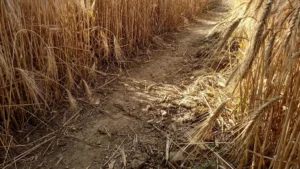
What to do: Walk the field edge at dusk, when the light turns the wheat amber and the air smells of cut straw. What to avoid: Walking into a standing crop, which flattens the grain the farm still has to cut. Best for: Travellers who want the field, not only the food. Time needed: An hour before supper. Standout tip: The best light is the hour before sunset, and the farm dog usually knows the path.
Stand beside the miller and watch your flour made
What to do: Stand beside the miller while the berries go in, and watch the flour come out warm. What to avoid: Buying flour from a farm you have not seen mill. Best for: Travellers who bake at home. Time needed: Half an hour in the mill room. Standout tip: Fresh kamut flour keeps for weeks in a cool jar, and it bakes best within a month of milling.
Eat kamut bread warm from the farm oven
What to do: Be at the table when the bread comes out, and eat it with olive oil and salt. What to avoid: Waiting for the bread to cool, which lets the crumb set and the smell fade. Best for: Travellers who plan their day around the oven. Time needed: Twenty minutes at the table. Standout tip: Kamut bread stays fresh for days, so ask for a loaf to carry on the road.
Take home berries to cook with later
What to do: Buy a small sack of whole berries at the farm gate, and ask the cook how she simmers them. What to avoid: Buying more than customs will let you carry home. Best for: Travellers who cook at home. Time needed: Ten minutes at the gate. Standout tip: Whole kamut berries cook like barley, in about forty minutes, and keep for a year in a dry jar.
Hold the flights until the cutting week is fixed
What to do: Wait for the farm to name its cutting week in writing, then book flights the same day. What to avoid: Booking flights on a guessed date, which leaves you watching green wheat from a window. Best for: Travellers who can book late. Time needed: One afternoon once the farm confirms. Standout tip: Refundable fares cost more, and on a harvest trip they are worth every penny.
Picking the right season and region
If this is your first kamut trip, go north in July, when the Montana and Palouse fields turn gold and the harvest is at its busiest. The days are long, the barns are open, and the farm table is at its best.
For the grain’s history, go to Khorasan or Faiyum, where the wheat is old and the baking is older, and where the stone oven matters more than the combine. The harvest there is smaller, quieter, and closer to the grain’s beginnings.
If you want the southern summer, go to the Wimmera in February, when Victoria is hot and the red earth is dry. Our buckwheat farm escape guide makes the same point another way: pick the season first, and the region second.
Two regions can also be paired in one trip, if the dates line up. The Marche and Abruzzo sit a few hours apart across the Apennines, and a week split between them gives you pasta on one side of the mountains and mountain soup on the other. The same works in America, where Chouteau County and the Palouse are a long day’s drive apart, and the plains of Montana give way to the rolling hills of Washington without a flight in between.
Leave a city at either end of the trip, too. A night in Ancona before the Marche, or in Spokane before the Palouse, gives you a proper bed, a hot shower and a restaurant meal before the farmhouse simplicity begins, and it makes the journey home easier when the harvest week ends. The farm will tell you which town its guests use, and the bus or the hire car from there is usually part of the stay.
The caveats that matter
A kamut farm escape is a working farm stay, and it asks more of you than a hotel does. The rooms are plain, the days start early, and the harvest moves with the weather, not with your booking. The one caveat that matters most is the gluten, which no amount of ancient-grain romance removes.
The second caveat is the dust. A kamut harvest is a dusty business, from the combines in the field to the mill room in the barn, and the flour gets into clothes, cameras and lungs. If you have asthma or a dust allergy, ask the farm where you will sleep relative to the mill, and carry the inhaler you would carry anywhere else.
| Detail | What is known |
|---|---|
| Best season to go | July to August in the north, February to March in the south, when the wheat is cut |
| How far ahead to book | Two to three months ahead, with flights held until the farm names its cutting week |
| How long a stay runs | Three to five nights, with the harvest days in the middle |
| Who should take care | Anyone with coeliac disease or a wheat allergy, since the kitchen cooks with wheat flour |
| What the kitchen cooks | Kamut pasta, farm bread, bulgur and porridge, with beans, herbs and olive oil |
| Gluten note | Kamut contains gluten, so a gluten-free traveller cannot eat from the farm kitchen |
| What to carry home | Whole berries and stone-milled flour, within your customs allowance |
| What it does not do | It does not promise a cutting day, a set menu, or hotel-style service on a working farm |
If you have coeliac disease, a wheat allergy, or a condition that heat makes worse, talk to the farm before you book. One question about the flour and the kitchen can spare you a difficult stay, and a farm that answers it straight is usually worth the visit. The same advice closes our fonio farm escape guide.
Checklist: before you book a kamut farm escape
Run through these checks before you pay, and once more the week before you travel.
- Ask which wheat the farm grows, and whether the Kamut name on the booking is certified.
- Get the cutting week in writing, and keep your flights refundable until the farm confirms it.
- Check that the mill stands on the farm, and that the kitchen bakes with its own flour.
- Ask to see the room before you hand over money, and check the mattress, the hot water and the heating, since farmhouse bedrooms are basic.
- Pack for sun and dust: shut shoes, a hat, a light layer for cool nights, and clothes that rinse clean.
- Leave a spare day at the end, so a harvest that moves still leaves you with a good trip.
Frequently asked questions
Is kamut gluten-free?
No. Kamut is wheat, and it contains gluten. Some people who struggle with modern wheat say they digest kamut more easily, but that is a personal report, not a medical fact, and it is not a safe grain for coeliac disease. If you eat gluten-free, the farm kitchen cannot feed you, so ask about a self-catering room before you book.
Is two months enough lead time for a kamut farm?
Two to three months ahead is about right for the farm, and the flights should wait until the farm names its cutting week, usually a fortnight before the harvest. Book the farm early, hold the flights, and pay for the fare only when the cutting week is fixed in writing.
Does a kamut farm have anything for a winter visitor?
In the north, winter is the wrong season: the fields are bare, the mill is quiet, and the farm table cooks from store. In the south, February is the harvest, so a Wimmera farm in the Australian summer is the winter escape. Check the hemisphere before you check the calendar.
Will the farm ship flour home for me?
Most farms will sell you flour and berries at the gate, and some will post them, but the postage costs more than the flour. Buy a small sack at the farm, carry it in your luggage, and check your customs allowance before you pack it.
Can someone with a wheat allergy stay on a kamut farm?
No. A wheat allergy is an allergy to wheat proteins, and kamut is wheat. The flour dust in a farm kitchen is everywhere, from the mill room to the table, so a traveller with a wheat allergy should not stay on a kamut farm at all, even in a self-catering room.
What will a kamut farm week set me back?
A three-night stay runs from about $180 at the cheapest farm to about $1,125 at the dearest, before flights, and a five-night stay roughly doubles it. Add the ride in from town, which some farms include and others charge for, and keep a spare day in the budget for the nearest town.
The bottom line
A kamut farm escape is a slow, golden, working kind of trip, suiting travellers who like tall wheat, stone mills and bread from a farm oven more than a hotel. The grain is amber, the flour is warm from the mill, and the best stays let you roll the pasta yourself.
Set the cutting week before you set the flights, and hold a spare day at the end. When the kamut ripens on time you will eat bread baked from grain cut that week, and when it does not, the plains, the rivers and the old towns will still give you a trip worth taking.