
What Is a Ylang Ylang Perfume 2027
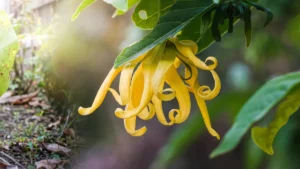
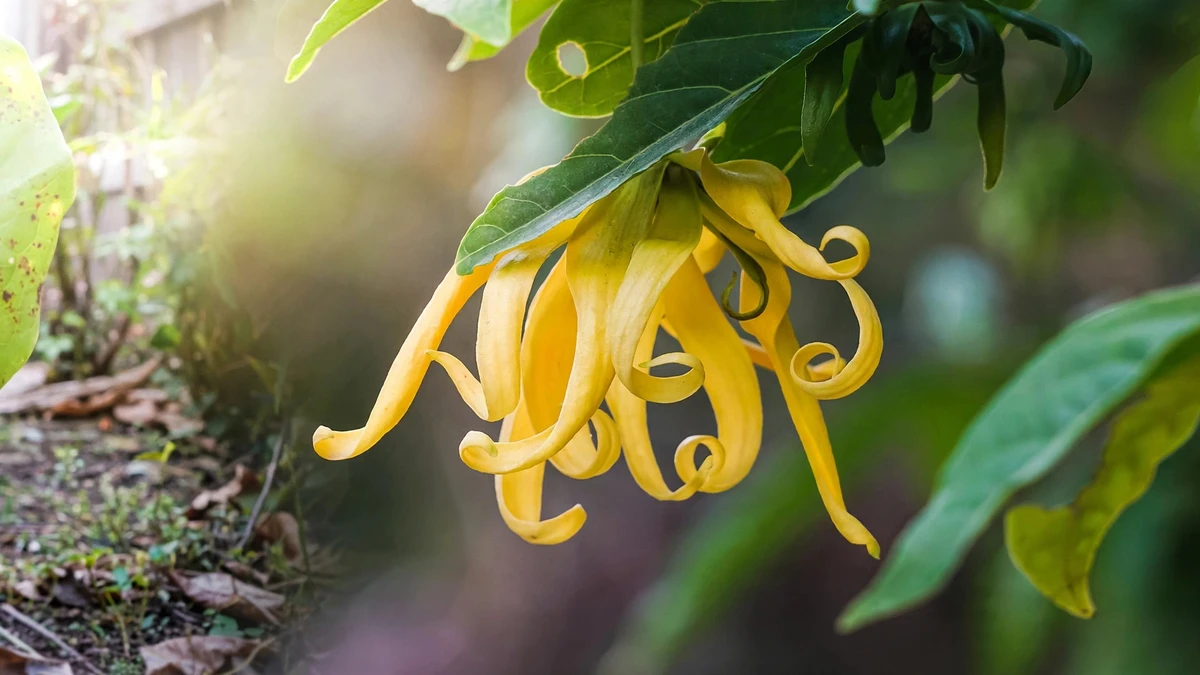
A ylang ylang perfume is a fragrance built around the scent of a small yellow flower, the blossom of Cananga odorata. It is not a perfume made from bananas, and it is not a perfume that smells of fruit in the everyday sense. What it smells of is warm custard, ripe banana, and soft jasmine, all at once.
It is one of the most widely used notes in perfumery, and also one of the most often misunderstood. It appears in everything from a $28 Elizabeth Arden spray to a $360 Le Labo parfum, and in each it does a different job: sometimes it sweetens the heart, sometimes it warms the base. The name on the pyramid changes too, from ylang ylang to Cananga odorata to ilang-ilang, which is why two people can be wearing the same note and never know it.
This guide explains what ylang ylang is, where it comes from, how it reaches a bottle, and how to tell it from jasmine and tuberose. The nine facts below cover the plant, the oil, the history, and how it behaves on skin, plus the cautions worth knowing.
Key takeaways
- A ylang ylang perfume is built around the blossom of Cananga odorata, and it smells of warm custard, ripe banana, and soft jasmine.
- The flowers are steam-distilled into an oil graded extra, I, II, III, and complete, and the grade decides how sweet and heavy the note smells.
- Ylang ylang, Cananga odorata, and ilang-ilang are the same flower under three names, while jasmine and tuberose are different flowers entirely.
- Chanel No. 5 made the note famous in 1921, and it has sat at the heart of classic perfumery ever since.
- The note is gentle on its own, but the spice and civet notes around it are not always so.
What a ylang ylang perfume is, in plain terms
A ylang ylang perfume is any fragrance in which the scent of the ylang ylang blossom plays a named, deliberate part. That sounds narrower than it really is, because the note seldom takes the lead. It almost never leads a composition, and that quiet role is why perfumers keep it on hand: it sweetens what is around it, warms what is underneath, and adds a creamy glow that no other floral can quite match.
The smell is easy to pick out once you have met it. Think of a custard left in the sun, a banana just turning ripe, and a jasmine flower warmed by the afternoon. The banana is not the sharp banana of fruit, and the jasmine is not the animalic jasmine of a summer night. Underneath it all there is a faint spiciness that keeps the note from turning flat.
Our earlier guide to frangipani perfume took the same plain-terms approach, and it works here too. A ylang ylang perfume is not a perfume that smells of bananas in any everyday sense. It is a perfume that borrows the blossom’s custard-like, banana-like, jasmine-like character to sweeten the rest of the composition.
How ylang ylang ends up in a bottle
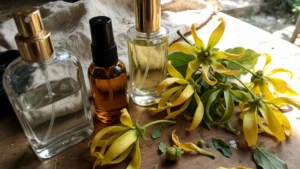
The blossom is steam-distilled into an oil graded by fraction. A perfumer does not press ylang ylang flowers and pour the result into a bottle. Instead, they distil the blossoms and draw off the oil in stages, and each stage smells different: the first, called extra, is sweet and light, while the last, called III, is heavy and almost rubbery. That is why two ylang ylang perfumes can smell so different, one building towards banana and sunshine, the other towards woods and spice.
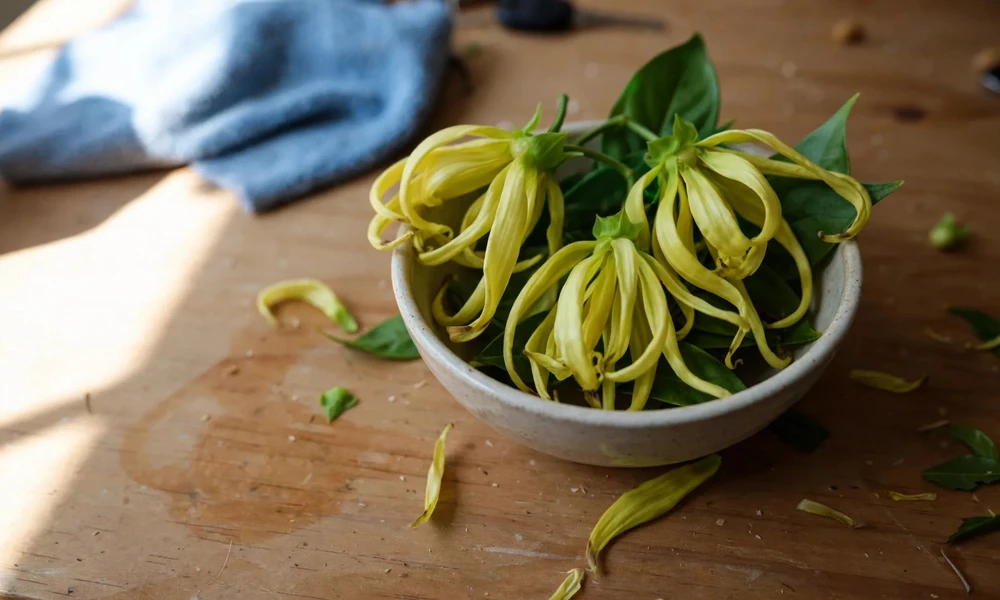
The oil is then placed in the pyramid, usually in the heart. In the heart it gives the middle its creamy sweetness and holds the composition together while the top notes evaporate. It is almost never placed in the opening, because it is too warm to announce a perfume, and rarely in the base on its own, because it needs woods or musk underneath to last.
Where it sits matters more than how much of it there is. A cologne with ylang ylang in the heart will carry it for hours, while an extrait with ylang ylang in the top will lose it within the hour. That is why one bottle can lose the note in an hour while another carries it all day.
Nine facts about ylang ylang perfume
The name means “flower of flowers” in Malay
What it shows: Ylang ylang comes from the Malay “alang-ilang”, which means flower of flowers, and it names the blossom of Cananga odorata, a tall tree that grows across Southeast Asia and the western Indian Ocean. The name is a promise: this is the flower perfumers reach for when they want a floral that does more than smell pretty.
What to consider: The name is spelled several ways on pyramids. “Ylang ylang” and “ylang-ylang” are the same note, “ilang-ilang” is the older Malay spelling, and “Cananga odorata” is the botanical name. A perfume that lists any of these names the same flower.
It grows in the western Indian Ocean, and Nosy Be grows the best
What it shows: The finest ylang ylang oil comes from Madagascar and the Comoros, especially the island of Nosy Be off the coast of Madagascar, where the flowers are picked at dawn and distilled the same day. The climate there gives the oil its custard-like sweetness, and oils from other regions smell thinner by comparison.
What to consider: Origin is not always on the bottle. A perfume that says only “ylang ylang” hides where the oil came from, while a house that names Madagascar or the Comoros is usually paying for the better grade.
The oil is graded extra, I, II, III, and complete
What it shows: The five grades are the fractions drawn off during distillation. Extra is the sweetest and most floral, I and II are softer and rounder, III is the heaviest and most rubbery, and complete is the whole oil blended back together. A perfume that uses extra will smell light and sweet, while one that uses III will smell dark and heavy.
What to consider: The grade is almost never on the bottle. A perfume that smells light and banana-like probably used extra, while one that smells dark and rubbery probably used III or complete.
Custard, banana, and jasmine: the three comparisons that capture it
What it shows: The three comparisons capture different parts of the note. Warm custard gives the soft, creamy depth, ripe banana gives the sweet, slightly fruity brightness, and soft jasmine gives the white-floral warmth underneath. Together they describe a smell that is floral without being sharp, sweet without being sugary.
What to consider: Treat those comparisons as a guide, not a promise. With citrus it smells brighter than with woods, and with vanilla it smells warmer than with spice.
Why perfumers put it in the heart of a blend
What it shows: Ylang ylang is too warm and too sweet to open a composition, so perfumers place it in the heart, where it can do its work and then stay. In the heart it gives the middle its creamy sweetness, and in the base it holds the drydown together while the lighter notes evaporate.
What to consider: Do not expect ylang ylang to greet you in the first spray. If you love the note, choose a heart placement like Samsara over a top placement; the heart lasts hours longer.
Four pairings show the note at its best: jasmine, tuberose, vanilla, and sandalwood
What it shows: The four pairings are the most common, and each shows a different side of the note. Jasmine sharpens it, tuberose deepens it, vanilla warms it, and sandalwood smooths it. Samsara is the classic sandalwood pairing, and Beautiful is the classic white floral pairing. Our guide to sweet clover perfume follows the same pairing-first approach.
What to consider: The pairing decides whether the perfume suits you. A jasmine pairing is bright and sharp, a vanilla pairing warm and sweet, a sandalwood pairing smooth and calm.
Chanel No. 5 made it famous, in 1921
What it shows: The note has two histories. Ylang ylang oil was already used in Macassar oil and Victorian hair tonics, but Chanel No. 5, from 1921, was the first major perfume to put the note at the heart of a modern classic. Dior J’adore, from 1999, was the second, and it made ylang ylang a reference point for the whole industry.
What to consider: Both perfumes are still made today, and they are the best way to smell the note’s past. For the most classic ylang ylang, try Chanel No. 5; for the most modern, try Dior J’adore. Neither is a pick in our roundup, because both already appear in earlier guides, but both are worth smelling.
Skin chemistry can push it towards heady, soapy, or rubbery
What it shows: Ylang ylang is a skin-dependent note. On most people it stays warm and custard-like, but on some it turns heady, like a room full of flowers, and on others it turns soapy, like old-fashioned bath soap.
What to consider: Always try it on your own skin first, and wear it for a full day. A paper strip will not show the soapy turn, and a five-minute shop test will not show the heady one. If it goes soapy on you, try a woodier pairing like Samsara; if it goes heady, try a greener one like 31 Rue Cambon.
A two-week bloom makes the harvest a race against the clock
What it shows: Ylang ylang flowers are picked at dawn, when the scent is strongest, and distilled the same day, because the blossoms lose their scent within hours of picking. The harvest runs for only a few weeks at a time, and the flowers must be gathered by hand, one by one.
What to consider: That short harvest is why the best oil costs what it does. An ylang ylang perfume that costs very little is probably using the later, heavier fractions, or a rebuilt accord, rather than the first-drawn extra.
Ylang ylang vs jasmine vs tuberose
The three names cause most of the confusion around this note, so it is worth setting them out plainly. Ylang ylang is the blossom of Cananga odorata, and it smells of warm custard, ripe banana, and soft jasmine. Jasmine is the flower of Jasminum sambac, and it smells richer, greener, and more animalic. Tuberose is the flower of Polianthes tuberosa, and it smells fleshier, greener, and more narcotic than either.
The three materials do different jobs: ylang ylang sweetens and warms, jasmine sharpens and deepens, and tuberose fattens and intoxicates. A perfume that names ylang ylang will smell creamy and warm, while one that names jasmine will smell darker and more animalic. Our guide to osmanthus perfume makes the same point about names that look alike yet mean different things.
When you are unsure, check the rest of the pyramid: vanilla, sandalwood, and musk point at ylang ylang. If the other notes are indole and dark woods, the jasmine is more likely doing the work. And if the pyramid says “ylang ylang” outright, it is definitely the flower, not a stand-in.
The caveats that matter
Ylang ylang is gentle, but buying it well takes care: the name changes from pyramid to pyramid, the note is an oil graded by fraction rather than a single material, and the scent can turn heady or soapy on some skins. The table below sets out what is worth knowing before you spend anything.
| Detail | What is known |
|---|---|
| What it is | A fragrance built around the blossom of Cananga odorata, smelling of warm custard, ripe banana, and soft jasmine |
| What it is not | Not jasmine or tuberose, which come from different flowers and smell darker and fleshier |
| How it is made | Usually an essential oil from steam-distilled flowers, graded extra, I, II, III, or complete, because the grade decides the smell |
| Where it sits | Heart in most perfumes; it sweetens over the first hour and stays for several more |
| Best season | Spring and summer, when its creamy warmth feels natural |
| Who should sample first | Anyone who finds heady florals overpowering should wear it for a full day before buying |
| Price range | $28–$35 at the low end, $340–$360 at the high end, for standard bottles in our roundup |
| What it does not do | It does not make a perfume last longer, and it does not suit every skin chemistry |
If your skin reacts easily, test any new perfume on a small patch first and wait a day. The blossom is gentle, but the spice and civet notes beside it can irritate.
Checklist: telling a true ylang ylang perfume from the rest
Work through these before you buy.
- Look at the pyramid first: it should name the flower in full, not just “exotic floral” or “white flowers”.
- Smell the grade: extra is sweet and light, complete is heavy and full; a perfume that says only “ylang ylang” hides which one it used.
- Wear it from morning to night before you decide: the banana facet arrives early, and the creamy depth is what stays.
- Compare it with jasmine and tuberose side by side: the three white florals smell alike at first, and the differences show up after an hour.
- Ask where the oil comes from: Madagascar and the Comoros grow the finest flowers, and the origin is usually on the bottle or the house’s site.
- Choose the smallest bottle when you are unsure: a 50 ml you finish beats a 100 ml left on the shelf.
Frequently asked questions
What is ylang ylang extra, and why does it cost more?
It means the first fraction drawn off during distillation. Extra is the sweetest and most floral grade of ylang ylang oil, taken in the first hour of distilling, while grade III is the heaviest and most rubbery. A perfume that uses extra will smell light and banana-like, while one that uses complete will smell dark and full.
Where does the banana smell in ylang ylang come from?
Because of the flower’s own chemistry. Ylang ylang oil contains compounds that the nose reads as ripe banana, the same family of molecules that give bananas their smell. The banana facet is strongest in the extra grade and fades as the oil gets heavier, which is why a light ylang ylang smells fruity and a dark one smells woody.
Can ylang ylang give you a headache?
Yes, on some people. The note is heady, and a strong dose in a warm room can feel overpowering. If it gives you a headache, try a lighter dose, a greener pairing like 31 Rue Cambon, or a smaller spray on the wrist rather than the neck.
Is ylang ylang the same flower as ilang-ilang?
Yes. Ilang-ilang is the older Malay spelling of the same name, and both point at the blossom of Cananga odorata. A pyramid that says “ilang-ilang” is naming the same flower, not a different note, and a perfume that lists it is a ylang ylang perfume by another name.
Can you wear ylang ylang when it is cold?
It suits spring and summer best, when its creamy warmth feels natural, but a woody or spiced pairing carries it into cold weather better than a light floral one. Samsara and Féminité du Bois wear well in autumn and winter, because the sandalwood and cedar underneath match the season.
How is ylang ylang oil made?
By steam distillation. The flowers are picked at dawn and distilled the same day, with the oil drawn off in stages called extra, I, II, and III. The whole oil blended back together is called complete, and each grade smells different, which is why two ylang ylang perfumes can smell so unlike each other.
The bottom line
A ylang ylang perfume is a fragrance built around the blossom of Cananga odorata, and it smells of warm custard, ripe banana, and soft jasmine. The note is usually an oil graded by fraction, it sits in the heart, and it goes by three names, while jasmine and tuberose are different flowers entirely.
Whatever you pick, check that the pyramid names the flower in full, wear it on skin for a full day, and judge it by how the creamy note grows over hours, not by the first minute. That is how you find one you will actually finish to the very last drop.