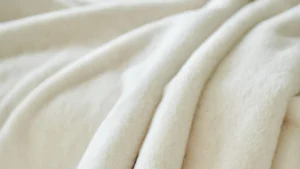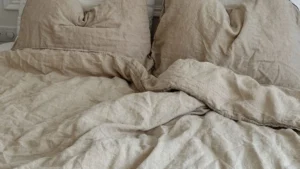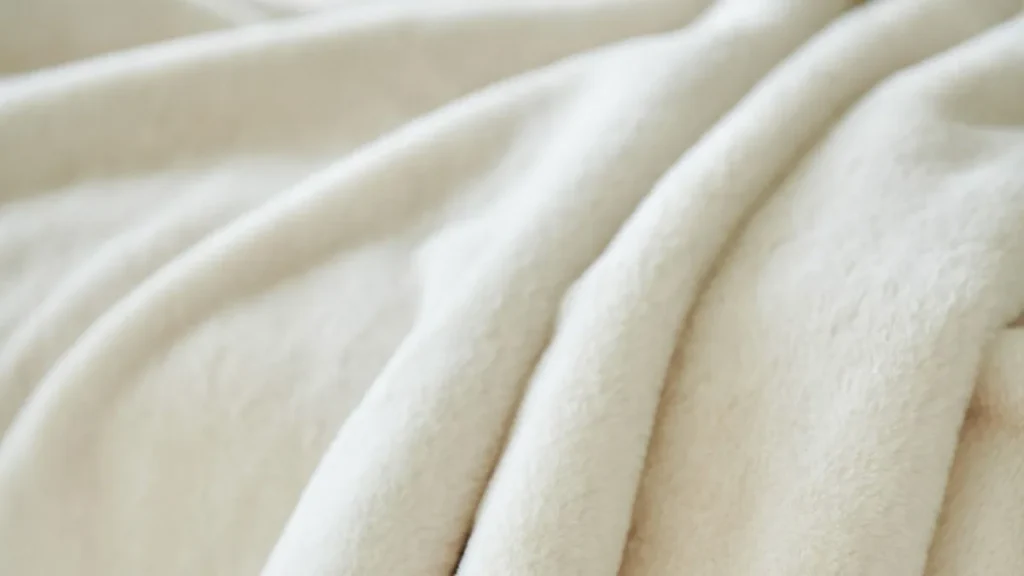
A luxury blanket is the simplest purchase in the bedroom and one of the easiest to get wrong. The wrong one slides off the bed at three in the morning, traps heat until you kick it away, or comes out of its first wash looking like a different object entirely. Price is no guarantee.
The difference between a blanket you reach for every night and one that ends up folded in a cupboard is the fit between the blanket and the way you sleep: your room, your temperature, your washing routine, and whether it covers a bed or a body.
This guide walks through that checklist in order: use, size, fibre, weight, weave, care, and budget — the method for judging any luxury blanket on its own merits.
Key takeaways
- Decide how the blanket will be used first — bed blanket, sofa blanket, or layer under a duvet — because use decides size, fibre, and care.
- Size is the most common mistake: a bed blanket covers the mattress edge to edge, while a throw suits one person on a sofa.
- Fibre decides feel and ageing: wool regulates temperature, cashmere is softest and most delicate, cotton washes easiest, and silk is cool but fussy.
- Weight in grams per square metre matters more than thickness: 200 to 300 gsm suits warm rooms, 300 to 450 gsm most bedrooms, and 500 gsm and above cold rooms.
- No label or price guarantees a good blanket — check size, fibre, weight, weave, and returns first.
Start with how you will actually use it
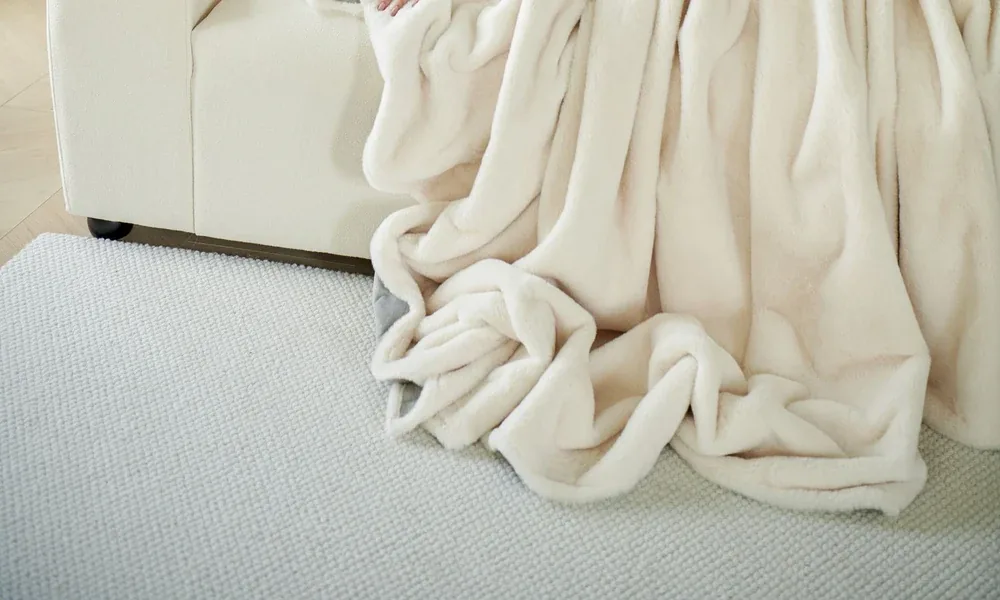
Every good blanket decision starts with an honest account of daily life, not with a photograph. A blanket for a bed you sleep under every night is a different object from one that dresses a sofa for an evening. For everyday sleep, prioritise a fibre you can wash at home and a size that stays tucked.
A blanket bought as a layer has a different job again. Slipped under a duvet, it adds warmth without the bulk of a second duvet, and it can be removed on a warm night without remaking the bed. A cold, draughty room wants a dense, heavy blanket, while a warm room wants a light, open weave. Before you compare fibres or prices, write down the blanket’s job in one sentence: the bed it covers, the season it serves, and who sleeps under it. Our guide to choosing a luxury throw covers the same thinking for sofa pieces.
Size: the mistake that ruins most blanket buys
The most common luxury blanket regret is the size, not the fibre or the price. Blanket sizes are not as standard as their names suggest: a queen blanket from one maker is not the same width as a queen from another. Measure the bed itself and compare with the blanket’s stated measurements, not its size name.
A true bed blanket covers the mattress edge to edge. As a rough guide, a twin runs about 66 by 90 inches, a queen about 90 by 90, and a king about 108 by 90. If a piece labelled a blanket barely covers half the mattress, it is a throw. Look for at least 10 to 15 centimetres of drop over each side of the bed, because a blanket that ends exactly at the mattress edge has nothing to hold it in place. Our guide to choosing a luxury bedding set covers the same measuring logic.
Fibre: what the blanket is made of
Fibre decides how a blanket feels against skin, how it handles heat, and how it ages. Wool is the default luxury fibre: it breathes and regulates temperature instead of trapping heat. Merino under 20 microns feels smooth against skin, while coarser wool above 30 microns prickles, so fineness matters more than the word wool on the label.
Cashmere is the softest fibre in this guide and the most delicate to own. It drapes beautifully and costs far more than wool, so check the exact percentage: a blend with a small cashmere share behaves like its main fibre. Cashmere pills, sheds a little at first, and usually needs gentle hand washing or dry cleaning.
Cotton is the most forgiving choice: breathable, washable at home, and softer with every wash. Linen is cool, textured, and better looking slightly creased than perfectly smooth. Silk is the coolest fibre to touch and the least practical to own: smooth and kind to skin and hair, but it fades in sunlight, water-marks easily, and usually needs professional cleaning. Most blankets are blends, and a good blend is not a compromise — but the label should name every fibre and its percentage.
Weight: warmth without the sweat
Weight is the number that tells you how warm a blanket will feel, and it matters far more than thickness. Makers state it in grams per square metre, or gsm. Roughly 200 to 300 gsm is a light blanket for warm nights and warm rooms. Roughly 300 to 450 gsm suits most bedrooms for most of the year. 500 gsm and above is a heavy blanket for cold rooms.
Thickness lies. A thick, loosely woven blanket can be lighter and less warm than a thin, densely woven one, because warmth comes from fibre and weave density, not from how puffy the blanket looks folded. Test it on your wrist, where skin is thin, and wait a few seconds. If you sleep hot, choose the lighter end and add a layer on cold nights.
Weave and construction: what holds it together
Weave is how the threads are crossed, and it decides the hand feel of a blanket more than fibre alone. A plain woven blanket lies flat, drapes cleanly, and stays put — the safest first luxury blanket. A brushed weave raises a soft nap and is the cosiest to touch, though it sheds a little at first and pills faster than a flat weave. A knitted blanket stretches and drapes around the body, suiting a sofa blanket, but it can snag and lose shape if washed roughly.
Quilting and stitching decide whether a filled blanket stays even. A filled blanket should be stitched through in squares or channels, so the filling cannot bunch — run your hand across it before you buy, because a cheaply stitched blanket feels lumpy. Edges are the most honest part: a well-made blanket has a bound, whipped, or fringed edge sewn firmly and evenly. A sloppy edge frays first.
Care: the cost nobody budgets for
Care is where luxury blankets quietly become expensive. A blanket that needs dry cleaning every time costs money with every clean, and one that cannot be washed at all will gather dust in a cupboard. Before you buy, read the care label as carefully as the fibre label.
Wool needs a gentle cold wash or dry cleaning, and it must never go through a hot wash or a hot dryer, which will shrink and felt it into a stiff mat. Cashmere needs gentle hand washing cold or dry cleaning, dried flat, never hung. Cotton washes at home and forgives the occasional mistake. Silk needs hand washing cold or dry cleaning, and it must never be wrung. Store it folded loosely, out of direct sunlight, clean and dry — damp storage invites moths and mildew.
Budget: what the price actually buys
A luxury blanket is not cheap, but price is a poor guide to quality on its own. A good wool bed blanket in a queen size typically costs roughly $110 to $300, depending on fineness and weave. Genuine cashmere can cost several times a wool blanket. Silk-filled blankets typically run roughly $180 to $550 for a queen.
What the price should buy is honesty: a named fibre with a percentage, a stated weight, a stated size, and a care label that matches the fibre. A blanket that gives you all four is worth more than one that gives you a grand name and none of them. The best value is usually the middle of the range: a fine merino or lambswool blanket, honestly labelled and well finished, will outlast a far more expensive one bought for its name and cared for badly.
The caveats that matter
| Detail | What is known |
|---|---|
| Blanket vs throw | A bed blanket covers the mattress edge to edge; a throw suits one person on a sofa. |
| Fibre percentages | A blanket sold as cashmere or silk can be mostly another fibre — check the percentages. |
| Wool and sensitive skin | Merino under 20 microns usually feels smooth; coarser wool above 30 microns often prickles. |
| Weight and hot sleepers | Above about 500 gsm, a blanket can overheat a warm sleeper. Choose the lighter end and layer up. |
| Washing wool and cashmere | Hot water and hot dryers shrink and felt wool. Wash cold and gentle, dry flat, and never wring silk. |
| Sunlight and silk | Strong sunlight fades silk and breaks the fibre down. Keep silk blankets out of direct sun. |
| Allergies and dust | Wool and silk resist dust mites, but a blanket that cannot be washed still gathers dust. |
| Returns and sleeping trials | A blanket cannot be judged folded on a shelf; a returns policy allowing a few nights of use beats a discount. |
Checklist before you buy
- Write down the blanket’s job in one sentence: the bed or sofa it covers, the season it serves, and who sleeps under it.
- Measure the bed and compare with the blanket’s stated measurements, allowing 10 to 15 centimetres of drop per side.
- Read the label for every fibre and its percentage, and check the weight against your room.
- Hold it against your wrist, check the weave for thin patches, and feel for lumps.
- Read the care label and ask whether you will actually follow it, including the cost of dry cleaning if it needs it.
- Check the returns policy before you pay, and keep the receipt until you have slept under it for a few nights.
Frequently asked questions
What size blanket do I need for a queen bed?
A queen bed blanket runs about 90 by 90 inches, with enough drop over each side to stay tucked. Measure your mattress first, because queen sizes vary by maker. Our roundup of the best luxury wool blankets shows how size, weight, and weave work together in real pieces.
How much should a luxury blanket cost?
A good wool bed blanket in a queen size typically costs roughly $110 to $300, while silk-filled blankets typically run roughly $180 to $550 and genuine cashmere costs far more. The price should buy honesty: a named fibre with a percentage, a stated weight and size, and a matching care label.
What is the best fibre for a luxury blanket?
It depends on the job. Wool regulates temperature and suits most bedrooms year-round. Cashmere is the softest and most delicate. Cotton is the easiest to wash. Silk is cool and kind to skin but fussy to care for.
How do I tell a real luxury blanket from a cheap one?
Check four things: the label names every fibre with a percentage, the weight is stated in grams per square metre, the size is stated in inches or centimetres, and the edges are firmly finished. Hold it against your wrist and to the light to check for thin patches.
Can you machine wash a luxury blanket?
It depends on the fibre. Cotton usually washes at home. Wool needs a gentle cold wash or dry cleaning, cashmere gentle hand washing or dry cleaning, and woven silk hand washing or dry cleaning.
How heavy should a blanket be?
Roughly 200 to 300 grams per square metre suits warm rooms, 300 to 450 gsm most bedrooms, and 500 gsm and above cold rooms. Weight matters more than thickness.
The bottom line
A luxury blanket earns its place by being the thing you reach for every night without thinking about it: a bed-sized layer, honestly labelled, with a fibre, weight, and weave that match your room. Measure first, read the label second, and test it against your wrist before you pay.
Buy the size first and the fibre second. A blanket that does not cover the bed will not stay on it, and one you cannot clean will live in a cupboard. Get those two things right, and a good blanket lasts a decade.
Note: Prices in this guide are general bands for 2027, not listings for one product, and care instructions vary by maker — always check the label on the exact blanket you buy.
Meet Our Experts
Our home and textiles editors cover bedding, fibres and bedroom design, and review published specifications, fill weights and care labels before recommending a piece.
Why Trust BrassSmile
We recommend only products with a published composition, size and price, and say plainly where a maker does not publish a figure. We do not invent test results.
Sources
Good Housekeeping Institute textile guides; The Woolmark Company fibre guides; Textile Exchange materials guidance; Pexels photography by SlipcoverKAS .COM.