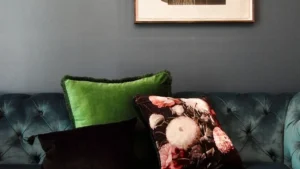
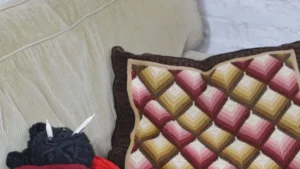
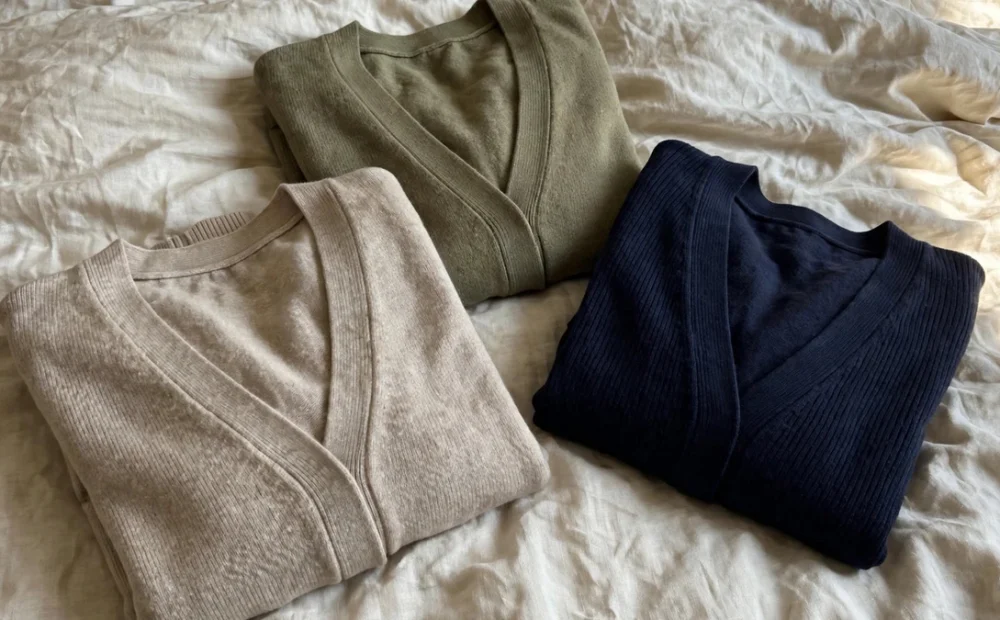
A luxury throw is the smallest change that makes a living room feel finished. Draped over a sofa arm it softens hard lines, and pulled across your knees on a cold evening it turns an ordinary night in into something worth staying home for. The trouble is that “luxury throw” now covers everything from a thin polyester blanket with a fancy label to a densely woven cashmere throw that will still look good in five winters, with prices from sixty to six hundred dollars.
Choosing well means matching five decisions in order: where the throw will live, what size that spot needs, which fibre suits your use, how much weight and warmth you want, and how much care you will give it.
This guide walks through those decisions with the numbers that matter — sizes, fibre fineness, weights and price bands. There is no picks list here and no brand roundup: the point is the checks, so the throw you buy is the one you will actually reach for.
Key takeaways
- Start with the room, not the label: the sofa and the climate decide size, weight and fibre before you look at a single throw.
- A true throw is about 50 by 60 inches — big enough for one person on a sofa, small enough to fold over an arm. Anything much larger is a bed blanket.
- Fibre decides feel, warmth and care: cashmere softest and lightest, merino wool warmest for its weight, velvet most decorative, cotton easiest to wash.
- Weight is the honest number: check grams per square metre. A heavy throw in a warm room is as useless as a light one in a cold room.
- Price bands below are general guides, not listings, and labels are loosely policed — a throw sold as cashmere or wool can contain only a small percentage of the fibre, so the composition label matters more than the name.
Start with the room, not the label
The room decides the throw. A cold living room with hard floors and a draught wants a dense, heavy throw that stays put. A warm bedroom wants a light weave that breathes. A sofa shared with children or dogs wants a throw that can be washed without a crisis, and a formal sitting room wants one that looks good folded, because that is how it will spend most of its life.
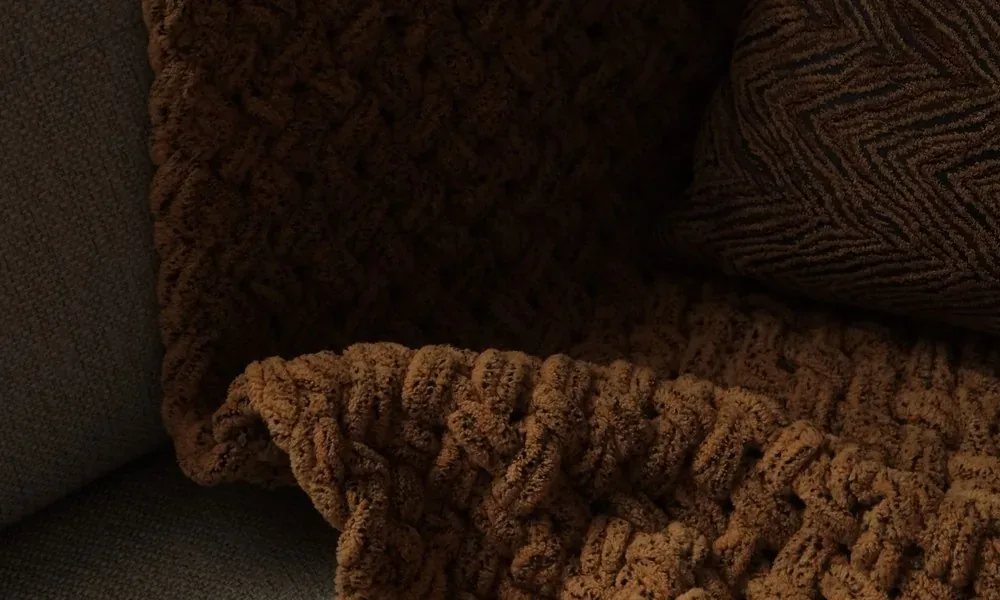
Think about who will use it, too: a throw for one person in an armchair has a different job from one two people share.
Size: the first decision
Size is the one decision you cannot fix later. A throw that is too small leaves cold shoulders and cold feet; a throw that is too big slides off the sofa, pools on the floor and gets walked on. Measure the spot first, not the throw.
A standard throw of about 50 by 60 inches, or roughly 130 by 150 centimetres, suits one person on a sofa or in an armchair: it covers shoulders to feet and folds neatly over an arm. An oversized throw, around 60 by 80 inches, suits two people sharing a sofa. Anything larger is a bed blanket. Check the stated size: some makers measure before hemming, some include the fringe.
Fibre: what each one actually gives you
Cashmere is the softest and the lightest. Good cashmere, around 14 to 15.5 microns, feels silky against bare skin with no prickle, and traps great warmth in little weight: a throw typically weighs 300 to 500 grams yet feels warmer, weight for weight, than wool the same size. The trade-off is care — most cashmere needs dry cleaning or a careful hand wash. Our guide on what a cashmere throw actually is explains grades and weaves.
Merino wool is the warmest for its weight and the most practical luxury fibre. Merino under 20 microns feels smooth against skin and regulates temperature rather than just trapping heat. Coarser wool above 30 microns usually prickles, so feel it against the inside of your wrist first. Our roundup of the best luxury wool throws covers merino, lambswool and alpaca.
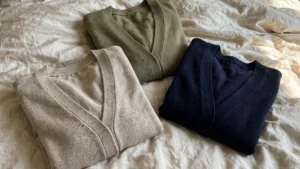
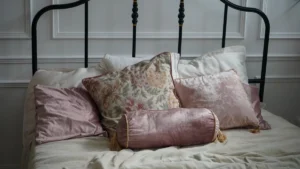
Velvet is a weave, not a fibre, and the most decorative choice. Silk velvet has a liquid drape and a glow no synthetic can imitate, but it is expensive and usually dry clean only. Cotton velvet is the most practical: matte, soft, often machine washable. Polyester velvet is the cheapest and easiest to clean, and fine as long as it is sold honestly.
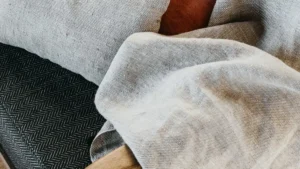
Cotton is the easy-care option: it machine-washes, dries quickly, and suits warm rooms and homes with children or pets. It is rarely as warm as wool or cashmere, but a cotton throw used every day is worth more than a cashmere throw kept in a drawer. Read the composition label, not the headline.
Weave, weight and drape
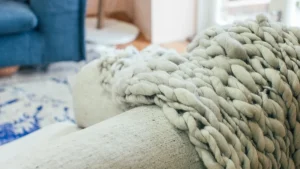
Once you have chosen a fibre, the weave decides how the throw behaves. A flat woven throw is structured and neat, draping in clean lines and holding its shape for years. A knitted throw is softer, stretchier and cosier — but open knits let air through, so they feel less warm than their bulk suggests.
Weight is the honest number, often given in grams per square metre: light is around 200 to 300, medium around 300 to 400 and suits most living rooms, and heavy is above 400, blocking draughts and staying put — but it can feel too warm in a heated room and too heavy to wash at home. If a maker will not state the weight, pick the throw up: it should feel substantial, not thin.
Drape is easy to judge: hold the throw by one corner and let it hang. A good throw falls in soft, even folds, while a stiff throw holds its shape like cardboard.
Colour and pattern
Colour comes last: it is the easiest decision to change your mind about, and the least important to the throw’s job. Start with the room’s palette, not the throw’s. Neutrals — cream, grey, camel, charcoal — work in almost any room and hide wear well.
Think about how the colour will age. Dark colours hide stains but show lint and pet hair; pale colours hide lint but show every spill. A mid-tone, such as warm grey, camel or sage, is the safest compromise. The same logic applies to pattern: a plain throw is the most versatile and never dates, a striped or herringbone throw adds structure and hides wear, and a bold print is the riskiest choice. First luxury throw? Buy plain.
Care: the cost nobody prices in
Care is the hidden price of a luxury throw. One that costs two hundred dollars and needs dry cleaning four times a year costs far more over five years than one that costs three hundred and goes in the washing machine. Read the care label as carefully as the composition label.
Dry-clean-only throws — most silk velvet and many cashmere throws — are fine for a formal room used gently, and a poor choice for a family sofa or a home with pets. Machine-washable throws — most cotton, many wool blends, and some polyester velvets — are the practical choice: wash cold on a gentle cycle, inside out if you can, and never tumble dry a natural-fibre throw, because heat shrinks wool and flattens velvet pile. Store it folded, not hung, out of direct sunlight.
Budget: what the price bands buy
As a general guide, a good cotton or polyester velvet throw costs roughly $60 to $150, a good wool throw roughly $90 to $220, a good cashmere throw roughly $150 to $450, and a silk velvet throw roughly $250 to $550.
Below those bands, be suspicious: a throw far below $60 claiming to be cashmere, or far below $80 claiming to be silk velvet, is almost certainly a blend with a small percentage of the named fibre. Above those bands, ask what the extra money buys — sometimes a finer fibre or a denser weave, sometimes only a famous name. If you cannot tell the difference from the one at half the price, buy the cheaper one.
The caveats that matter
| Detail | What is known |
|---|---|
| Size | True throw about 50 by 60 inches; oversized 60 by 80; larger is a bed blanket. |
| Cashmere | Softest, lightest, 14 to 15.5 microns Grade A, $150 to $450, usually dry clean only. |
| Merino wool | Warmest for its weight, under 20 microns smooth, $90 to $220, gentle wash or dry clean. |
| Velvet | A weave, not a fibre; silk velvet $250 to $550, cotton velvet $80 to $180. |
| Cotton | Easiest to wash, $60 to $150, suits warm rooms and pets, less warm than wool. |
| Weight | Light 200 to 300 gsm, medium 300 to 400, heavy above 400. |
| Labels | Loosely policed: check the composition label for the exact fibre percentage. |
| Care cost | Dry cleaning adds real cost over a year; washable throws suit daily use. |
Checklist: before you buy a luxury throw
- Measure the spot first: 50 by 60 inches suits one person; two people need closer to 60 by 80 inches.
- Read the composition label, not the marketing: check the exact fibre and its percentage.
- Feel it against the inside of your wrist: thin skin there tells you in seconds whether it prickles.
- Check the weight and the weave: ask for grams per square metre, and hold the throw by one corner to test the drape.
- Decide who will clean it before you buy: dry-clean-only costs real money over a year; washable suits daily use.
- See the colour in daylight: shop lighting flatters everything.
Frequently asked questions
What size is a luxury throw?
Most luxury throws are about 50 by 60 inches, covering one person on a sofa; oversized throws, around 60 by 80 inches, suit two people. Our roundup of the best luxury throw blankets covers the wider market.
How much should a luxury throw cost?
As a general guide, cotton or polyester velvet costs roughly $60 to $150, wool $90 to $220, cashmere $150 to $450, and silk velvet $250 to $550.
Is cashmere worth it for a throw?
Cashmere is worth it if you want the softest, lightest throw and will care for it: it feels silkier than wool, weighs almost nothing, and grows softer with use. For daily use by children or pets, or if dry cleaning would put you off using it, a good wool throw is warmer for its weight and easier to live with.
Can you machine wash a luxury throw?
It depends on the fibre. Most cotton throws and many wool blends are machine washable on a gentle cold cycle, but silk velvet almost always needs dry cleaning, and most cashmere needs dry cleaning or a careful hand wash. Never tumble dry a natural-fibre throw.
How do I stop a throw sliding off the sofa?
Weight and weave decide it: a throw above 400 grams per square metre stays put far better than a light one, and a quilted or tightly woven throw grips better than a smooth silk velvet. Tucking one end behind a cushion also helps.
What is the best colour for a luxury throw?
There is no single best colour — it depends on the room. Mid-tones such as warm grey, camel or sage are the safest: they hide lint and stains better than very pale or very dark colours.
The bottom line
Choose a luxury throw the way you would choose anything you will touch every day: start with the room, then the size, the fibre, the weight and the care, and let colour come last. A throw that fits its spot, feels good against skin, and survives its own washing instructions will be used every day — and that is what makes it luxury, not the price on the label.
If you remember one thing, remember the label. The composition label tells you what the throw is, the care label what it will cost to keep, and the size whether it will fit the sofa. Check all three before you pay, and buy the throw you will actually reach for.
Note: Prices above are general bands, not listings for one product, checked in November 2026. Check the listing before buying, and follow the care label.
Meet our experts
Our home and lifestyle editors cover bedding, textiles and interiors, and check compositions, sizes and prices against published listings.
Why trust BrassSmile
We recommend only products with a published composition, size and price, and say plainly where a maker does not publish a figure. We do not invent test results.
Sources
Published retail coverage and textile care guidance from interiors publications, and published fibre information on cashmere grades, wool microns and velvet weaves from textile reference sources.