A cashmere throw is the small blanket you reach for on the sofa: light enough to fold over one arm, warm enough for a cold evening, softer than any ordinary wool. It is not a bed blanket, not a scarf, and not simply a smaller cashmere blanket. It is its own thing, with its own size, weave and job.
The confusion is understandable. Shops use throw, blanket and wrap almost interchangeably, and a cashmere throw can cost ten times a wool one while looking, at a glance, like the same rectangle of cloth. The difference is the fibre. Cashmere is the fine undercoat goats grow to survive freezing winters, and each goat produces only a small amount of it each year. That scarcity is what makes a real cashmere throw feel the way it does.
This guide explains what a cashmere throw actually is: where the fibre comes from, what the grades mean, how throws are woven and knitted, their sizes, and how a throw differs from a blanket. No product picks, no buying shortlist — just the facts, so you know what you are looking at next time one is draped over a sofa.
Key takeaways
- A cashmere throw is a small, single-person blanket, usually about 50 by 60 inches, made from the fine undercoat of cashmere goats, meant for a sofa or a chair.
- Genuine cashmere is rare: each goat grows only a little soft undercoat a year, combed out in spring, then cleaned and de-haired.
- Grade A cashmere is around 14 to 15.5 microns wide and 34 to 36 millimetres long; finer, longer fibres feel silkier and pill less.
- Woven throws are flat and structured and drape neatly, knitted throws softer and stretchier; two-ply yarn is the standard for a throw used daily.
- Labels are loosely policed: a throw sold as cashmere can contain only a small percentage of the fibre, so the composition label matters more than the name on the front.
What a cashmere throw actually is
A throw is a small blanket for one person, usually about 50 by 60 inches, or roughly 130 by 180 centimetres — long enough to cover shoulders to feet, small enough to fold over an arm. A cashmere throw is that same small blanket made from cashmere, the fine undercoat of the cashmere goat.
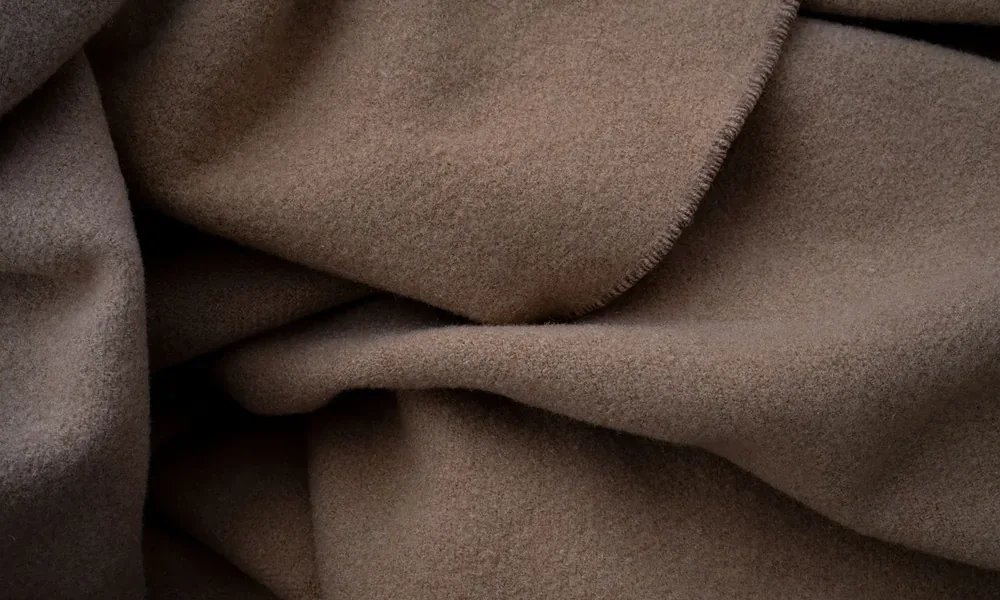
Its job is warmth in the living room, not warmth in bed. A throw lives on a sofa or an armchair, ready to be pulled across your lap on a cold evening, doubling as decoration: folded over a sofa arm, it softens the room in a way a bare cushion never does. Because it is small, it is also the most affordable way into cashmere: a full bed blanket uses far more fibre and costs far more.
What sets it apart is the fibre. Cashmere fibres are hollow and very fine, so they trap a great deal of still air in very little weight. A cashmere throw typically weighs 300 to 500 grams, yet it is warmer, weight for weight, than a wool throw of the same size. It feels silky and almost buttery against bare skin, with no prickle at all, and it grows softer with use.
The fibre: where cashmere comes from and what the grades mean
Cashmere comes from the undercoat of cashmere goats, which live in high, cold places, mostly Mongolia and Inner Mongolia. In winter they grow a dense, fine layer of down beneath their coarse outer guard hairs, and in spring that undercoat is combed away by hand, then cleaned and de-haired, separating the fine fibres from the coarse guard hairs, leaving the soft material that becomes yarn.
Each goat yields only a small amount of that fine undercoat in a year, which is the first reason genuine cashmere is expensive; the second is grading. The finest cashmere, usually called Grade A, has fibres around 14 to 15.5 microns in diameter and roughly 34 to 36 millimetres long. Those long, fine fibres lie smoothly, feel silky and resist pilling, because fewer loose ends rub together.
Grade B has thicker fibres of around 19 microns and shorter lengths, so it feels less luxurious and pills more. The lowest grade, around 30 microns, is barely finer than ordinary wool, and a throw made from it feels much like a wool throw at a cashmere price. Short fibres under about 25 millimetres pill aggressively, because their ends work loose, while longer fibres from around 30 millimetres stay locked into the yarn. Grade A, de-haired or long-staple are useful signals; vague claims such as premium cashmere tell you little. Our guide to what to look for in a cashmere blanket explains the same checks for a larger blanket.
Weave, ply and weight: how a cashmere throw is made
Once the fibre is spun into yarn, a throw is made in one of two ways: woven or knitted. A woven cashmere throw is made on a loom, with yarns crossing at right angles. It is flat, structured and smooth, drapes neatly over a sofa arm, and holds its shape well; most classic throws — fine herringbone or twill, with a fringed edge — are woven. A knitted throw is made from loops of yarn, like a very large, flat jumper: softer and stretchier, though the open structure lets air through, so it is less warm than its bulk suggests and snags more easily.
Ply describes how many strands of yarn are twisted together. A single-ply throw uses one strand, so it is light and delicate — lovely for layering or a mild evening, but less resilient under daily use. Two-ply yarn twists two strands together, making the fabric stronger, warmer and better at holding its shape — the minimum for a throw used every day. Three-ply and higher yarns are thicker and warmer, though heavier and less fluid.
Weight is measured in grams per square metre, or GSM — one of the most honest numbers on a product page. Under about 250 GSM a cashmere throw is light and best as a layer; around 300 to 450 GSM is the everyday sweet spot, warm without stiffness; above 500 GSM it is a heavy, winter-weight throw that feels substantial but folds less neatly. Well-made throws have bound, hemmed or hand-knotted fringed edges that lie flat; raw edges curl and fray.
Throw sizes, and how a throw differs from a blanket
Size is the simplest way to tell a throw from a blanket. A throw is about 50 by 60 inches, made for one person on a sofa. A blanket is larger — a typical bed blanket is 60 by 80 inches or more — and is made to cover a bed, or two people, while they sleep. Anything much larger is a blanket, whatever the label says.
The difference is not only size. A blanket is a sleeping layer: heavier, often thicker, chosen for warmth through the night. A throw is a living-room layer: lighter, more decorative, and chosen as much for how it looks folded over a sofa as for how warm it is. A throw is handled far more often — folded, unfolded, draped, carried from room to room — so its drape and edges matter more than a bed blanket’s.
Throws come in a few standard variations. A small lap throw, around 40 by 50 inches, covers knees and lap and suits a reading chair. The standard 50 by 60 inch throw is the one-person sofa size. An oversized throw, around 60 by 70 inches, covers two people sitting close together or one person on a deep sofa. Cashmere suits the throw format well: the fibre is so light for its warmth: a wool throw of the same warmth weighs 800 grams to 1.5 kilograms, against 300 to 500 grams for cashmere. Our comparison of cashmere versus wool blankets sets out where each fibre wins on warmth, weight, feel, durability, care and price.
The caveats that matter
Cashmere has a reputation that invites exaggeration; the table below is the short version, before any label is believed.
| Detail | What is known |
|---|---|
| Softness | Decided by fineness: Grade A at 14 to 15.5 microns feels silky; fibres near 30 microns feel little different from wool. |
| Pilling | Normal for fine, short fibres; longer fibres above 30 millimetres and two-ply yarn pill less. |
| Blends | Common and not always bad, but a throw can be sold as cashmere with only a small percentage of it — check the composition. |
| Price | Genuine cashmere is costly because each goat yields so little undercoat; a very cheap throw is almost always a blend. |
| Washing | Most cashmere needs gentle hand washing in cool water and drying flat; hot water or a tumble dryer can shrink and felt it. |
| Moths | Cashmere is a favourite moth food: store throws clean, dry and folded away from moths and sunlight in summer. |
| Shedding | A little shedding at first is normal; heavy, ongoing shedding points to short fibres. |
| Warmth | Cashmere is warmer for its weight than wool, but wool stays warm when damp and is tougher. |
Checklist: before you call it a cashmere throw
- Check the size is about 50 by 60 inches — much larger and it is a blanket, not a throw.
- Read the label for the exact cashmere percentage, not just the word cashmere.
- Test softness on the inside of your wrist, where skin is thin and honest.
- Look at the weave and edges: even weaving, and bound, hemmed or fringed edges that lie flat.
- Check the care label: gentle hand wash in cool water, dry flat, is normal for pure cashmere.
- Choose colour for real life: undyed neutrals hide wear, pale colours show stains, deep colours show lint.
Frequently asked questions
What size is a cashmere throw?
A standard cashmere throw is about 50 by 60 inches, or roughly 130 by 180 centimetres — big enough for one person on a sofa, small enough to fold over an arm. Lap throws run 40 by 50 inches, oversized throws 60 by 70.
Is a cashmere throw warmer than a wool throw?
Cashmere is warmer for its weight and softer against bare skin, but wool is tougher and stays warm when damp. A cashmere throw weighs 300 to 500 grams against 800 grams to 1.5 kilograms for a comparable wool throw.
Can you wash a cashmere throw?
Most pure cashmere throws should be hand washed gently in cool water, then dried flat away from direct heat. A hot wash or tumble dryer can shrink and felt the fibres beyond repair, so follow the care label.
Why does my cashmere throw pill?
Pilling is normal for cashmere, especially in the first weeks, because fine fibres work loose where the fabric rubs. Longer fibres and two-ply yarn pill less; a fabric comb removes pills without damaging the weave.
Is a cashmere throw worth the price?
It depends on how it will be used. For a throw that lives on a sofa and is used daily, the softness and lightness of genuine cashmere are hard to match, and a well-cared-for throw can last a decade. With children or pets, a washable wool throw is usually the more practical luxury.
What is the difference between a throw and a blanket?
A throw is a small, single-person blanket of about 50 by 60 inches, made for a sofa or chair and chosen as much for decoration as warmth. A blanket is larger, usually 60 by 80 inches or more, made to cover a bed or two people while they sleep.
The bottom line
A cashmere throw is a small, single-person blanket made from one of the finest fibres in the world: the soft undercoat of cashmere goats, combed out once a year in spring, graded by fineness and length, then woven or knitted into a piece that is light, warm and silky. Its size sets it apart from a blanket, its fibre from a wool throw, and its weave decides how it drapes, wears and should be cared for.
Start with the label, not the name on the front. Check the size, the exact cashmere percentage and the care instructions, feel it against your wrist: a suspiciously cheap cashmere throw is almost always a blend. To see how the other fibres compare, our roundup of the best luxury wool throws covers merino, lambswool and alpaca in true throw sizes.
Note: Fibre grades, sizes and prices are general guidance, not a guarantee for any one product, and care varies by maker. Check the label before buying.
Meet our experts
Our home and lifestyle editors cover bedding, textiles and interiors, and check compositions, sizes and prices against brand listings.
Why trust BrassSmile
We recommend only products with a published composition, size and price, and say plainly where a brand does not publish a figure. We do not invent test results.
Sources
Cashmere fibre and care guidance from the International Wool Textile Organisation and the Woolmark Company, and published retail coverage from Better Homes & Gardens and The Spruce.