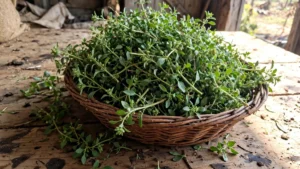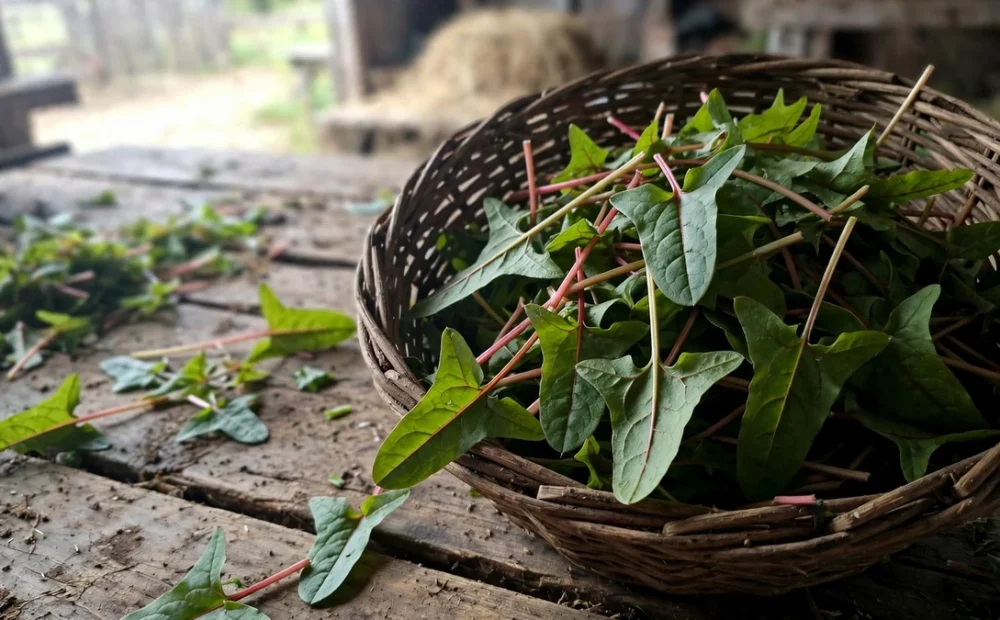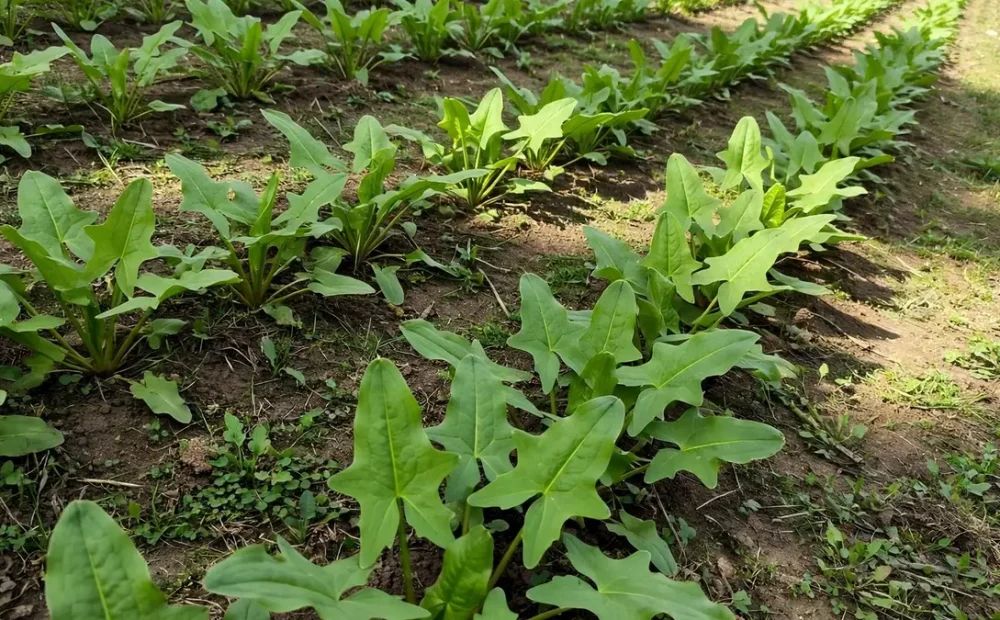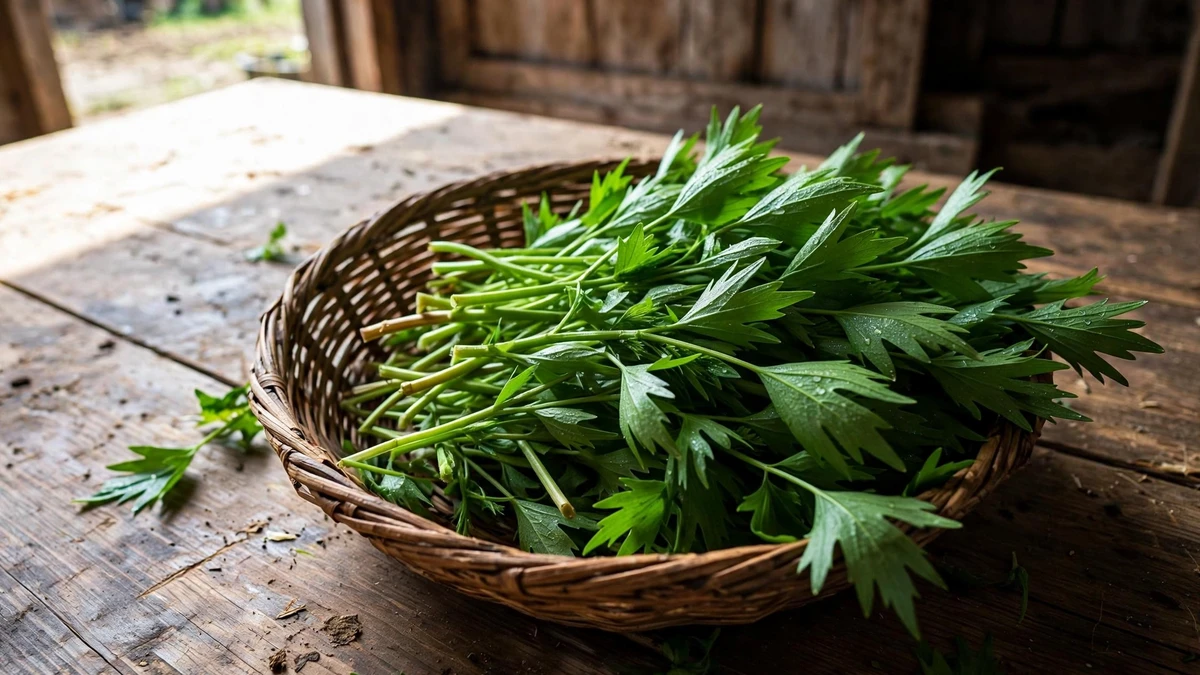
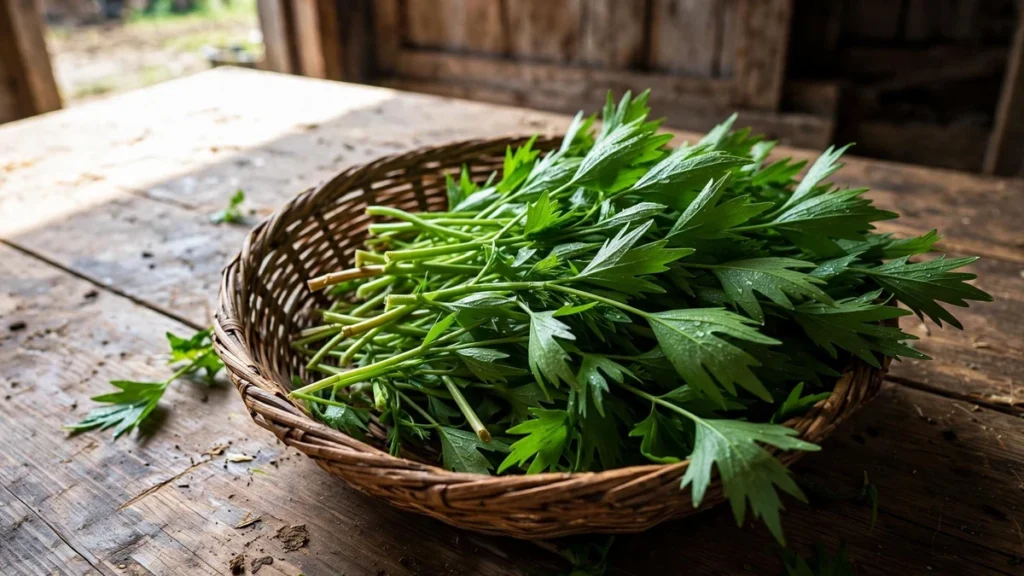
Planning a lovage farm escape works backwards from most holidays. Nothing is booked until the farm says when it will cut, because the plant decides the calendar. Lovage is at its best in the weeks before it flowers, when the leaves are full of flavour and the scent is at its deepest, and the farms name that week only a few weeks ahead. Book the flights first and you may arrive to plants that have already flowered, which smell lovely and cook mild.
The holiday itself is short and simple: three to five nights on a working farm, a room in the farmhouse, meals from the farm kitchen, and mornings among the tall beds. The plants grow taller than a person, so the work is done from the paths with a sharp knife, and the leaves are carried to the kitchen. Guests are welcome to cut a bundle, strip leaves for the broth, or watch the roots come out of the ground in autumn, and just as welcome to read on the porch.
This guide sets out the nine steps for a lovage farm escape in 2027, from telling the leaf from the root to packing for the cutting and bringing the farm’s own dried lovage home.
Key takeaways
- Wait for the farm’s cutting week before booking flights, because the week is fixed only a few weeks ahead and the flavour is at its best just before flowering.
- Learn the difference between the leaf and the root first, since the leaf is cut in summer and the root is dug in autumn, and the two cook differently.
- These are small working farms with plain rooms and one shared supper table, so pack for mud, rain and tall plants, not for a hotel.
- Closed shoes and long sleeves are essential for the cutting, with boots that rinse clean, a wide hat and a soft bag with room for dried lovage on the way home.
- Tell the kitchen about gluten-free eating in the first email, because the farm’s bread is nearly always wheat even though the lovage itself is safe.
What a lovage farm escape involves
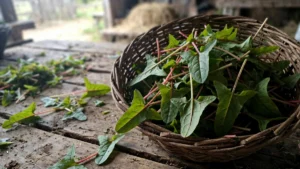
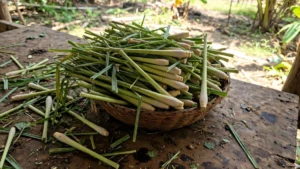
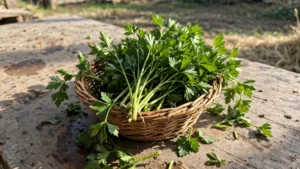
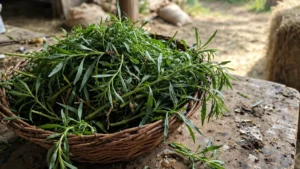
A lovage farm escape is three to five nights on a farm, timed to the cutting, with the farmhouse as the base and the tall beds as the reason for the trip. You sleep in a farmhouse room or a converted barn, eat what the farm kitchen cooks, and spend the mornings where the lovage grows, watching the leaves cut with a knife, the bundles carried to the kitchen, and the fresh leaf torn into soup, broth and stew. Every great lovage region grew up around a soup pot: Germany folds the leaf into potato soup, Poland stirs it into broth, and the farms of the Balkans dry it for winter stews. Lovage is a tall perennial in the celery family, and German cooks call it the Maggi plant, for the seasoning its flavour recalls.
The days follow the plant. Cutting starts in the cool of the morning, before the sun draws the scent out of the leaves, and the afternoons are for drying and long teas on the porch. Supper is one table shared by everyone staying, the rooms are plain, and the work is offered rather than imposed. A guest who wants to cut a bundle is welcome to cut one, and a guest who would rather read is welcome to read. The escape is brief and unhurried, and the lovage is everywhere: in the soup, in the broth, in the scent that rises when a leaf is torn.
How to plan it, and what to ask first
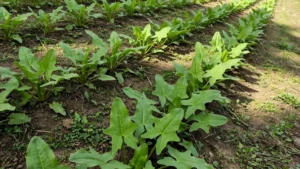
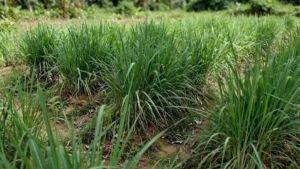
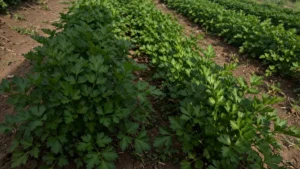
The plant comes first, not the map. Lovage is a perennial, so it comes back each spring from the same roots, and a bed in its third or fourth year is at its best. Ask how old the farm’s beds are and whether the root is dug in autumn, and the rest of the plan comes together on its own.
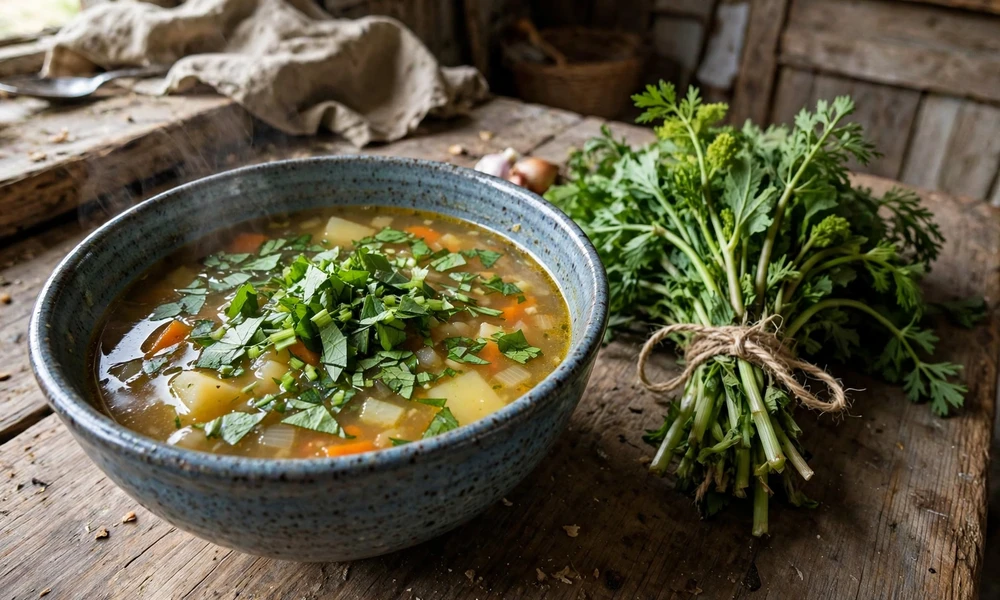
Put three questions in your first email. One, the cutting week: the dates it falls on, and whether guests will be there for the cut or arrive just before it. Two, the rate: what it covers, with supper, the drive in from the nearest town and walks among the beds counted in the price rather than charged on arrival. Three, the kitchen: what it can cook for you if you eat gluten-free, since a farm table nearly always serves wheat bread. A farm that answers all three plainly is worth booking. The basil farm escape is planned on the same three questions, and the farms that answer them well are the ones guests tend to remember.
The 9 steps to plan a lovage farm escape
Work out leaf or root before you choose a farm
What to do: Decide what you want from lovage before you pick a farm. The leaf is cut in summer for soups and broths, while the root is dug in autumn for the stock pot, and farms offer one or the other depending on the season.
What to avoid: Do not book for the place on the map and hope the plant suits you. The mint farm escape runs on the same rule: choose the crop first, then the place.
Best for: Travellers who know their lovage. Time needed: An evening of reading. Standout tip: Taste lovage in soup at home first.
Shape the journey around the cutting week
What to do: Hold off on flights and rooms until the farm fixes its cutting dates, then plan the trip around them. The flavour is at its best just before flowering, and the farm names the week a few weeks ahead.
What to avoid: Do not fix a week months in advance and hope the plant keeps to it. Lovage cut after flowering smells lovely and cooks mild.
Best for: Travellers whose calendar bends. Time needed: A few weeks of waiting. Standout tip: Ask the farm to put the week in writing.
Know which half of the plant you are after
What to do: Ask whether the farm cuts the leaf for the kitchen or digs the root for the stock pot. A farm that knows its own plant will tell you in one sentence.
What to avoid: Do not assume every lovage farm digs its root, or that every farm cooks with the leaf. The two halves of the plant are used differently, and the work is different too.
Best for: Travellers who want the whole picture. Time needed: A minute, in the first email. Standout tip: Ask how old the beds are.
Walk the tall beds while the morning stays cool
What to do: Walk the beds in the early cool, before the sun takes the scent out of the leaves, wearing closed shoes and long sleeves, and watch where you put your hands, since the plants are taller than you are.
What to avoid: Do not wait until midday, when the heat is fierce and the cutting is done. Do not wear shoes you would mind losing to the mud.
Best for: Early risers and slow walkers. Time needed: An hour before breakfast. Standout tip: Tear a leaf, do not pull a stem.
Chew a torn leaf and judge the flavour
What to do: Tear a fresh leaf and taste it before it reaches the pot. The celery depth tells you at once whether the lovage was cut at its best.
What to avoid: Do not judge the farm’s lovage by a dried leaf from home. Do not salt the soup before tasting, or the salt will hide the herb.
Best for: Soup lovers and the curious. Time needed: A single morning pot, poured at the table. Standout tip: Ask which leaves the pot used.
Shadow a bundle on its way to the kitchen
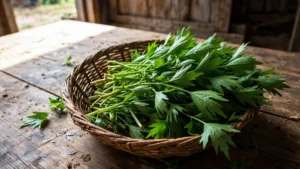
What to do: Follow a bundle from the bed to the kitchen, cut with a sharp knife, the leaves stripped for the soup and the stems saved for the stock.
What to avoid: Do not step into the path of the work. The bundles are heavy, the kitchen runs hot, and the farm sets the pace.
Best for: Travellers who want the full story. Time needed: One morning to cut, one afternoon at the stove. Standout tip: Keep the drying racks in sight, not in your way.
Pack light, washable clothes and sturdy boots
What to do: Pack for a working farm, not a hotel: closed shoes and long sleeves for the cutting, boots that rinse clean, a wide sun hat, a rain layer, and clothes that wash easily by hand.
What to avoid: Leave white clothes and open sandals behind; nothing here stays clean. A soft bag manages narrow farmhouse stairs better than a hard case.
Best for: Practical packers. Time needed: An evening spent packing. Standout tip: Pack the rain layer on top.
Buy dried lovage at the farm gate
What to do: Buy the farm’s own dried lovage and root at the gate. Dried lovage keeps well, the leaves are the truest taste of the crop, and the root lasts through winter.
What to avoid: Do not buy lovage from a shop in town and call it the farm’s own. Do not haggle at the farm gate; the farm’s prices are fair already.
Best for: Travellers who want a souvenir with a story. Time needed: Ten minutes at the gate, before you go. Standout tip: Ask the farm how it dries its leaves.
Take soup, photographs and dried leaves home
What to do: Leave the farm as you found it, with the beds where the farm planted them and the rows straight and weeded. Take photographs, dried lovage and root, and leave the living plants where they are.
What to avoid: Do not dig up a root or take a cutting without asking. If you want lovage at home, ask for a potted division and keep it in deep soil, since the roots run long.
Best for: Guests who leave things as they found them. Time needed: A pause at the gate, before you leave. Standout tip: The best thing to take home is the dried leaf.
Picking the right season and region
Count the trip in cutting weeks, not in calendar months. The week falls just before flowering, and it moves by region and by year, so the farm names it a few weeks ahead and the careful traveller waits for the word. Burgenland and Slavonia cut in the warm months, when the leaves are tall and the kitchens are busy; Podhale and Maramureș cut with the mountain mists in the mornings, and Šumadija cuts in the late summer, when the days are clear and the plum trees are heavy.
Match the region to the plant and the climate together. Leaf lovers belong in Burgenland, Spreewald and Ceredigion, where the leaf is the point and the kitchen is the reason to go; root lovers belong in Prekmurje and Spreewald, where the digging is the point and the stock pot is the reward. Soup drinkers should look to Podhale and Maramureș, and travellers who want scale to Prekmurje and Slavonia, where lovage grows in acres rather than beds. The rosemary farm escape plans on the same seasonal logic, and the same question holds there: choose the crop you love, then the climate you can stand.
The caveats that matter
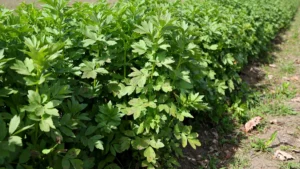
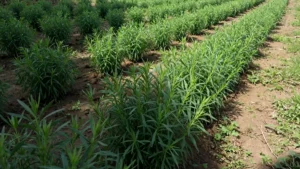
A lovage farm is a working farm with a tall crop, and the farms are frank about it. The plants grow taller than a person, so the beds are worked from the paths, and the leaves are cut with a knife. The flavour is at its best before flowering, so a stay booked after the plant has flowered smells lovely and cooks mild. The stays are small, the rooms are plain, and supper is a single shared table, which suits travellers who enjoy company rather than those who want privacy. Read the first email with care, ask what the rate truly includes, and raise the gluten-free question before you pay.
| Detail | What is known |
|---|---|
| When to go | The cutting weeks, just before the plant flowers, when the leaves hold the most flavour, with the week named a few weeks ahead |
| What guests do | Walk the beds in the morning, cut leaves with a knife, carry bundles to the kitchen, and watch the roots dug in autumn for the stock pot |
| How long to stay | Three to five nights, built around the cutting weeks rather than a fixed calendar date |
| Who should be careful | Guests unused to tall plants and muddy paths, and anyone who forages, since wild umbellifers include plants that are not safe to eat |
| What is on the table | Potato soup, bean soup, sour soup and meat broths, with lovage leaf in the pot and fresh bread beside the plate |
| Gluten-free note | The lovage itself is safe, but the bread and pastry on a farm table are nearly always wheat, so ask the kitchen before you pay |
| What to bring | Closed shoes and long sleeves for the cutting, boots that rinse clean, a wide sun hat, a rain layer for sudden showers, and clothes that wash easily by hand |
| What not to expect | No promised cutting day, no fixed menu, and no hotel-style service on a working farm |
Checklist: before you book a lovage farm escape
- Settle on the leaf or the root first, and pick the farm that offers it.
- Wait until the farm puts its cutting week in writing before booking flights.
- Find out what the nightly rate includes, and what is charged separately on arrival.
- Warn the kitchen about eating gluten-free before you pay.
- Bring closed shoes, long sleeves, boots that rinse clean, a wide hat and a rain layer, and leave room for dried lovage.
- Leave the living plants where they grow, and take dried lovage home instead.
Frequently asked questions
Can gluten-free travellers enjoy a lovage farm?
Yes, as long as the kitchen hears about it before you arrive. The lovage itself carries no gluten, and farm cooking leans on vegetables, meat, beans and potatoes, so a gluten-free table is usually simple to arrange.
When is the right moment to book a lovage farm stay?
Once the farm has fixed its cutting week, usually a few weeks ahead. The farms are small, with only a handful of rooms, and everyone wants the cutting week, so rooms go quickly once the dates are fixed.
What should I pack for lovage country?
Closed shoes and long sleeves for the cutting, boots that rinse clean, a wide sun hat, a rain layer, and clothes that wash easily by hand. The plants are tall, the paths are muddy after rain, and the sun is fierce by midday in the hot-climate farms.
Do lovage farms welcome children?
Yes, on most of these farms. Tearing leaves for the kitchen is the easiest job on the farm, and the beds are safe to walk, though children should wear closed shoes and long sleeves, stay out of the kitchen at its busiest, and keep to the paths, since the plants are tall.
What should I bring home from a lovage farm?
The farm’s own dried lovage leaves and root, bought at the gate. Dried lovage keeps well, the leaves are the truest taste of the crop, and the root is a small piece that lasts through winter.
How much does a week on a lovage farm cost?
The nine farms in this guide run from $65 to $380 a night, so a week with meals runs roughly from $450 to $2,700 before flights, with the cheaper Austrian and Croatian farms at the bottom and the Serbian farm at the top. The rate usually covers supper, the drive in and walks among the beds, so read the first email carefully and ask what is billed on arrival.
The bottom line
A lovage farm escape is a short, slow, honest holiday, and it plans itself in the opposite order to most trips: the farm names its dates first, and everything else follows. Choose the leaf or the root, wait for the cutting week, ask the kitchen your questions before you pay, and pack for a working farm rather than a hotel, and the farm will do the rest.
Of the nine steps, the two that matter most are the first and the third: pick the half of the plant you love, and find out how old the beds are. Get those two right, and the soup will be cooked from leaves cut that morning, the beds tall, and the lovage at its strongest.