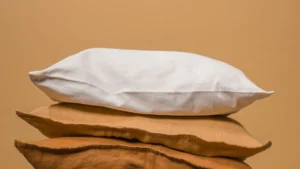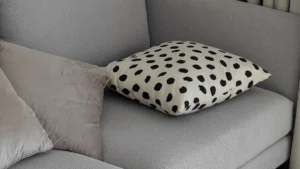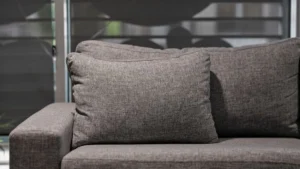
A luxury cushion is the smallest purchase that can change a whole room, and the easiest one to get wrong. One well-chosen cushion makes a plain sofa look considered and expensive. One wrong cushion sits there looking tired within weeks.
The difference is rarely the price tag. Some of the most expensive cushions are the hardest to live with, because silk creases, pale linen stains, and an unplumped feather cushion collapses. A mid-priced cotton velvet or linen cushion, chosen in the right size and fill, can be brushed, steamed and sat on every day for years.
Choosing well is a sequence: use, size, fill, fabric, firmness, colour, budget, and returns. This guide walks through each check in turn. There is no list of cushions to buy here and no brand roundup — just the method for judging any luxury cushion on its own merits.
Key takeaways
- Decide how the cushion will be used first — decoration, back support or sleeping — because use decides size, fill and fabric.
- Size is the most common mistake: a 50-centimetre square suits a three-seat sofa, while a smaller cushion looks lost on it.
- Fill trades support against softness: feather is soft and needs plumping, foam holds its shape.
- Fabric decides how the cushion ages: cotton velvet and linen are the most forgiving luxury choices, while silk and pale colours need careful handling.
- No price or photograph guarantees comfort — always check the size, fill, fabric and returns policy first.
Start with how you will actually use it
Every good cushion decision starts with an honest account of daily life, not with a photograph. A cushion that finishes a formal living room is a different object from one you lean against every evening, and both differ from one that must survive children, dogs and red wine.
For decoration alone, you can prioritise fabric and colour: a bold pattern is fine when nobody leans on it for hours. For back support, firmness and fill matter more than looks — a soft feather cushion flattens under your back within minutes, while a foam or feather-wrapped foam core keeps its shape. A home with children or pets needs a fabric that cleans easily and a fill that survives rough use.
Measure first: size, scale and the sofa it sits on
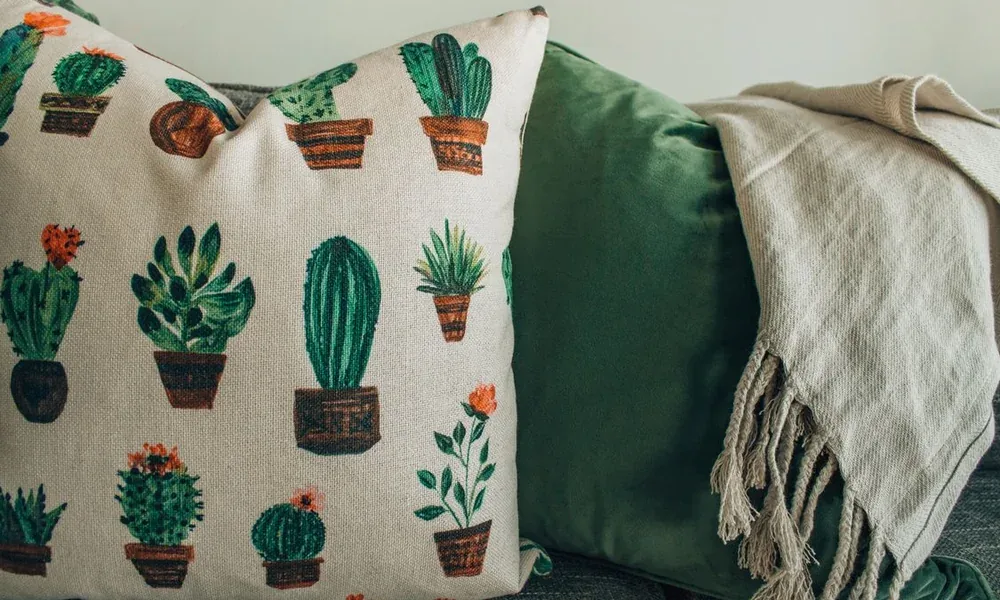
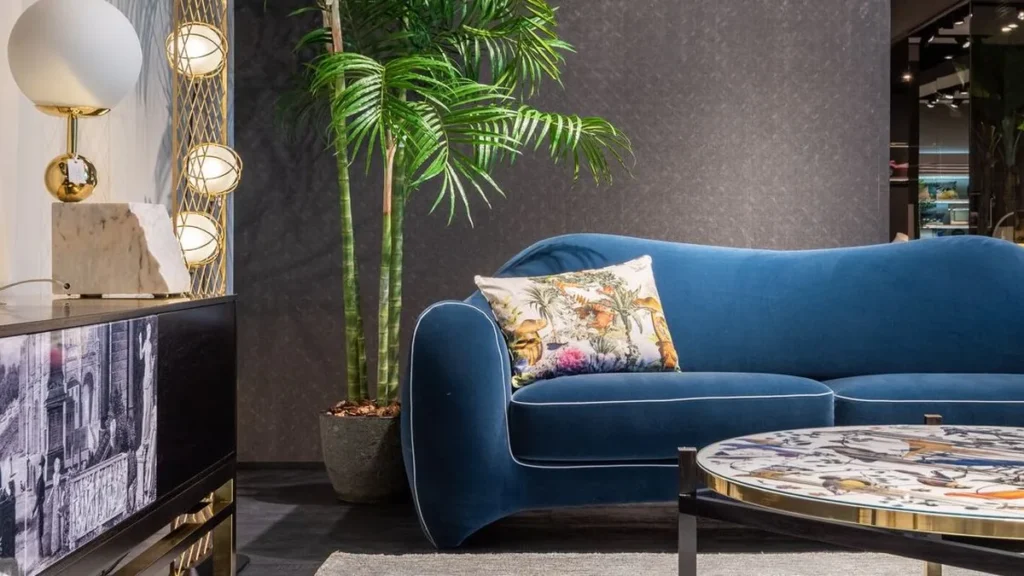
The most common luxury cushion regret is not the fabric or the price. It is the size. A 45-centimetre square suits a two-seat sofa or an armchair, a 50-centimetre square suits a standard three-seat sofa, and a 55 to 60-centimetre square suits a deep sofa. Lumbar cushions usually run 30 by 50 or 40 by 60 centimetres.
Check the sofa itself, too: our guide to choosing a luxury sofa covers seat depth and back height, and both decide how much room a cushion has to sit in. A deep seat swallows a small cushion; a low back leaves a tall cushion nowhere to lean. Count before you buy: two suit a two-seater, three to five suit a three-seater.
Fill: how it should feel
Fill is what you actually feel when you lean back, and it is the part of a cushion that no photograph can show you. Feather and down is the softest to the touch: it moulds around you and can be shaken back into shape. It also needs that shaking — daily, if it is used daily — and it flattens under sustained weight, so it is a poor choice for back support.
Foam holds its shape and gives the firmest support, which makes it the best fill for a cushion you lean against. It never needs plumping, but it can feel stiff. A feather-wrapped foam core splits the difference and is the fill most luxury makers use for their best cushions: a foam centre for structure, wrapped in feather for softness. Polyester fibre is the budget option — light, washable and allergy-friendly, but it clumps and flattens faster than any other fill. Check whether the inner pad is included and the cover is removable: many luxury cushions are sold as cover only.
Fabric: match it to your household
Fabric decides how a cushion looks, how it feels, and how it ages — and it is where most luxury cushion mistakes are made. Velvet is the fabric most people picture when they think of a luxury cushion: its pile catches the light. Our explainer on what a velvet cushion is covers the weave and the fibres behind it. Cotton velvet is the most practical luxury choice for everyday sofas: it can be brushed, steamed and sat on daily. Silk velvet is the most beautiful and the most delicate, marking easily and usually needing dry cleaning.
Linen is the relaxed luxury choice: breathable, naturally textured, and better looking slightly creased than perfectly smooth. It washes well, but pale linen shows every mark. Cotton is the workhorse: durable, washable, and the easiest fabric to live with. Silk is the most luxurious fabric to touch and the least practical to own: it fades in sunlight, water-marks easily, and usually needs professional cleaning. Performance fabrics, woven to resist stains and fading, suit homes with children or pets. Before you commit, ask for a fabric sample and check it in your own light.
Firmness and shape: square, lumbar, bolster and round
Firmness is not a single quality. A cushion can be firm because its fill is dense or its cover is tight. Press the centre: a good cushion springs back slowly and evenly, without a permanent dent.
Shape matters as much as firmness. The square is the default: it works on any sofa, in any arrangement. The lumbar rectangle is the support shape — it fits behind your lower back, in front of larger squares. The bolster, a long cylinder, suits the end of a sofa or the centre of a bed. The round cushion is the accent shape: it breaks up a row of squares, but it is the least useful for support. Do not mix too many shapes at once — one shape repeated, with one contrasting shape in front, looks considered.
Colour and pattern: choose it in your light
Colour is the reason most people buy a cushion, and the reason most cushions disappoint. The rule that saves the most money is simple: choose the cushion in the room it will live in, not in the shop or on a screen. A cushion that looked deep green in a showroom can look grey in a north-facing room.
Start with the sofa. If the sofa is a strong colour, the cushion should be quieter — a neutral, a tone of the same colour, or a pattern that picks up the sofa colour in small amounts. If the sofa is neutral, the cushion can carry the colour. One strong colour per arrangement is usually enough. Pattern follows the same logic: a large-scale pattern suits a large cushion and a plain sofa, while mixing patterns works when they share a colour and differ in scale. Deep colours hide marks best: pale velvet shows every crease, while a deep colour forgives both. See our roundup of the best luxury velvet cushions for nine very different colour choices.
Budget: what the money actually buys
A luxury cushion can cost anything from the price of a dinner out to the price of a weekend away. What the money buys, in order of importance, is fabric, fill, construction and finish — and you can judge all four before you pay. Fabric is the biggest cost driver: silk velvet and fine linen cost several times more than polyester velvet or plain cotton. Fill is next: feather costs more than fibre. Construction is the quiet cost: a hidden zip, piped edges and a lined cover cost more to make and last longer.
Think in cost per year rather than price on the day. A well-made cushion that still looks good after five years is cheaper than a cheap cushion replaced every year. Set your budget after you have chosen the fabric and fill, not before. And beware the price that looks too good: a luxury cushion at a fraction of the usual price is usually a luxury cover over a cheap fill.
Care, trial and returns
A luxury cushion is only as good as its care label, so read it before you buy, not after the first stain. Velvet usually needs brushing with a soft clothes brush and occasional steaming. Linen and cotton covers can usually be washed, but check whether they shrink — a cover that shrinks will never fit its inner pad again. Silk almost always needs dry cleaning. Plump feather cushions daily, rotate them regularly, and keep them out of direct sunlight.
Before you order, confirm three things in writing: the exact size including the inner pad, the returns policy, and the delivery time. Many made-to-order cushions are non-returnable, or returnable only with a restocking fee, and custom sizes and colours are rarely returnable at all. If the cushion is returnable, check whether you pay the return postage.
The caveats that matter
| Detail | What is known |
|---|---|
| Feather fill and allergies | Feather can trigger sensitivity; fibre or foam is safer if anyone reacts to feather bedding. |
| Silk and sunlight | Silk fades in sunlight and water-marks easily; keep it away from windows and drinks. |
| Pale velvet | Pale velvet shows pile marks, creases and fingerprints; deep colours hide them far better on everyday sofas. |
| Cover-only pricing | Many are sold as cover only, inner pad sold separately; confirm what the price includes. |
| Removable covers | Without a removable cover a cushion cannot be washed; a hidden zip is worth paying for. |
| Custom sizes and returns | Made-to-order sizes and colours are often non-returnable, or returnable only with a restocking fee. |
| Rub count | A rub count above 25,000 is a reasonable minimum for daily use. |
| Children and pets | Performance fabrics, washable covers and foam fills survive rough use best; silk and pale linen do not. |
Checklist: before you order a luxury cushion
- Write down how the cushion will be used, and let that decide size, fill and fabric.
- Measure the sofa and choose the size from the measurement, not the photograph.
- Check the fill, whether the inner pad is included, and whether the cover is removable with a hidden zip.
- Ask for a fabric sample, check it in your light, and confirm the cleaning code.
- Choose the colour against the sofa in the room.
- Confirm the all-in price, delivery time and returns policy in writing before you order.
Frequently asked questions
What size luxury cushion should I buy for a three-seat sofa?
A 50-centimetre square is the usual starting point, with 55 to 60 centimetres for a deep sofa. Smaller cushions look lost on a three-seater.
Which cushion fill is best?
It depends on use. Feather is the softest, but needs daily plumping and flattens under sustained weight. Foam holds its shape and gives the best back support. A feather-wrapped foam core gives most people the best of both.
Is velvet a good fabric for cushions?
Yes, with the right fibre. Cotton velvet is the most practical choice for everyday sofas. Silk velvet is more beautiful and more delicate.
How many cushions should I put on a sofa?
Two suit a two-seater and three to five suit a three-seater. More than five starts to look like a shop display. Odd numbers look more relaxed than even ones.
Can luxury cushions be washed?
It depends on the fabric. Linen and cotton covers with a removable zip can usually be washed, but check for shrinkage first. Velvet needs brushing and steaming rather than washing. Silk almost always needs dry cleaning.
Are expensive cushions worth it?
They can be, if the money buys better fabric, better fill and better construction. A well-made cushion that still looks good after five years is cheaper per year than a cheap cushion replaced annually.
The bottom line
Choosing a luxury cushion is a sequence, not a single decision. Use first, then size, fill, fabric, firmness, colour, budget, and care. Done in that order, the wrong cushions fall away at each step.
The most expensive mistake is buying on looks alone. A cushion chosen this way will still look good and feel good in five years — and that, more than any label, is what makes it luxury.
Note: Prices, sizes, care instructions and returns policies vary by maker and change over time. Confirm the fill, fabric, size and warranty details for the exact cushion you are buying before you order.
Meet Our Experts
Our interiors editors cover luxury homes and design, testing furniture guidance against real rooms, real measurements and real households. Where a claim rests on a maker’s specification or a published review, it is attributed to that source rather than presented as our own test result.
Why Trust BrassSmile
BrassSmile covers luxury lifestyle, homes and design with the same method across every guide: check the construction and materials first, give the numbers that matter, and say plainly where a choice is a trade-off. We do not rank cushions by brand or take a maker’s word for its own quality.
Sources
BrassSmile’s guides to velvet cushions, velvet sofas and luxury sofas; makers’ published fabric, fill and care specifications; furniture care guidance from upholstery and textile specialists.