A silk cushion can make a plain sofa look expensive, or make the whole room look like a dressing table. The difference is the colour it sits next to, the light it catches, and whether it stays put.
Silk moves: its sheen shifts as you walk past, it slides on smooth sofas, and it shows every splash of water.
This guide covers styling only: colour pairing, sheen and texture mixing, placement, and seasonal swaps. It does not explain what silk is, or rank cushions. If you have not chosen one yet, our roundup of the best luxury silk cushions covers the silk types and sizes first.
Key takeaways
- Style the silk against the sofa and the light, not the shop shelf: sheen doubles a colour.
- One silk cushion per seating area is usually enough; the rest should be matte.
- Mix shapes and sizes: a large square at the back, a smaller square or a lumbar in front.
- Place silk where it is admired, not sat on: sofa ends, the head of the bed, a reading chair, never in direct sun or on slippery leather.
- No pairing works in every room, so live with it for a few days before buying a second one.
What styling a silk cushion means
Styling a silk cushion means deciding four things in order: silk type, colour, company, and place. Get the order wrong and the cushion fights the room: a glossy emerald charmeuse cushion is beautiful alone, but on a dark green leather sofa in sun it glares, slides and fades.
Not all silk shines the same way. Mulberry charmeuse is the glossiest, with a liquid sheen. Silk dupion is crisper, with a slubbed surface and a softer glow. Raw silk is almost matte, and hides creases and marks.
A room that already has shine, glass, brass and polished wood, needs the quieter silks, while a room of flat, matte surfaces can take the glossiest charmeuse. Judge it in the room’s own light: a cushion that looks deep teal in the shop can look bright turquoise by a south-facing window.
Finally, decide how much silk the room can take. A three-seat sofa takes three to five cushions, and only one needs to be silk. A two-seat sofa takes two or three, with one silk. An armchair takes one, and a bed takes two or three, with one silk at most. Silk is an accent fabric: once it is the majority, the room looks draped rather than dressed.
Colour pairing: letting the sheen do the work
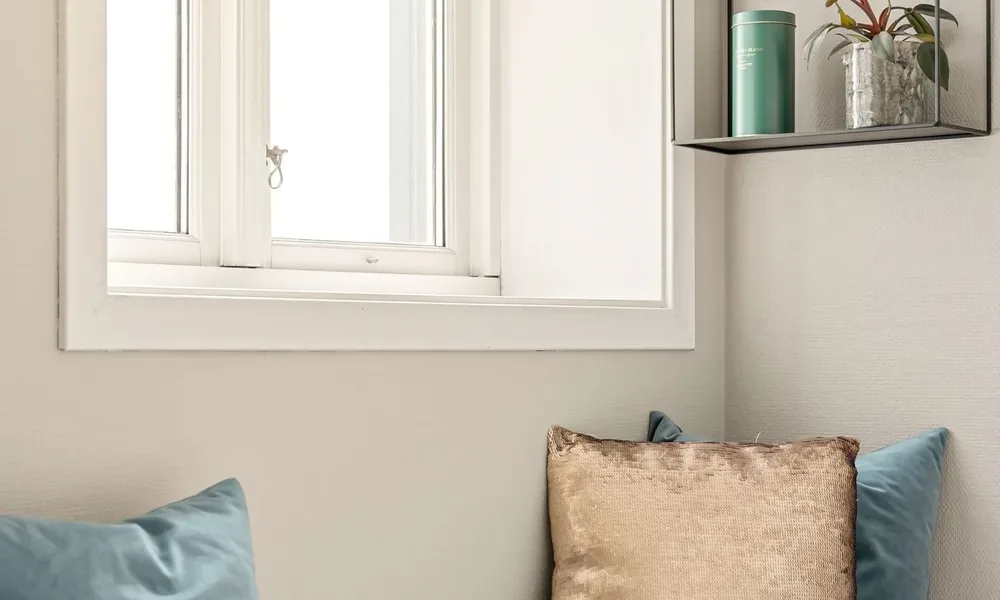
Colour pairing starts from the sofa, and with silk the sheen counts as part of the colour. On a pale grey or cream sofa, a deep jewel silk, emerald, sapphire or burgundy, lifts both.
On a dark sofa, the cushion needs to be lighter or warmer: champagne, dusty rose or pale gold. But pale silk marks easily, so it belongs on a bed or a chair that is admired, not on the seat everyone uses.
Warm silks, champagne gold, terracotta, warm rose and amber, suit rooms with wood floors, brass fittings and warm white walls. Cool silks, teal, midnight navy, dusty blue and plum, suit rooms with grey walls, chrome fittings and cool daylight. One warm silk cushion in a cool room is a deliberate accent. Two or three look like a mistake, because the sheen makes the mismatch impossible to miss.
A charcoal, taupe or deep mushroom silk adds softness without committing the room to a colour. The risk is dullness: a grey silk cushion on a grey sofa is invisible in the morning and glaring by a lamp at night. If the sofa is grey, choose a silk with a warm undertone.
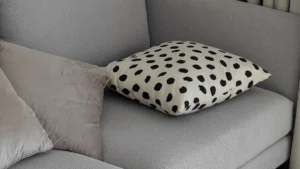
A patterned silk cushion, jacquard, brocade or embroidered, works best as the single patterned piece, between two plain cushions. If the sofa itself is patterned, skip patterned silk and choose a plain silk in the quietest colour in the pattern: two patterned silks side by side fight each other.
Texture mixing: taming the shine with matte company
Silk has no pile and no grain to break up the light, so it looks its best next to fabrics unlike it. A silk cushion beside a linen cushion reads as richer than either alone, because flat, matte linen makes the silk’s sheen visible. Cotton, wool, knit and bouclé do the same.
The texture to be careful with is more shine: a silk cushion next to a satin cushion, a silk throw or any glossy cushion turns the arrangement into a shine contest. Velvet is the one glossy neighbour that works, but only in small doses: one silk and one velvet per seating area, with the rest matte.
Silk looks better with something warm and solid nearby, a wooden side table, a brass lamp, a woven basket, because the weight of those materials grounds the lightness of the silk. In a room of only glass, chrome and lacquer, silk can look cold and slippery.
A linen or cotton throw reads as relaxed; a cashmere or wool throw reads as formal and wintery. The throw should never be silk as well: two silks sliding against each other will not stay put.
Placement: sofa, bed and chair
On a sofa, the corners do the work. A silk cushion belongs at one end, leaning against the arm, where the arm stops it sliding. A second belongs at the opposite end, not in the middle, and only on a large sofa.
Layering follows a simple order: the largest cushion goes at the back, and each one in front is smaller. A 50-centimetre square at the back, a 45-centimetre square in front, and a lumbar of around 50 by 30 centimetres in front of that is the full arrangement, with the silk as one piece in it.
On a leather sofa, a silk cushion creeps forward every time someone sits down, so it needs a heavier cushion behind it or a matte cushion in front of it. Never place a silk cushion in the middle of a seat where it will be sat on: it will be flattened, creased and slid out of place, and pale silk will pick up marks from denim within days.
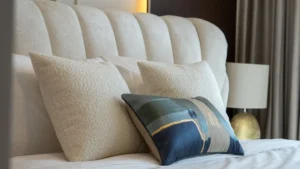
On a bed, one silk cushion is enough, placed in front of the sleeping pillows and slightly off-centre, so the bed looks dressed rather than symmetrical. It should be the easiest to remove at night, because it should never be slept on.
On a chair, the answer is one cushion and one only: an armchair with two looks crowded, and the second ends up behind the sitter’s back or on the floor. The single silk cushion should be a 40 to 45 centimetre square, against one side of the chair back rather than dead centre.
Avoid the row, a line of matching silk cushions across a sofa, and the sunny spot, where silk left in direct sunlight fades unevenly within a season.
Seasonal swaps: changing the room without new furniture
Silk is at its best in spring and summer, because it feels cool to the touch and its sheen suits bright light. Pair it with linen and cotton in lighter colours.
Keep it out of the strongest sun even in summer: draw the curtain at midday, or move it to the shaded end. In autumn, swap the linen partners for wool and knit, and let the silk go deeper in colour: terracotta or burgundy beside a wool cushion and a cashmere throw.
In winter, silk works best in deep tones, midnight navy, emerald or plum, with the sheen catching lamplight. One silk cushion among wool and velvet is enough.
Store the silk cushion you are not using flat, in a cloth bag, out of the sun, and never folded hard across the middle: a crease in silk is hard to remove without professional pressing.
The caveats that matter
Silk rewards care and punishes neglect faster than any other cushion fabric: every row below is a mistake that is easy to make once and expensive to fix.
| Caveat | What happens | What to do instead |
|---|---|---|
| Direct sunlight | Colour fades unevenly | Keep it out of direct sun |
| Water and spills | Water marks ring the spot | Keep drinks away; blot, never rub |
| Pale colours on a used sofa | Marks from denim and pets show fast | Use pale silk on a bed or chair, not the main seat |
| Silk on leather | It slides forward and ends up on the floor | Put a heavier matte cushion behind it |
| Snagging | Jewellery, zips and pet claws pull threads | Keep it away from rough edges and pets |
| Silk with silk | Two silks slide against each other | One silk per arrangement; the rest matte |
| Machine washing | Shrinkage, dullness and water marking | Follow the care label; most silk needs dry cleaning |
| Creasing from folding | Hard creases that will not shake out | Store flat in a cloth bag, never folded hard |
None of this makes silk a bad choice, only a deliberate one, for rooms where it will be admired and handled gently.
Checklist: styling a silk cushion
- Choose the silk type first: charmeuse for calm rooms; dupion or raw silk for everyday rooms.
- Hold it against the sofa in the room’s own light first.
- One silk cushion per seating area; pair it with linen, cotton, wool or knit, never satin or a second silk.
- Place it at the end of a sofa, against the arm, where it is leaned on, not sat on.
- Keep it out of direct sun, away from drinks, jewellery and pets, and off slippery leather.
- Swap its partners with the seasons, and store a spare flat in a cloth bag.
Frequently asked questions
Can a silk cushion go on a sofa that is used every day?
It can, but only as one cushion at the end of the sofa, against the arm, where it is leaned on rather than sat on. In the middle of a daily-used seat it will crease, slide and mark quickly.
How do I stop a silk cushion sliding off the sofa?
Place it against the arm with a heavier matte cushion behind it, and a matte cushion in front of it. On a leather sofa this matters most, because silk grips leather least. A heavier feather filling also helps.
What colours work best for a silk cushion?
Deep and mid-tone colours work best, because the sheen makes the colour look richer without making it loud. Emerald, sapphire, burgundy, teal and plum suit pale sofas; champagne, dusty rose and pale gold suit dark sofas but mark easily.
Can I mix a silk cushion with a velvet cushion?
Yes, and it is one of the best pairings, because the velvet’s pile absorbs light while the silk reflects it. Keep it to one silk and one velvet per seating area, with the rest matte.
Do silk cushions work in summer?
They work better in summer than in winter, because silk feels cool to the touch and its sheen suits bright rooms. Pair it with linen and cotton in lighter colours, and keep it out of the strongest midday sun, which fades silk faster than any other cushion fabric.
How do I keep a silk cushion looking new?
Keep it out of direct sun, away from water and drinks, and off the seat everyone uses. Follow the care label: most silk cushions need dry cleaning. Store a spare flat in a cloth bag, and never fold it hard across the middle. Our guide to why silk sheets are worth the price explains the same fibre at a larger scale, and the same care rules apply.
The bottom line
Styling a silk cushion comes down to four decisions in order: silk type, colour against the sofa, matte company, and place. One silk cushion at the end of a sofa, clearly different from the sofa and in the same warm or cool family as the room, will do more than a whole set of matching silks. If you are still choosing, our guide to how to choose a luxury cushion covers size, filling and shape.
The rest is care: keep it out of the sun, off the seat everyone uses, and store it flat.
Note: This article is a styling guide only. It does not explain what silk is, rank cushions, or recommend products.
Meet Our Experts
Our interiors editors cover fabrics, furniture and home textiles, and check styling advice against real rooms and real light, not against showroom photographs.
Why Trust BrassSmile
We describe home textiles from their construction, fibre and weave, and we separate styling advice that works in a lived-in room from arrangements that only work in a photograph.
Sources
Colour and texture guidance follows published interior design references, including House Beautiful, Elle Decoration and Architectural Digest; silk care guidance follows manufacturer care labels and published textile guides. Fabric definitions follow standard textile references.