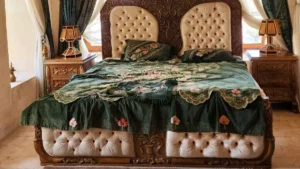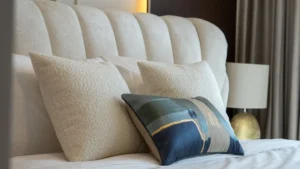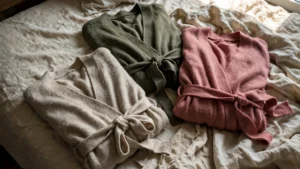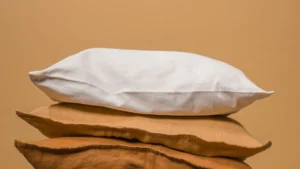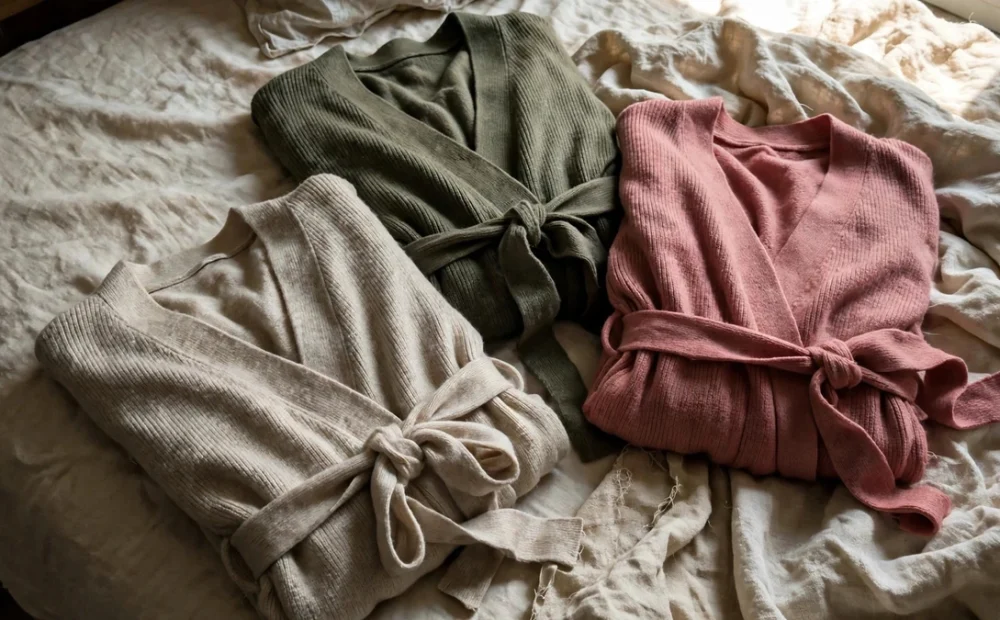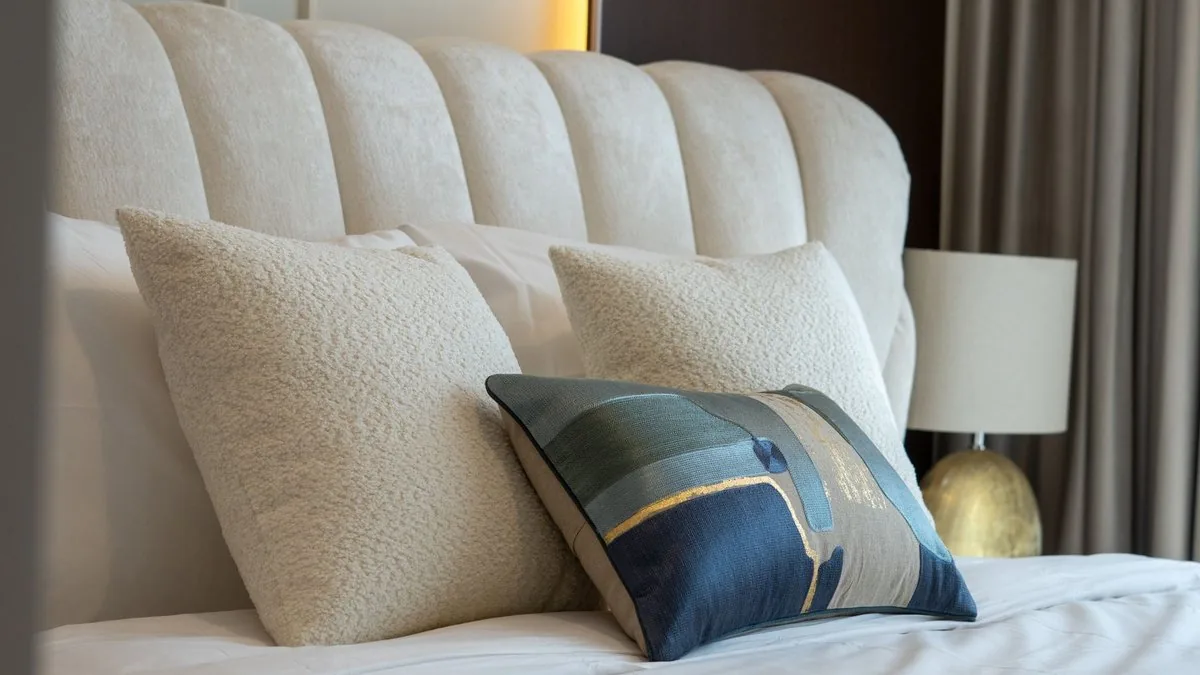

A luxury bedding set is the purchase you touch more than almost anything else in your home, and the easiest one to buy badly. A wrong one pills, fades, sleeps hot, or never quite fits the mattress it was bought for.
The difference is rarely the price tag. Some of the most expensive sets are the hardest to live with, because silk marks, pale linen creases, and a high thread count can hide a short, weak fibre.
Choosing well is a sequence: use, size, fibre, thread count, weave, closure, colour, budget, and care. This guide walks through each check in turn. There is no list of bedding sets to buy here and no brand roundup — just the method for judging any luxury bedding set on its own merits.
Key takeaways
- Decide how the set will be used first — everyday sleep, a guest room or a showpiece bedroom — because use decides fibre, weave and care.
- Size is the most common mistake: measure the mattress, including its depth, before you order.
- Fibre decides how the set feels and ages: long-staple cotton is the most forgiving luxury choice, linen the most breathable, silk the most delicate.
- Thread count is only useful between about 200 and 600, and only when the fibre is named.
- No price or photograph guarantees a good night — always check the size, fibre, weave, closure and returns policy first.
Start with how you will actually use it
Every good bedding decision starts with an honest account of daily life, not with a photograph. A set for a bed you sleep in every night is a different object from one that dresses a guest room, and both differ from a set that must survive children, dogs and a washing machine that runs most days.
For everyday sleep, prioritise washability and comfort: a fibre you can wash at home, a weave that suits how warm you sleep, and a fitted sheet that stays put. A hot sleeper needs a breathable weave more than a high thread count.
Measure first: size, scale and the bed it dresses

The most common luxury bedding regret is not the fibre or the price. It is the size. Bed sizes are not as standard as their names suggest: a queen mattress in one country is not the same width as a queen in another, and a deep mattress needs a deeper fitted sheet than a thin one. Measure the mattress itself — width, length and depth — and compare those numbers with the set’s stated measurements, not with its size name.
A fitted sheet should be at least 5 centimetres deeper than the mattress so it stays tucked through the night, and a flat sheet should hang at least 25 centimetres over each side. Our guide to choosing a luxury cushion covers the same sizing logic for the pillows on top of the bedding.
Fibre: what the set is made of
Fibre decides how a bedding set feels against skin, how it handles heat, and how it ages. Cotton is the default luxury fibre for a reason: it is breathable, washable and soft, and it gets softer with washing. Long-staple cotton, sold as Egyptian or Pima cotton, has longer fibres that spin into a smoother, stronger yarn with less pilling.
Linen is the relaxed luxury choice: breathable, naturally textured, and better looking slightly creased than perfectly smooth. It is the coolest fibre to sleep under in warm weather,. Silk is the most luxurious fibre to touch and the least practical to own: smooth, cool and kind to skin and hair, but it fades in sunlight, water-marks easily, and usually needs professional cleaning.
Thread count: what the number does and does not tell you
Thread count is the number most shoppers are told to care about, and the number that misleads most often. It counts the threads in one square inch of fabric, and between about 200 and 600 it does tell you something: a 200-count cotton percale feels crisp and light, a 400-count sateen feels smooth and dense.
Above about 600, the number stops meaning much. Makers can inflate it by counting the plies inside a single yarn as separate threads, so a 1,000-count label can describe a fabric no finer than a 400-count one. A very high count can also mean a heavier, less breathable fabric that sleeps hot. Ask what the fibre is, how long the staple is, and what the weave is, instead of trusting the number.
Weave: percale, sateen, twill and jersey
Weave is how the threads are crossed, and it decides the hand feel of the set more than fibre alone. Percale is a plain one-over, one-under weave: crisp, cool and matte, with a fresh feel that suits hot sleepers and anyone who likes a hotel-bed finish.
Sateen has more threads on the surface: smooth, slightly lustrous and soft, with a drape that suits cooler sleepers and formal bedrooms. It is warmer than percale and can feel slippery to sleepers who like a crisp sheet. Jersey is a knit, not a weave: soft, stretchy and warm, like a favourite T-shirt, and the best choice for a cold bedroom — but it pills faster than a woven fabric and never looks crisp. Choose the weave for how you sleep, not for how it photographs. Our comparison of silk versus linen sheets covers the same trade-off from the fibre side.
Closure and construction: what holds the set together
A luxury bedding set is defined by what you notice at two in the morning. The closure on a duvet cover is the first test. Buttons are the classic choice: quiet, secure and easy to replace, though they take longer to fasten. A zip is faster and holds the duvet in place, but a cheap zip snags and a metal zip can feel cold against skin.
Look inside the corners of the duvet cover for ties or loops that hold the duvet in place — a set without them will bunch the duvet into one corner by morning. Check the fitted sheet for elastic all the way around, not just at the corners: full elastic holds a deep mattress far better. French seams last longer than overlocked edges, and a straight hem means the fabric was cut on-grain.
Colour and pattern: choose it in your light
Colour is the reason most people buy a bedding set, and the reason most sets disappoint. The rule that saves the most money is simple: choose the set in the bedroom it will live in, not in the shop or on a screen.
Start with the room. If the walls are a strong colour, the bedding should be quieter — a neutral, a tone of the same colour, or a pattern that picks up the wall colour in small amounts. If the room is neutral, the bedding can carry the colour, and one strong colour per bed is usually enough. Deep colours hide marks best; white looks clean and fresh, but needs more washing. See our roundup of the best luxury velvet bedding sets for nine very different colour choices — velvet shows colour differently from cotton or linen, because the pile catches the light.
Budget: what the money actually buys
A luxury bedding set can cost anything from the price of a dinner out to the price of a weekend away. What the money buys, in order of importance, is fibre, weave, construction and finish — and you can judge all four before you pay. Fibre is the biggest cost driver: long-staple cotton and fine linen cost several times more than short-staple cotton or polyester.
As a general guide, a good cotton percale or linen set for a queen bed usually runs from about $150 to $400, a fine long-staple cotton sateen from about $250 to $600, and a silk set from about $350 to $800 or more. Think in cost per year rather than price on the day: a well-made set that still looks good after five years of weekly washing is cheaper than a cheap set replaced every year.
Care, trial and returns
A luxury bedding set is only as good as its care label, so read it before you buy, not after the first wash. Cotton and linen can usually be washed at home in cool or warm water, but check whether they shrink — a fitted sheet that shrinks will never fit its mattress again. Silk almost always needs dry cleaning or a gentle hand wash, and it should never go in a hot dryer.
Rotate two sets rather than washing one constantly: a set that rests between washes lasts longer than a set washed every few days. Before you order, confirm three things in writing: the exact measurements including the fitted sheet depth, the returns policy, and the delivery time. Many made-to-order sets are non-returnable, or returnable only with a restocking fee, and custom sizes and colours are rarely returnable at all — and most makers will not take back a set once it has been washed.
The caveats that matter
| Detail | What is known |
|---|---|
| Thread count above 600 | Often inflated by counting plies as threads; it can mean a heavier, hotter fabric. |
| Silk and sunlight | Silk fades in sunlight and water-marks easily; keep it away from windows and drinks. |
| Fitted sheet depth | A shallow sheet pops off at night; allow 5 centimetres of extra depth. |
| Polyester blends | Polyester adds durability, but it sleeps hotter and pills faster than pure cotton or linen. |
| Allergies and feather | Down and feather can trigger sensitivity; fibre or wool is safer. |
| Shrinkage | Cotton and linen can shrink in a hot wash or dryer; wash cool and check the label first. |
| Custom sizes and returns | Made-to-order sizes are often non-returnable, or returnable only with a restocking fee. |
| Children and pets | Washable cotton and linen in deep colours survive rough use best. |
Checklist: before you order a luxury bedding set
- Write down how the set will be used, and let that decide fibre, weave and care.
- Measure the mattress — width, length and depth — and choose the size from the measurement, not the size name.
- Check fibre, staple length, weave and thread count together, not thread count alone.
- Check the closure, the corner ties, the elastic and the seams before you pay.
- Ask for a fabric sample, check it in your bedroom light, and confirm the cleaning code.
- Confirm price, piece count, delivery and returns in writing before you order.
Frequently asked questions
What thread count should I look for in a luxury bedding set?
Between about 200 and 600, in a named fibre and a weave you like.
Which fibre is best for a luxury bedding set?
It depends on use. Long-staple cotton is the most forgiving all-round choice: breathable, washable and soft. Linen is the coolest for warm sleepers. Silk is the most luxurious to touch and the least practical.
Is percale or sateen better for bedding?
Percale is crisp, cool and matte, and suits hot sleepers. Sateen is smooth, slightly lustrous and warmer, and suits cooler sleepers.
How do I know what size bedding set to buy?
Measure the mattress, not the bed frame: width, length and depth. The fitted sheet should be at least 5 centimetres deeper than the mattress, and the duvet cover should match the duvet you own.
Can luxury bedding sets be washed at home?
It depends on the fibre. Cotton and linen can usually be washed at home in cool or warm water, but check for shrinkage first. Silk almost always needs dry cleaning or a gentle hand wash.
Are expensive bedding sets worth it?
They can be, if the money buys better fibre, better weave and better construction.
The bottom line
Choosing a luxury bedding set is a sequence, not a single decision. Use first, then size, fibre, thread count, weave, closure, colour, budget, and care.
The most expensive mistake is buying on looks or on a thread count alone. A set chosen this way will still feel good and look good in five years — and that, more than any label, is what makes it luxury.
Note: Prices, sizes, care instructions and returns policies vary by maker and change over time. Confirm the fibre, weave and size for the exact set you are buying before you order.
Meet Our Experts
Our interiors editors cover luxury homes and design, testing furniture and bedding guidance against real rooms, real measurements and real households. Where a claim rests on a maker’s specification or a published review, it is attributed to that source rather than presented as our own test result.
Why Trust BrassSmile
BrassSmile covers luxury lifestyle, homes and design with the same method across every guide: check the construction and materials first, give the numbers that matter, and say plainly where a choice is a trade-off. We do not rank bedding sets by brand or take a maker’s word for its own quality.
Sources
BrassSmile’s guides to velvet bedding sets, silk and linen sheets, and luxury cushions; makers’ published fibre, weave and care specifications; textile and bedding care guidance from upholstery and textile specialists.