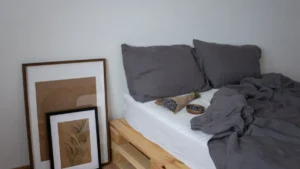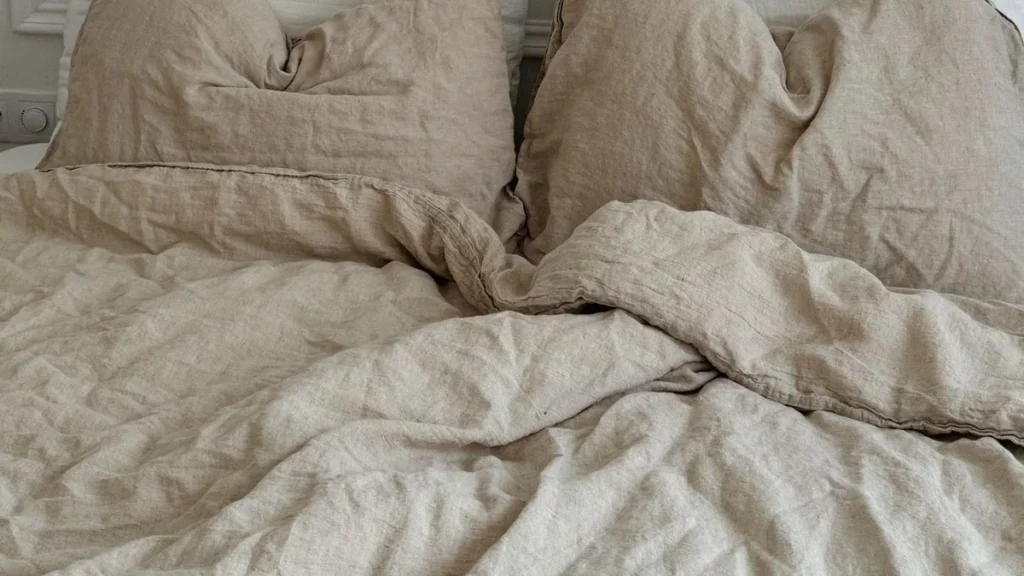
A linen bedding set is matching bed linen woven from flax: a flat sheet, a fitted sheet and two pillowcases, all in the same linen, sold together. The word that matters most is linen, because it is also the word most often stretched on a label.
The confusion is understandable. A set labelled linen may be pure linen, a blend with a small share of linen, or a cotton set with a linen look and a linen price. Linen also behaves unlike any other bedding fabric.
This guide explains what a linen bedding set is: the fibre, the pieces, the kinds of linen, the weave and weight, and how to care for it.
Key takeaways
- A linen bedding set is matching linen sheets and pillowcases: a flat sheet, a fitted sheet and two pillowcases. A duvet cover set has a cover and pillowcases but no sheets.
- The label should say 100% linen or 100% flax. A blend, or a cotton set with a linen finish, is a different fabric.
- The numbers that matter are weave and weight: most linen bedding uses a plain weave, and weight runs 150 to 190 grams per square metre for sheets.
- Linen feels cool and dry, which suits hot sleepers — but it wrinkles, feels crisp at first, and softens only with washing.
- No bedding improves sleep on its own, so linen’s claims are about feel and temperature, not health.
What a linen bedding set actually is
A linen bedding set is a set of bed linen in which every piece is woven from the same linen. The standard set is four pieces: a flat sheet, a fitted sheet and two pillowcases. Some sets add a duvet cover, and some are sold as a duvet cover set instead, with a cover and two pillowcases and no sheets at all.
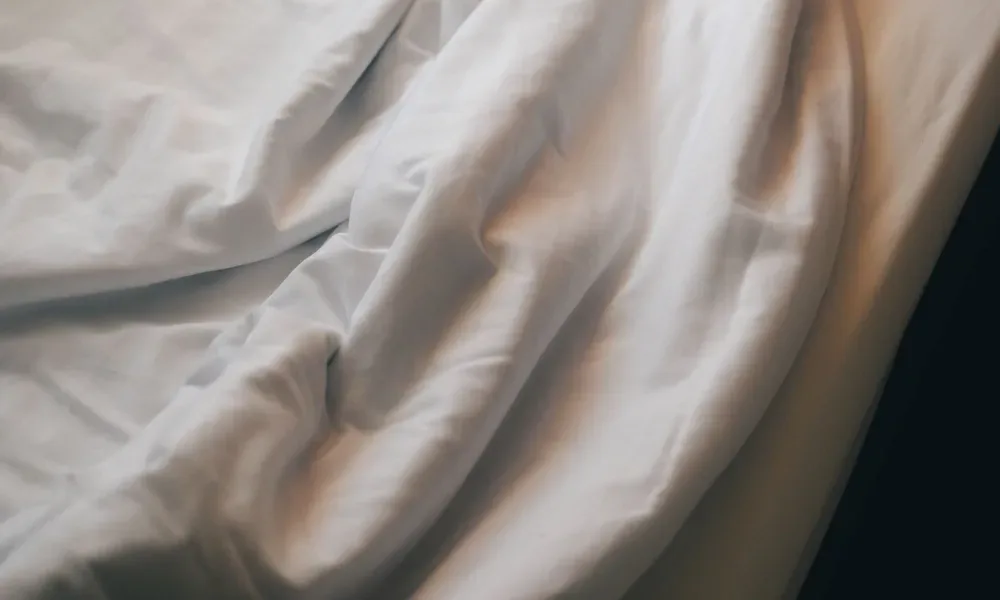
The flat sheet is the piece you feel most: a large rectangle of linen, usually hemmed at the top edge, that lies between the sleeper and the duvet. The fitted sheet wraps the mattress, with elastic around the corners, and its depth matters most: a standard fitted sheet suits a mattress about 25 centimetres deep, a deep-pocket version 30 to 40. The pillowcases complete the set, usually two, in the same linen and weave as the sheets. Our roundup of the best linen bedding sets lists sets by weight and price.
The fibre: what linen is and where it comes from
Linen is woven from flax, a tall plant grown for its stem fibres. The fibres are long, strong and naturally hollow, and they are pulled from the stem, cleaned, spun into yarn and woven into cloth. Most bedding flax comes from France, Belgium and the Netherlands.
The fibre is what gives linen its feel. Flax fibres are thicker and stiffer than cotton fibres, so linen cloth has a dry, slightly crisp hand and a visible texture, with tiny irregularities called slubs where the yarn thickens. Linen also absorbs moisture without feeling damp and releases it quickly, which is why it feels cool and dry. Flax is one of the strongest plant fibres, and linen cloth gets stronger when wet, which is why linen sheets can last for years. The trade-off is the first weeks, when new linen feels crisp and only softens with washing and use.
What a set includes, piece by piece
The flat sheet is the top sheet, and it is the piece most often skipped in a linen set. Some sleepers use it, some fold it back, and some sleep directly under the duvet. A set that includes one is the fuller option, and it is worth having if you like a layer between you and the duvet cover, or if you sleep in a warm room and use the flat sheet alone in summer.
The fitted sheet is the working piece. It holds the set to the mattress, and its pocket depth is the measurement that matters. Measure the mattress, including any topper, before buying: a pocket that is too shallow pops off the corners, and one that is too deep bunches and wrinkles under the sleeper. The pillowcases are the smallest pieces and the ones you touch most: a standard set includes two, in the same linen as the sheets. Pillowcase sizes follow the pillow, not the bed. A duvet cover is sometimes the fifth piece, a large envelope of linen that holds the duvet, with buttons or a zip at the foot end.
European linen, Belgian flax and the other labels
Most linen bedding is European linen, which means the flax was grown in Europe and the cloth was woven there. The phrase is a statement about origin, not a quality grade, and it covers a wide range of cloth, from light summer sheets to heavy winter-weight linen. An unnamed linen on a listing is usually European.
Belgian flax is flax grown in Belgium, where the climate and the retting — the process of rotting the stem to free the fibres — produce long, fine fibres. Belgian linen is the best known of the European linens, and it is often the most expensive. Linen is also graded by finish: garment-washed or stonewashed linen has been washed before cutting, so it arrives soft with a relaxed look and less first-wash shrinkage, while unwashed linen arrives crisper and may shrink more. Certification is more useful than origin: OEKO-TEX Standard 100 means the finished fabric was tested for harmful substances.
Weave, weight and the numbers on the label
The weave is how the linen threads are put together, and for bedding it is usually a plain weave, one thread over and one under, in a simple grid. The plain weave is what gives linen its matte surface and its visible texture, and it is the weave to expect.
Weight is given in grams per square metre, written as gsm. Bedding linen usually runs from 150 to 190 gsm. At 150 it is light and cool but thin and more likely to show the mattress through a white sheet; at 190 it is heavier, more opaque and more durable, but warmer and pricier. Thread count does not apply to linen the way it does to cotton. It counts threads in a square inch of cotton, and a linen listing quoting one is borrowing a number that means little for a fibre whose yarns are thicker and more irregular. Weight, weave and fibre content are the numbers that describe linen.
Linen, cotton and linen blends at a glance
Linen is often sold next to cotton and blends, and the three are easy to confuse. The table below sets out what each one is.
| Detail | What is known |
|---|---|
| 100% linen, plain weave | Cool, dry, textured and matte; 150 to 190 gsm; softens with washing. |
| European linen | Flax grown and woven in Europe; the usual origin for bedding linen, not a quality grade. |
| Belgian flax linen | Flax grown in Belgium; long, fine fibres; often the priciest linen on a listing. |
| Garment-washed linen | Pre-washed before cutting; softer on arrival, relaxed look, less first-wash shrinkage. |
| Linen-cotton blend | Part linen, part cotton; softer and cheaper, but less cool and less durable; the linen share varies. |
| Cotton with a linen look | Not linen: cotton finished to look textured. Smooth and cheap, but it traps more heat. |
| Heavyweight linen, over 190 gsm | Thick and opaque, for duvet covers and cold rooms; too warm for most summer sheets. |
Linen is a fibre; a linen look is a finish. Our guide to linen versus silk bedding compares the two fibres for temperature and care.
Care basics
Linen care starts with the label. Most linen bedding sets are machine washable, and linen is one of the few bedding fabrics that gets better with washing rather than worse. Wash on a gentle or normal cycle in cool or warm water, around 30 to 40 degrees, with a mild detergent. Avoid bleach: it weakens flax fibres and yellows white linen.
Drying is where most linen is damaged. Line drying is best, because linen dries quickly and the air keeps it fresh, but a tumble dryer on low heat is fine if the set is removed while still slightly damp. High heat shrinks linen and sets creases that are hard to press out. Ironing is optional. Linen wrinkles, and the wrinkles are part of the fabric’s character rather than a fault; if you want a smoother look, iron while the linen is still slightly damp, or use a steamer.
When a linen bedding set works — and when it does not
A linen bedding set works best for hot sleepers and warm rooms. The hollow fibres and loose plain weave let air through, and the fabric absorbs moisture without feeling damp.
It works less well for sleepers who want a smooth, slippery feel, or a bed that looks crisp and hotel-like. It is a poor choice for a cold room unless the weight is heavy, since the same breathability that cools in summer lets warmth escape in winter. Price is the other honest test: a linen set costs more than a cotton set of the same size, and the gap is large. The value is in the lifespan, since a well-made linen set can last years and softens rather than wearing thin. Our guide to what a silk bedding set is covers the other luxury fibre, for sleepers who want smoothness rather than texture.
Checklist
- Check the label says 100% linen or 100% flax, not a blend and not a linen look.
- Check the weight: 150 to 190 gsm for sheets, 160 to 170 the usual middle ground.
- Check the piece count: flat sheet, fitted sheet and two pillowcases, or a duvet cover set.
- Measure the mattress with any topper, and match the fitted sheet pocket depth.
- Check the finish: garment-washed arrives soft; unwashed linen shrinks more on the first wash.
- Check the care label: most linen is machine washable, but temperature and drying rules vary by maker.
Frequently asked questions
Is a linen bedding set the same as linen sheets?
Linen sheets are the pieces; a linen bedding set is the matched group of them, usually a flat sheet, a fitted sheet and two pillowcases in the same linen. A set guarantees the colour and weave match.
What weight of linen should I choose?
For sheets, 150 to 190 gsm, with 160 to 170 the common middle ground. Lighter linen is cooler but thinner; heavier linen is more opaque but warmer. Above 190 gsm suits duvet covers better than sheets.
Does linen bedding get softer over time?
Yes. Linen softens with every wash, as the stiff flax fibres relax. A new set feels crisp for the first weeks, and a garment-washed set starts softer. It does not wear thin as it softens.
Why is linen bedding so expensive?
Flax is slower and costlier to grow, harvest and spin than cotton, and most bedding flax is grown and woven in Europe. The price buys years of use rather than a single season.
Can you machine wash a linen bedding set?
Most sets can be machine washed on a gentle cycle in cool or warm water, around 30 to 40 degrees, with a mild detergent. Avoid bleach and high heat, and remove the set while still slightly damp.
Is linen better than cotton for bedding?
For hot sleepers, yes: linen breathes better and dries faster. For sleepers who want a smooth, crisp, low-maintenance bed, cotton is easier, since it wrinkles less and costs less.
The bottom line
A linen bedding set is a matching set of sheets and pillowcases woven from flax, usually in a plain weave at 150 to 190 gsm. The fibre makes it cool and dry, the weave gives it its texture, and the weight decides how substantial it is. The rest of the listing — piece count, pocket depth, finish and care — decides whether the set fits your bed and laundry habits.
Start with the label, not the name on the front. Check it says 100% linen, check the weave and weight, and check the care instructions before you buy.
Note: Fibre types, weights and care guidance are general information, not a guarantee for any one product, and care varies by maker. Check the label before buying.
Meet our experts
Our home and lifestyle editors cover bedding, textiles and interiors, and check compositions, sizes and prices against brand listings.
Why trust BrassSmile
We recommend only products with a published composition, size and price, and say plainly where a brand does not publish a figure. We do not invent test results.
Sources
Linen fibre, weave and care guidance from the Textile Institute and published home coverage from Better Homes & Gardens and The Spruce.