A cotton bedding set is the most ordinary thing in a bedroom and the most misunderstood. Nearly every bed has one, yet the phrase on the label can mean several different things: a set of sheets, a duvet cover with pillowcases, or a full bundle that covers the whole bed. Shoppers who assume they know what they are buying often open the parcel to find a piece missing, or a fabric that is only partly cotton.
This guide explains what a cotton bedding set actually is: the fibre, the pieces, the weaves and weights, how it differs from other bedding, and how to care for it. No product picks, just the facts.
Key takeaways
- A cotton bedding set is a matching group of bed linen made from cotton, usually a flat sheet, a fitted sheet, and two pillowcases, or a duvet cover with pillowcases.
- Cotton is a plant fibre grown in a soft boll; long-staple cottons such as Egyptian and Supima spin into smoother, stronger yarn than ordinary cotton.
- The weave decides the feel more than the thread count does: percale is crisp and cool, sateen is smooth and slightly warm, and flannel and jersey are soft and warm.
- The label should say 100% cotton or name the cotton and the blend; a cotton blend is a different fabric, even when it looks the same.
- No cotton set is wrinkle-free, pill-proof, or proven to improve sleep on its own, and the care label, not the marketing, decides how it should be washed.
What a cotton bedding set actually is
A bedding set is a group of matching pieces of bed linen sold together for one bed. In a cotton bedding set, those pieces are made from cotton cloth, or from a cloth in which cotton is the named fibre. Everything matches in fibre, weave, colour, and finish.
The most common form is the sheet set: a flat sheet, a fitted sheet with elasticated corners, and two pillowcases. A three-piece set leaves out the flat sheet, and some sets sold as bedding sets are duvet cover sets instead — a cover plus pillowcases, with no sheets at all. The piece count, usually printed as 3-piece or 4-piece, is the first thing to check.
A set earns its name from the face fabric, the side you see and touch. A duvet cover may be cotton on the face and a blend on the reverse. Size matters too: a set is sold for a bed size, and the fitted sheet is made to a pocket depth that fits a mattress of a stated thickness. A queen set will not fit a king bed, and a shallow fitted sheet will pop off a deep mattress. If you are comparing sets, our roundup of luxury cotton bedding sets shows how the same fibre appears in very different sets, from crisp percale to brushed flannel.
The cotton fibre: where it comes from and what it feels like
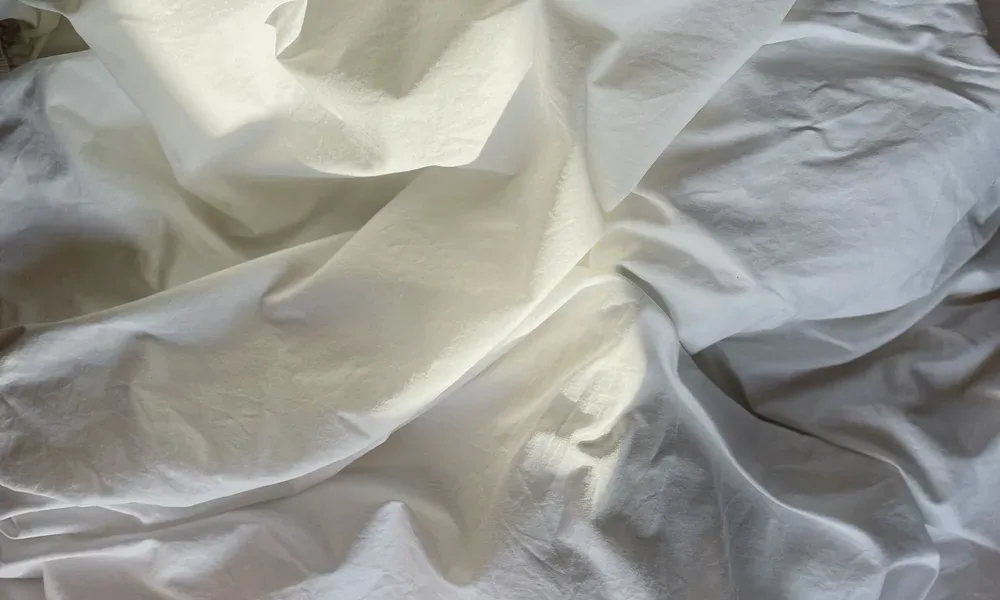
Cotton is a natural plant fibre. It grows in the boll of the cotton plant, a soft white puff that opens when the plant matures. The fibres are picked, cleaned, and spun into yarn, then woven or knitted into cloth. The length of the fibre, called the staple, is the single most useful fact about a cotton set, because longer fibres spin into smoother, stronger yarn.
Ordinary cotton, often called upland cotton, has a staple of roughly 25 to 30 millimetres. It makes good everyday sheets, but the shorter fibres leave more ends sticking out of the yarn, which is why ordinary cotton can feel slightly rough at first and pill with washing. Extra-long staple cottons, such as Egyptian cotton and Supima, an American-grown variety, have fibres of 35 millimetres or more. Their yarn is smoother and stronger, so the cloth feels softer, resists pilling better, and lasts longer.
Cotton feels the way it does because the fibre breathes: it absorbs moisture from the skin and releases it into the air, so cotton sheets feel cool and dry rather than clammy. The fibre also softens with washing, so a new set often feels firmer than it will after five or ten washes.
Weave and weight: percale, sateen, and thread count
Weave is how the yarn is crossed to make cloth, and it changes the feel of a cotton set more than any other single factor. The two weaves you will meet most often are percale and sateen. Percale is a plain, one-over-one-under weave. It feels crisp, matte, and cool, and it suits hot sleepers and warm rooms. Sateen is a weave in which the yarn floats over several threads before going under, giving the cloth a smooth surface and a soft sheen. It feels silky and slightly warm, suiting cool rooms and winter.
Two other weaves appear in cotton bedding. Flannel is cotton brushed on one or both sides, raising a soft nap that traps warm air; it is the warmest cotton bedding and the best choice for cold bedrooms. Jersey is cotton knitted rather than woven, like a T-shirt, so it stretches and feels soft and casual, though it can pill faster than a woven cloth.
Thread count is the number of threads in one square inch of cloth, counting both the lengthwise and crosswise yarns. A count of 300 to 500 in a single-ply weave is the sweet spot for most buyers: soft, strong, and breathable. Counts above 800 are often inflated, because makers count the thin strands inside a multi-ply yarn as separate threads, and a very high count can mean a heavier, less breathable sheet rather than a better one. Hot sleepers should favour light, open weaves, and cold sleepers should favour brushed or knitted cotton.
What a set usually includes: pieces, sizes, and counts
A standard cotton sheet set has four pieces: a flat sheet, a fitted sheet, and two pillowcases. The flat sheet lies on top of the fitted sheet and under the duvet or blanket; the fitted sheet wraps the mattress; the pillowcases cover the pillows. In a single bed the set may have one pillowcase, and in a king set the count rises with the bed size.
A duvet cover set has a cover and pillowcases but no sheets. The cover buttons or zips around the duvet, and the pillowcases match it. This is the set to buy if you already own sheets you like, or if you sleep under a duvet with no flat sheet. A full bedding bundle may add a bed skirt, shams, and a throw, but those extras are decoration, not bedding.
Piece counts can mislead. A listing that says seven pieces may count each pillowcase, each sham, and a cushion cover, while the cotton pieces are only three. Count the pieces you will sleep on, and ignore the decorative extras when you compare prices. Sizes also vary by country: a queen in one market is not always a queen in another, and a fitted sheet cut for a 25-centimetre mattress will not fit a 35-centimetre one. Measure your mattress, including its depth, and compare it with the listing.
How cotton differs from other bedding sets
Cotton is the middle ground of bedding fibres: breathable, washable, and easy to live with. Linen, made from the flax plant, is more textured and more relaxed; it wrinkles more than cotton, feels cooler in heat, and softens slowly over years rather than weeks. Our guide to linen bedding sets explains that fibre in full.
Silk is the smoothest bedding fibre, made from the filament of the silkworm, and it slides rather than gripping. It feels cool and gentle, but it marks easily, needs gentle washing, and costs far more than cotton. Wool bedding is the warmest, made from the fleece of sheep, and it regulates temperature well, but it needs more careful washing and can feel heavy. Our guide to wool bedding sets covers that fibre in full.
Blends sit between the fibres. A cotton-polyester blend costs less than pure cotton, wrinkles less, and dries faster, but it breathes less well and can feel warmer and less natural. The question is whether the label tells you the blend, and in what proportions: a set that says cotton on the front and 60% polyester on the label is a blend, whatever the headline claims. Cotton’s advantage is that it gives most of the comfort of luxury fibres at a fraction of the price, and it can be washed at home without special care.
The caveats that matter
Cotton is forgiving, but it is not trouble-free. It wrinkles, it can shrink, and it shows its age in ways that other fibres hide. The table below gathers the points that catch buyers out most often.
| Detail | What is known |
|---|---|
| Thread count | 300 to 500 single-ply is the sweet spot; counts above 800 are often inflated. |
| Wrinkles | All cotton wrinkles; percale wrinkles most, sateen least, and blends wrinkle less than pure cotton. |
| Shrinkage | Cotton can shrink a few percent; check the fitted sheet depth after the first wash. |
| Pilling | Short-staple cotton pills more; long-staple cotton and tight weaves pill less. |
| Hot sleepers | Percale and light weaves breathe best; sateen, flannel, and jersey sleep warmer. |
| Sensitive skin | Untreated, undyed cotton is gentlest; wash new sheets before first use. |
| Blends | Cotton-polyester blends cost less and wrinkle less, but breathe less well. |
| Organic claims | GOTS and OEKO-TEX check growing and processing, not softness or durability. |
Checklist: before you buy a cotton bedding set
- Check the label says 100% cotton, and names the cotton, such as Egyptian, Supima, or organic.
- Choose percale for cool sleep and sateen for warmth, not the other way round.
- Look for a thread count of 300 to 500 in a single-ply weave, and be wary of counts above 800.
- Count the pieces: four for a sheet set, two or three for a duvet cover set with pillowcases.
- Measure your mattress depth and check the fitted sheet pocket fits it with room to spare.
- Read the care label and the return policy before you wash the set.
Frequently asked questions
What is a cotton bedding set?
A cotton bedding set is a matching group of cotton bed linen sold together for one bed: usually a flat sheet, a fitted sheet, and two pillowcases, or a duvet cover with pillowcases.
Is 100% cotton bedding better than a cotton blend?
For most sleepers, yes: pure cotton breathes better and feels more natural than a blend. A cotton-polyester blend costs less, wrinkles less, and dries faster, but it can feel warmer and less soft.
What thread count is best for cotton sheets?
For most buyers, 300 to 500 in a single-ply weave is best: soft, strong, and breathable. Counts above 800 usually mean thinner yarns counted more than once, and can make a heavier, less breathable sheet.
Is percale or sateen better for cotton bedding?
Neither is better for everyone. Percale is crisp, matte, and cool, so it suits hot sleepers. Sateen is smooth, slightly lustrous, and warmer, so it suits cool rooms and winter. If unsure, percale is the safer first buy.
How do I wash cotton bedding?
Wash in cool or warm water with a mild detergent, skip the bleach, and tumble dry on low or line dry. Hot water and high heat wear cotton out faster and can shrink the fitted sheet.
How often should I replace cotton bedding?
Good cotton sheets usually last two to four years with weekly washing. Replace them when the fabric thins or pills heavily, or the fitted sheet no longer stays on.
The bottom line
A cotton bedding set is a matching group of bed linen made from cotton: usually a flat sheet, a fitted sheet, and two pillowcases, or a duvet cover with pillowcases. The fibre, the weave, and the piece count decide how it feels and how long it lasts. Long-staple cotton in a weave that suits your sleep, at a thread count of 300 to 500, is the safest buy.
Read the label before you buy, measure your mattress before you order, and wash the set gently once it arrives. Cotton rewards simple care: it softens with washing, breathes through the night, and lasts for years when it is not washed too hot.
Note: Fibre names, certifications, and piece counts vary between sellers, so check the label and the listing for the set you are buying, and follow its care instructions.
Meet Our Experts: Our home and lifestyle editors research bedding from published specifications, certifications, and independent reviews.
Why Trust BrassSmile: We describe only products we can verify from published sources, list trade-offs as well as strengths, and do not invent test results or prices.
Sources: The Good Trade, Real Simple, Homes and Gardens, Apartment Therapy, Sleep Foundation, and the Cotton Incorporated fibre guide.