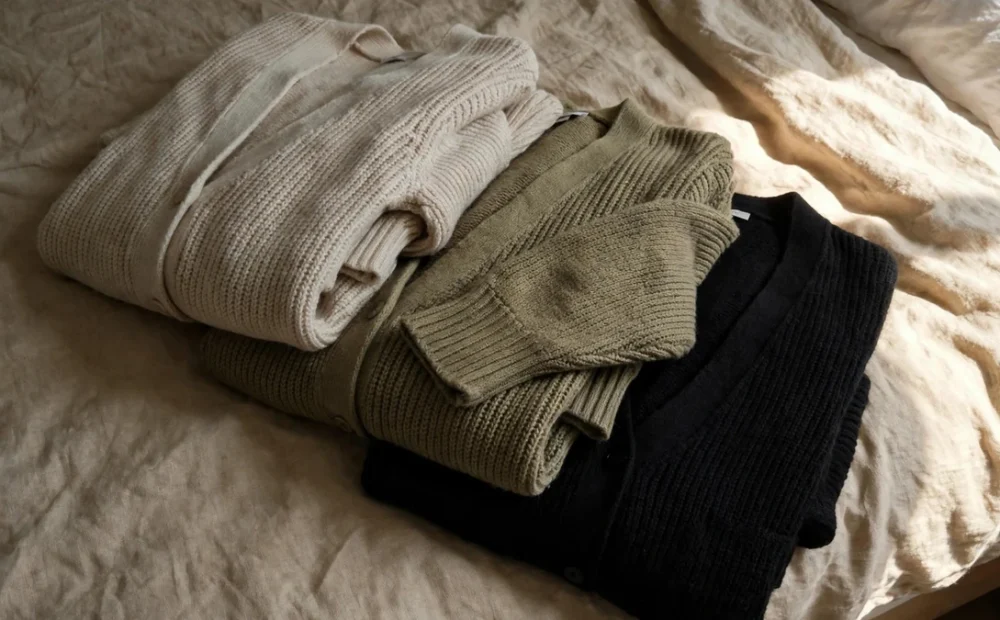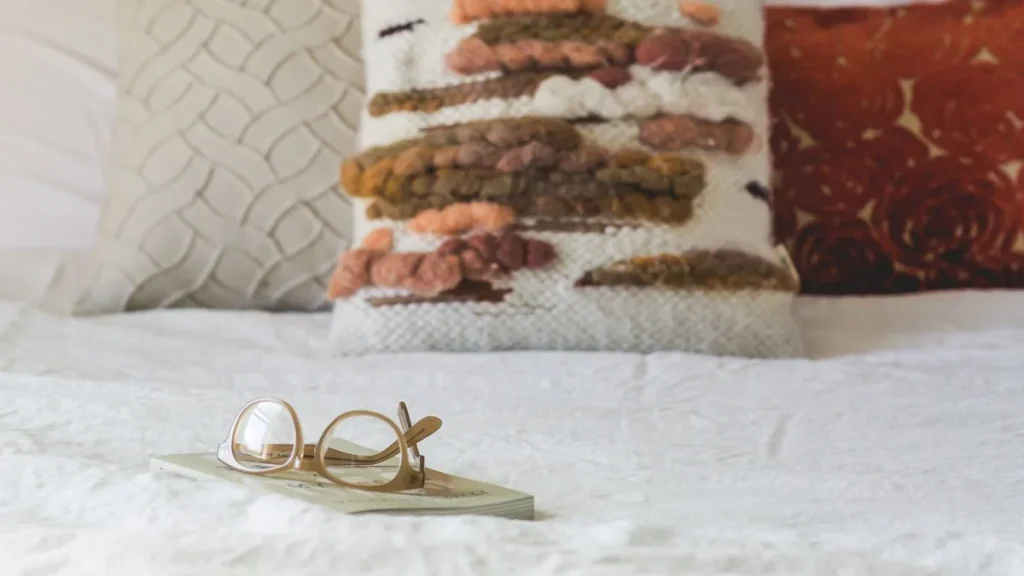
A wool bedding set can make a bedroom feel warm, calm and lived in, or it can make the bed look like a display that nobody actually sleeps in. The difference is rarely the set itself: it is the colour beside it, the weight of the layers over it, and the order the bed is dressed in.
Most wool bedding fails for three reasons: the colour is chosen on a screen instead of against the wall, the headboard and the light; every layer is wool, so the bed reads as one heavy block; or the bed is dressed for a photograph, with throws and cushions piled so high that the sleeping pillows disappear.
This guide covers styling only: colour pairing, layering with throws and cushions, bed dressing, and seasonal swaps. It does not explain what wool is, or rank sets: our roundup of the best luxury wool bedding sets covers the fibres and the sets themselves.
Key takeaways
- Style the set against the room, not the shop shelf: the wall, the headboard and the light decide whether an undyed or charcoal wool works.
- Wool is matte and textured, so pair it with something smooth: plain linen or cotton gives contrast, while a knit wool throw is the one wool-on-wool layer that works.
- Dress the bed in a fixed order, largest layer first, and shake the duvet out rather than pressing it flat: wool is lofty, and flattening it kills the look.
- The seasonal swap is about the layers around the set, not the set itself: wool regulates temperature, so the same set can stay on the bed all year.
- No pairing works in every room: wool’s natural tones shift with the light, and moths, pilling and weight limit what the bed can carry.
What styling a wool bedding set means
Styling a bedding set means deciding four things in order: the colour, what sits on top of it, how the bed is dressed, and when the layers change. Look at the largest surfaces first: the wall behind the bed, the headboard, the rug and the curtains. If the walls are pale and plain, almost any wool colour will show up well, including the undyed oatmeal and cream tones that are wool’s natural palette.
Wool changes the dressing itself, because a wool duvet has loft: it is thick, soft and full of air, and it does not drape the way cotton or silk does. That loft is the point of wool, and it is also what makes a badly dressed wool bed look lumpy. Our guide on what a wool bedding set is explains the fibre, the fineness and the weaves behind that loft.
Colour pairing: wool’s natural palette
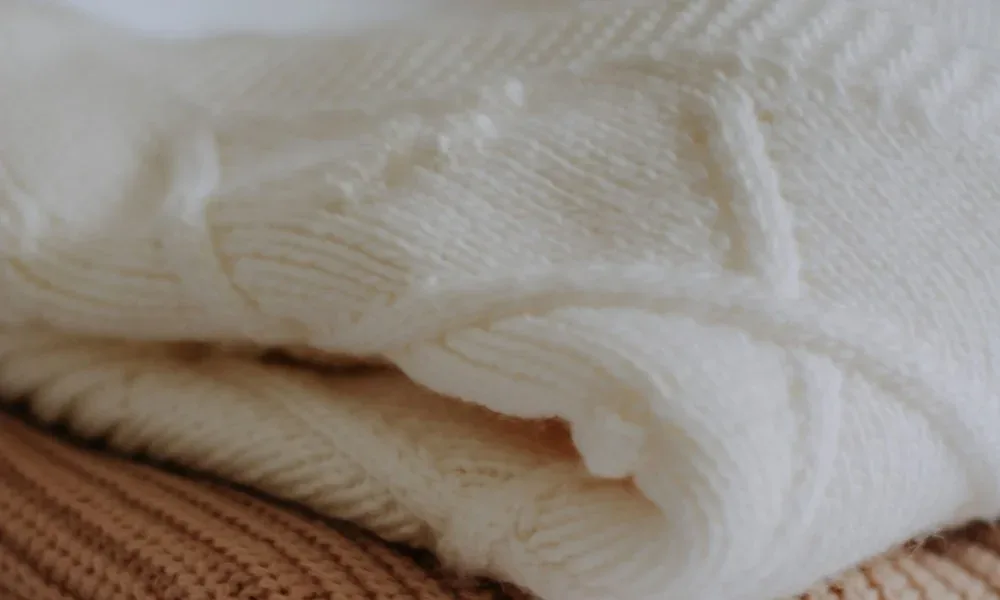
Colour pairing starts from the wall and the headboard, because the set sits between them. Wool’s best colours are its natural ones: undyed oatmeal, cream, soft grey, heather and charcoal. On pale grey, cream or white walls, a charcoal or deep heather wool makes both the bed and the room look better. On dark walls, the set needs to be lighter: oatmeal, cream or pale grey, so the bed does not vanish into the wall behind it.
Warm wools, oatmeal, camel, rust and warm grey, suit rooms with wood floors, rattan and brass fittings. Cool wools, charcoal, slate and heather grey, suit rooms with grey walls, stone floors and chrome fittings. One warm cushion in a cool room is a deliberate accent; a warm duvet covers too much of the bed to read as one.
The headboard decides more than most people expect: a wool set against a wool-covered headboard in the same colour merges into a single block. If the headboard is upholstered in wool or felt, choose the set in a different shade of the same colour family. If it is wood, rattan, iron or plain fabric, the colour can be bolder.
Layering: throws, cushions and the fold
Layering is where a wool set either looks finished or looks overdone, and the rule is simple: the wool duvet is the statement, so most of what sits on it should be smoother and lighter. A throw in linen or cotton, folded across the foot of the bed, gives the eye a second texture and the sleeper a light extra layer. A chunky knit wool throw is the exception: wool on wool works when the throw is clearly a different texture from the duvet, a loose knit over a smooth woven cover.
Fold the throw in thirds, lengthways, and lay it across the lower third of the bed, slightly off-centre, so the duvet still shows above and below it. Folded in half it looks like a hotel display; tossed loosely it looks like laundry. A heavy wool throw folded across the whole bed will flatten the duvet’s loft, so keep it to the foot.
Start with the sleeping pillows in their wool pillowcases, standing upright against the headboard, then place one or two cushions in a contrasting texture in front of them: linen, cotton or a smooth woven wool. Our roundup of the best luxury wool blankets covers the throws and blankets that layer best over a wool set. Two cushions suit a double bed; three at most on a king, and no more than one of them should be a chunky knit.
Dressing the bed: the order that works
A well-dressed wool bed follows a fixed order, the same every morning. Start with the fitted sheet, smoothed flat, because any crease under a wool duvet shows as a ridge in the loft. Then the duvet: shake it out, let it fall, and lay it flat without pressing it down. Wool bedding should look full, not flat.
Fold the top edge of the duvet back about a hand’s width: it breaks the flat surface, shows the reverse of the fabric, and gives the sleeper a clear place to get in. Next come the sleeping pillows, in their wool cases, standing upright and slightly overlapping, open ends turned to the middle so the seams do not show from the door. Then the throw across the foot, then the cushions in front of the pillows.
The folded edge is where wool’s texture shows best: a woven wool cover folded back reveals the weave. Fold it back too far and the bed looks unmade; too little and the band disappears. Air the bed for ten minutes before dressing it, with the duvet pulled back: wool releases moisture overnight, and a bed dressed while still damp from sleep will smell stale by evening.
Seasonal swaps: the set stays, the layers change
Wool is the most temperature-flexible of the luxury bedding fibres: it insulates on a cold night and wicks moisture on a warm one. The set itself does not need to come off the bed in summer. What changes is everything around it.
In summer, keep the wool duvet cover but lighten everything else: use a lighter insert inside the cover, swap a chunky knit throw for a thin linen one or none at all, and use linen or cotton cushions in pale tones instead of wool ones. In winter, do the reverse: keep the heavier insert, add a chunky knit throw, keep the wool cushions, and add one more cushion in a warm tone.
Spring and autumn are the easiest seasons for wool, because the set needs no change at all. Instead, use those seasons to care for it: air the duvet and the pillows outside on a dry day, and brush the cover lightly to lift any pilling.
The caveats that matter
Wool is a forgiving fabric to sleep under and a demanding one to style. The table below covers the problems that show up most often.
| Detail | What is known |
|---|---|
| Pilling on the cover | Normal for wool, especially where the fabric rubs. A fabric comb or a light brush removes pills; pulling them off by hand makes it worse. |
| Moths in storage | Wool is food for clothes moths. Store spare sets clean and dry, with cedar or lavender, and check the cupboard twice a year. |
| Weight and bulk | A wool-filled duvet is heavier than cotton or down. A very heavy set can look lumpy and feel too warm for light sleepers. |
| Colour shift in different light | Undyed wool looks cream in daylight and grey or yellow under warm lamps. Judge it in the room’s own light. |
| Washing and care | Most wool bedding needs a cold, gentle wash or dry cleaning. A hot wash will felt and shrink it. |
| Sunlight fading | Strong sunlight fades dyed wool, especially dark colours. Keep the bed out of the strongest sun, or use a curtain during the day. |
| Itch and prickle | Coarse wool above 30 microns can prickle bare skin. A cotton flat sheet between skin and wool solves it. |
| Matching wool everywhere | A wool set with a wool rug, wool curtains and wool cushions reads as one heavy block. Keep at least two large surfaces in other fabrics. |
Checklist: before you call the bed finished
- Stand at the bedroom door: one strong wool colour with quiet neighbours, not wool against more wool in the same shade.
- Count the wool pieces: one set, at most one chunky knit cushion and one knit throw.
- Check the fold-back at the top of the duvet: a visible band, about a hand’s width, showing the weave or the reverse.
- Remove the cushions and the throw, then put them back: more than a minute means the arrangement is too complicated.
- Look at the bed in morning light and in evening light: undyed wool should work in both.
- Shake the duvet out instead of pressing it flat: the bed should look full, and the loft should spring back when you lift a corner.
Frequently asked questions
Can a wool bedding set go on any bed frame?
Yes, with one condition: the frame should not be upholstered in wool in the same colour, or bed and frame merge into one block. A wood, iron or plain upholstered frame suits a wool set best.
How many cushions go on a wool bed?
Two on a double bed and three at most on a king, and only one needs to be a chunky knit. The sleeping pillows in their wool cases already carry the fibre, so the cushions in front should mostly be linen, cotton or smooth woven wool.
Does wool bedding work in summer?
It can, and better than most fibres: wool wicks moisture and regulates temperature, so the same set can stay on the bed all year. In summer, use a lighter insert and swap wool cushions for linen or cotton ones.
Why does my undyed wool set look yellow in the evening?
Because undyed wool is a warm cream, and warm lamp light pushes it towards yellow, while daylight pushes it towards grey. This is normal, not a fault.
How do I stop a throw sliding off a wool duvet?
Usually you do not need to: wool grips wool, so a knit throw stays where it is put. A smooth linen or cotton throw can slide, so fold it in thirds lengthways and lay it across the lower third of the bed.
How often should I air a wool bedding set?
Air the duvet and pillows outside on a dry day twice a year, in spring and autumn, and pull the bed back for ten minutes each morning so the wool releases overnight moisture.
The bottom line
Styling a wool bedding set comes down to four decisions: the colour against the room, the textures layered over it, the order the bed is dressed in, and the seasonal swap. One strong wool surface in a natural tone, smooth neighbours in linen or cotton, a knit throw at the foot, and a fixed dressing order will do more than a whole set of matching wools.
The rest is living with it: air the set twice a year, brush away pills when they appear, and keep it out of strong sunlight. A set styled that way looks deliberate for years, and it stays on the bed in every season.
Note: This article is a styling guide only. It does not explain what wool is, rank bedding sets, or recommend products. For the fibre and the sets themselves, see our roundup of the best luxury wool bedding sets.
Meet Our Experts
Our interiors editors cover fabrics, furniture and home textiles, and check styling advice against real rooms and real light, not against showroom photographs.
Why Trust BrassSmile
We describe home textiles from their construction, fibre and weave, and we separate styling advice that works in a lived-in room from arrangements that only work in a photograph.
Sources
Colour and texture guidance follows published interior design references, including Architectural Digest and Elle Decoration; wool care guidance follows manufacturer care labels and published textile guides. Fabric definitions follow standard textile references.