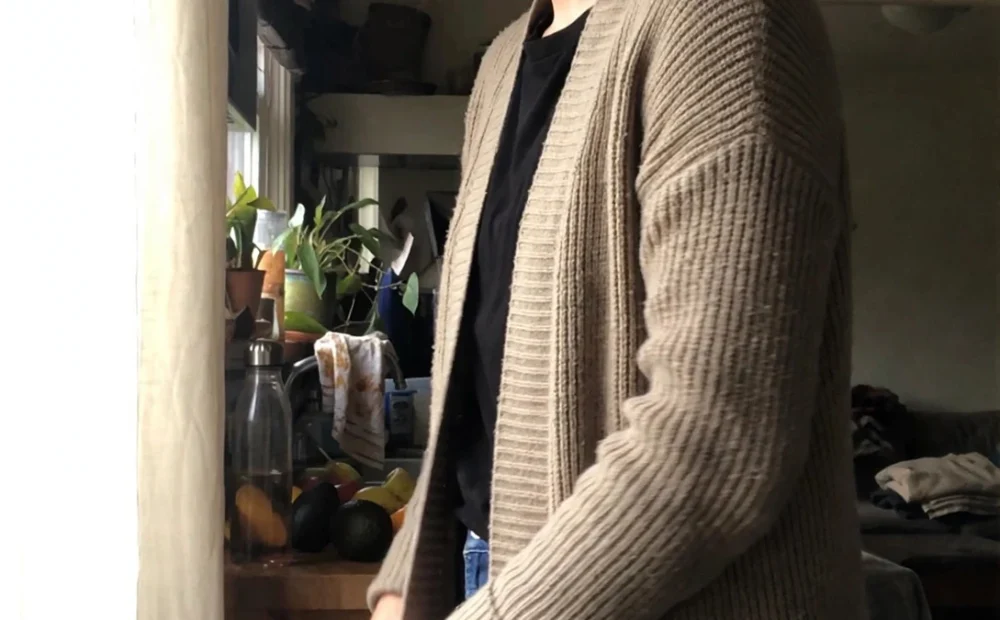
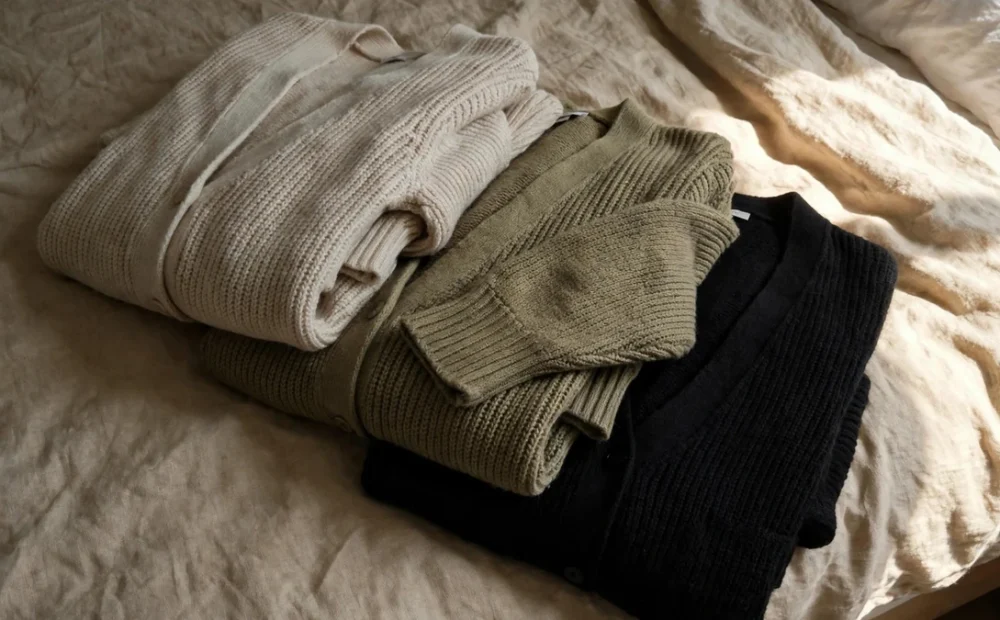
A longline cardigan is the easiest layer to wear badly. It is long enough to dominate an outfit, which means it can either pull the whole look together or swallow it entirely. The difference is rarely the cardigan. It is the order you dress in, the width of the leg underneath, and whether the hem is allowed to do its work or left to fight the rest of the outfit.
The trick is to treat the cardigan as a frame rather than a blanket. A frame works when what sits inside it is simple, so the layer underneath should be plain, the leg should be slim, and the colour should be drawn from the cardigan itself. When those three things are right, the length becomes an asset, drawing one clean line from shoulder to hem. When they are wrong, the length becomes a liability, and the outfit looks unfinished no matter how good the cardigan is.
Below are nine steps for styling a longline cardigan in 2027, from choosing the layer underneath to getting the hem right. Each step tells you what to do, what to avoid, and the small detail that makes the difference, so the cardigan looks deliberate rather than accidental.
Key takeaways
- A longline cardigan works as a frame, so the layer underneath must be plain and the leg must be slim.
- Dress from the inside out, choosing the base layer first and the cardigan second.
- The hem decides the outfit: a mid-thigh hem is the easiest length, a knee-length hem needs a longer leg.
- One narrow strip of the outfit showing down the front is enough; the cardigan should not hide everything.
- No styling rule saves a cardigan that is the wrong length for your frame, so check the hem before you buy.
What styling a longline cardigan actually means
Styling a longline cardigan means managing length. The cardigan adds a vertical line to the outfit, and your job is to make sure that line helps rather than hurts. An open cardigan over a column of one colour lengthens the body. A closed cardigan over a wide trouser shortens it. A longline over a short skirt can work, but only when the skirt is visible in a deliberate strip rather than peeking out by accident.
It also means managing weight. A longline cardigan is heavier than a short one, and it will pull at the shoulders if the rest of the outfit is heavy too. Keep the layers underneath light, and let the cardigan carry the warmth. If you are wearing a thick jumper under a longline cardigan, you are wearing two coats, and the outfit will look like it.
The third thing it means is managing the hem. The hem is the most visible part of a longline cardigan, and it is the part most people ignore. A hem that ends at the widest part of the thigh will draw the eye there. A hem that ends just above or below the knee will draw the eye to the knee. Choose the hem that lands where you want the eye to go, and the rest of the outfit will follow.
There is one more thing length changes, and it is the way the cardigan moves. A short cardigan moves with the body and stays close to it. A longline swings, catches the air when you turn, and settles in a different place each time you stand up. That movement is part of the appeal, and part of the risk. A heavy knit settles quickly and stays put. A light knit keeps moving, and it can end up twisted or bunched at the back without you noticing. The fix is simple: choose a knit with enough weight to settle, and check the back view before you leave the house.
How to approach a longline cardigan
Start with the base layer, not the cardigan. Pick a plain top in a colour drawn from the cardigan, in a fine gauge that sits flat under the knit, and only then put the longline over it. The base layer is the foundation of the outfit, and a longline over a lumpy or patterned top will show every bump through the knit.
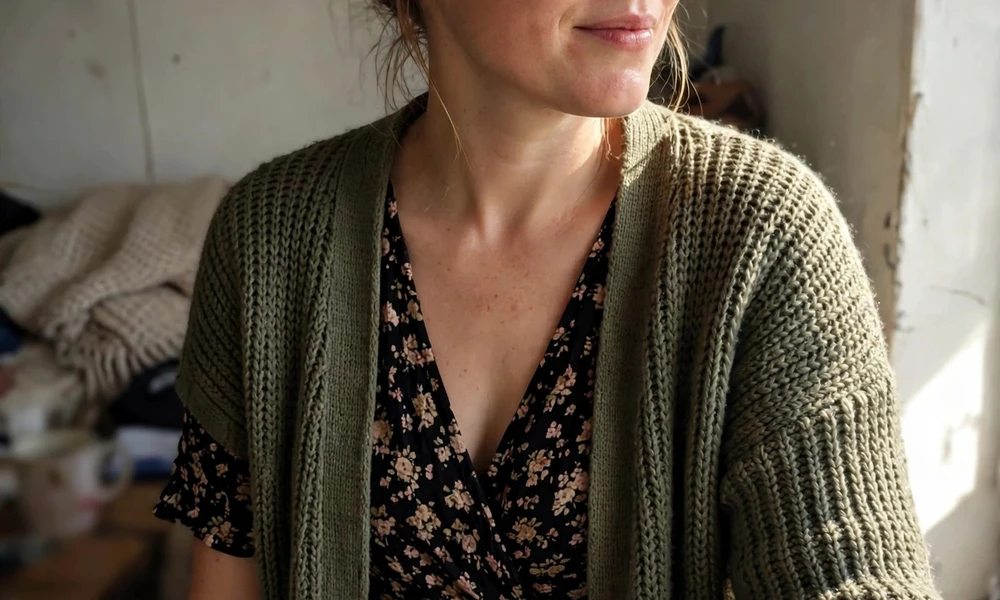
Next, choose the leg. A slim trouser, a straight skirt, or a narrow bootcut keeps the line clean, because the cardigan needs something slim to contrast with its length. A wide trouser can work, but only when the cardigan is open and the trouser is visible in a narrow strip down the front, so the width reads as deliberate rather than accidental.
Finally, check the whole outfit in a full-length mirror, standing and sitting. A longline that looks right standing up can bunch at the knees when you sit, and a hem that looks even from the front can ride up at the back. The mirror is the only test that matters, and it takes less than a minute.
One more check is worth doing before you leave: sit down in the outfit and stand up again. The cardigan will show you what it does when you move rather than when you pose, and a hem that looked level a moment ago can tell a different story after one trip across the room.
9 steps to style a longline cardigan for women
Begin with what goes underneath
What to do: Choose a plain camisole or fine-gauge tee first, in a colour drawn from the cardigan, and only then put the longline over it, so the layer underneath is a deliberate choice rather than whatever you happened to be wearing.
What to avoid: Pulling a longline over a patterned or slogan top, which turns the long frame of the cardigan into a frame around a distraction. Best For: Anyone whose cardigan keeps looking unfinished. Time Needed: Two minutes while you are still choosing the top. Standout Tip: If the base layer would not work on its own, it will not work under a longline.
Slim bottoms stop the length swallowing you
What to do: Wear a slim trouser, a straight skirt, or a narrow bootcut, so the length of the cardigan has something narrow to contrast with and the vertical line stays visible from hip to ankle. A straight skirt works the same way, because the cardigan and the skirt share one straight line, and the outfit reads as a column rather than a collection of pieces.
What to avoid: Pairing a longline with a wide trouser and a closed front, which hides the leg entirely and turns the outfit into one wide block. Best For: Days when the cardigan is the main layer. Time Needed: A moment at the wardrobe before you dress. Standout Tip: The slimmer the leg, the longer the cardigan looks.
Show a thin stripe of the base outfit
What to do: Wear the cardigan open so a narrow strip of the outfit shows down the front, from the neckline to the hem, which breaks the length into two lines and keeps the outfit from reading as one solid block.
What to avoid: Buttoning or belting a longline shut over a plain outfit, which removes the only break in the length and can make the body look shorter. Best For: Outfits built on one colour. Time Needed: Seconds, once the cardigan is on. Standout Tip: The strip should be as wide as your hand, no more.
Choose a hem that suits your frame
What to do: Choose a mid-thigh hem if you are petite and a knee-length hem if you are tall, so the cardigan lands where it flatters rather than where it happens to fall.
What to avoid: Wearing a knee-length longline on a petite frame, where the length overwhelms the body, or a mid-thigh longline on a tall frame, where it can look accidentally short. Best For: Anyone buying their first longline. Time Needed: Five minutes in front of a full-length mirror. Standout Tip: The hem should land above or below the knee, never exactly on it.
Boots anchor a longline better than trainers do
What to do: Choose boots that reach the ankle or the knee, so the leg has a clean finish under the hem and the outfit reads as one continuous line from shoulder to shoe. Knee boots work best with a knee-length hem, because the boot and the cardigan meet without a gap, while ankle boots suit a mid-thigh hem, where a little leg shows between the two.
What to avoid: Wearing trainers with a knee-length longline, which breaks the line at the ankle and makes the cardigan look like a dressing gown. Best For: Cooler days when the cardigan is the coat. Time Needed: The time it takes to change shoes. Standout Tip: A boot in the same colour family as the cardigan lengthens the leg further.
Belt the base layer when the waist peeks out
What to do: Add a belt only when the cardigan is open and the waist is visible, cinching the base layer rather than the cardigan, so the shape comes from the outfit underneath and the cardigan hangs free.
What to avoid: Belting a closed longline at the waist, which bunches the knit and turns a clean line into a gathered one. Best For: Evenings when the outfit needs a waist. Time Needed: A minute with a slim belt. Standout Tip: If the belt fights the knit, take the belt off, not the cardigan.
Resist piling extras onto a longline
What to do: Wear a plain top and a simple necklace, and let the cardigan carry the visual weight, so the outfit has one focal point rather than three competing ones. A longline already adds drama through its length, so the neckline does not need to compete. A plain crew neck or a shallow V-neck is enough, and anything more will fight the cardigan for attention.
What to avoid: Adding a statement necklace, a scarf, and a patterned top under a longline, which crowds the neckline and makes the length look like an afterthought. Best For: Work outfits that need to look polished. Time Needed: No extra time, just fewer accessories. Standout Tip: One simple piece of jewellery is enough with a longline.
Turn round and look at the back hem
What to do: Turn around in a full-length mirror and check that the hem sits level at the back, the knit hangs straight, and nothing is caught or bunched at the seat.
What to avoid: Leaving the house without checking the back, because a longline that looks fine from the front can ride up or twist at the back where you cannot see it. Best For: Every day you wear a longline. Time Needed: Thirty seconds with a mirror. Standout Tip: A hand mirror held behind you catches what the wall mirror misses.
Cuff the sleeves with one fold
What to do: Fold the sleeves back once at the cuff, so the forearm shows in a clean band and the knit stays flat, which shortens a long sleeve without disturbing the drape.
What to avoid: Pushing the sleeves up the arm, which bunches the knit at the elbow and pulls the shoulders out of line. Best For: Warmer afternoons when the cardigan is too warm. Time Needed: Ten seconds per sleeve. Standout Tip: One fold is enough; a second fold starts to look like a uniform.
Matching the longline to the occasion
For work, keep the longline open over a plain top and a straight skirt, with ankle boots and one simple piece of jewellery. The length reads as polished rather than casual when the rest of the outfit is tailored, and the open front keeps the line from looking like a uniform. A wool-blend longline suits the office best, because it holds its shape through a day of sitting. Our guide to styling an open-front cardigan makes the same point about tailoring, and it holds here too.
For a weekend, wear the longline over a tee and slim jeans, with boots that meet the hem. The length does the work of making a simple outfit look considered, and the cardigan becomes the coat. A cotton-blend longline suits the weekend best, because it is easy to wash and hard to ruin. The wrap cardigan guide on styling a wrap cardigan covers casual layering in the same way, and the advice applies here.
For an evening, choose a fine-gauge longline in a dark colour, worn open over a slip dress or a column of one colour, with heeled boots. The length adds drama without effort, and the fine knit keeps the outfit from looking heavy. A cashmere-blend longline suits the evening best, because the softness reads as luxury in low light. The cable-knit cardigan guide on styling a cable-knit cardigan covers evening texture in the same way, and the advice applies here.
The caveats that matter
A longline cardigan will not fix an outfit that is wrong underneath it. If the base layer is lumpy, the trousers are too wide, or the colours clash, the length will only make the problem more visible, because there is more cardigan for the eye to travel across. Fix the outfit first and the cardigan second. It is also worth remembering that a longline is not a coat. It has no fastening to keep the wind out, and it will not keep you warm in real cold, so treat it as a layer for cool, dry days rather than a substitute for outerwear.
| Detail | What is known |
|---|---|
| First step | Choose the base layer before the cardigan |
| Best leg underneath | Slim trouser, straight skirt or narrow bootcut |
| Front strip width | About as wide as your hand, no more |
| Best hem for petite frames | Mid-thigh, above or below the knee, never on it |
| Best shoes | Ankle or knee boots that meet the hem |
| When to belt | Only when the waist shows, and belt the base layer |
| Biggest mistake | Pushing the sleeves up instead of folding them once |
| Weather limit | Cool, dry days; not a substitute for a coat |
Checklist: styling a longline cardigan honestly
- Choose the base layer first and keep it plain.
- Wear a slim leg underneath so the vertical line stays visible.
- Leave a narrow strip of the outfit showing down the front.
- Check the hem lands above or below the knee, never exactly on it.
- Check the back view in a full-length mirror before you leave.
- Fold the sleeves once at the cuff instead of pushing them up.
Frequently asked questions
Open or closed: which way suits a longline best?
Open, almost always. An open longline shows a strip of the outfit down the front, which breaks the length into two lines and keeps the body looking longer. A closed longline works only over a very plain outfit.
Which trouser shapes sit well under a longline?
A slim trouser, a straight skirt, or a narrow bootcut. The leg needs to be slim so the cardigan has something narrow to contrast with, and the line stays clean from hip to ankle.
Footwear for a longline: trainers, boots, or neither?
With a mid-thigh longline, yes, if the trainers are clean and simple. With a knee-length longline, boots work better, because trainers break the line at the ankle.
Why does my longline read as a dressing gown?
Wear it open over a plain, structured outfit, choose boots rather than slippers or trainers, and keep the top half simple. The dressing-gown look comes from softness everywhere at once.
Is belting a longline ever a good idea?
Only when the waist shows. Belt the base layer rather than the cardigan, so the shape comes from the outfit underneath and the knit hangs free without bunching.
Mid-thigh or knee: where should a first longline end?
Mid-thigh. It is the easiest length to wear, it suits most frames, and it pairs with the widest range of trousers, skirts and shoes.
The bottom line
Styling a longline cardigan comes down to three things: a plain base layer, a slim leg, and a hem that lands where you want the eye to go. Get those three right and the length does the rest, drawing one clean line from shoulder to hem and making even a simple outfit look considered.
If you remember one thing from this guide, make it the order you dress in. Choose the base layer first, the leg second, and the cardigan last, and check the back view before you leave. A longline styled in that order looks deliberate. A longline thrown on top of whatever you were already wearing looks like an afterthought, and no cardigan deserves that.