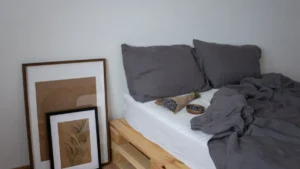
A linen bedding set is the easiest bed in the house to style and the easiest to get wrong. The fabric does half the work for you: its matte surface, visible weave and relaxed drape already look considered, Choose the wrong colour against the wall and the whole room feels cold.
The trick is to style with the fabric rather than against it. Linen wants to look lived in, not pressed. It suits soft, chalky colours better than bright ones, matte textures better than shiny ones, and a small number of well-chosen layers better than a pile of cushions. A linen set styled well looks like a bed someone actually sleeps in.
This guide covers styling only: colour pairing, layering with throws and cushions, bed dressing, and seasonal swaps. It does not explain what linen is, or rank sets: our guide to what a linen bedding set is covers the fibre, the pieces and the weights, and our roundup of the best linen bedding sets lists sets by weight and price.
Key takeaways
- Style the set against the room: the wall, the headboard and the light decide whether a shade works.
- Linen is the matte anchor of the bed, so the layers on top should add contrast in texture, not shine: knit, wool and washed cotton all work.
- Dress the bed in a fixed order, largest layer first, and keep the cushions few enough to clear in under a minute.
- Wrinkles are part of the look: smooth the bed with your hands and let the creases fall where they fall, instead of ironing them out.
- No pairing works in every room: pale shades mark easily, and a set that looks calm in a bright room can look flat in a dark one.
What styling a linen bedding set means
Styling a bedding set means deciding four things in order: the colour, what sits on top of it, how the bed is dressed, and when the layers change. A deep charcoal linen duvet is beautiful on its own, but against a dark grey wall it disappears, and in a small room it can make the bed look like a heavy block.
Light matters most with linen because the fabric is matte. Unlike silk, which changes with the angle of the light, linen looks much the same from every direction, which is both its strength and its risk. Test a colour in the room at two times of day before committing.
The second thing linen decides is texture. The fabric has a visible weave, small irregularities in the yarn, and a dry, slightly crisp hand, and that texture is the styling. A bed dressed entirely in linen can look flat, because every surface has the same finish, so the layers on top need a different feel. The third thing is the wrinkle. Linen creases, and no amount of careful making will keep it smooth for long.
Colour pairing: starting from the room

Colour pairing starts from the wall and the headboard, because the set sits between them. On pale grey, cream or white walls, a deeper linen colour, charcoal, sage, terracotta or deep olive, gives the bed weight. On dark walls, the set needs to be lighter or warmer: natural flax, oatmeal, pale stone or soft white. Warm shades suit wood floors and brass; cool shades suit grey walls and chrome.
The headboard decides more than most people expect. A linen set against a dark wood headboard looks grounded and warm, and almost any linen shade works with it. Against a pale upholstered headboard, a pale linen set can blur into one soft shape, so the set needs a deeper tone or a contrasting throw to separate the bed from the wall behind it.
White linen is the hardest colour to style well, and the most forgiving once it works. It suits almost any wall and any throw, but it shows every mark, so give it contrast: a coloured throw, deeper cushions, a dark frame. Natural flax, the undyed beige of the fibre, is the easiest linen shade to live with. It warms a cool room, hides marks better than white, and sits comfortably beside both warm and cool accents.
Pattern belongs on the layers, not on the set itself. A plain linen duvet with a striped or checked cushion, or a small patterned throw, looks deliberate. A patterned linen duvet with patterned cushions looks busy, because the weave of the linen is already a pattern of its own. Keep the set plain, and let one layer carry the print: a ticking stripe on a cushion, a small check on a throw, a floral on a single lumbar pillow.
Layering: throws, cushions and texture
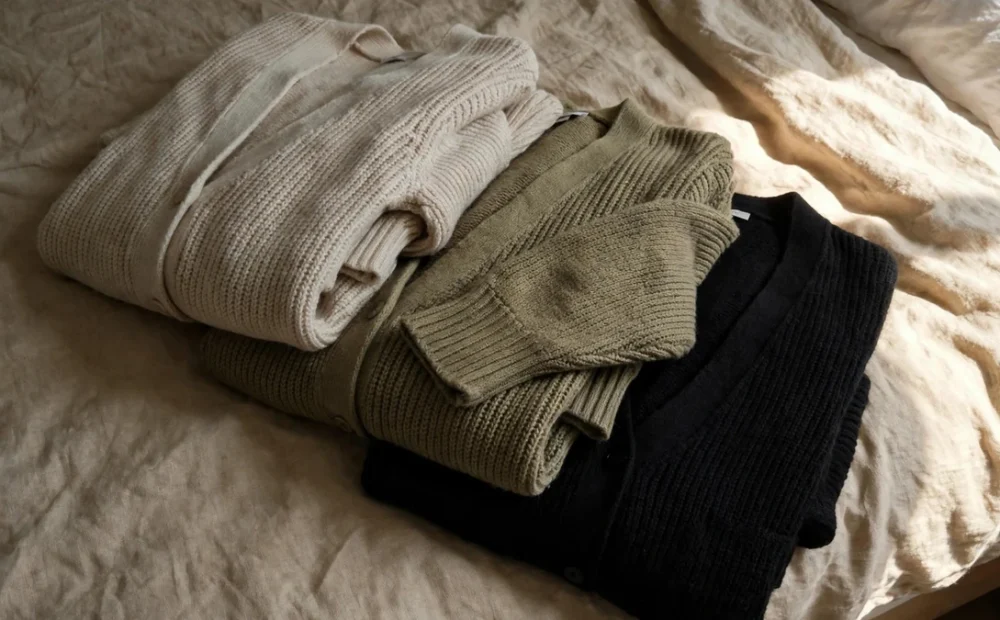
Layering is where a linen set either looks finished or looks overdone, and the rule is simple: the linen duvet is the statement, so everything on top of it should be quieter in colour and different in texture. A throw in a knit, a light wool or a washed cotton, folded across the foot of the bed, gives the eye a second texture and the sleeper a light extra layer. Fold it in thirds and lay it across the lower third of the bed, slightly off-centre. Our roundup of the best luxury linen blankets covers linen throws, which work when the throw is a deeper shade than the duvet.
Start with the sleeping pillows in their linen pillowcases, standing upright against the headboard, then place one or two cushions in a contrasting texture in front of them: a knit cushion, a velvet cushion in a deep tone, or a washed cotton cushion in a plain colour. Two cushions suit a double bed; three at most on a king. Cushions on a linen bed should sit against the pillows, not on the flat duvet, because the flat duvet is where they slide and where they wrinkle the cover.
The texture contrast is what makes the bed look styled rather than simply made. Linen beside linen is quiet; linen beside a chunky knit is interesting. Shiny fabrics are the one texture to use sparingly. A silk or satin cushion can work as a single accent, catching the light against the matte linen, but two or three shiny pieces make the bed look confused about what it is.
Dressing the bed: the order that works
A well-dressed linen bed follows a fixed order, the same every morning. Start with the fitted sheet, pulled smooth and tucked at the corners, because any bunching under a linen duvet shows through as a ridge. Then the duvet, shaken out and laid flat, with the top edge folded back about a hand’s width: it shows the sheet beneath and gives the bed a finished top edge. Next come the sleeping pillows, in their linen cases, standing upright and slightly overlapping, Then the throw across the foot, then the cushions in front of the pillows.
Smoothing matters with linen, but it is done by hand, not by iron. Run a hand over the duvet from the centre outwards after laying it flat, and smooth the pillowcases the same way before standing them up. Do not iron linen bedding on the bed. The heat flattens the weave, and the fabric will crease again within an hour anyway.
The fold-back is the detail that makes a linen bed look styled. A duvet folded back at the top, showing a flat sheet or the reverse of the cover, gives the bed a clear top edge and a sense of depth. Without it, a linen duvet can look like a single rumpled slab. Fold it back a hand’s width, no more, and let the fold sit slightly uneven, which suits the fabric. Leave the duvet loose at the sides, draping a few inches over the mattress.
Seasonal swaps: keeping linen in use all year
Linen is cool by nature, and a full linen set in high summer needs almost nothing else: the flat sheet alone, or the duvet with a light insert, is enough on a warm night. The styling in summer is about subtraction. Take the heavy throw off, reduce the cushions to one, and let the set breathe.
Winter is when the layers earn their place. Keep the linen set, but add a warmer throw, a wool or a heavy knit, across the foot, and a heavier duvet insert inside the cover. One seasonal swap, a warmer throw and a heavier insert in winter, keeps the set usable all year, and it is cheaper than owning two sets.
In spring and autumn, split the difference: a medium-weight throw, two cushions, and a set that has softened with washing will drape better than a new one.
The combinations that work: at a glance
| Room | Set colour | Throw | Cushions |
|---|---|---|---|
| Pale walls, wood floor | Natural flax | Knit, oatmeal | One rust, one plain |
| Dark walls, grey light | Soft white | Wool, charcoal | One slate, one cream |
| Bright room, white walls | Sage | Cotton, cream | One striped, one plain |
| Warm room, brass fittings | Terracotta | Linen, deeper rust | One cream, one ochre |
| Cool room, chrome fittings | Slate blue-grey | Wool, pale grey | One white, one navy |
| Small room, low light | Pale stone | Cotton, white | One, in a deep tone |
| Large room, high ceiling | Charcoal | Knit, cream | Two, in warm tones |
Checklist: before you dress the bed
- Check the set against the wall and headboard in daylight and evening light.
- Keep the set plain; let one layer carry the pattern.
- Choose the throw by touch, and fold it in thirds across the lower third of the bed.
- Limit cushions to two on a double and three on a king, kept against the pillows.
- Smooth the duvet by hand from the centre outwards, fold the top back a hand’s width, and let the sides drape.
- Plan one seasonal swap, a warmer throw and a heavier insert in winter, so the same set works all year.
Frequently asked questions
Can you style a linen bedding set in a small bedroom?
Yes, and linen suits a small room well, because its matte surface does not bounce light around or demand attention. Choose a pale shade, keep the cushions to one or two, and use a single throw.
Should linen bedding be ironed?
No. Ironing flattens the weave and the fabric creases again within an hour, so the effort does not last. Smooth it by hand instead; the creases that remain are part of the look.
What colour throw goes with white linen bedding?
Almost any colour works with white linen, which is why it is the most versatile shade. The safest choice is a throw in a deeper shade than the duvet, in a different texture, so the two layers read as separate.
How many cushions should go on a linen bed?
Two on a double bed and three at most on a king, plus the sleeping pillows. One cushion can be enough, and it should sit slightly off-centre.
Does linen bedding work in winter?
Yes, with a heavier duvet insert and a warmer throw. The linen cover stays the same, and still sets the tone of the bed, while the insert and the throw do the warming.
Can you mix linen bedding with other fabrics?
Yes, and you should: linen beside linen alone can look flat. Knit, wool, washed cotton and velvet all contrast well with linen’s matte texture.
The bottom line
Styling a linen bedding set is a matter of working with the fabric, not against it. Choose the colour against the room, keep the set plain, add one contrasting texture on top, dress the bed in a fixed order, and let the wrinkles fall where they fall. A linen bed styled this way looks calm, lived in and expensive,
The test of a styled linen bed is not how it looks in a photograph. It is how it looks on an ordinary morning, after a night’s sleep, made again in two minutes. If the bed still looks good then, with the throw straightened and the cushions back in place, the styling works.
Note: Colour and texture depend on taste and on the light in your room, so treat these pairings as starting points. Check shades against your own walls before buying, and check the care label before washing or steaming.
Meet Our Experts
Our home and interiors editors cover bedding, textiles and bedroom design, and our contributors include interior stylists who dress beds for hotels and private homes. Product and fabric claims in this guide come from published specifications and established textile references, not from invented testing.
Why Trust BrassSmile
BrassSmile covers luxury living, homes and design with the same care we bring to fashion and beauty: we check specifications against published sources, we describe fabrics from their known properties, and we do not invent test results or expert quotes. Where a claim cannot be verified, we say so, and where taste is involved, we say that too.
Sources
The Good Trade, Homes & Gardens, Real Simple, The Quality Edit, Parachute, Brooklinen, Boll & Branch, Cultiver, Coyuchi, Quince, SIJO.