Linen and silk are the two fabrics that turn a bed from a place to sleep into a place to recover. One is crisp, breathable and beautifully imperfect; the other is smooth, cool and quietly luxurious. Both are natural fibres, both cost more than cotton, and both are easy to buy badly, which is why a straight comparison is worth doing before you spend.
The difference starts with the fibre. Linen comes from the flax plant, and its long, strong fibres make a fabric that is breathable, durable and naturally textured. Silk comes from the silkworm, and its fine filaments make a fabric that is smooth, light and cool against the skin. Those two origins explain almost everything else: how each fabric feels, how it handles heat, how it should be washed, and how long it lasts.
Below are nine comparisons that matter in 2027, from sleep temperature and softness to price and sustainability. Each one is described by what each fabric does well, what to watch for, and who it suits best, so you can choose with your sleep and your budget in mind, not just the set on the shelf.
Key takeaways
- Linen is the most breathable bedding fabric and the best for hot sleepers, while silk is the smoothest and kindest to skin and hair.
- Both fabrics last for years when cared for properly, but linen is tougher and more forgiving, while silk needs gentler handling.
- Linen softens with every wash and looks better slightly rumpled; silk stays smooth and polished but shows marks and water spots easily.
- Price is high for both, but linen usually offers better value per year because it is harder to damage and easier to wash.
- No bedding fabric fixes poor sleep on its own, and neither linen nor silk is a substitute for a good mattress, a dark room or a regular sleep routine.
What linen and silk bedding actually are
Linen bedding is woven from flax fibres, which are long, strong and naturally hollow, so air moves through the fabric easily. That is why linen feels cool in summer and comfortable in winter: it breathes, it absorbs moisture without feeling damp, and it dries quickly. Linen has a visible texture and a relaxed, slightly rumpled look, and it softens with every wash rather than wearing thin.
Silk bedding is woven from silk filaments, usually mulberry silk, which are smooth, fine and naturally temperature-regulating. Silk feels cool to the touch and glides against the skin, which is why it is often recommended for people with sensitive skin or hair that tangles overnight. It has a soft sheen and a polished, hotel-like look, but it is more delicate than linen and more sensitive to water, sunlight and rough handling.
Both fabrics are sold as sheet sets, duvet covers and pillowcases at a wide range of prices. The quality gap is large, so the label matters: look for pure linen or pure mulberry silk, and be wary of blends that are mostly polyester.
How we chose these comparisons and what to look for
Look first at the fibre and the weave. For linen, pure flax in a plain weave is the most reliable, and a weight around 150 to 170 grams per square metre balances durability and drape. For silk, mulberry silk at 19 to 22 momme is the sweet spot: smooth enough to feel luxurious and thick enough to last. Lower momme silk feels thin and tears more easily, while higher momme silk is heavier and more expensive without much extra benefit.
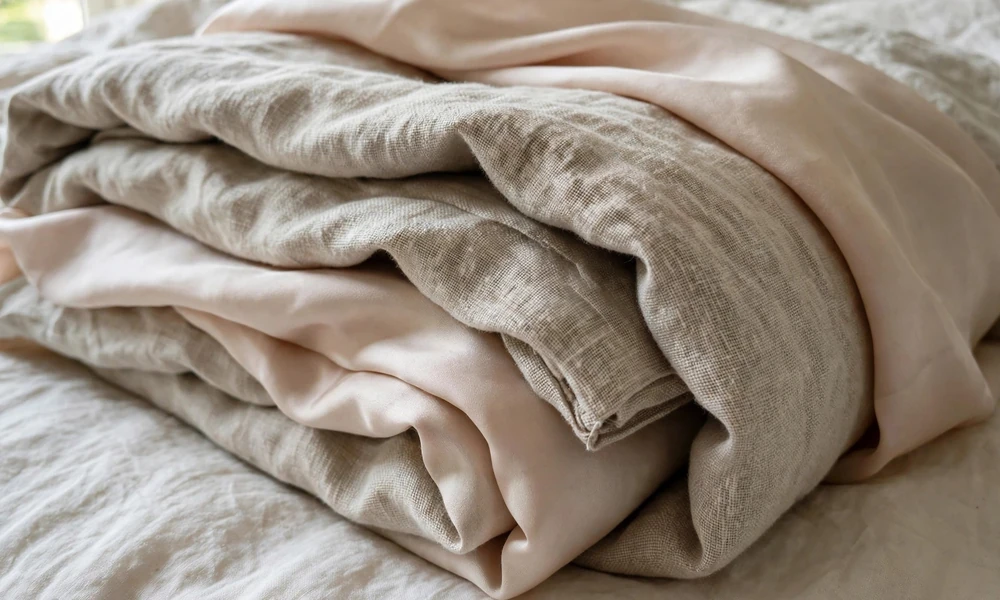
Look next at the finish and the care label. Good linen is garment-washed or stonewashed for softness, and it should feel substantial, not flimsy. Good silk should feel cool and slippery, with a consistent sheen and no rough patches. Check whether the set is machine washable, because some silk bedding needs hand washing or dry cleaning, which adds cost and effort over time. Our guide to why silk pillowcases are worth it explains the momme scale in more detail, and the same numbers apply to silk sheets and duvet covers.
Finally, look at the colour and the size. Light colours show marks more easily on silk, while linen hides them better, so deep, natural tones are the most forgiving. Buy the right size for your mattress, including its depth, so the sheet stays put and the duvet cover does not bunch.
The 9 comparisons that matter in 2027
Sleep temperature and breathability
What we like: Linen is the most breathable bedding fabric, moving air and moisture away from the body, which makes it the best choice for hot sleepers. Silk also regulates temperature well and feels cool on contact, but it is less breathable in humid heat. What to consider: Linen can feel cool at first on a cold night, while silk feels cool and smooth straight away. Best for: Linen for hot sleepers and warm climates; silk for people who want a cool touch without linen’s texture. Fabric: Pure flax linen versus mulberry silk, 19 to 22 momme. Price range: £80 to £250 for a linen set; £120 to £400 for a silk set. Standout feature: Linen’s airflow, which keeps the bed dry through the night.
Softness against skin
What we like: Silk is the smoothest fabric against the skin, with almost no friction, which is why it is recommended for sensitive skin and for hair that breaks or tangles overnight. Linen starts crisp and softens with every wash. What to consider: New linen can feel rough for the first few washes, while silk can feel slippery and slide off the bed. Best for: Silk for sensitive skin and hair care; linen for people who like a natural, textured feel. Fabric: Mulberry silk versus garment-washed flax linen. Price range: £120 to £400 silk; £80 to £250 linen. Standout feature: Silk’s near-zero friction against skin and hair.
Durability and lifespan
What we like: Linen is one of the strongest natural fibres, and a good linen set can last a decade or more, softening rather than wearing thin. Silk is strong for its weight, but it can tear, snag or thin at pressure points. What to consider: Linen improves with age, while silk needs careful handling to reach the same lifespan. Sunlight, rough washing and sharp nails all damage silk faster. Best for: Linen for long-term durability; silk for a luxury set used in rotation. Fabric: Pure flax linen versus mulberry silk. Price range: £80 to £250 linen; £120 to £400 silk. Standout feature: Linen’s strength, which makes it a genuine long-term buy.
Care and washing
What we like: Linen is easy: machine wash cool or warm, hang to dry, and it needs no ironing if you like the relaxed look. Silk needs a gentle cycle, a mild detergent, and should be kept out of direct sunlight and high heat. What to consider: Silk can be damaged by ordinary detergent, by hot water and by tumble drying, while linen tolerates all of them better. Some silk sets need hand washing or dry cleaning. Best for: Linen for low-effort care; silk for people happy to wash gently and air-dry. Fabric: Flax linen versus mulberry silk. Price range: No real difference in purchase price, but silk costs more to maintain. Standout feature: Linen’s forgiving wash routine.
Wrinkles and appearance
What we like: Linen’s wrinkles are part of its charm, giving the bed a relaxed, lived-in look that needs no ironing. Silk stays smooth and polished, with a soft sheen that makes a bedroom look more luxurious. What to consider: Linen looks rumpled even when it is clean, which some people dislike, while silk shows creases, water spots and marks more easily. Best for: Linen for a relaxed, natural bedroom; silk for a polished, hotel-like look. Fabric: Garment-washed linen versus mulberry silk. Price range: £80 to £250 linen; £120 to £400 silk. Standout feature: Silk’s sheen, which lifts the whole room.
Allergy and skin sensitivity
What we like: Both fabrics are naturally hypoallergenic and resist dust mites better than many synthetics. Silk is the gentlest on irritated or eczema-prone skin, because it does not rub. Linen is also kind to skin, and its breathability helps people who sweat at night. What to consider: Silk can be a problem for people with a silk allergy, though this is rare, while linen’s texture can irritate very sensitive skin before it has softened. Best for: Silk for very sensitive skin; linen for allergy-prone sleepers who want breathability. Fabric: Pure mulberry silk or pure flax linen. Price range: £80 to £400. Standout feature: Both fabrics’ natural resistance to dust mites.
Price and value
What we like: Both fabrics are premium, but linen usually offers better value per year, because it lasts longer and costs less to maintain. Silk costs more upfront and more to care for, but it delivers a luxury feel linen cannot match. What to consider: Cheap linen is often a linen-cotton blend that loses linen’s benefits, and cheap silk is often a low momme that tears quickly. Buy quality once rather than replacing a cheap set twice. Best for: Linen for value over years; silk for a considered luxury buy. Fabric: Pure flax linen or mulberry silk, 19 to 22 momme. Price range: £80 to £250 linen; £120 to £400 silk. Standout feature: Linen’s value, measured in years of nightly use.
Sustainability and sourcing
What we like: Linen is one of the most sustainable fabrics: flax needs little water and few pesticides, and almost the whole plant is used. Silk is also natural, but it needs more water and labour, and its production raises animal welfare questions some buyers care about. What to consider: Look for European linen and for silk with credible certification, because the origin and the processing matter more than the marketing. Best for: Linen for the lowest environmental footprint; silk for buyers who prioritise natural fibres and are comfortable with its production. Fabric: European flax linen versus certified mulberry silk. Price range: £80 to £400. Standout feature: Linen’s low water and pesticide needs.
Style and bedroom look
What we like: Linen gives a bedroom a calm, natural feel, and it works with wood, rattan and neutral tones. Silk gives a bedroom a polished, glamorous feel, and it works with velvet, brass and deep colours. What to consider: Linen suits a relaxed style and can look unfinished in a very formal room, while silk suits a dressed-up style and can feel out of place in a casual, family bedroom. Best for: Linen for a natural, relaxed bedroom; silk for a luxurious, dressed-up bedroom. Fabric: Garment-washed linen versus mulberry silk. Price range: £80 to £400. Standout feature: The way each fabric sets the mood of the whole room.
Which bedding is right for you
Choose linen if you sleep hot, want bedding that lasts for years, and like a relaxed, natural look that needs no ironing. A garment-washed set in a natural or soft neutral tone is the most versatile starting point.
Choose silk if you want the smoothest feel against your skin, care about hair and skin friction overnight, and like a polished, luxurious bedroom. It suits sensitive skin, a guest room, or a set you rotate with linen rather than using every night. Mulberry silk at 19 to 22 momme is the quality to look for, and our guide to natural fibres in clothing explains why fibre quality matters just as much in the bedroom as it does in the wardrobe.
Many people end up owning both: linen sheets for everyday, and a silk pillowcase for the skin and hair benefits. That costs less than a full silk set.
The caveats that matter
Both fabrics have limits worth knowing before you buy. Linen wrinkles, and if you want a crisp, ironed look, it will fight you. Silk marks easily, water spots show, and sunlight fades it. Neither fabric is cheap, and neither is a good buy in a low-quality blend, because a mix loses the benefits you are paying for.
| Detail | What is known |
|---|---|
| Most breathable | Linen, which moves air and moisture better than any other bedding fabric |
| Smoothest against skin | Silk, with near-zero friction that helps skin and hair |
| Most durable | Linen, which softens with age and can last a decade or more |
| Easiest to care for | Linen, machine wash and hang to dry |
| Best for hot sleepers | Linen, for airflow and moisture control |
| Best for sensitive skin | Silk, for its smooth, non-irritating surface |
| What to avoid | Low momme silk that tears easily; linen blends that are mostly cotton or polyester |
| What neither fabric does | Neither fixes poor sleep alone, and neither replaces a good mattress or a dark, quiet room |
Check the label before you buy, because both fabrics are now sold in blends that trade on the name. Look for 100 percent flax linen or 100 percent mulberry silk, and treat a long list of synthetic fibres as a warning sign. For bedroom styling ideas, our guide to celebrity home decor shows how texture and natural materials are being used in real bedrooms, and the same principles apply whether you choose linen, silk or a mix of both.
Checklist: choosing between linen and silk bedding
Use these checks before you buy, and again after the first wash.
- Check the fibre: 100 percent flax linen, or 100 percent mulberry silk at 19 to 22 momme.
- Check the weight: linen around 150 to 170 grams per square metre; silk at 19 to 22 momme, not lower.
- Check the size: measure your mattress, including its depth, so the sheet fits and the duvet cover does not bunch.
- Check the care label: linen should be machine washable; silk should be washable on a gentle cycle or by hand.
- Check the colour: deep, natural tones hide marks best on both fabrics, especially on silk.
- Check the feel: linen should feel substantial and soften with washing; silk should feel cool, smooth and consistent.
Frequently asked questions
Is linen or silk better for hot sleepers?
Linen is better. It is the most breathable bedding fabric, moving air and moisture away from the body through the night. Silk feels cool on contact and regulates temperature well, but it does not breathe the way linen does, so in a warm or humid room linen is the clear winner.
Does silk bedding help with hair and skin?
Yes, and this is silk’s strongest benefit. Its smooth surface creates very little friction, so hair tangles less and skin is not dragged across the pillowcase overnight. That does not fix damage or replace a good routine, but for people with curly, fine or easily tangled hair, the difference is noticeable.
Can I machine wash silk bedding?
Some silk bedding is machine washable on a gentle or delicates cycle with a mild detergent, but some needs hand washing or dry cleaning. Check the label before you buy, because a set that needs dry cleaning costs far more to maintain, and hot water or ordinary detergent can damage silk permanently.
Does linen bedding get softer over time?
Yes, and that is one of its best qualities. Linen softens with every wash, becoming more comfortable and lived-in rather than wearing thin. A linen set that feels crisp at first will usually feel noticeably softer after five to ten washes.
Is linen or silk bedding worth the price?
Both are worth it if you buy quality and use the set for years. Linen usually offers better value, because it lasts longer and costs less to maintain. Silk costs more, but it delivers a smoothness no other fabric matches. A cheap set in either fabric is rarely good value, because it will not last.
Can I mix linen and silk bedding?
Yes, and it is a popular combination. Linen sheets with a silk pillowcase give you linen’s breathability and durability with silk’s smoothness where it matters most, for skin and hair. It also costs less than a full silk set, and the two textures work well together in a natural, relaxed bedroom.
The bottom line
Linen and silk are both excellent bedding fabrics, but they solve different problems. Linen is the practical luxury: breathable, durable, easy to care for, and better with age. Silk is the sensory luxury: smooth, cool, kind to skin and hair, and beautiful to look at. Neither is the wrong choice, but each is the wrong choice for the wrong sleeper.
Buy linen first if you sleep hot, want a set that lasts for years, and like a relaxed look. Add silk where it matters most, a pillowcase or a duvet cover, if you want the smoothest feel and the most polished bedroom. Choose pure fibre, the right weight, and a colour that hides marks, and either fabric will make your bed a better place to be.