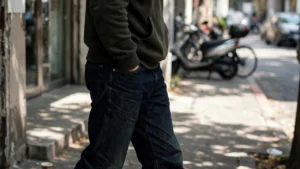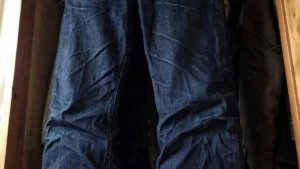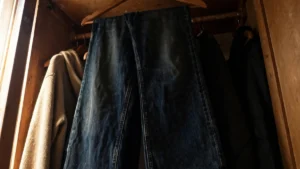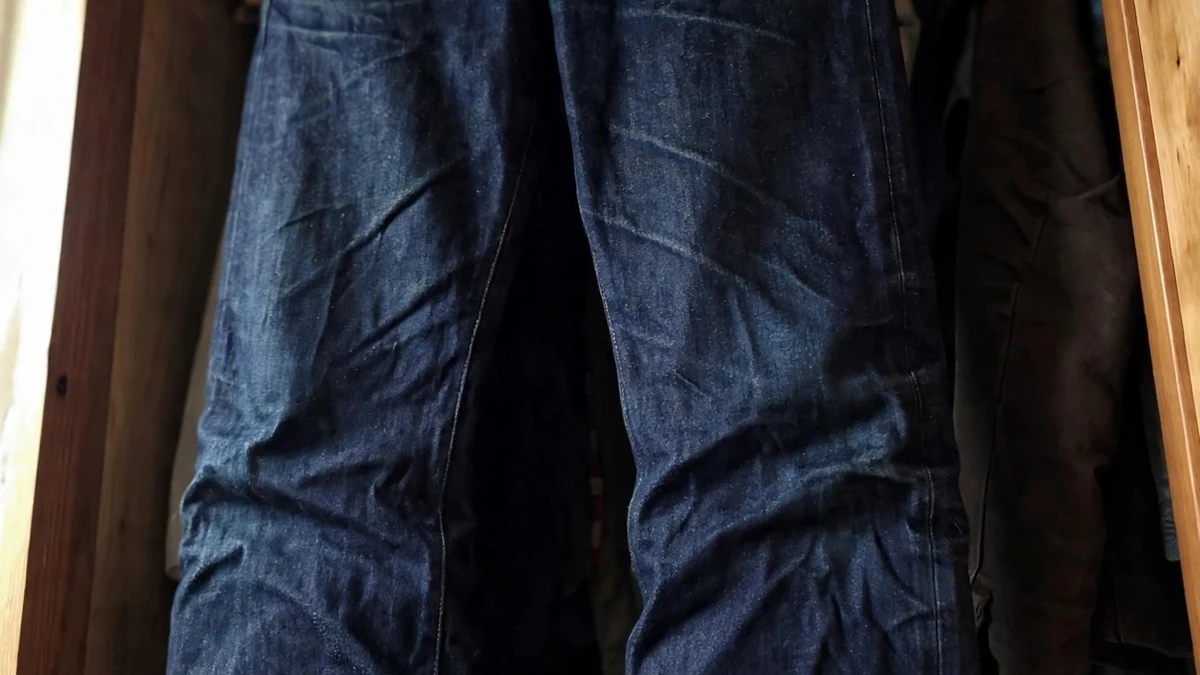

Raw denim is denim that has never been washed after dyeing. It leaves the loom stiff, dark, and dry to the touch, with every gram of indigo still in the cloth. The first week feels like wearing cardboard shaped like trousers. Keep wearing them and the cloth softens, the creases set, and the fade starts to record how you move, sit, and walk.
The appeal is that record. A washed jean arrives with someone else’s fade already printed on it, usually by a laser or a stone wash that guesses where your knees bend. A raw pair starts blank and earns its fade from your life, so after a year no two pairs look alike. The trade is patience: the first month is stiff, the dye rubs off on pale shoes, and the first wash has to wait far longer than feels sensible.
Below are nine raw denim jeans worth trying in 2027, from a Dearborn pair under $110 to an Oni pair near $365. All nine are real pairs you can buy now, priced from the brands’ own listings, and none of them has shown up in an earlier men’s jeans roundup of ours.
Key takeaways
- Raw denim is unwashed denim: stiff at first, deep indigo, and it fades only where you actually wear it.
- Most raw pairs need four to six weeks of regular wear before the first wash, so the creases have time to set.
- Sanforized raw denim barely shrinks, while unsanforized can lose up to two inches in the waist and length.
- Prices here run from under $110 to near $365, and the cheapest pair is a genuine raw jean, not a dark wash with a raw name.
- No raw denim stays stiff forever, and a hot wash erases months of fading in one cycle, so the care label decides how long the break-in lasts.
What raw denim actually is
A raw jean starts as indigo-dyed yarn woven into denim, then cut and sewn with no wash. Most jeans go through one rinse before they reach a shop, which softens the cloth and takes the harshest dye off the surface. Raw denim skips that step, so the pair you buy is the pair that left the sewing line, stiff with starch and dark enough to stain a white trainer on the first wear.
That stiffness is the point, not a flaw. Raw denim is rigid because the cotton yarns have never been relaxed by water, and as you wear the pair the fibres break in along your own lines: behind the knees, at the hips, across the thighs. The indigo rubs away first at those creases, which is how the whiskers and honeycombs appear. A washed jean fades evenly because the factory did the fading; a raw jean fades where you bend.
Raw denim is not the same thing as selvedge denim, though the two often travel together. Selvedge describes how the cloth was woven, on a shuttle loom that seals the edge, while raw describes what happened after weaving, which is nothing. A jean can be raw without being selvedge, and it can be selvedge without being raw, though most of the famous Japanese raw pairs are both. What matters is the finish: if the label says dry, unwashed, or raw, the cloth is untreated, and the break-in is yours to do.
How we chose these nine pairs

We started with the finish. Each pick had to be a genuine raw jean, unwashed after dyeing, not a dark wash relabelled as raw and not a rinsed pair with a dry name. Then we checked the cloth: the weight had to suit the price, with lighter denim at the cheap end and heavyweight Japanese cloth at the top, and every pair had to come from a maker that sells raw denim.
We also looked at shrinkage and fit. Sanforized raw denim barely moves after washing, so the size you buy is the size you keep, while unsanforized raw denim shrinks, so the maker has to say so plainly and the cut has to allow for it. Each pick below says what it does well, what to watch for, and who it fits.
The 9 best raw denim jeans for men in 2027
Dearborn Denim Slim Straight Raw
What we like: The cheapest genuine raw jean in this list, cut slim through the thigh with a straight leg that sits easily over a boot. The rigid American cotton denim is made in Chicago, and it softens faster than the heavier Japanese pairs, so the break-in takes weeks rather than months. What to consider: The lighter denim fades quicker but sits shallower. Best For: Men trying raw denim for the first time without spending over $110. Material: Rigid raw American cotton denim. Price Range: $95–$110. Standout Feature: The cheapest true raw jean here, with a Chicago-made cloth that breaks in fast.
Gustin Straight Fit Raw Denim
What we like: Gustin sells direct, so a solid mid-weight pair costs what most brands charge for a washed one. The straight fit is the easy one here, a leg that neither hugs nor billows, and the indigo stains a pale shoe on the first wear, the honest sign of an unwashed cloth. What to consider: Gustin runs its jeans in small batches, so a size can sell out and stay gone for weeks. Best For: Men who want a straightforward raw pair at a direct-to-consumer price. Material: Mid-weight raw cotton denim. Price Range: $120–$140. Standout Feature: The best value raw denim here, sold direct with no shop markup.
Todd Shelton Standard Slim Raw Denim
What we like: Todd Shelton makes this one in New Jersey from a rigid raw cloth with a dry, papery hand that softens into a clean drape. The standard slim cut is trim without squeezing, with a taper that ends neatly above a leather shoe, and the stitching is the plain, heavy kind that lasts for years. What to consider: The cloth starts very stiff, so the first fortnight is the hardest here. Best For: Men who want an American-made raw pair with a clean slim cut. Material: Rigid raw cotton denim with a dry hand. Price Range: $150–$170. Standout Feature: An American-made raw jean with a dry hand that drapes cleanly once broken in.
KATO The Pen Slim in Raw Indigo
What we like: KATO cuts The Pen slim through the whole leg, with a low rise and a taper that suits a slim trainer. The smooth Japanese raw denim fades evenly in fine lines, and the pair holds its shape through a long day without bagging at the knee. What to consider: The low rise and close taper suit leaner legs best, and the leg is long, so shorter men will need a hem. Best For: Men who want a slim raw jean with a fine, even fade. Material: Japanese raw cotton denim. Price Range: $180–$200. Standout Feature: The smoothest fade in this list, from a slim Japanese raw cloth.
Baldwin Denim The Reed Slim
What we like: Baldwin makes The Reed in Kansas City from a rigid raw cloth with a clean, dry hand and a slim cut that tapers below the knee. The denim softens into a smooth drape, so the fades come out fine and even, and the stitching is the heavy, plain kind that lasts for years. What to consider: The taper is gentle, so men who want a sharp narrow hem should look at the KATO instead. Best For: Men who want an American-made raw pair with a smooth, even fade. Material: Rigid raw cotton denim. Price Range: $205–$225. Standout Feature: The smoothest American fade here, from a Kansas City-made raw cloth.
Freenote Cloth Rios Slim Tapered
What we like: Freenote Cloth cuts the Rios slim through the thigh with a taper that ends above a boot, and the slubby raw selvedge cloth throws up strong whiskers. Made in Los Angeles with a chain-stitched hem and hidden rivets, the denim holds its shape through a long day without bagging at the knee. What to consider: The slubby cloth starts rough against the skin, so the first fortnight takes some getting used to. Best For: Men who want a slubby raw jean with strong whiskers. Material: Slubby raw selvedge cotton denim. Price Range: $230–$250. Standout Feature: The strongest whiskers in the middle of this list, from a slubby Los Angeles cloth.
Rogue Territory Stanton Slim Straight
What we like: Rogue Territory makes the Stanton in Los Angeles from a heavyweight raw selvedge cloth with a slim straight cut that works with boots and trainers. The dense, textured denim sets hard creases and high-contrast fades, and the hidden rivets and tucked-in waistband show the maker cares about the inside as much as the outside. What to consider: The heavy cloth needs real commitment, and the first three weeks will feel like breaking in a pair of boots. Best For: Men who want a high-contrast fade from a Los Angeles-made raw jean. Material: Heavyweight raw selvedge cotton denim. Price Range: $260–$280. Standout Feature: The highest-contrast fade here, from a dense Los Angeles cloth.
Samurai S710XX 19oz
What we like: The S710XX is Samurai’s famous 19-ounce jean, woven in Japan from a slubby cotton yarn that gives the cloth a rough, hand-made texture. The straight tapered cut is roomy through the thigh and narrow at the hem, and the fades are the most dramatic here, with whiskers turning almost white against the deep indigo. What to consider: Nineteen ounces is genuinely heavy, so this pair is a cold-weather jean for most men, and the unsanforized cloth shrinks, so buy a size up in the waist and length. Best For: Men who want the most dramatic fade money can buy under $330. Material: 19-ounce raw cotton denim. Price Range: $300–$330. Standout Feature: The most dramatic fade in this list, from a 19-ounce Japanese cloth.
Oni 622ZR Secret Denim
What we like: Oni’s Secret Denim is a 20-ounce cloth woven on old looms with uneven tension that gives the denim a bumpy, organic texture no other pair here has. The 622ZR cut is relaxed through the thigh with a taper below the knee, and the indigo looks black indoors, then fades into a vivid, electric blue at the creases. What to consider: The texture is an acquired taste, and the unsanforized cloth shrinks hard, so follow the maker’s sizing advice exactly. Best For: Men who want the most unusual raw denim cloth in this list. Material: 20-ounce raw Secret Denim cotton. Price Range: $335–$365. Standout Feature: The most unusual cloth here, a 20-ounce denim with a bumpy, hand-made texture.
Which raw denim jeans suit your build
A slim man gets the most from the close cuts here, KATO’s Pen and the Freenote Rios, because the taper shows the fade lines cleanly and the cloth does not swamp a narrow leg. A heavier man does better with the straighter cuts, the Gustin straight fit or the Samurai S710XX, because a close taper pulls across the thigh and the creases set in the wrong places. Height matters too: a tall man can carry the heavy Japanese pairs without the hem pooling, while a shorter man should budget for a hem on the KATO and the Oni, both of which run long.
Fit is what raw denim punishes most, because the cloth starts stiff and hides nothing once it softens. Buy the pair that fits at the waist on day one, not the pair you hope will stretch, and remember that unsanforized denim shrinks after the first wash while sanforized denim stays put. If you want a safer first raw pair, our best mid wash jeans for men are already broken in, while our best light wash jeans for men show what a fully faded pair looks like, and our best grey jeans for men are the neutral alternative when indigo feels too loud.
The caveats that matter
| Detail | What is known |
|---|---|
| What raw denim jeans are | Denim that was never washed after dyeing, stiff and dark with all its indigo intact |
| How raw differs from selvedge | Raw is an unwashed finish; selvedge is a loom-woven edge, and a jean can be one without the other |
| Who it suits best | Men who will wear one pair often and wait weeks for the first wash |
| What to check before buying | Sanforized or unsanforized, the cloth weight, and a fit that holds at the waist |
| How it wears over time | The cloth softens and fades only at the creases, so the pair records how you move |
| How to wash it | Wait four to six weeks, then cold water, inside out, mild detergent, hang to dry |
| Where it does not belong | On pale furniture or white trainers in the first weeks, when the dye still rubs off |
| What it does not do | It does not stay stiff forever, and it will not hide a bad fit once the cloth softens |
Raw denim is also the wrong buy for a man who washes his jeans after every wear. The whole point is the long stretch before the first wash, and a pair washed weekly never builds the creases that make raw denim worth the effort. If you need a pair that can go straight in the machine on a Sunday, buy a washed jean and save the raw pair for days you can wear it for a month.
Checklist: buying raw denim jeans honestly
- Check the label says raw, dry, or unwashed, not just dark indigo.
- Ask whether the cloth is sanforized, and size up if it is not.
- Feel the weight: 12 to 14 ounces suits most men, 19 ounces and above is a commitment.
- Try the waist sitting down, since stiff denim hides a tight waist when you stand.
- Budget for a hem, because raw jeans usually run long.
- Keep pale shoes and light sofas away from the pair for the first month.
Frequently asked questions
Are raw denim jeans worth the extra effort in 2027?
They are worth it if you wear one pair often and enjoy watching it change. A raw pair becomes personal because the fade follows your body, which a washed pair cannot copy. If you rotate ten pairs and wash weekly, the effort never pays off, and a washed jean is better.
How long should raw denim go before its first wash?
Four to six weeks of regular wear is the usual answer, long enough for the creases to set behind the knees and at the hips. Some men wait six months, but the difference after two months is small, and the smell usually settles the question first.
Will raw denim jeans shrink after the first wash?
Sanforized raw denim barely shrinks, usually under one percent. Unsanforized raw denim can lose up to two inches in the waist and length, which is why Japanese makers tell you to buy a size up and soak before the first wear.
What is the difference between raw denim and selvedge denim?
Raw describes the finish: the denim was never washed after dyeing. Selvedge describes the weave: the cloth was made on a shuttle loom that seals the edge. Most famous raw jeans are also selvedge, but the two words answer different questions.
Can raw denim jeans be worn to a smart office?
A dark, stiff raw pair reads smarter than any washed jean, because the indigo is deep and the cloth holds a clean line. Pair it with a shirt and leather shoes, and it passes in most offices that allow jeans. Once the fades set in, it reads casual again, so keep a fresh pair for smart days.
How do I stop raw denim from staining my shoes?
You cannot stop it entirely in the first weeks, because the excess indigo has to go somewhere. Wear dark shoes, keep white trainers away from the pair, and turn the cuffs up so the hem does not rub the shoe. After the first wash the transfer drops sharply.
The bottom line
Raw denim is the slowest way to buy jeans and the most personal. The first month is stiff, the dye gets everywhere, and the first wash feels overdue by the time it arrives. What you get is a pair that fits your body and fades in your pattern, which no factory wash can copy.
Start with the Dearborn to try raw denim cheaply, or the Gustin for the best value. Move to the Baldwin or the Rogue Territory when you know you like the break-in, and save the Samurai or the Oni for the day you want a pair still fading in two years.