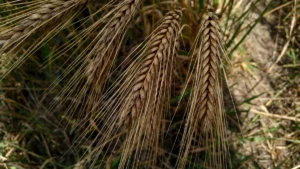
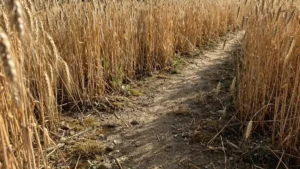
Emmer is the grain that asks for patience. The kernels grow two to a spikelet inside a husk that must come off before milling, the stalks are tall and bend in the wind, and the flour it gives is dense, earthy and faintly sweet. In Italy it is farro, in the Levant it is an old grain of the hills, in Ethiopia it is part of the highland table, and in each place the same old wheat feeds the same kind of table: soup, hand-rolled pasta, pilaf with lentils and herbs.
Planning an emmer farm escape means planning around a working farm, not a hotel. The grain fixes the dates, the dehuller fixes the day, and the kitchen serves what the fields grew. You will sleep in a farmhouse room, eat farro soup from the farm pot, and spend your days walking the fields, watching the harvest, and standing beside the miller as your flour is made.
The nine steps below run from the first question to the flight home, in the order that causes the least fuss. Take them in order and the trip will bend around the harvest instead of breaking against it.
Key takeaways
- Emmer is one grain under three names, farro in Italy and farro medio on the packet, so confirm which wheat the farm actually grows before you pay.
- Emmer carries gluten in every kernel, so it suits no one with coeliac disease or a wheat allergy, and no farm kitchen can make it safe.
- The cutting week is set by the rain, not the calendar, so hold the flights until the farm sets its window in writing.
- Choose the country before the farm, and the farm before the dates, since the harvest runs weeks apart from Tuscany to Virginia.
- A farm can shift its cutting week by days with no notice, and a trip with no spare day can end before the grain is cut.
What an emmer farm escape involves
An emmer farm escape is a stay of three to five nights on a farm that grows emmer, timed to the harvest weeks of early summer. The days are built around the grain: morning walks through the fields, the harvest in the afternoon, the dehuller in the evening, and supper at a shared table with farro soup from the farm pot.
The work is gentle but real. Guests help carry sheaves, watch the dehulling, and stir the soup pot at the farm table, but the farm does not stop for visitors, and the harvest moves at the pace of the weather. Expect mud on your boots, early mornings, and rooms that are simple rather than polished.
The reward is the table. Farro soup warm from the pot, pasta rolled that afternoon, pilaf with lentils and herbs, and flour ground in the barn to take home. The grain is the reason for the trip, and everything else, the hills, the rivers, the old towns, is the scenery around it.
Emmer also asks more of the traveller than a hotel stay. The grain must be dehulled before it can be milled, the dough is firmer than wheat dough and tears if it is worked too hard, and the harvest waits for no one, so the days are shaped by the farm’s rhythm rather than your own. Travellers who enjoy that rhythm come home with grain, flour and a soup recipe; travellers who want room service and a set menu will be happier elsewhere, and the farm will say so if you ask.
How to plan it, and what to ask first
Start from the grain, not the destination. Ask the farm which wheat it grows, whether the dehulling and milling happen in its own barn, and what the kitchen serves guests who eat no wheat at all. A farm that answers all three questions plainly is a farm that knows its own grain.

Then ask about the cutting week, the price and the bedroom. Get the cutting window in writing, confirm what the nightly rate covers, and look at the bedroom first. Farms are open about their limits when asked directly, and a plain answer now saves a hard stay later.
The 9 steps to plan an emmer farm escape
Emmer, einkorn or spelt: sort the three old wheats before you book
What to do: Ask the farm whether it grows emmer, and which name it uses on its own signs, then read the answer before you book. A farm that grows einkorn or spelt is growing a fine grain, but it is not growing emmer, and the soup on the table will taste different. What to avoid: Assuming every old wheat on a farm is emmer. Best for: Travellers who want the true grain, not the label. Time needed: One email, answered before the day ends. Standout tip: Farro and farro medio both mean emmer, so a farm using either name is growing the same grain.
Choose Italy first if the farro story matters most
What to do: Begin with the Garfagnana if the story matters to you, since the farro name was guarded there, then look outward to the Valnerina, the Sabina and the rest. What to avoid: Picking a farm by price alone and missing the farro country entirely. Best for: Travellers who want the history along with the harvest. Time needed: An evening of reading, then a single email. Standout tip: The Garfagnana and the Valnerina suit a first trip, while the Simien Mountains suit a traveller who wants altitude with the grain.
Find out if the farm dehulls its grain in its own barn
What to do: Ask whether the dehulling and the stone milling happen in the farm’s own barn, and whether guests may watch. A farm that dehulls on site will usually welcome you into the mill room, while one that sends its grain away has little to show. What to avoid: Booking a farm that sends its grain elsewhere to be dehulled. Best for: Travellers who want the whole chain, field to flour, before their eyes. Time needed: One question, asked in the first email. Standout tip: A dehuller on the farm means flour ground the day it is baked, and that shows in the loaf.
Taste farro soup on the first night, not bread
What to do: Ask the kitchen to serve farro soup at the first supper, so you can taste the grain itself before the bread. What to avoid: Deciding emmer is better before you have tasted it. Best for: Travellers who cook at home and want to know the grain. Time needed: One supper, on night one. Standout tip: Farro soup is earthy and chewy, and it holds its bite longer than wheat soup.
Take a dawn walk through the emmer field
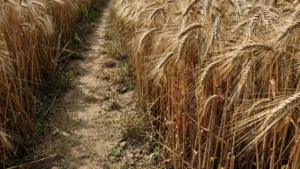
What to do: Take the morning walk through the emmer field, when the tall stalks are cool and the grain stands still. What to avoid: Walking the field at midday, when the heat is fierce and the light is hard. Best for: Travellers who want the field looking its best. Time needed: An hour before breakfast. Standout tip: The ears turn gold a week before the grain is ready, so the colour promises more than it signals.
Watch the grain threshed before it is milled
What to do: Stand beside the thresher and watch the grain beaten from the ears, and ask how the farm separates the kernels from the chaff. What to avoid: Touching the thresher or the grain while the machine turns. Best for: Travellers who want to see the whole harvest. Time needed: Half an hour at the thresher’s side. Standout tip: Threshing comes first, dehulling second, and milling last, and each step changes what the flour can do.
Roll farro pasta with the farm cook
What to do: Ask the cook to let you roll pasta at the farm table and learn how the dough behaves. Emmer dough is firmer than wheat dough, so it needs a steady hand and a longer rest. What to avoid: Treating emmer dough like wheat dough, since it tears more easily. Best for: Travellers who want a dish for the journey home. Time needed: An afternoon at the table. Standout tip: Emmer dough needs more rest than wheat dough, and rushing it makes the pasta tough.
Let the kitchen teach you its farro salad
What to do: Ask the kitchen to show you its farro salad, and learn how the cooked grain is dressed. Emmer holds its shape in a salad, so it takes oil, lemon and herbs without turning soft. What to avoid: Overcooking the grain before it goes in the bowl, since it turns to porridge. Best for: Travellers who want a recipe for the journey home. Time needed: A morning, from pot to table. Standout tip: Farro salad keeps for a day in the cold, so make a bowl for the road.
Bring whole farro and stone-ground flour home in sealed jars
What to do: Buy whole farro and flour from the farm before you leave, and ask how the farm stores them. What to avoid: Packing flour loose in a bag, where it will spill out. Best for: Travellers who cook and want the grain waiting at home. Time needed: Ten minutes in the farm shop at the end. Standout tip: Whole farro lasts for months in a sealed jar, while flour is best used within a few weeks.
Picking the right season and region
The emmer harvest runs from June into July across the south, with the northern farms cutting into August, and the southern farms cutting first and the mountain farms last. The Garfagnana and the Sabina cut early, the Limousin and Cappadocia cut in the middle weeks, and the Eifel and Shenandoah cut late. Pick the region to fit the dates you can travel, not the other way round.
For a first trip, the Garfagnana is the simplest choice: the grain is at its oldest there, the farms are used to guests, and the soup is the best introduction to what emmer can do. For scenery, Cappadocia and the Simien Mountains put the fields in wild country, while the Middle Atlas puts them among the cedars, and the Shenandoah offers the same grain on a North American farm.
Season matters as much as place. The southern farms cut first, in June, while the mountain farms in the Simien range and the northern farms in the Eifel and the Shenandoah cut into July and August, and the Middle Atlas cuts whenever the highland weather allows. A traveller with fixed holidays should pick the region whose cutting window fits those dates, while one with open dates should pick the region first and let the farm set the week.
If you want a grain without gluten, emmer is the wrong trip, and our guide to planning a teff farm escape covers a grain that is naturally free of it. The spelt farm escape offers the same ancient-wheat story with a softer crumb, and it carries the same gluten warning as emmer.
The caveats that matter
On an emmer farm the weather sets the terms: the farm offers a best guess, never a promise, and a trip pinned to a single cutting day is a bet on the rain. The sharper warning is the gluten, easy to overlook when a grain is sold as old and wholesome.
| Detail | What is known |
|---|---|
| Best time to visit | The cutting season opens in June in the south and runs into August up north, with the exact days set by the rain |
| What the trip involves | Walking the fields, standing by the harvest, and watching the kernels dehulled and milled in the barn |
| How long a stay runs | Three to five nights, planned around the early-summer harvest |
| Who should take care | Anyone with coeliac disease or a wheat allergy, since emmer is a wheat, and anyone unused to strong sun |
| What the kitchen serves | Farro soup, pasta, pilaf and porridge, often served with beans, herbs and olive oil |
| Gluten note | Emmer is a wheat and carries gluten, so it is not a gluten-free grain |
| What to pack | Closed shoes, a sun hat, a layer for cold hill evenings, and clothes that wash easily |
| What it does not do | It offers no promised cutting day, no set menu, and no hotel-style service |
If you live with coeliac disease, a wheat allergy, or a condition that heat makes worse, talk to the farm before you book. One question about the kitchen and the flour can prevent a miserable stay, and a farm that answers it plainly is usually worth visiting. The kamut farm escape carries the same warning, since kamut is another old wheat with gluten in each kernel.
Checklist: before you book an emmer farm escape
Run through these checks before you pay, and once more the week before you travel.
- Get the cutting window in writing, plus a backup plan if the ears are still green when you arrive.
- Confirm that supper, the ride in from town and the walks are in the price, so no extras land on the bill.
- Check that the dehulling and milling happen in the farm barn, and ask whether the kitchen can make a wheat-free meal.
- See the bedroom before you pay: the rooms are plain, so check the bed, the water and the heating first.
- Pack for fierce sun and dusty tracks: closed shoes, a hat, a layer for the evening, and clothes you can rinse out.
- Keep one spare day for the nearest town, so a harvest that shifts still leaves a fine trip.
Frequently asked questions
Does emmer suit a coeliac traveller?
No. Emmer is a wheat and carries gluten in every kernel, so it is not safe for anyone with coeliac disease or a wheat allergy. The farm kitchen cannot make it safe, since the flour hangs in the air of the mill and the bakery, so a traveller with either condition should choose a gluten-free grain farm instead.
What is the latest I can book an emmer farm?
Two months is a fair minimum, and three is better, since the farms take only a handful of guests and the cutting week is set only late on. Book the farm first, then wait for the farm to confirm its cutting window in writing before you book flights. The busiest farms, in the Garfagnana and the Sabina, fill their guest rooms before the harvest is even set, so an early email costs nothing and a late one can cost the trip.
What goes in the bag for the emmer fields?
Closed shoes for the field tracks, a hat for the hard sun, a warm layer for cool hill evenings, and clothes you can rinse out. Add a sealed jar or two for the flour and grain you buy at the farm, since loose flour escapes in a suitcase.
Can children come along to the emmer harvest?
Older children are, and most farms welcome them for the field walks, the soup pot and the pasta table. Young children should stay near the farmhouse, since the harvest machines and the mill are working machines, and the farm will say outright which parts of the day suit them.
Can I buy farro and flour at the farm?
Yes, and most farms sell flour and whole farro both at the farm shop. Whole farro lasts for months in a sealed jar, while flour is best used within a few weeks, so buy farro if you cook rarely and flour if you bake weekly.
How dear is a week on an emmer farm?
Three to five nights runs from roughly $200 to $1,900 depending on the region, with the Garfagnana at the low end and the Shenandoah at the high end, before flights. The nightly rate usually covers supper and the walks, so check what is included before you compare farms. Flights are the biggest extra cost, and a flexible ticket is worth the money on a harvest trip, since the cutting week can move by days.
The bottom line
An emmer farm escape suits travellers who would rather eat farro soup from a farm pot than breakfast in a hotel. The stalks are tall, the soup is earthy and chewy, and the best stays feed you from fields the farm itself worked.
Fix the harvest week first, then the travel dates, and keep a spare day at the end. If the emmer ripens on time you will eat soup from grain cut that week, and if it does not, the hills, the rivers and the old towns will still carry the trip.