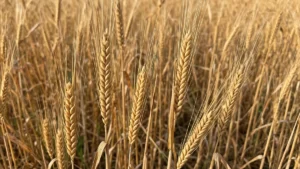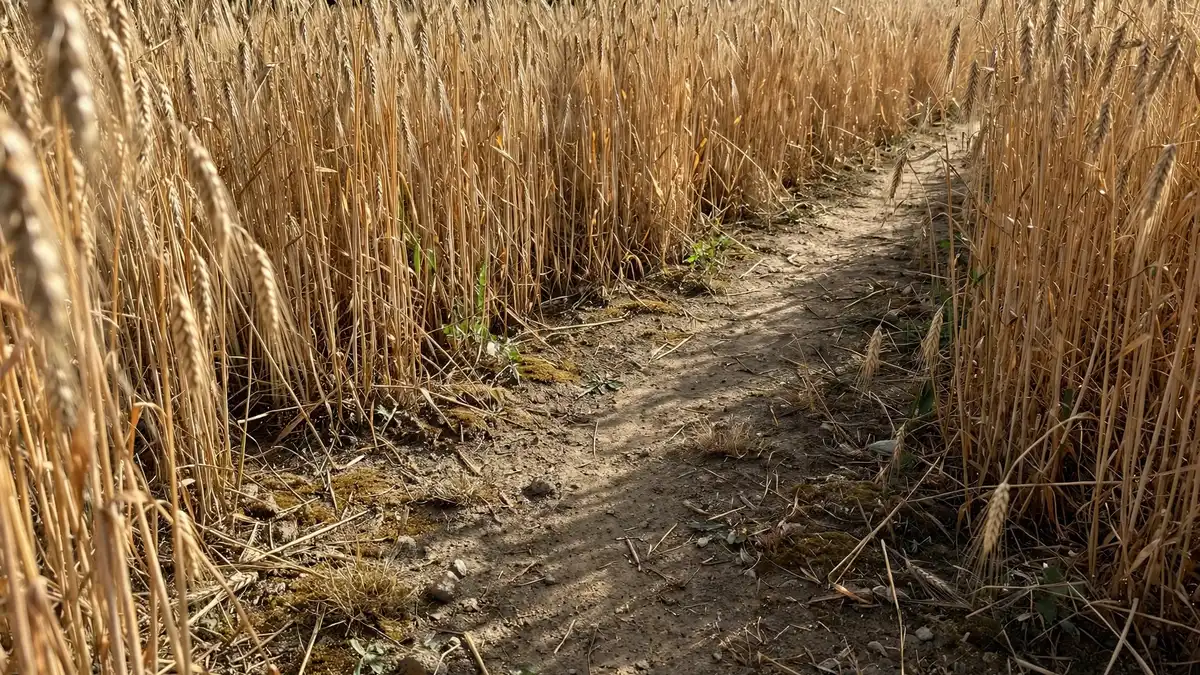
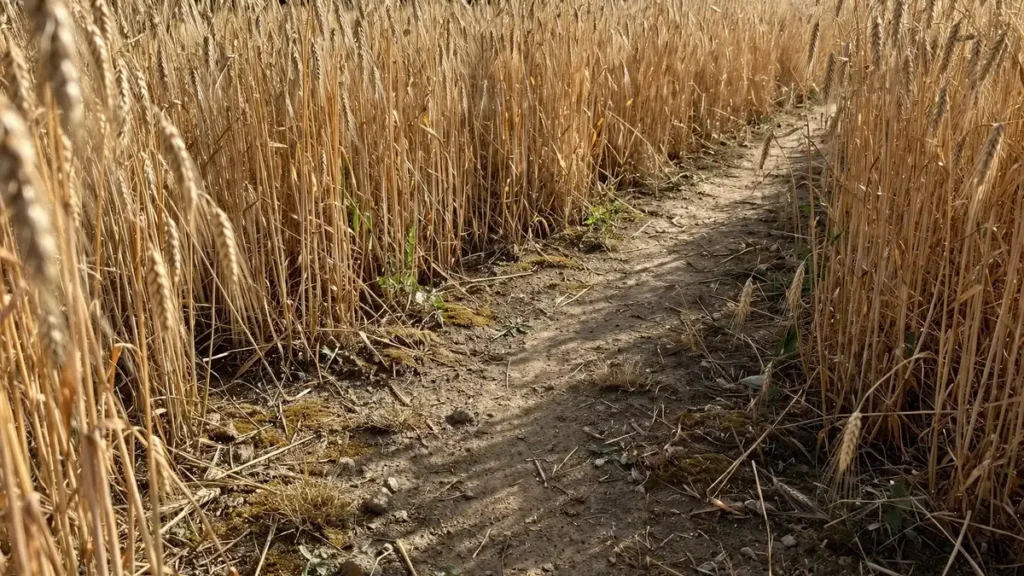
Einkorn is the grain that asks for patience. The kernels grow one to a spikelet inside a husk that must be hulled before milling, the stalks are tall and thin and bend in the wind, and the flour it gives is golden, nutty and faintly sweet. In France it is petit épeautre, in Italy farro piccolo, in Germany Einkorn, and in each place the same old wheat feeds the same kind of table: sourdough, hand-rolled pasta, soup with beans and herbs.
Planning an einkorn farm escape means planning around a working farm, not a hotel. The grain fixes the dates, the mill fixes the day, and the kitchen serves what the fields grew. You will sleep in a farmhouse room, eat sourdough from the farm oven, and spend your days walking the fields, watching the harvest, and standing beside the miller as your flour is made.
The nine steps below run from the first question to the flight home, in the order that causes the least trouble. Take them in sequence and the trip will flex around the harvest instead of snapping against it.
Key takeaways
- Einkorn is one grain under three names, petit épeautre in France and farro piccolo in Italy, so confirm which wheat the farm actually grows before you pay.
- Einkorn carries gluten in every kernel, so it suits no one with coeliac disease or a wheat allergy, and no farm kitchen can make it safe.
- The cutting week is set by the rain, not the calendar, so hold the flights until the farm fixes its window in writing.
- Choose the country before the farm, and the farm before the dates, since the harvest runs weeks apart from Turkey to Quebec.
- A farm can shift its cutting week by days at the last minute, and a trip with no spare day can finish before the grain is cut.
What an einkorn farm escape involves
An einkorn farm escape is a stay of three to five nights on a farm that grows einkorn, timed to the harvest weeks of early summer. The days are built around the grain: morning walks through the fields, the harvest in the afternoon, the mill in the evening, and supper at a shared table with sourdough from the farm oven.
The work is gentle but real. Guests help carry sheaves, watch the hulling, and stir the soup pot at the farm table, but the farm does not stop for visitors, and the harvest moves at the pace of the weather. Expect dust on your shoes, early mornings, and rooms that are simple rather than polished.
The reward is the table. Einkorn sourdough warm from the oven, soup made from the farm’s own berries, pasta rolled that afternoon, and flour ground in the barn to take home. The grain is the reason for the trip, and everything else, the hills, the rivers, the old towns, is the setting around it.
Einkorn also asks more of the traveller than a hotel stay. The grain must be hulled before it can be milled, the dough is softer than wheat dough and tears if it is worked too hard, and the harvest waits for no one, so the days are shaped by the farm’s rhythm rather than your own. Travellers who enjoy that rhythm come home with flour, berries and a loaf recipe; travellers who want room service and a set menu will be happier elsewhere, and the farm will say so if you ask.
How to plan it, and what to ask first
Begin with the grain, not the destination. Ask the farm which wheat it grows, whether the hulling and milling happen in its own barn, and what the kitchen serves guests who eat no wheat at all. A farm that answers all three questions straight is a farm that knows its own grain.
Then ask about the cutting week, the price, and the bedroom. Get the cutting window in writing, confirm what the nightly rate covers, and see the bedroom before you pay. Farms are open about their limits when asked directly, and a straight answer now saves a hard stay later.
The 9 steps to plan an einkorn farm escape
Einkorn, emmer or spelt: learn which wheat you are visiting
What to do: Ask the farm whether it grows einkorn, and which name it uses on its own signs, then read the answer before you book. A farm that grows emmer or spelt is growing a fine grain, but it is not growing einkorn, and the bread on the table will taste different. What to avoid: Assuming every old wheat on a farm is einkorn. Best for: Travellers who want the real grain, not the label. Time needed: One email, answered the same day. Standout tip: Petit épeautre and farro piccolo both mean einkorn, so a farm using either name is growing the same grain.
Start with the origin, then work outward
What to do: Begin with Karaçadağ if the story matters to you, since the grain was first tamed there, then look outward to Thessaly, Kakheti and the rest. What to avoid: Picking a farm by price alone and missing the origin entirely. Best for: Travellers who want the history with the harvest. Time needed: An evening of reading, then a single email to the farm. Standout tip: Karaçadağ and Thessaly suit a first trip, while Kakheti suits a traveller who wants mountains with the grain.
Check the hulling and the milling both happen on the farm
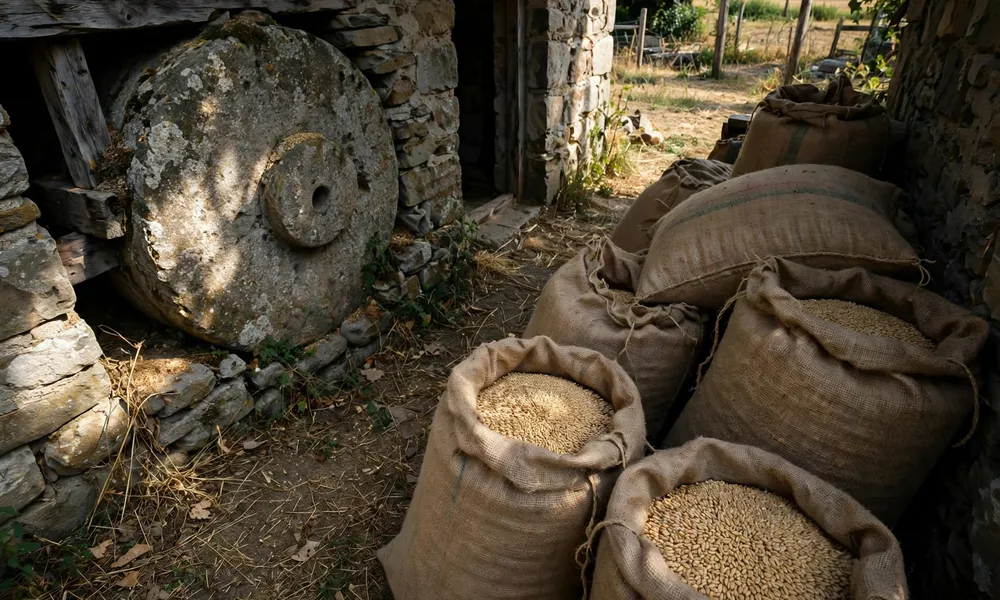
What to do: Ask whether the hulling and the stone milling happen in the farm’s own barn, and whether guests may watch. A farm that mills on site will usually welcome you into the mill room, while one that sends its grain away has little to show. What to avoid: Booking a farm that sends its grain elsewhere to be milled. Best for: Travellers who want the whole chain, field to flour, in view. Time needed: A single question in the first email. Standout tip: A mill on the farm means flour ground the day it is baked, and that shows in the loaf.
Put einkorn sourdough next to wheat sourdough at the first supper
What to do: Ask the kitchen to serve einkorn sourdough beside ordinary wheat sourdough at the first supper, so you can taste the difference. What to avoid: Deciding einkorn is better before you have tasted it. Best for: Travellers who bake at home and want to learn the grain. Time needed: One supper, on your first night. Standout tip: Einkorn sourdough is nuttier and more golden than wheat sourdough, and it stays moist for days.
Wait for dusk before you walk the stalks
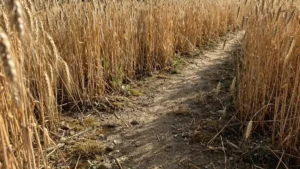
What to do: Take the evening walk through the einkorn field, when the thin stalks catch the low sun and the grain glows. What to avoid: Walking the field at midday, when the heat is fierce and the light is harsh. Best for: Travellers who want the field at its finest. Time needed: An hour before supper. Standout tip: The ears turn gold a week before the grain is ready, so the colour is a promise, not a signal.
See your flour ground in the farm mill
What to do: Stand beside the miller and watch your flour made, and ask which stones the mill uses and how fine the grind runs. What to avoid: Touching the stones or the grain while the mill turns. Best for: Travellers who bake and want to know the flour. Time needed: Half an hour at the miller’s side. Standout tip: Stone-ground einkorn flour keeps its warmth and smell for a day, so bake with it soon after it is milled.
Cook einkorn berries into soup at the farm table
What to do: Ask the cook to let you stir the soup pot and learn how the whole berries behave. Einkorn berries cook softer than wheat berries, so they need less time in the pot and a gentler hand. What to avoid: Treating einkorn berries like wheat berries, since they soften faster. Best for: Travellers who want a dish to take home. Time needed: An afternoon at the farm table. Standout tip: Einkorn berries need less cooking than wheat berries, and overcooking them turns the soup to porridge.
Learn the farm’s loaf from the baker
What to do: Ask the baker to let you shape and bake a loaf in the farm oven, and learn how the dough behaves. Einkorn dough is softer and stickier than wheat dough, so it needs a gentler hand and a shorter rest. What to avoid: Kneading einkorn dough the way you knead wheat dough, since it tears more easily. Best for: Travellers who want a skill for the journey home. Time needed: A morning, from mixing to baking. Standout tip: Einkorn dough needs less kneading than wheat dough, and overworking it makes the loaf dense.
Buy berries and flour to take home from the farm shop
What to do: Buy berries and flour from the farm before you leave, and ask how the farm stores them. What to avoid: Packing flour loose in a bag, where it will spill. Best for: Travellers who cook and want the grain in their own kitchen. Time needed: Ten minutes in the farm shop before leaving. Standout tip: Whole berries last for months in a sealed jar, while flour is best used within a few weeks.
Picking the right season and region
The einkorn harvest runs from June into July across the south, with the northern farms cutting into August, and the southern farms cutting first and the mountain farms last. Karaçadağ and Thessaly cut early, Kakheti and Burgundy cut in the middle weeks, and Vermont and Quebec cut late. Choose the region by the dates you can travel, not the other way round.
For a first trip, Thessaly is the simplest choice: the grain is at its oldest there, the farms are used to guests, and the baking is the best introduction to what einkorn can do. For scenery, Kakheti and Burgundy put the fields among the vines, while Sardinia puts them on a dry island, and Vermont offers the same grain on a North American farm.
Season matters as much as place. The southern farms cut first, in June, while the mountain farms in Kakheti and the northern farms in Vermont and Quebec cut into July and August, and Extremadura cuts whenever the dehesa heat allows. A traveller with fixed holidays should choose the region whose cutting window fits those dates, while one with open dates should choose the region first and let the farm set the week.
If you want a grain without gluten, einkorn is the wrong trip, and our guide to planning a teff farm escape covers a grain that is naturally free of it. The spelt farm escape offers the same ancient-wheat story with a softer crumb, and it carries the same gluten warning as einkorn.
The caveats that matter
On an einkorn farm the weather sets the terms: the farm offers a best guess, never a promise, and a trip pinned to a single cutting day is a bet on the rain. The sharper warning is the gluten, easy to miss when a grain is sold as old and wholesome.
| Detail | What is known |
|---|---|
| Best time to visit | The cutting season opens in June in the south and runs into August up north, with the exact days set by the rain |
| What the trip involves | Walking the fields, standing by the harvest, and watching the berries hulled and milled in the barn |
| How long a stay runs | Three to five nights, planned around the early-summer harvest |
| Who should take care | Anyone with coeliac disease or a wheat allergy, since einkorn is a wheat, and anyone unused to strong sun |
| What the kitchen serves | Einkorn sourdough, soup, pasta and porridge, often served with beans, herbs and olive oil |
| Gluten note | Einkorn is a wheat and carries gluten, so it is not a gluten-free grain |
| What to pack | Closed shoes, a sun hat, a layer for cold hill evenings, and clothes that wash easily |
| What it does not do | It offers no promised cutting day, no set menu, and no hotel-style service |
If you live with coeliac disease, a wheat allergy, or a condition that heat makes worse, talk to the farm before you book. One question about the kitchen and the flour can prevent a miserable stay, and a farm that answers it straight is usually worth visiting. The kamut farm escape carries the same warning, since kamut is another ancient wheat with gluten in each kernel.
Checklist: before you book an einkorn farm escape
Run through these checks before you pay, and once more the week before you travel.
- Get the cutting window in writing, plus a backup plan if the ears are still green.
- Confirm that supper, the ride in from town and the walks are in the price, so no extras appear on the bill.
- Check that the hulling and milling happen in the farm barn, and ask whether the kitchen can make a wheat-free meal.
- See the bedroom before you pay: the rooms are simple, so check the bed, the water and the heating first.
- Pack for fierce sun and dusty tracks: closed shoes, a hat, a layer for the evening, and clothes that rinse clean.
- Keep one spare day for the nearest town, so a shifted harvest still leaves a fine trip.
Frequently asked questions
Can I eat einkorn if wheat makes me ill?
No. Einkorn is a wheat and carries gluten in every kernel, so it is not safe for anyone with coeliac disease or a wheat allergy. The farm kitchen cannot make it safe, since the flour hangs in the air of the mill and the bakery, so a traveller with either condition should pick a gluten-free grain farm instead.
How early do I need to book an einkorn farm?
Two months is a fair minimum, and three is better, since the farms take only a handful of guests and the cutting week is set late. Book the farm first, then wait for the farm to confirm its cutting window in writing before the flights. The busiest farms, in Thessaly and Burgundy, fill their guest rooms before the harvest is even set, so an early email costs nothing and a late one can cost the trip.
What do I need to pack for the einkorn fields?
Closed shoes for the field tracks, a hat for the hard sun, a warm layer for cool hill evenings, and clothes that rinse clean. Add a sealed jar or two for the flour and berries you buy at the farm, since loose flour escapes in a suitcase.
Are children welcome at the einkorn harvest?
Older children are, and most farms welcome them for the field walks, the soup pot and the baking. Young children should stay near the farmhouse, since the harvest machines and the mill are working machines, and the farm will say plainly which parts of the day suit them.
Does the farm sell flour and berries to take home?
Yes, and most farms sell flour and whole berries both at the farm shop. Whole berries last for months in a sealed jar, while flour is best used within a few weeks, so buy berries if you bake rarely and flour if you bake weekly.
What does an einkorn farm week cost?
Three to five nights runs from roughly $200 to $1,900 depending on the region, with Karaçadağ at the low end and Quebec at the high end, before flights. The nightly rate usually includes supper and the walks, so confirm what is covered before you compare farms. Flights are the biggest extra cost, and a flexible ticket is worth the money on a harvest trip, since the cutting week can shift by days.
The bottom line
An einkorn farm escape suits travellers who would rather eat sourdough from a farm oven than breakfast in a hotel. The stalks are thin, the loaves are golden and nutty, and the best stays feed you from fields the farm itself worked.
Settle the harvest week first, then the travel dates, and leave a spare day at the end. If the einkorn ripens on time you will eat bread from grain cut that week, and if it does not, the hills, the rivers and the old towns will still carry the trip.