What Is a Night-Blooming Jasmine Perfume 2027
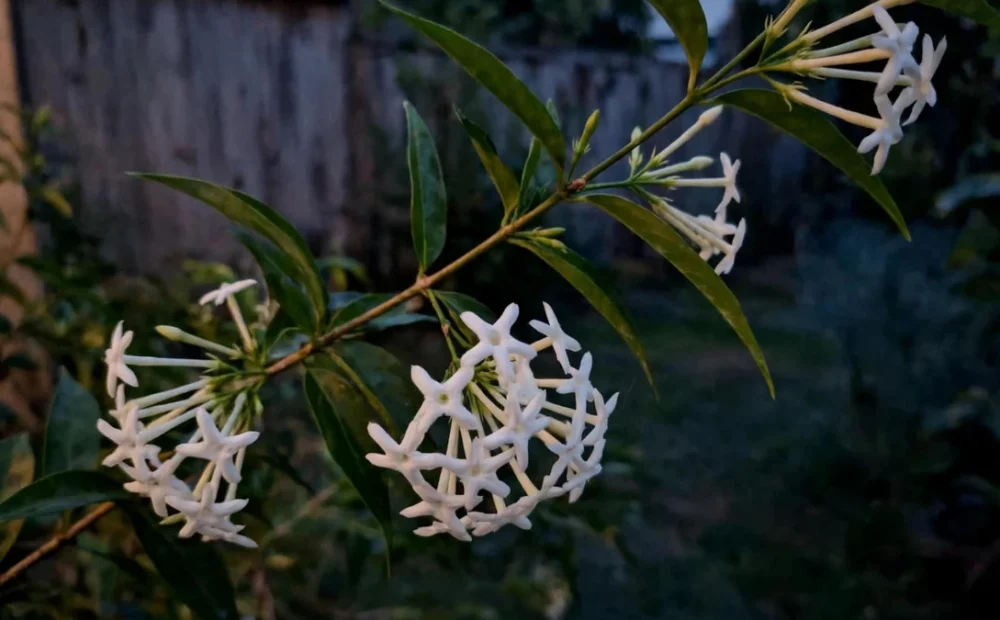
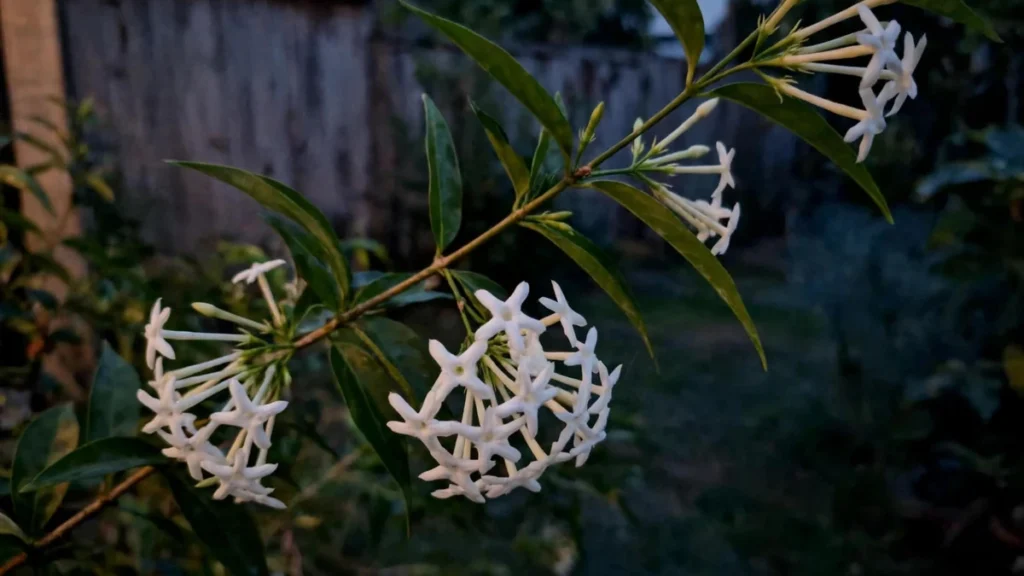
A night-blooming jasmine perfume is a perfume built around a flower that only starts working after dark. The plant behind it, Cestrum nocturnum, sits quiet through the day, then opens its small white trumpets at dusk and pours out a thick, honeyed sweetness that can fill a whole garden. In a bottle that sweetness reads as creamy, warm, and faintly green, the sort of floral that feels like evening rather than morning.
The name causes more confusion than almost any other note in perfumery. True jasmines belong to the genus Jasminum, Arabian jasmine blooms at night too, and the Indian parijat tree is called night-flowering jasmine as well. Three different plants, one shared nickname, and pyramids that shorten the name to plain jasmine whenever they feel like it.
Below are nine facts that settle what the note is, where it comes from, how it behaves in a bottle, and how to tell the real thing from a lookalike.
Key takeaways
- Night-blooming jasmine is Cestrum nocturnum, a shrub from the nightshade family, not a true jasmine at all.
- It blooms after dark to attract moths, and its scent peaks in the hours before dawn, which is why it reads as nocturnal in a bottle.
- It usually sits in the heart of a perfume, where it sweetens white florals and warms vanilla, musk, and woods.
- One hundred and eleven perfumes list the note, from a $10 Jovan cologne to a $200 Serge Lutens parfum.
- Pyramids sometimes shorten it to plain “jasmine”, so confirm the full note name before you buy a bottle for the note alone.
What night-blooming jasmine actually smells like
On a blotter, night-blooming jasmine smells like warm honey poured over white petals, with a green, slightly leafy edge on top and a soft, musky warmth underneath. It is not a sharp floral. At first it smells sweet and creamy, near tuberose after dark, then it sinks into something deeper and more narcotic, nearer vanilla and musk than a freshly cut flower.
The note resists a simple description, because the flower only gives up its scent at night. Out in the wild it opens after dusk to summon moths, and its perfume is strongest in the hours before dawn. That nocturnal habit is why it smells of evening in a bottle: warm air, stone paths, and flowers left out in the dark.
Compared with true jasmine, it is creamier and greener, with less of the animalic edge that jasmine can carry. Compared with tuberose, it is lighter and fresher, with more honey and less spice. It sits between the two, which is why perfumers use it as a bridge between white florals and warm base notes.
Most perfumers never touch the living flower. Natural night-blooming jasmine oil is rare and costly, and the blooms give up so little oil that most houses build the note from a reconstructed accord instead: benzyl acetate for the sweet floral lift, phenylethyl alcohol for the rosy softness, and a measured dose of indole for the warm, animalic depth. A good reconstruction smells so close to the flower that few noses could tell them apart, and it keeps the price of the finished perfume within reach. The trade-off is that every house rebuilds it slightly differently, which is why two perfumes that both name the note can smell like cousins rather than twins.
How to read a pyramid that names it
Start with the exact wording. A pyramid that says “night blooming jasmine” is naming Cestrum nocturnum, while a pyramid that says only “jasmine” is naming something else, usually sambac or grandiflorum, and a pyramid that says “white flowers” is naming nothing at all. The full phrase is the only reliable test. Our earlier guides to frangipani perfumes and osmanthus perfumes applied the same test, and it works here too.
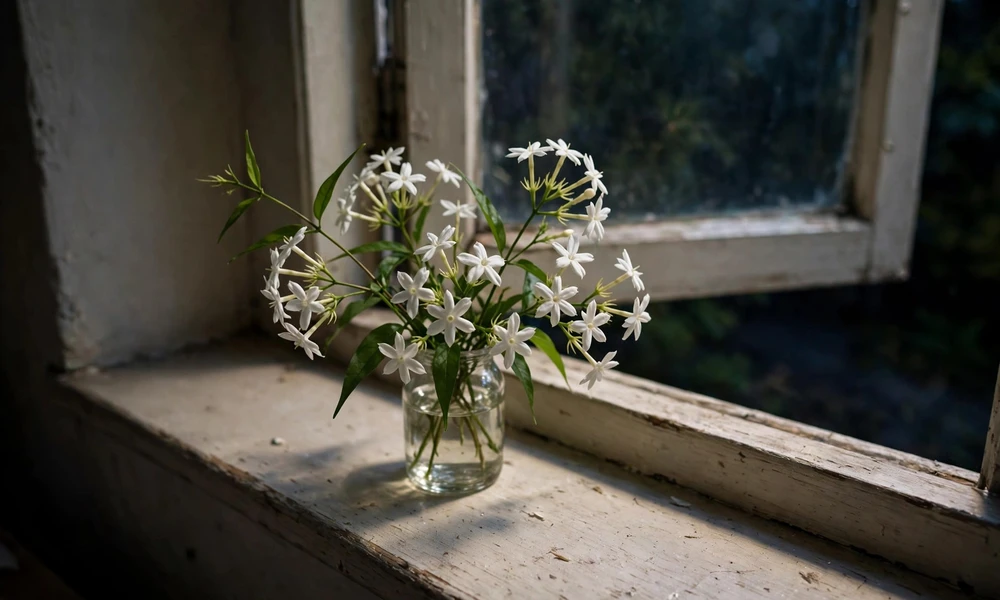
Next, find where it sits. About six in ten perfumes that list it put it in the heart, where it stays for hours and sweetens everything around it. A top placement, as in Perfect Intense and Fils de Joie, means it greets you first and fades fastest, while a heart placement, as in Goldea The Roman Night, means it carries the middle of the wear.
Finally, look at what surrounds it. Tuberose and rose deepen it, vanilla and musk sweeten it, citrus and blackcurrant keep it bright. A perfume that pairs it with almond is a different animal from one that pairs it with patchouli, and the neighbours tell you more about the wear than the note alone ever could. A pyramid that hides the flower behind “white floral bouquet” is telling you the house did not want you to find it, and that is a reason to sample first rather than buy blind.
9 facts about night-blooming jasmine
Nightshade is its true family
What it shows: Night-blooming jasmine is Cestrum nocturnum, a shrub from the Solanaceae family, the same family as tomatoes, potatoes, and tobacco. True jasmines belong to the genus Jasminum in the olive family, so the two plants are not related at all, whatever the shared name suggests. What to consider: A pyramid that names the plant correctly is a good sign; one that calls it a jasmine without the night qualifier is usually naming a different flower.
The West Indies are its native home
What it shows: Cestrum nocturnum is native to the West Indies and tropical America, and it is now grown across the tropics and subtropics, including India, the Philippines, and Mexico. It is a warm-climate shrub that needs heat to flower well, which is why it thrives in gardens from the Caribbean to Southeast Asia. What to consider: The plant’s tropical home explains the note’s warmth; it never smells cool or green in the way a temperate flower does.
It is also called lady of the night
What it shows: The plant’s other common names are lady of the night and queen of the night, both of which describe the same habit: flowers that open after dusk and pour out scent through the night. In some regions it is also called night jessamine, an older spelling of the same word. What to consider: A perfume that uses one of these names in its marketing is usually talking about the same plant, but the pyramid is still the proof.
It blooms at night to attract moths
What it shows: The flower opens after dusk because its pollinators are moths, which navigate by smell in the dark. The scent peaks in the hours before dawn, when the moths are most active, and fades once the sun is up. By day the blooms sit quiet and almost scentless. What to consider: That nocturnal habit is why the note reads as an evening scent in a bottle; it was built by evolution to work after dark.
Its chemistry is honey, cream, and indole
What it shows: The flower’s scent comes from a mix of benzyl acetate, which smells sweet and jasmine-like, phenylethyl alcohol, which smells rosy and soft, and indole, which adds the warm, faintly animalic depth that makes white florals smell heady rather than fresh. Perfumers use the accord above five percent concentration when they want the note to carry a composition. What to consider: The indole is what separates it from a simple sweet floral; without it, the note would smell flat and soapy.
Arabian jasmine is a different flower
What it shows: Arabian jasmine, or sambac, is Jasminum sambac, a true jasmine that also blooms at night and is picked before dawn in many countries. It smells greener and more tea-like than night-blooming jasmine, with less honey and less cream. The two are often confused because both are night flowers, but their pyramids name them differently. What to consider: A perfume that lists “jasmine sambac” is not a night-blooming jasmine perfume, however nocturnal its marketing sounds.
Parijat is not this flower at all
What it shows: Parijat, or night-flowering jasmine, is Nyctanthes arbor-tristis, a tree whose flowers open at night and fall at dawn. In Indian tradition it is a sacred tree, and its scent is softer and more delicate than that of Cestrum nocturnum. The two share a nickname and a habit, but they are different species with different scents. What to consider: A perfume named for parijat is a different note entirely, and its pyramid will say so if you read it closely.
One hundred and eleven perfumes list it
What it shows: As of late 2026, one hundred and eleven perfumes list night-blooming jasmine in their pyramids, and about six in ten put it in the heart. The most loved include Marc Jacobs Perfect Intense, Serge Lutens Fils de Joie, Bvlgari Goldea The Roman Night, and Viktor&Rolf Flowerbomb Midnight, which together cover the note from gourmand to oriental to fruity. What to consider: The count is small next to plain jasmine, which appears in thousands of pyramids, so genuine night-blooming jasmine picks are rarer than they look.
The 1979 Jovan bottle that put it on the map
What it shows: Jovan’s Night Blooming Jasmine, launched in 1979, was the first widely sold perfume to put the note front and centre, built on aldehydes and ylang-ylang with the flower as the dominant note. It introduced the scent to a mass audience decades before niche houses like Serge Lutens and Zoologist took it up again. What to consider: A note with a landmark this old is not a trend; it is a classic that keeps returning in new forms, from Gucci Bloom Parfum in 2025 to the newest niche releases.
Who it suits and when to wear it
Night-blooming jasmine suits anyone who likes heady white florals without the sharpness of plain jasmine. It works best in the evening, when its honeyed warmth feels natural, and in spring and summer, when warm air carries it further. Our ylang ylang perfume guide follows the same evening-first logic, and it works here too.
The lightest versions, like Hello Beautiful and Indian Night Jasmine, work in the daytime as well, because their musk and sandalwood bases keep the flower soft. The darkest versions, like Goldea The Roman Night and Fils de Joie, are evening perfumes through and through, and they can feel too much in a warm office.
Skin chemistry matters more here than with most florals, because the indole in the accord turns warm or animalic depending on the wearer. Test on skin for a full day before you buy a full bottle: paper will show you the honey, but only skin shows you the depth underneath.
It also layers well. A drop of night-blooming jasmine perfume over a plain musk or a vanilla body lotion stretches the wear and softens the sweetness, while a spray under a woody oud lets the flower sit on top like a light. Start with one spray and add a second only after an hour, because the note builds on skin and a heavy hand in the morning becomes a cloud by noon.
The caveats that matter
Night-blooming jasmine is an easy note to love and a hard one to buy well: three different plants share the night name, pyramids shorten it to plain jasmine whenever they feel like it, and the note’s own chemistry can turn animalic on some skins. Bear these warnings in mind before you spend anything at all.
| Detail | What is known |
|---|---|
| What the plant is | Cestrum nocturnum, a shrub from the nightshade family, native to the West Indies and tropical America |
| What it is not | Not a true jasmine, not Arabian jasmine (sambac), and not parijat (Nyctanthes arbor-tristis) |
| Where it sits in a pyramid | Heart in about six in ten perfumes that list it; top in a few, including Perfect Intense and Fils de Joie |
| What it smells like | Creamy, honeyed, and faintly green, with a warm, musky depth from indole |
| How many perfumes list it | One hundred and eleven, as of late 2026, against thousands for plain jasmine |
| Best season | Spring and summer suit it best; the darkest versions work in autumn too |
| Who should sample first | Anyone who dislikes heady, honeyed florals should try Hello Beautiful and Indian Night Jasmine first |
| What it does not do | It does not smell like a jasmine bush in daylight, and it does not behave the same on every skin |
Try any new perfume on a small patch of skin and wait a day before wearing it properly. The flower itself is gentle, but the spice, citrus, and patchouli around it can irritate skin, and no perfume is ever just one note.
Checklist: understanding night-blooming jasmine honestly
Work through these before you buy.
- Start with the pyramid: it should name “night blooming jasmine”, not just “jasmine” or “white flowers”.
- Check the plant behind the name: Cestrum nocturnum is the real material, and sambac and parijat are different plants.
- Always test on skin rather than paper alone: warm skin draws out the honey and cream, while paper dulls them.
- Wait an hour before you judge it: the green brightness goes first, and the honeyed depth underneath is what remains.
- Put two side by side before you choose: Jovan next to Indian Night Jasmine, or Goldea next to Flowerbomb Midnight.
- If you cannot decide, take the smallest bottle: a used-up 50 ml is better than a 100 ml you never touch.
Frequently asked questions
Is night-blooming jasmine a real jasmine?
No. The plant is Cestrum nocturnum, a shrub from the nightshade family, while true jasmines sit in the genus Jasminum in the olive family. The two smell related because both are heady white florals, yet the night-blooming flower is creamier, greener, and more honeyed, and it opens only after dark.
Why does it only smell at night?
Because its pollinators fly at night. The blooms open after dusk and pour out scent in the hours before dawn to guide moths, which find flowers by smell in the dark. Through the day they stay shut and nearly scentless, so a garden full of them can catch you off guard late in the evening.
Can you grow night-blooming jasmine at home?
Yes, in a warm climate or a large pot brought indoors for winter. It needs heat, sun, and rich soil to flower well, and it grows fast once established. Keep it away from pets and children, because like many nightshades the plant is toxic if eaten, whatever its scent suggests. Prune it after flowering to keep it bushy, and plant it near a window or a door, where the evening scent can drift inside.
How long before it fades?
Usually a long time. It tends to endure because it sits in the middle or the base and outlives the opening notes. Fils de Joie holds longest, past ten hours, while Hello Beautiful fades within a few hours as a light daytime mist.
Is this note for men too?
Yes, some do. Most of the nine are sold to women, yet the note itself carries no gender, and Fils de Joie and Flowerbomb Midnight both have male wearers. The surrounding notes settle the question: the mossy Forest Noir and the woody Fils de Joie read the most unisex here.
How do you tell it apart from parijat?
They are separate species that happen to share a nickname. Parijat, or night-flowering jasmine, is Nyctanthes arbor-tristis, a tree whose flowers fall at dawn, while night-blooming jasmine is Cestrum nocturnum, a shrub whose flowers open at dusk. Both flower at night, yet their scents differ, and a pyramid naming one is not naming the other.
The bottom line
Night-blooming jasmine is one plant, Cestrum nocturnum, and everything else with a night name is a different flower wearing the same nickname. Read the pyramid for the full phrase, test on skin for a full day, and judge the note by how its honeyed depth behaves over hours.
Start with Jovan if you want the note on its own for ten dollars, Indian Night Jasmine if you want it warm and honest under thirty, and Fils de Joie if you want the purest version money can buy. That is how you find a night-blooming jasmine perfume you will keep reaching for until the bottle is empty.