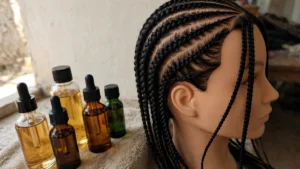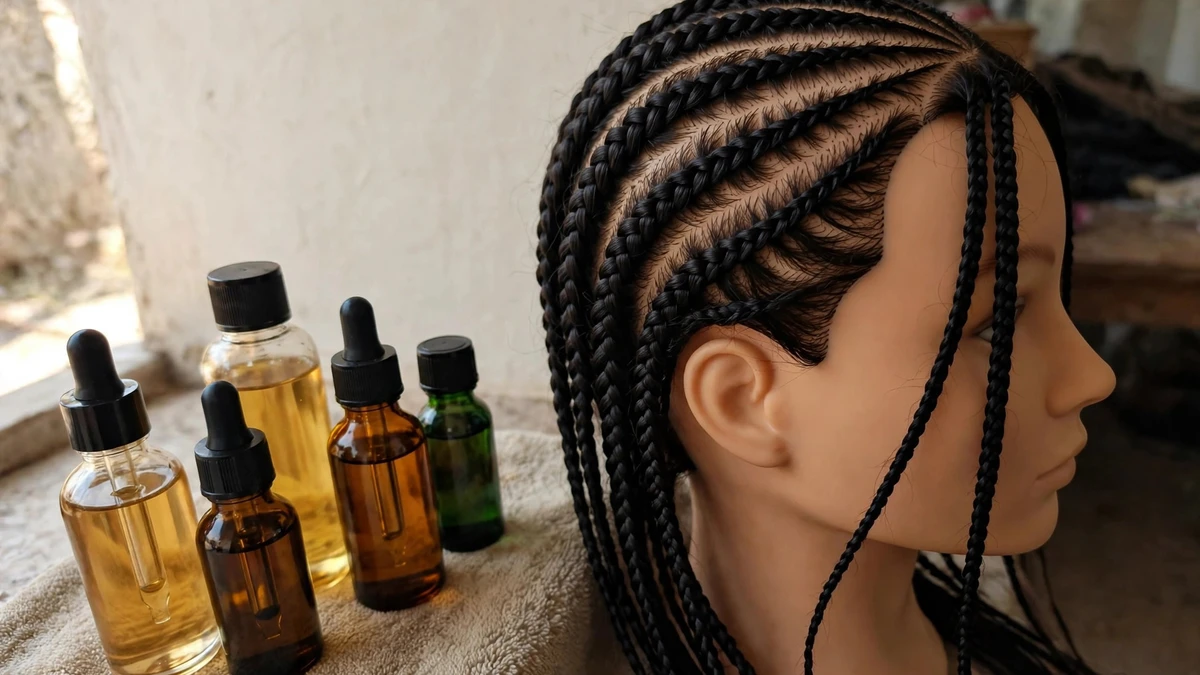
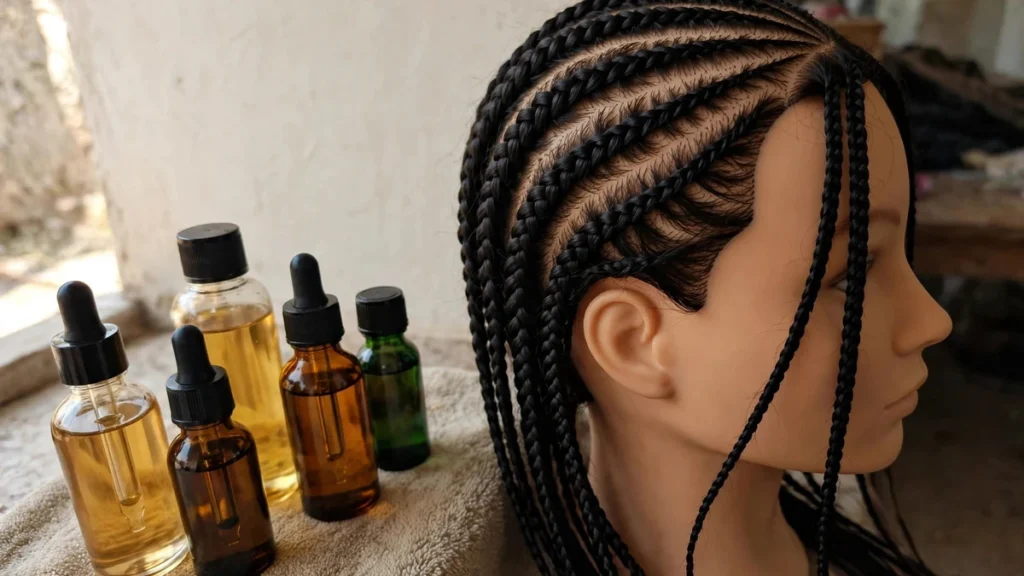
A lemonade braid is a set of cornrows sweeping to one side of the head, the way Beyoncé wore them on the cover of her 2016 album Lemonade. The braids run from one temple across the crown and down past the opposite shoulder, so the whole style has a direction, and caring for it follows that direction. Oil goes on the scalp along the partings first, then down the braids in the same sweep, never against it.
That sweep is what makes oil choice matter. A heavy oil flattens the ridges, while a light oil disappears and leaves the braids looking dry by midday. The right oil adds shine without weighing the ridges down, and keeps the scalp comfortable under braids that pull one way for weeks.
Below are nine oils for 2027, from a two-dollar coconut oil to a forty-dollar plant-oil blend. For each oil, you will find its strengths, its limits, and the hair it suits best.
Key takeaways
- Lemonade braids sweep to one side, so work oil along the partings and down the braids in that direction, never against it.
- Light oil suits the ridges; save a heavier oil for the partings and ends.
- Oil the scalp in small amounts along each parting, not in one pour, because braids trap excess oil for days.
- Keep oil away from the hairline edges, where it loosens braids and turns fresh edges into flyaways.
- No oil keeps a lemonade braid fresh for ever, and an itchy, flaky, or sore scalp needs the braids out.
What a lemonade braid needs from hair oil
A lemonade braid is built from cornrows, braided close to the scalp in long, raised rows that run from the parting on one side, across the crown, and down over the opposite shoulder. The scalp on the parting side shows more skin between the rows, so oil has two jobs: keeping that exposed scalp from drying out, and giving the raised rows a soft shine that shows the direction of the style.
The scalp job comes first. Cornrows hold the scalp taut for weeks, and a dry scalp under tension itches, flakes, and can develop sore spots along the partings. A drop worked into each parting keeps the skin supple, and it works best applied little and often. Two drops a day beats a palmful once a week, because the second wash never gets past the first layer of braids.
The shine job is subtler. Lemonade braids look best when the ridges catch the light, which needs a thin, even coat on the outside of the braids. A light oil spread across the palms and smoothed down the braids in the sweep’s direction does that well. A thick oil, or too much of a light one, fills the gaps between the ridges and turns the braid into a smooth cord.
How we chose these oils and what to look for
Begin with how heavy the oil feels. A light oil, such as argan or thin coconut oil, spreads along a braid and sinks in without a film. A medium oil, such as Jamaican black castor oil, suits the scalp and ends, where you want something that stays put. A very heavy oil is the wrong tool here, because it sits on the surface and attracts dust to the partings.
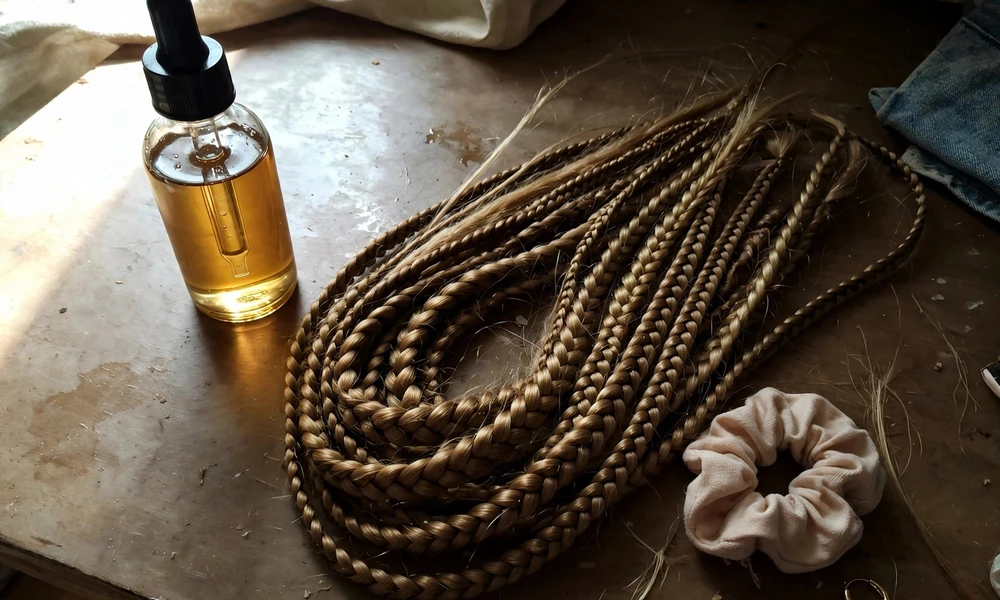
Look next at the applicator. A narrow nozzle or a dropper places a single drop exactly on a parting, which is what this braid needs. A wide-mouth jar makes you dip your fingers in and guess, which usually means too much oil in one place and none in the next. Our guide to herringbone braid hair oils makes the same point, because a chevron braid shares the same problem: the oil has to land where you mean it to, not where it happens to fall.
Last, consider the scent and the residue. You will wear this style for two to six weeks, so a strong fragrance becomes a roommate, and a sticky film will collect lint along every parting. A mild scent and a finish that feels dry within ten minutes are worth more than a famous brand name.
The 9 best hair oils for lemonade braids in 2027
Bajaj 100% Pure Coconut Oil
What we like: A plain coconut oil for about two dollars that does the scalp job as well as anything here. It melts thin on warm skin, so a drop runs easily along a parting and leaves a soft shine.
What to consider: It solidifies in a cold room, so warm it in your hands first, and it will not calm a coarse, frizzy tail alone.
Best For: Oiling a scalp on a tight budget. Material: Pure coconut oil. Price Range: $2–$3. Standout Feature: The cheapest oil here, with the simplest formula.
Soulflower Cold Pressed Coconut Oil
What we like: A cold-pressed coconut oil with a clean, mild scent that spreads well down a braid. The bottle pours a controlled drop rather than a rush.
What to consider: Like all coconut oil, it can feel light on very coarse hair, so save it for the braid lengths and use something richer on the ends.
Best For: Fine to medium hair that wants shine without weight. Material: Cold-pressed coconut oil. Price Range: $4–$5. Standout Feature: The cleanest-smelling coconut oil in this list.
Just Herbs Castor and Black Onion Seed Hair Oil
What we like: A castor oil blended with black onion seed, made for scalp care, and the first here that helps an itchy parting. It is thicker than the coconut oils above, so it stays on a parting instead of running down the braid.
What to consider: That thickness is also its limit: scalp only, and keep it off the braid ridges, where it flattens the pattern.
Best For: An itchy or tight scalp under cornrows. Material: Castor oil with black onion seed. Price Range: $5–$6. Standout Feature: The best scalp comfort at the budget end of the list.
Difeel Jamaican Black Castor Premium Hair Oil
What we like: A dark, rich Jamaican black castor oil for the ends, where lighter oils disappear within hours. A drop warmed between the palms is enough for a whole tail, and it keeps the ends from splitting.
What to consider: The heaviest oil in the first half of this list, so never use it on the ridges, and it can stain a light pillowcase, so tie the braids up at night.
Best For: Dry braid ends that need a seal. Material: Jamaican black castor oil. Price Range: $8–$9. Standout Feature: The strongest end sealer under ten dollars.
Lee Stafford Argan Oil
What we like: A straightforward argan oil for the shine job: a drop smoothed down the braids leaves the ridges glossy without a greasy feel, and the scent is light enough to wear daily. Reach for it when the braids look dull and the scalp is fine.
What to consider: A finishing oil, not a scalp treatment, so do not expect it to calm an irritated parting; use it after the scalp is oiled, not instead of it.
Best For: Dull braids that need a quick shine. Material: Argan oil. Price Range: $10–$12. Standout Feature: The best shine-to-weight balance in the middle of the list.
Kristin Ess The One Signature Serum
What we like: A light serum that smooths hairline flyaways without touching the partings, where this braid needs help most. It tames the wispy hairs around the sweep without loosening the edges, and dries to a soft, touchable finish.
What to consider: A serum, not a pure oil, so it will not feed a dry scalp; keep it for the surface of the braids and hairline, and use a real oil for the partings.
Best For: Flyaways at the hairline and along the sweep. Material: Lightweight silicone serum blend. Price Range: $14–$16. Standout Feature: The only pick here made for flyaways rather than the scalp.
WOW Skin Science Moroccan Argan Oil
What we like: A Moroccan argan oil with a pump that gives a measured drop, so a full head of partings is easy to oil without guessing. It is thin enough for the ridges and rich enough for the ends, so it is the most versatile oil on this list.
What to consider: The pump can give more than a drop if pressed hard, so press it halfway and spread what comes out before reaching for more.
Best For: Anyone who wants one oil for the whole style. Material: Moroccan argan oil. Price Range: $21–$22. Standout Feature: The most versatile oil here, with the best applicator.
Kiehl’s Smoothing Oil-Infused Leave-In Concentrate
What we like: An oil-infused leave-in that smooths the braid surface and adds weight to the tail without greasiness, so the sweep hangs instead of springing up. It is the first pick here that helps the style hold its shape.
What to consider: A little goes a long way, and too much makes the tail look damp, so start with half a pump and add more only if the ends still feel dry.
Best For: A long tail that needs weight and control. Material: Oil-infused leave-in concentrate. Price Range: $26–$28. Standout Feature: The best pick for keeping the sweep hanging straight.
Aveda Beautifying Composition Oil
What we like: A plant-oil blend with a soft, herbal scent, made for hair, body, and scalp, and the most pleasant here. It sinks into the partings without residue and leaves a gentle glow, and the scent fades within an hour.
What to consider: The most expensive oil here by a clear margin, and it does nothing the cheaper argan oils cannot do, so buy it for the experience and the scent, not for a result you cannot get for less.
Best For: Anyone who wants a luxury oil for a special-occasion style. Material: Blend of plant oils. Price Range: $38–$42. Standout Feature: The most pleasant scent and refined texture here.
Which oil is right for your lemonade braid
Start with your scalp. If it itches, or the partings look dry and tight, choose a scalp oil: the Just Herbs castor and black onion seed blend or the Bajaj coconut oil, in single drops along each parting. If your scalp is comfortable and the problem is dull braids, start with a shine oil instead, such as the Lee Stafford argan oil or the WOW Moroccan argan oil, smoothed down the lengths in the sweep’s direction.
Then think about texture. Fine hair needs the lightest oils here, because anything heavier pulls the braids flat and makes the style look limp by day two. Coarse hair can take the Difeel Jamaican black castor oil on the ends and the Kristin Ess serum on the flyaways, because it absorbs more before looking greasy.
Finally, think about wear time. A braid worn for two weeks needs less oil than one worn for six, because buildup accumulates along the partings. For a long wear, choose oils that dry down cleanly, such as the argan oils and the Aveda blend, oiling the scalp every other day. Our infinity braid hair oil roundup covers the same long-wear problem, because a looped braid traps oil the way a side-swept one does.
The caveats that matter
A lemonade braid protects your hair only if the scalp underneath stays healthy. Oil helps with that, and it can also hurt it: too much oil traps sweat and dead skin against the scalp, which leads to itching, flaking, and small bumps along the partings. The rule is simple. Use less than you think you need, place it where you mean it, and wash the braids when the scalp feels coated rather than comfortable.
| Detail | What is known |
|---|---|
| Best oil for the scalp | A light oil in single drops along each parting, daily or every other day |
| Best oil for the braids | A thin argan oil smoothed down the ridges in the sweep’s direction |
| Best oil for the ends | A heavier castor oil, warmed in the palms and pressed into the tail |
| What to avoid | Pouring oil straight from the bottle, and oiling the hairline edges |
| How often to oil | Scalp every one to two days; braids only when they look dull |
| Signs of too much oil | Partings that look wet, braids that feel heavy, lint collecting along the rows |
| When to wash the braids | When the scalp itches despite oiling, or the partings feel coated |
| What oil cannot fix | A braid that is too tight, a sore scalp, or edges that are already thinning |
If your scalp is sore, you see redness or bumps along a parting, or your edges are thinning, take the braids out and let the scalp rest. No oil will fix a style that pulls too hard, and oiling a sore scalp can make it worse. A lemonade braid should feel secure, not painful, and the first day should be the tightest.
Checklist: choosing a hair oil for lemonade braids honestly
Use these checks before you buy, and again after a week of wear.
- Check the weight: light for the braids, heavier only for the scalp and ends.
- Check the applicator: a dropper or narrow nozzle beats a wide-mouth jar.
- Check the finish: dry to the touch within ten minutes, not sticky or wet.
- Check the scent: you will wear it for weeks, so mild beats strong.
- Check the partings: if they look wet or coated, you are using too much.
- Check the edges: keep oil away from the hairline, where it loosens braids and creates flyaways.
Frequently asked questions
How often should I oil my scalp with lemonade braids in?
Every one to two days is enough. Put a drop on a fingertip and run it along each parting, not poured from the bottle. If the partings still look dry the next morning, add a second drop the following day, but do not double the amount in one session.
Can I oil the braids themselves, or only the scalp?
You can oil both, but differently. The scalp takes a drop per parting, placed with a fingertip. The braids take a thin coat of light oil, spread across the palms and smoothed down the lengths in the sweep’s direction. Never pour oil directly onto the braids, because it pools between the ridges.
Will oil make my lemonade braids slip out?
It can, if it reaches the roots and the hairline. Oil softens the braid’s grip at the root, so the edges loosen first. Keep oil on the partings and lengths, away from the hairline and the first inch of each braid.
What is the best oil for an itchy scalp under lemonade braids?
A castor-based scalp oil, such as the Just Herbs castor and black onion seed blend, helps most, because it stays on the parting. Apply it in single drops and massage gently. If the itching continues for more than a few days, or you see bumps, take the braids out and let the scalp breathe.
Can I use the same oil for my lemonade braids and my natural hair when they come out?
Yes, and most oils on this list work well on loose hair too. Argan and coconut oil suit daily smoothing, and castor oil is good for the ends. The difference is the amount: loose hair can take more oil, because no partings trap it.
How do I wash oil out of lemonade braids without ruining the style?
Use diluted shampoo in an applicator bottle, applied along the partings, and rinse with low water pressure so the braids stay in place. Our five-strand braid hair oil roundup explains the same rinse method, because a wide, flat braid needs the same gentle wash as a side-swept one. Do not scrub the braids, and let them dry fully before oiling again.
The bottom line
The best hair oil for a lemonade braid in 2027 is not the most expensive or famous. It is the one that matches the job: a light oil for the braids, a scalp oil for the partings, and a heavier oil for the ends. For most people, that means argan oil for shine, a castor-based oil for the scalp, and a single drop at a time, placed where you mean it.
Start with one oil, use it for a week, and judge it by how your scalp feels and how clearly the pattern shows. If the partings stay comfortable and the ridges still catch the light, you have the right oil. If the scalp itches or the braids look heavy, use less, or switch to a lighter oil, before blaming the style itself.