What Is a Patchouli Perfume 2027
Patchouli is the leaf that perfumers reach for when a perfume needs weight. It smells of damp earth, old wood, and dark sweetness, and it sits at the bottom of a pyramid holding everything else in place. A perfume with patchouli in the base lasts longer, smells deeper, and feels warmer than the same blend without it, which is why the note appears in everything from cheap colognes to private-collection parfums.
Most people meet patchouli before they know its name. It is the earthy warmth under a vanilla oriental, the dark green edge in a chypre, the smoky depth in a woody men’s cologne. The word itself carries baggage: head shops, the 1960s, incense sticks. But the material is older and stranger than its reputation, a fermented leaf oil that has travelled from Asian herb gardens to Parisian perfume houses over two centuries.
This guide explains what patchouli is, where it comes from, how to read it on a pyramid, and which perfumes show it best. It also covers the mistakes buyers make most often, from confusing patchouli with the synthetic Clearwood to judging a base note by its first minute on a blotter. Our ylang ylang explainer follows the same plain-language approach, and it works here too.
Key takeaways
- Patchouli is the oil of Pogostemon cablin, a leafy plant in the mint family, and it smells earthy, woody, and faintly sweet.
- It is a base note and a fixative, which means it sits at the bottom of a pyramid and makes the lighter notes above it last longer.
- The oil is made from dried, fermented leaves, and it improves with age, so dark patchouli smells smoother than light patchouli.
- It travelled west in the nineteenth century as a moth repellent in cashmere shawls, and the 1960s made it a counterculture signature.
- Some pyramids name a clean synthetic called Clearwood instead of the natural oil, so read the note list carefully before you buy.
What patchouli actually smells like
On a blotter, patchouli smells like soil after rain, with a woody warmth on top and a sweet, almost chocolatey depth underneath. It is not a bright or fresh smell. First it smells green and a little sharp, close to crushed mint leaves, then it deepens into something earthy and warm, nearer cedarwood and cocoa than any flower.
The smell changes with the oil. Light patchouli oil is green, camphoraceous, and almost minty, while dark patchouli oil, aged for months or years, is smooth, smoky, and deep. A perfume that uses the light oil smells very different from one that uses the dark, which is why two patchouli perfumes can smell like different notes entirely.
In a blend, patchouli acts like an anchor. It holds bright citruses and sweet vanillas in place, gives roses and jasmines a darker frame, and adds weight to woods that would otherwise feel thin. It rarely opens a perfume. Spray it, enjoy the green opening, and expect the earthy warmth to remain on skin long after the top notes have disappeared.
Concentration changes the note too. An eau de toilette lets the green, camphoraceous opening lead, while an eau de parfum or parfum pushes the dark, earthy base forward, so the same leaf can smell almost like two different materials depending on the bottle you pick up.
How to read a pyramid that names it
A pyramid lists notes in three layers: top, heart, and base. Patchouli usually appears in the base, where it fixes the lighter notes above it and gives the perfume its staying power. When you see it there, expect a long, warm drydown. When you see it in the heart, as in Tom Ford White Patchouli, expect the leaf to show itself in the middle hours and fade sooner.
The spelling changes from house to house. “Patchouly” on a French bottle is the same material as “patchouli” on an English one, and both name the leaf oil of Pogostemon cablin. What matters is the word itself: a pyramid that says only “woody notes” or “earthy notes” is not naming patchouli at all, and neither is one that lists a synthetic such as Clearwood without the natural oil. The same plain reading shaped our frangipani explainer and osmanthus explainer, and it works here too.
Watch the company the note keeps. Patchouli with vanilla and amber is sweet and warm, patchouli with rose and iris is soft and floral, patchouli with cedarwood and vetiver is dry and woody. The partners tell you more about the finished perfume than the note alone ever could.
9 facts about patchouli
The leaves carry the scent
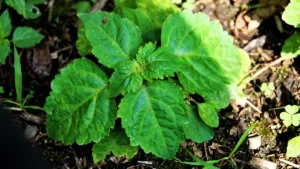
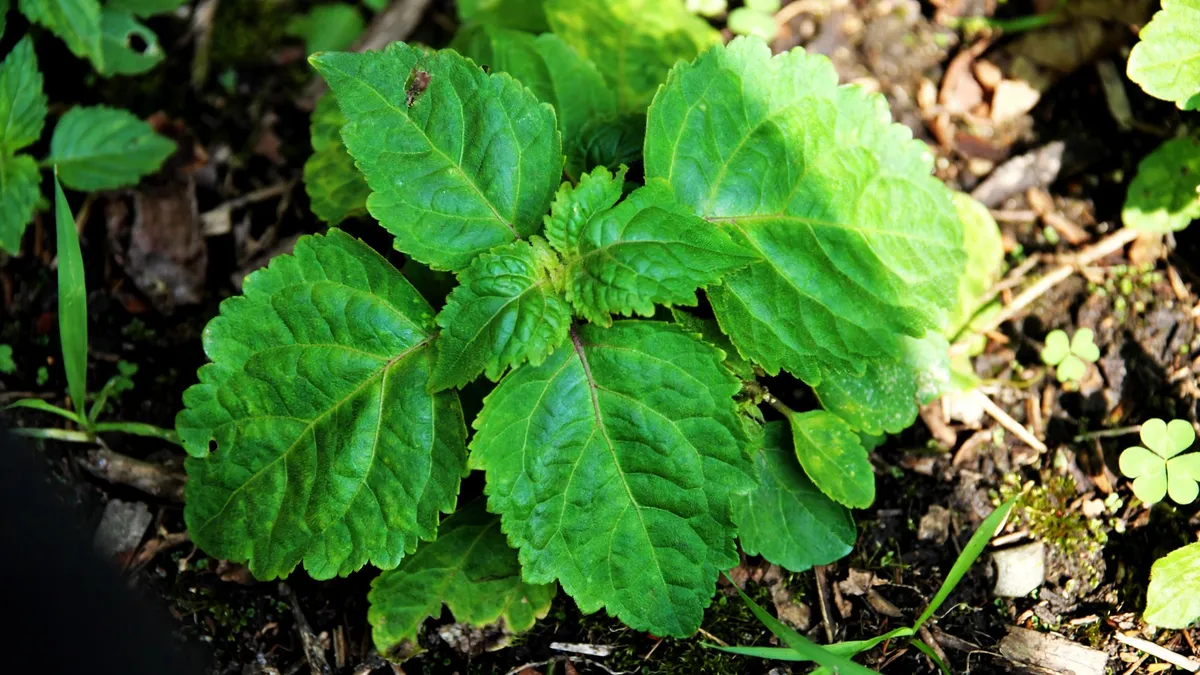
What it shows: Patchouli comes from Pogostemon cablin, a leafy plant in the mint family, and the oil is pressed from its leaves, not its blooms. The plant does flower, but the flowers are small, pale, and almost scentless, and they play no part in the perfume.
What to consider: Because it is a leaf oil, patchouli smells green and earthy rather than sweet and floral. Anyone who expects a flower will be surprised by the soil and wood in the first sniff.
The oil comes from dried, fermented leaves
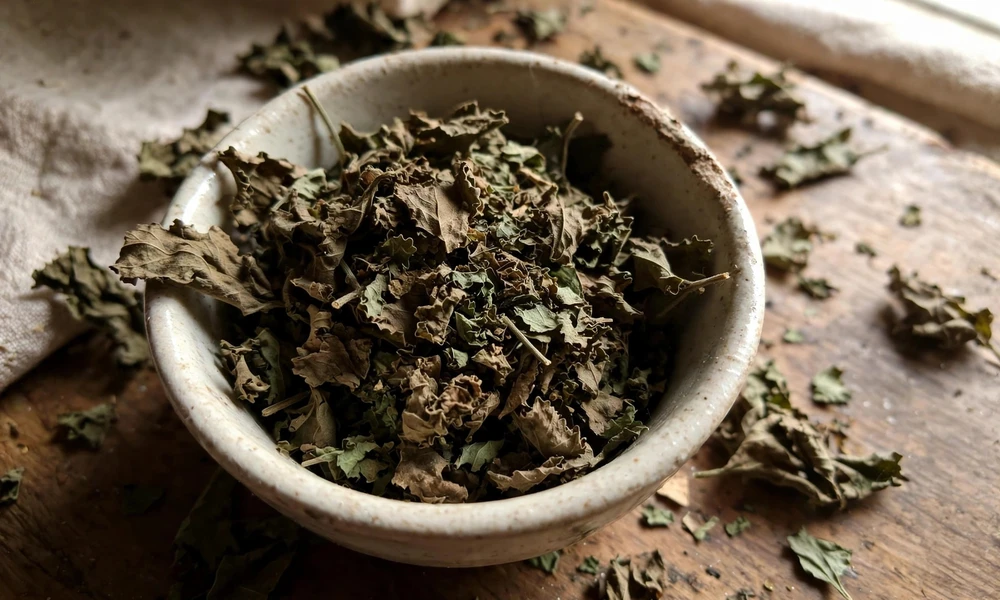
What it shows: Fresh patchouli leaves are dried in the shade, then left to ferment in piles before they are steam-distilled. The fermentation is what builds the oil’s deep, earthy character, and it is the step that separates patchouli from other leaf oils.
What to consider: The process takes weeks, and the quality of the drying and fermenting decides the quality of the oil. Poorly dried leaves give a harsh, camphoraceous oil, while careful drying gives a smooth, woody one.
Its main molecule is patchoulol
What it shows: Patchoulol is the single molecule that carries most of patchouli’s smell, and it makes up roughly a third of the natural oil. It is a heavy, slow-evaporating molecule, which is why patchouli lasts so long on skin and why a small amount fills a room.
What to consider: Because one molecule does most of the work, perfumers can rebuild patchouli in a lab. A synthetic built on patchoulol smells close to the natural oil but cleaner, with less of the smoky, animalic depth.
Cashmere shawls carried it west
What it shows: Patchouli reached Europe in the nineteenth century packed into cashmere shawls from India, where the dried leaves were used as a moth repellent. The shawls arrived smelling of the leaf, and European buyers came to expect the scent, so shawl makers began adding patchouli even to shawls that had never been near a moth.
What to consider: The shawl trade is why patchouli smells old-fashioned to some noses. It was a luxury smell before it was a hippie smell, and the association with fine wool never quite left it.
The 1960s made it a signature scent
What it shows: In the 1960s and 1970s, patchouli oil became the signature scent of the counterculture, sold in head shops and worn neat on skin. It was cheap, strong, and unmistakable, and it marked its wearer as clearly as any uniform.
What to consider: The association still follows the note. A heavy patchouli can read as a costume to anyone who grew up with the head-shop smell, which is why modern perfumers usually soften it with florals, vanilla, or clean woods.
The oil improves as it ages
What it shows: Patchouli oil is one of the few perfume materials that improves with age, like wine. Fresh oil is green and sharp, but after months or years in the barrel the harsh edges round off, the smoke deepens, and the oil turns dark and smooth. Aged oil is sold as dark patchouli and costs more than the light kind.
What to consider: Ageing is also why old bottles of patchouli perfume can smell better than new ones. If a vintage bottle has been stored well, the patchouli inside it has had years to mellow, though the lighter notes around it may have faded.
Patchouli anchors a perfume from the base
What it shows: A fixative is a heavy, slow-evaporating material that holds lighter notes on skin. Patchouli is one of the classic fixatives, and it is why perfumes with patchouli in the base last eight, ten, or twelve hours while a citrus cologne fades in two.
What to consider: The fixative job means patchouli is often present in perfumes that never name it as a star. If a perfume lasts far longer than its pyramid suggests, a fixative such as patchouli is usually doing the quiet work underneath.
Clearwood is the clean synthetic
What it shows: Clearwood is a patchouli material made by Firmenich from patchoulol, designed to smell like the natural oil without its smoky, animalic edge. It is cleaner, greener, and more transparent, and it is used in perfumes that want patchouli’s staying power without its earthiness.
What to consider: A pyramid that names Clearwood is not naming natural patchouli. The two smell related but not identical, and a buyer who wants the dark, smoky leaf should look for “patchouli” itself rather than the synthetic. You will find Clearwood in many modern designer perfumes, where it gives a clean patchouli backbone without the vintage weight of the natural oil.
Angel made it a bestseller
What it shows: Mugler Angel, launched in 1992, built its base on patchouli and praline, and it became one of the best-selling perfumes in the world. Angel proved that patchouli could carry a mass-market gourmand, and it put the leaf in millions of homes that had never heard of Pogostemon cablin.
What to consider: Angel’s success also fixed patchouli’s public image as a sweet, heavy note. The praline does most of the sweetening in Angel, and the patchouli underneath is far earthier than the finished perfume suggests.
Who it suits and when to wear it
Patchouli suits anyone who likes warmth and depth in a perfume. It flatters people who find fresh florals too thin and clean musks too quiet, and it rewards patience: the note is at its best an hour after spraying, when the green opening has settled and the earthy warmth takes over. Wear it when you want to be noticed without shouting.
Autumn and winter are its seasons. Cold air carries the earthy warmth well, and a heavy patchouli feels natural under a coat in a way it never does in July heat. The cleanest picks, such as White Patchouli, work in spring and even summer, but the resinous ones belong to cold weather.
At work, keep it light. A single spray of a clean patchouli is fine in an office, but a heavy oriental such as Patchouli Leaves can fill a small room. Save the strongest picks for evenings, and test any new patchouli on skin for a full day before you wear it out.
Skin chemistry matters more with patchouli than with most notes. On warm skin the earthy depth comes forward quickly, while on cool skin the green opening lingers longer, so the same bottle can smell dry on one person and sweet on another. That is another reason to wear it for a full day before you decide.
The caveats that matter
Patchouli is easy to love and hard to buy well: the oil changes with ageing, the spelling changes from house to house, and the note hides inside perfumes that never name it as a star. Hold these warnings in mind before you spend anything.
| Detail | What is known |
|---|---|
| What “patchouli” means on a pyramid | It is the leaf oil of Pogostemon cablin; “patchouly” on a French bottle is the same material |
| Where the note usually sits | Base in most perfumes; it fixes lighter notes and outlives the opening |
| Longevity | Usually very long, because patchoulol evaporates slowly; heavy patchouli perfumes carry twelve hours or more |
| Best season | Autumn and winter suit it best; the cleanest picks work in spring too |
| Who should sample first | Anyone who dislikes earthy, heavy scents should try White Patchouli and Reminiscence first |
| Natural versus synthetic | Natural patchouli is dark, smoky, and earthy; Clearwood is the clean, green synthetic built on patchoulol |
| Ageing | The oil improves with age; dark patchouli is aged longer than light patchouli and costs more |
| What it does not do | It does not make a perfume smell like a flower, and it does not suit every skin chemistry |
Test any new perfume on a small patch of skin and wait a day before wearing it properly. On its own patchouli is gentle, but the spice, citrus, and amber around it can irritate, and no perfume is ever a single note.
Checklist: understanding patchouli honestly
Work through these before you buy.
- Start with the pyramid: it should name “patchouli” or “patchouly”, not just “woody notes” or “earthy notes”.
- Ask whether the note is natural or synthetic: Clearwood is clean and green, natural patchouli is dark and smoky.
- Wear it on skin, never on paper alone: warm skin reveals the earthy depth, while paper dulls it.
- Let an hour pass before you decide: the green brightness lifts first, and the earthy warmth underneath is what endures.
- Put two bottles next to each other before you choose: Reminiscence beside Borneo 1834, or White Patchouli beside Patchouli Ardant.
- If you cannot decide, buy the smallest bottle: a 50 ml you finish beats a 100 ml gathering dust.
Frequently asked questions
Is patchouli a real plant?
Yes. Patchouli is Pogostemon cablin, a leafy plant in the mint family grown across Indonesia, India, and China. The oil is steam-distilled from dried, fermented leaves, and it has been traded as a perfume material since the nineteenth century.
Why is it called a hippie scent?
Because the counterculture adopted it in the 1960s and 1970s, when patchouli oil was sold in head shops and worn neat on skin. The association stuck, but the material is much older: it arrived in Europe in cashmere shawls a century earlier, and perfumers have used it as a fixative ever since.
What is Clearwood?
Clearwood is a patchouli material made by Firmenich from patchoulol, the main molecule of natural patchouli oil. It smells like patchouli without the smoky, animalic edge: cleaner, greener, and more transparent. A pyramid that names Clearwood is naming the synthetic, not the natural leaf oil.
Does the oil improve the longer it is kept?
Yes. Patchouli oil is one of the few perfume materials that improves with age, like wine. Fresh oil is green and sharp, but after months or years the harsh edges round off and the oil turns dark and smooth. Aged oil is sold as dark patchouli and costs more than the light kind.
Is patchouli suitable for the office?
You can, if you keep it light. A single spray of a clean patchouli such as White Patchouli is fine in an office, but a heavy oriental such as Patchouli Leaves can fill a small room. Save the strongest picks for evenings, and test any new patchouli on skin for a full day before you wear it out.
How do you tell natural patchouli from synthetic?
Read the pyramid. Natural patchouli is listed as “patchouli” or “patchouly”, while the synthetic is listed as “Clearwood”. On skin, the natural oil smells darker, smokier, and earthier, while Clearwood smells cleaner and greener. The price is a clue too: natural aged patchouli costs more than the synthetic.
The bottom line
Patchouli is a leaf oil with two centuries of history behind it: a moth repellent in cashmere shawls, a counterculture signature, and one of the great fixatives of perfumery. It smells of damp earth and old wood, it holds lighter notes in place, and it gets better with age. For the clearest introduction, try Reminiscence Patchouli; for the purest leaf, try Borneo 1834.
Whatever you go for, make sure the pyramid names “patchouli” or “patchouly” rather than just “woody notes”, wear it on skin for a full day, and judge it by how the earthy warmth deepens over hours rather than by the first minute. That is how you settle on a patchouli perfume you will actually wear to the last drop.