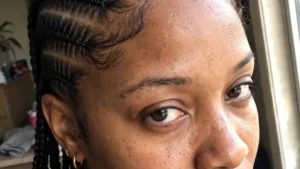
A stitch braid earns its name from the way it is built. Hair goes in pinch by pinch, a little at a time, so the row shows a neat line of stitches beside the parting. The lines are the whole point of the style — straight, even, and easy to read — and oil has to work around them. A drop in the wrong spot softens a stitch line; the right oil on the scalp first keeps the pattern sharp and the skin calm.
That split job is what makes the choice of oil matter. The partings are wide and evenly spaced, so a lot of scalp is on display for the full wear, and skin under tension dries out quickly. The raised rows need a gleam to show the stitching off. A thin coat does it. A thick coat, or too much of a thin one, fills the gaps and turns a crisp row into a plain cord.
The nine oils below run from seven dollars to forty. Each one lists what it does well, where it falls short, and the hair it suits.
Key takeaways
- Stitch braids leave the scalp showing in tidy, even partings, so start with the skin along each parting, then the braids.
- Light oil keeps the stitch lines sharp; keep heavy oil for the partings and ends.
- Work in single drops from a fingertip or dropper — braids hold on to extra oil for days.
- Stay clear of the hairline, where oil loosens the opening stitch and turns fresh edges into flyaways.
- No oil can keep a stitch braid fresh for ever, and a sore, bumpy, or itchy scalp is a sign to take the braids out.
What a stitch braid asks of a hair oil
A stitch braid starts as a cornrow: hair braided tight to the scalp, fed in from the sides as the row travels. The feed is what sets it apart — small pinches, added one after another at the same pace, so the row reads as stitching rather than a smooth plait. Partings run straight and hold the same width from hairline to crown, and the scalp between them stays visible until the style comes out.
The scalp comes first. Rows hold the skin taut for weeks, and the broad, regular partings lose moisture faster than a loose style. A drop in each parting, little and often, keeps the skin supple. Two drops a day does more than a palmful once a week, because a wash cannot reach past the outer layer of braids.
Then comes the shine. Rows look their best when the ridges catch the light, and that takes a thin, even layer on the outside of the braid. Rub a light oil between your palms and run it down the rows with the stitches. A thick oil, or too generous a hand with a light one, fills the spaces between stitches and smudges the pattern.
How we picked these oils and what to check
Start with weight. A light oil — argan, or a thin herbal blend — travels along a braid and sinks in without a film. A middle-weight oil — onion or bhringraj — suits the scalp and ends, where you want something that stays put. A very heavy oil is the wrong tool, since it rests on the surface and gathers dust in the partings.

Then look at the applicator. A dropper or slim nozzle puts one drop exactly on a parting, which is what this braid calls for. A wide jar forces you to dip in a finger and guess — usually too much in one spot and nothing in the next. Our roundup of hair oils for herringbone braids makes the same case, since a chevron braid has the same need: oil must land where you intend it, not wherever it happens to fall.
Finally, weigh scent and residue. A style worn for two to six weeks turns a strong fragrance into a constant companion, and a tacky film gathers lint along every parting. A gentle scent and a finish that feels dry in ten minutes count for more than a famous name.
The 9 best hair oils for stitch braids in 2027
The Moms Co. Natural Hair Oil
What we like: A plain onion-based oil at about seven dollars that handles the scalp job as well as anything here. It runs thin from a dropper, so a drop travels a parting easily and leaves a soft gleam.
What to consider: The onion smell is gentle but present on day one, so use it at night if scent bothers you; alone, it will not seal coarse, frizzy ends.
Best For: An itchy scalp under tight rows. Material: Onion oil blend. Price Range: $7–$9. Standout Feature: The cheapest scalp soother on the page, with the plainest formula.
Omved Kesha Hair Oil
What we like: A classic Ayurvedic blend of brahmi and bhringraj, made for everyday scalp care — the first oil here that feels built for this braid. It is light enough for a parting, kind to irritated skin, and one drop covers a lot of ground.
What to consider: It is a scalp oil through and through — do not look to it for shine on the rows; use it on the partings and save a lighter oil for the lengths.
Best For: A dry scalp that wants a drop each day. Material: Ayurvedic herbal oil blend. Price Range: $11–$13. Standout Feature: The most traditional recipe in the list.
Bare Anatomy Damage Repair Hair Oil
What we like: A featherweight repair oil for hair that has seen colour or heat — the first here that helps the braid as much as the scalp. It smooths the rows without pressing the stitches flat, and dries clean.
What to consider: Made for damaged hair, it can feel like overkill on healthy hair; use half a drop on the rows and keep the rest for the ends.
Best For: Braids over colour-treated or heat-damaged hair. Material: Lightweight repair oil blend. Price Range: $14–$16. Standout Feature: The best choice for damaged hair under braids.
Plum Onion & Bhringraj Hair Oil
What we like: An onion and bhringraj mix between the budget oils and the salon ones, and the strongest scalp care in the middle of the list. It stays on a parting instead of running down the braid — exactly what a stitch parting calls for.
What to consider: That staying power cuts both ways: scalp only, and keep it off the stitch ridges, where it smudges the pattern, and off the hairline, where it loosens the opening stitch.
Best For: Partings that feel tight and dry. Material: Onion oil with bhringraj. Price Range: $17–$19. Standout Feature: The strongest scalp comfort in the middle of the list.
Kama Ayurveda Neeli Hair Oil
What we like: A neeli, or indigo, oil in a sesame base, the only indigo-based oil here. It feels cool on the scalp, smells lightly herbal, and spreads thin enough for a stitch parting without pooling.
What to consider: The indigo base tints the oil green in the bottle, so try a drop on a pale pillowcase first; and it is a scalp oil, not a shine oil, so the rows still want a lighter coat.
Best For: A scalp that likes a traditional oil with a cooling feel. Material: Neeli (indigo) in a sesame oil base. Price Range: $20–$22. Standout Feature: The only indigo-based oil on the page.
Fanola Oro Therapy 24K Gold Oil
What we like: An illuminating oil with a gold shimmer that makes the stitch ridges catch the light, the most glamorous pick here. A drop run down the rows gives the pattern a glow a plain oil cannot match, with a scent soft enough for everyday wear.
What to consider: The shimmer is a styling effect, not a treatment — do not expect it to soothe a dry scalp; keep it for the rows and use a proper scalp oil on the partings.
Best For: Braids that need shine for an occasion. Material: Illuminating oil with gold pigments. Price Range: $24–$26. Standout Feature: The most glamorous shine in the list.
Milk_Shake Glistening Argan Oil
What we like: A no-fuss argan oil for the shine job: one drop run down the rows leaves the stitches glossy without any greasy feel, and the scent is light enough to live with daily. Turn to it when the braids look flat and the scalp is happy.
What to consider: It finishes, it does not treat — do not expect it to settle an irritated parting; use it after the scalp is oiled, not in place of that step.
Best For: Dull rows that want gloss without weight. Material: Argan oil. Price Range: $28–$30. Standout Feature: The best gloss-to-weight balance near the top of the list.
Alfaparf Milano Semi di Lino Sublime Cristalli Liquidi
What we like: A liquid-crystal smoothing oil that gives a long stitched tail weight without greasiness, so the rows hang instead of springing up. It is the first pick here that helps the style keep its shape, and a small amount covers a lot.
What to consider: Small is the operative word — too much leaves the tail looking damp, so start with half a pump and add more only if the ends feel dry.
Best For: A long stitched tail that needs weight and control. Material: Liquid crystal smoothing oil. Price Range: $32–$35. Standout Feature: The best choice for keeping a long tail hanging straight.
Oway Glossy Nectar
What we like: A plant-oil nectar with a soft herbal scent, made for hair, body, and scalp — the most pleasant of the nine. It settles into the partings without residue and leaves a gentle glow, and the scent is gone within the hour.
What to consider: It is the priciest oil here by a wide margin, and the cheaper argan oils do the same work — buy it for the feel and the scent, not a result you cannot get for less.
Best For: Anyone after a luxury oil for a special occasion. Material: Blend of organic plant oils. Price Range: $38–$42. Standout Feature: The softest scent and smoothest texture of the nine.
Which oil fits your stitch braid
Let the scalp decide first. If it itches, or the partings look parched and tight, pick a scalp oil — the Plum onion and bhringraj blend or the Omved Kesha oil — in single drops along each parting. If the scalp is fine and the trouble is dull braids, start with a shine oil instead — the Milk_Shake argan oil or the Fanola gold oil, run down the lengths with the stitch lines.
Then factor in texture. Fine hair wants the lightest oils here — anything heavier drags the rows flat and smudges the stitching by day two. Coarse hair can handle the Bare Anatomy repair oil on the rows and the Kama Ayurveda neeli oil on the partings, since it soaks up more before looking greasy.
Finally, weigh the wear time. Two weeks in braids asks for less oil than six, since residue builds along the partings. For a long wear, pick oils that dry down cleanly — the argan oils and the Oway nectar — and oil the scalp every other day. Our infinity braid hair oil roundup tackles the same long-wear puzzle, since a looped braid traps oil like a stitched one.
The caveats that matter
A stitch braid only protects your hair while the scalp beneath stays healthy. Oil helps there, and it can also work against you: too much of it traps sweat and dead skin against the scalp, which brings on itching, flaking, and small bumps along the partings. Keep it simple: use less than you think you need, put it where you mean it, and wash the braids once the scalp feels coated instead of comfortable.
| Detail | What is known |
|---|---|
| Best oil for the scalp | A light oil in single drops along each parting, daily or every other day |
| Best oil for the braids | A thin argan oil run down the rows with the stitch lines |
| Best oil for the ends | A heavier oil, warmed in the palms and pressed into the tail |
| What to avoid | Pouring oil straight from the bottle, and oiling the hairline edges |
| How often to oil | Scalp every one to two days; braids only when they look dull |
| Signs of too much oil | Partings that look wet, rows that feel heavy, lint gathering along the stitches |
| When to wash the braids | When the scalp itches in spite of oiling, or the partings feel coated |
| What oil cannot fix | A braid that is too tight, a sore scalp, or thinning edges |
Soreness, redness, or bumps along a parting mean the braids should come out and the scalp should rest. No oil rescues a style that pulls too hard, and oiling irritated skin can make it worse. A stitch braid ought to feel secure, not painful, and day one is always the tightest.
Checklist: choosing a hair oil for stitch braids honestly
Run through these before you buy, and again a week later.
- Weigh it: light for the rows, heavier only for the scalp and ends.
- Check the applicator: a dropper or slim nozzle beats a wide jar.
- Feel the finish: dry to the touch in ten minutes, never tacky or wet.
- Smell it: you will live with it for weeks, so gentle beats strong.
- Watch the partings: wet or coated means too much.
- Watch the stitch lines: if they blur, the oil is too heavy for the rows.
Frequently asked questions
How often does the scalp under stitch braids need oil?
Every one to two days is plenty. Set a drop on a fingertip and run it along each parting; never pour from the bottle. If a parting still looks dry the next morning, add one more drop the following day, but do not double the amount in a single sitting.
Should I oil the stitch rows, or stick to the scalp?
Both, but in different ways. The scalp gets a drop per parting, set on with a fingertip. The rows get a thin layer of light oil, spread over the palms and run down the lengths with the stitches. Never pour oil straight onto the rows, since it gathers between the stitches and smudges the pattern.
Can oil make my stitch braids slip out?
Yes, once it reaches the roots and the hairline. Oil softens the braid’s hold at the root, so the edges give way first — keep it on the partings and lengths, clear of the hairline and the opening stitch.
Which oil calms an itchy scalp under stitch braids?
An onion or bhringraj scalp oil, such as the Plum blend, does the most good — it stays put on the parting. Use single drops, massaged softly. If the itch carries on for more than a few days, or bumps appear, take the braids out and let the scalp rest.
Does one oil work for stitch braids and loose hair alike?
Yes — most of the oils here work well on loose hair too. Argan and herbal oils suit everyday smoothing, and a heavier oil suits the ends. The only change is the amount: loose hair can take more, because no partings trap it.
How do I wash oil out of stitch braids without blurring the pattern?
Set diluted shampoo in an applicator bottle, run it along the partings, and rinse gently so the rows hold. Our five-strand braid hair oil roundup walks through the same rinse, since a wide, flat braid needs the same gentle wash as a stitched one. Never scrub the rows, and let them dry right through before oiling again.
The bottom line
The right hair oil for a stitch braid in 2027 is not the dearest or the best known. It is the one that fits the job: a light oil for the rows, a scalp oil for the partings, and a heavier oil for the ends. For most people that means argan oil for shine, an onion or bhringraj oil for the scalp, and one drop at a time, set where you mean it.
Try one oil for a week and judge it by the scalp and how clearly the stitch lines show. If the partings stay easy and the rows still catch the light, the oil is right. If the scalp itches or the pattern smudges, use less, or move to a lighter oil, before faulting the style.