A silk pillowcase sounds like a luxury you do not need, until you hear the same story for the tenth time: less frizz in the morning, fewer sleep creases, skin that feels less dry. The claims are everywhere, and some of them are overblown. The honest question is not whether silk pillowcases are nice. It is whether they are worth the price, and for whom.
The short answer is that silk does something real, but it does it quietly. It creates less friction than cotton, it absorbs less moisture from your skin and hair, and it stays cool against your face. That is the whole case for silk: not a miracle, but a better surface to sleep on.
Below are nine facts that explain why silk pillowcases are worth it in 2027, from how silk behaves against hair and skin to what to look for when you buy one. Each fact is described by what it does well, what to watch for, and who it suits best, so you can decide with your own sleep and skin in mind, not just a marketing claim.
Key takeaways
- Silk creates less friction than cotton, which means less frizz, fewer tangles, and less tugging on skin overnight.
- Silk absorbs less moisture than cotton, so it takes less water from your skin and less oil from your hair.
- Mulberry silk is the grade to look for, and momme weight tells you how substantial the fabric is.
- A silk pillowcase is a small change with a slow payoff, not an overnight transformation.
- No pillowcase replaces good skincare or good haircare, and cheap silk will not deliver the benefits of real silk.
What a silk pillowcase actually does
A silk pillowcase is a pillowcase made from silk, most often mulberry silk, which is the smoothest and most widely available kind. The fabric is woven tightly, with a smooth surface that lets hair and skin glide across it instead of catching. That smoothness is the whole point. Cotton, especially a rougher weave, creates friction. Silk does not.
Friction matters because you move in your sleep. Every time you turn your head, your hair drags across the pillowcase and your face presses into it. Over eight hours, that adds up to a lot of rubbing. On cotton, that rubbing can tangle fine hair, rough up curls, and press creases into skin that take an hour to fade. On silk, the same movement is gentler, because there is less to catch on.
Silk also handles moisture differently. Cotton absorbs water readily, which means it can draw moisture from your skin and absorb the oils and products in your hair. Silk absorbs far less, so more of your night cream stays on your face and more of your hair’s natural oils stay in your hair. The difference is small on any one night, and noticeable over weeks.
How we chose these facts and what to look for
Look first at the silk itself. The label should say 100 percent mulberry silk, and it should name the momme weight, which is the measure of how heavy and substantial the fabric is. A pillowcase of 19 momme is a good everyday weight. At 22 momme or above, the silk is thicker, smoother, and more durable, and it is the weight most luxury pillowcases use.
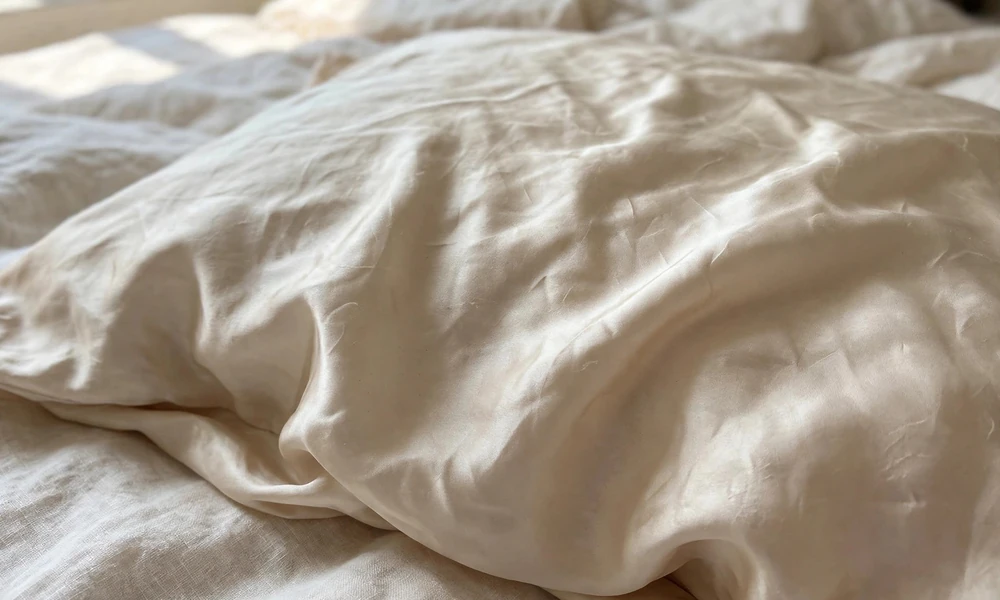
Look next at the weave and the finish. A charmeuse weave, smooth on one side and slightly matte on the other, is the standard for silk pillowcases. The seams should be neat and the zip or envelope closure should be hidden, so nothing hard presses against your face. A pillowcase that feels rough, thin, or papery is probably not the silk it claims to be.
Finally, look at the price with a clear head. Real mulberry silk at 19 momme or above costs real money, and a pillowcase that costs very little is almost certainly a blend or a synthetic satin. Satin is a weave, not a fibre, and polyester satin looks like silk but does not behave like it. Our guide to the best silk pillowcases lists pillowcases at every price, so you can see what real silk costs before you buy.
The 9 reasons silk pillowcases are worth it in 2027
Less friction means less frizz
What we like: Silk is smooth, so hair glides across it instead of catching, which means less frizz and fewer tangles by morning. What to consider: The effect is strongest on fine, curly, or easily tangled hair, and subtler on short, straight hair. Best For: Anyone who wakes up with frizzy or tangled hair. Cost: A good silk pillowcase costs more than cotton, but less than a salon treatment. Time Needed: One night to notice, a few weeks to judge properly.
This is the benefit most people notice first. If your hair looks worse in the morning than it did at bedtime, friction is part of the reason, and silk is the simplest fix.
It is gentler on skin
What we like: A smooth surface tugs less at skin, which means fewer sleep creases and less pulling on delicate skin around the eyes. What to consider: It will not prevent wrinkles on its own, and sleeping on your back helps more than any pillowcase. Best For: Side sleepers and anyone with sensitive or mature skin. Cost: Mid-range for a good mulberry silk pillowcase. Time Needed: A few weeks of regular use.
Sleep creases are temporary, but they are a sign of how much your face is being pressed and dragged overnight. Silk reduces the dragging, even if it cannot stop the pressing.
It keeps your hair’s moisture where it belongs
What we like: Silk absorbs far less moisture than cotton, so it takes less water and oil from your hair overnight. What to consider: The effect is modest, and it will not rescue hair that is already very dry or damaged. Best For: Dry, curly, or colour-treated hair. Cost: Mid-range. Time Needed: Two to four weeks to see a difference.
Cotton is absorbent by nature, and a cotton pillowcase can soak up the oils and leave-in products you put in your hair. Silk leaves more of them where you put them.
It stays cool through the night
What we like: Silk feels cool when you first lie down and regulates temperature well, which helps if you sleep hot. What to consider: It will not fix a hot room or a heavy duvet. Best For: Hot sleepers and warm climates. Cost: Mid-range. Time Needed: One night to feel the difference.
It is kinder to your night skincare
What we like: Because silk absorbs less, more of your night cream and serum stays on your face instead of transferring to the pillow. What to consider: Some transfer still happens, and a silk pillowcase is no substitute for a good routine. Best For: Anyone who uses night creams, oils, or treatments. Cost: Mid-range. Time Needed: A few weeks to notice the difference.
If you spend money on night skincare, silk is the practical partner to a good routine, not a replacement for one.
Mulberry silk is the grade that matters
What we like: Mulberry silk, from silkworms fed on mulberry leaves, is the smoothest, most uniform, and most durable silk available. What to consider: Not all silk is mulberry, and lower grades can feel rough and wear out faster. Best For: Anyone buying their first silk pillowcase. Cost: Higher than tussah or wild silk, but worth it. Time Needed: Minutes to check the label before buying.
The word “silk” on a label is not enough. Mulberry is the grade that delivers the smooth, even surface this whole guide is about, so check for it by name.
Momme weight tells you how substantial it is
What we like: Momme weight measures how heavy the silk fabric is, and a higher momme means thicker, smoother, more durable silk. What to consider: Very high momme can feel heavy and warm, so 19 to 22 momme is the sweet spot for most people. Best For: Anyone comparing pillowcases by quality rather than price. Cost: Higher momme costs more, but lasts longer. Time Needed: Minutes to compare labels.
Momme is the one number that tells you more than price does. A 22 momme pillowcase will outlast a 16 momme one, and it will feel noticeably smoother from the first night.
It lasts longer than it looks
What we like: A well-made silk pillowcase, washed gently, can last for years, which makes the cost per night very low. What to consider: Silk needs gentle washing and careful drying, and it will not survive a hot machine cycle. Best For: Anyone who will follow the care instructions. Cost: Higher upfront, lower over time. Time Needed: A few minutes of care per wash.
Silk looks delicate, but it is also strong. A pillowcase you wash properly will still be smooth years after you bought it, which is more than most cotton pillowcases can say.
Care is simpler than the label suggests
What we like: Most silk pillowcases can be machine washed on a cold, delicate cycle in a mesh bag, or hand washed in cool water. What to consider: Never use hot water, bleach, or a tumble dryer, and never wring silk out. Best For: Anyone who was put off by the idea of hand washing. Cost: A mesh laundry bag costs very little. Time Needed: A few extra minutes per wash.
The care instructions look fussy, but in practice they are simple: cold water, gentle detergent, no heat, dry flat or on a line. Once you have done it twice, it becomes routine.
Which silk pillowcase is right for you
Start with your hair. If your hair is fine, curly, or easily tangled, you will notice the difference fastest, and a silk pillowcase is an easy win. If your hair is short and straight, the hair benefit is smaller, but the skin and temperature benefits may still make it worth it.
Think about your skin next. If you sleep on your side and wake up with creases, or if your skin is sensitive or mature, silk is gentler than cotton and worth trying. If you use night creams or oils, silk also keeps more of them on your face, which makes the whole routine work a little better.
Choose the weight and the colour with the same care. A 19 momme pillowcase is a good starting point, and 22 momme is the luxury choice if you want the smoothest, longest-lasting option. A light colour shows stains more easily, so a mid-tone or dark colour is more forgiving. Our guide to the best luxury bedding brands is worth a look if you want to match your pillowcase to the rest of your bedding, because the brands that make good silk usually make good sheets too.
The caveats that matter
Silk pillowcases are not a miracle. They will not remove wrinkles, repair damaged hair, or replace a good skincare routine. What they do is reduce friction and moisture loss, which are real but modest effects. If you are expecting a transformation, you will be disappointed. If you are expecting your hair to look a little better and your skin to feel a little calmer in the morning, you will probably be pleased.
The other caveat is price. Real mulberry silk costs real money, and a very cheap silk pillowcase is almost certainly not what it claims to be. Polyester satin looks like silk in a photograph, but it is slippery rather than smooth, it does not breathe the same way, and it will not give you the same results. Check the label, check the momme weight, and buy from a seller who names both.
| Detail | What is known |
|---|---|
| Main benefit | Less friction than cotton, so less frizz, fewer tangles, and less tugging on skin |
| Best silk to buy | 100% mulberry silk, named on the label |
| Best weight | 19 momme for everyday use, 22 momme for the smoothest, most durable option |
| Who notices it most | Fine, curly, or easily tangled hair, side sleepers, and sensitive or mature skin |
| How to wash it | Cold, delicate machine cycle in a mesh bag, or hand wash in cool water |
| What to avoid | Hot water, bleach, tumble drying, and wringing |
| How long it lasts | Years, with gentle washing and proper storage |
| What it does not do | It does not remove wrinkles, repair damaged hair, or replace skincare |
There is also the question of who silk suits least. If you have very oily skin, silk will not make it worse, but it will not help either, and a breathable cotton may feel fresher. If you share a bed with a pet that sleeps on your pillow, silk will show claw marks and fur more readily than cotton. And if you are allergic to silk, which is rare but real, it is obviously not for you.
Checklist: buying a silk pillowcase honestly
Use these checks before you buy, and again after a month of use.
- Check the label: it should say 100 percent mulberry silk, with a momme weight of 19 or above.
- Check the feel: it should be cool, smooth, and substantial, with a subtle sheen rather than a shiny glare.
- Check the closure: a hidden zip or envelope closure, with no hard parts pressing against your face.
- Check the size: it should fit your pillow properly, with no loose fabric bunching up at night.
- Check the price: very cheap silk is usually a blend or a synthetic satin, so be realistic about what real silk costs.
- Check the care: you are willing to wash it cold and gently, and to keep it out of the tumble dryer.
Frequently asked questions
Do silk pillowcases really help hair?
Yes, in a modest way. Silk creates less friction than cotton, so hair tangles less and frizzes less overnight, and silk absorbs less moisture, so it takes less oil from your hair. The effect is strongest on fine, curly, or easily tangled hair. Our guide to the best hair oils covers the products that work alongside a silk pillowcase, because the two solve different parts of the same problem.
Are silk pillowcases good for skin?
They are gentler than cotton, because the smooth surface tugs less at skin and absorbs less of your night cream. That means fewer sleep creases and less pulling on delicate skin. They will not prevent wrinkles on their own, and sleeping on your back helps more than any pillowcase.
What is momme weight?
Momme is the measure of how heavy silk fabric is, and a higher momme means thicker, smoother, more durable silk. A pillowcase of 19 momme is a good everyday weight, and 22 momme is the luxury standard. Below 16 momme, silk is thin and wears out faster.
How do I wash a silk pillowcase?
Machine wash on a cold, delicate cycle in a mesh laundry bag, or hand wash in cool water with a gentle detergent. Never use hot water or bleach, never wring silk out, and never tumble dry it. Dry flat or hang it out of direct sunlight.
Is satin the same as silk?
No. Satin is a weave, not a fibre, and most satin pillowcases are made from polyester. Polyester satin looks like silk but does not behave like it: it is slippery rather than smooth, it does not breathe the same way, and it will not give you the same results for hair and skin.
How long does a silk pillowcase last?
A well-made mulberry silk pillowcase, washed gently, should last for years. Cheap silk or polyester satin will wear out much faster, which is why the upfront price is a poor guide to value. Buy the best you can afford and care for it properly.
The bottom line
Silk pillowcases are worth it in 2027 if you value the small, nightly benefits they deliver: less frizz, fewer tangles, gentler mornings for your skin, and a cooler surface to sleep on. They are not a miracle, and they will not transform your hair or your skin on their own. But they are a genuine improvement on cotton, and the improvement is there every single night.
Buy real mulberry silk, at 19 momme or above, from a seller who names the grade and the weight on the label. Wash it gently, keep it out of the dryer, and judge it after a month, not a night. That is the honest way to find out whether silk is worth it for you.