
A silk dress is the closest thing a wardrobe has to a cheat code. One well-cut piece of fabric can look like you spent an hour getting ready when you spent ten minutes. The sheen does the work and the drape does the rest.
That is also what makes a silk dress easy to get wrong. Silk shows everything: a belt in the wrong place, a layer that fights the fabric, shoes that belong to a different outfit. Styled well, it looks effortless; styled carelessly, it looks like you got dressed in the dark.
This guide covers styling silk dresses of every cut — the slip, the shirt dress, the wrap, the A-line and the maxi — for real occasions: work, weddings, date nights and holidays. It covers choosing the right dress, layering it through the seasons, picking shoes and accessories, and the mistakes that undo a good outfit.
Key takeaways
- Let the dress lead: one layer on top, shoes that match the occasion, and one focal accessory.
- A bias-cut or A-line midi in a solid colour is the most versatile silk dress you can own.
- Layer with structure: a blazer, a leather jacket or a fine knit gives silk shape; soft layers slide and bunch.
- Match the shoe to the mood: flat sandals for day, a block heel for work, a strappy heel for evening.
- Steam, never iron on high heat, and check the dress in daylight — silk shows creases indoor light hides.
Choose the right silk dress first

No amount of styling rescues the wrong dress, so start with the cut. A bias-cut silk dress is cut diagonally across the weave, giving silk its liquid fall: it skims the body and rarely pulls across the hips. An A-line flares gently from the waist and suits almost everyone. A wrap dress lets you set the waist exactly where you want it.
Length matters more with silk than with most fabrics. A midi, falling between knee and ankle, is the most versatile: it works for the office with a blazer and for a wedding with heels. A maxi is the romantic option and the easiest on holiday. A mini is a party piece — keep it simple, with bare legs and one strong accessory.
Colour deserves the same attention as cut. Solid colours are the easiest silk dresses to style, because the sheen itself is the decoration. Black, navy, champagne, ivory and deep jewel tones like emerald and burgundy take both casual and formal styling. Prints can be beautiful on silk, but a busy print limits how many ways you can wear the dress. Buy a solid first; a print is the fun second purchase.
Styling a silk dress by occasion
The same silk dress can serve many occasions. The table below is a quick reference — the dress stays the same, and the shoes, layer and bag do the talking.
| Occasion | Dress | Layer | Shoes | Bag and extras |
|---|---|---|---|---|
| Office | Midi shirt dress or A-line in navy or black | Tailored blazer, buttoned | Block heel or pointed flat | Structured tote, small studs |
| Wedding guest | Midi or maxi in a jewel tone, not white | None, or a light shawl | Strappy heel | Clutch, one statement earring |
| Date night | Slip or wrap dress in a dark tone | Leather jacket or cropped cardigan | Heeled sandal | Small shoulder bag, delicate necklace |
| Daytime and brunch | Printed midi or shirt dress | Denim jacket or open cardigan | Flat sandals or white trainers | Crossbody bag, sunglasses |
| Holiday | Maxi in a light colour or print | None, or a linen shirt worn open | Flat leather sandals | Straw tote, wide-brim hat |
| Evening event | Floor-length or long midi, solid colour | None, or a silk wrap | Metallic heel | Evening clutch, bold cuff |
| Smart casual | A-line midi in a neutral tone | Fine knit worn over the top | Loafers or ballet flats | Shoulder bag, simple gold jewellery |
| Winter occasion | Long-sleeve midi in a dark tone | Long wool coat | Knee-high boots | Structured handbag, scarf |
The pattern is simple: the more formal the occasion, the less you add. A wedding guest look is the dress plus heels plus a clutch. A daytime look is where layers earn their place.
Layering a silk dress through the seasons
Silk is a year-round fabric, but it needs different help in different weather. In spring, a blazer is the best partner a silk dress has: the structure of the jacket balances the fluidity of the dress, and the combination works for the office, for lunch and for an evening out. Our guide to the best silk blouses of 2027 is worth a look, since the layering rules carry across.
In summer, add as little as possible: a silk dress on its own, with flat sandals and a straw bag, is a complete outfit. If you need a layer, a linen shirt worn open works better than a cardigan. In autumn, a fine knit over a silk midi turns a summer dress into an autumn outfit, and a leather jacket over a slip dress is the classic version of the same trick. Add tights and ankle boots, and the same dress works in October.
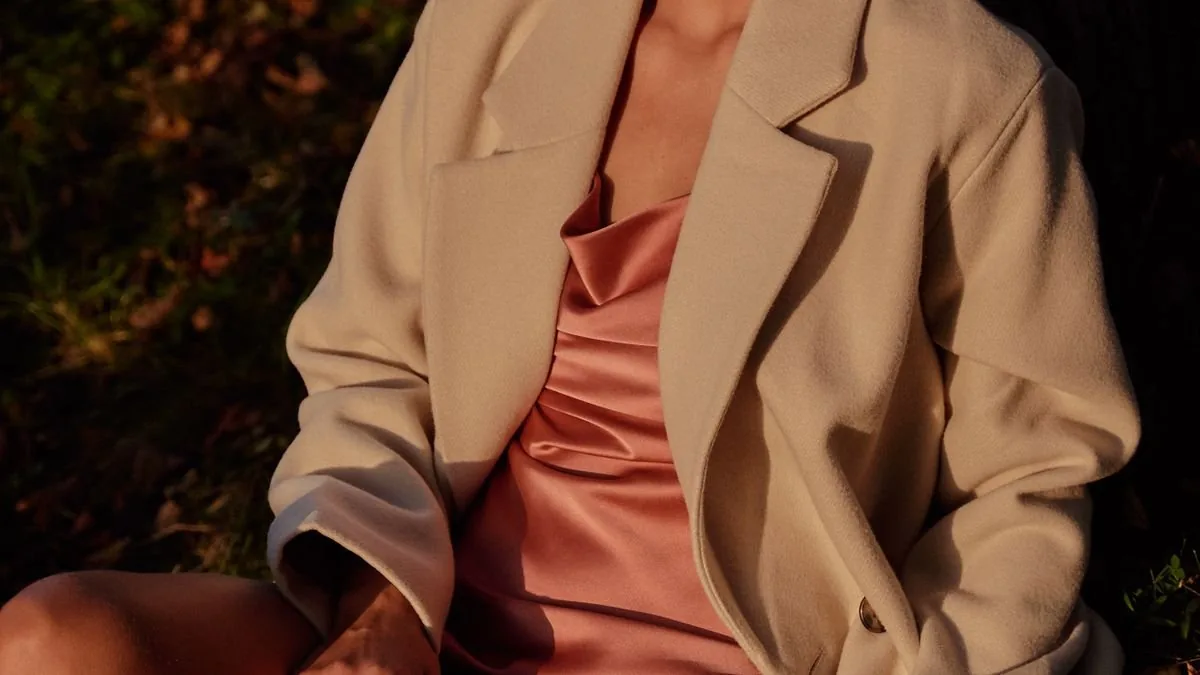
Winter is the hardest season for silk, but it is not impossible. The key is a long coat: a wool coat that falls to the same length as the dress or longer keeps the silhouette clean, while a short jacket cuts the outfit in half. Knee-high boots under a midi are warmer than tights, and a fine roll-neck under a sleeveless dress reads as a deliberate choice.
Shoes and accessories that suit silk
Shoes set the mood of a silk dress more than any other single choice. Flat sandals keep it casual and are the right call for daytime and holidays. A block heel is the workhorse: comfortable enough for a full day and smart enough for the office. A strappy heel is the evening choice. Trainers can work with a silk shirt dress, but only clean, simple white ones.
Jewellery should be simple, because silk already has a shine of its own. One focal piece — statement earrings, a bold cuff, or a pendant necklace — is enough; two start to compete with each other and with the dress. Gold suits warm tones like champagne and rust; silver suits cool tones like navy and emerald. Pearls are the classic partner for a silk dress.
Bags follow the same rule as shoes: match the weight of the bag to the occasion. A structured tote for work, a crossbody for daytime, a clutch for evening. A heavy, slouchy bag against a silk dress looks like a mistake. A slim leather belt at the natural waist can give an A-line or shirt dress definition — but a wrap dress needs no belt at all.
Colour, print and what to wear underneath
Colour pairing with silk is easier than it looks, because the sheen makes even simple combinations feel considered. A black silk dress takes any metal and any shoe colour. A navy silk dress pairs beautifully with tan leather accessories. An ivory or champagne silk dress suits gold jewellery and nude shoes. A red silk dress needs nothing more than simple black or nude accessories.
What you wear underneath a silk dress matters more than with any other fabric, because silk is thin, light and sometimes sheer. Seamless underwear close to your skin tone disappears under the fabric. A slip underneath stops the dress from clinging and adds opacity. For a low back, a low-back or stick-on bra is the practical answer. Our roundup of the best summer dresses of 2027 covers the cuts and fabrics that work hardest in the heat.
Your silk dress checklist
Run through this list before you leave the house, and most silk dress problems disappear before they start.
- Check the dress in daylight: hold it to a window and look for sheerness, creases and water marks indoor light hides.
- Steam, do not iron on high heat: a steamer relaxes silk safely, while a hot iron can scorch it.
- Do the sit test: sit in the dress and check the hem, neckline and where the fabric pulls before you commit.
- Match the shoe to the occasion, not the dress: flats for day, a block heel for work, a strappy heel for evening.
- One focal accessory only: a statement earring, a bold cuff or a pendant — never all three at once.
- Carry a small emergency kit: safety pins, a stain wipe and a spare hair tie fix most silk emergencies.
Common mistakes to avoid
The most common mistake is over-styling. A silk dress with a belt, a scarf, statement earrings, a bold bag and patterned shoes is five outfits competing at once. Silk needs space around it — remove one thing before you leave the house, and the outfit usually improves. The second mistake is the wrong layer: a heavy, unstructured cardigan slides, bunches and hides the shape of the dress. Layers over silk should have structure — a blazer, a leather jacket, a tailored coat — or be fine and close-fitting.
The third mistake is ignoring the care label. Silk is a natural protein fibre, and it does not forgive rough treatment the way cotton does. Hot water can shrink it, a hot iron can scorch it, and a splash of water left to dry unevenly can leave a ring. Most silk dresses are best hand-washed in cool water with a gentle detergent or dry-cleaned, and dried flat away from direct sun. The fourth mistake is buying the wrong size: silk has no stretch, so a tight dress pulls and a loose one hangs like a sack. Try it on, sit in it, and check it in daylight before you buy. For evening occasions, the best satin dresses of 2027 roundup is a useful companion read.
Frequently asked questions
Can you wear a silk dress to work?
Yes, if you choose the right cut and layer it well. A midi shirt dress or A-line in navy, black or another dark solid colour, worn with a tailored blazer and a block heel, is office-appropriate. Avoid slip dresses, very short hemlines and sheer fabrics at work.
Can you wear a silk dress in winter?
Yes. Wear a fine roll-neck under a sleeveless silk dress, add tights or knee-high boots, and finish with a long wool coat. Long-sleeve silk dresses in dark tones are the easiest winter option.
How do you stop a silk dress from clinging?
Wear a slip underneath, which puts a smooth layer between the dress and your skin. Anti-static spray helps on dry days. Heavier silk or silk blends cling less than very lightweight silk.
Are silk dresses still in style in 2027?
Yes. Silk dresses have been a constant on the runways and in street style for several seasons, and 2027 styling leans towards wearing them as everyday pieces — with blazers, leather jackets and flat shoes — rather than saving them for special occasions.
What shoes go best with a silk dress?
It depends on the occasion. Flat sandals for daytime and holidays, a block heel for work, a strappy heel for evening, and clean white trainers for a casual look with a shirt dress or printed midi. Keep the shoe light and simple.
How do you wash a silk dress?
Read the care label first, because some silk dresses are dry-clean only. Most others can be hand-washed in cool water with a gentle detergent, pressed gently to remove water — never wrung — and dried flat away from sun and radiators. Steam removes creases safely, and stains should be treated quickly with cool water and detergent rather than rubbed.
The bottom line
A silk dress earns its place in a wardrobe by being the simplest thing you own and the hardest working. Buy the right one — a bias-cut or A-line midi in a solid colour — and let the layers, shoes and accessories do the talking. One layer on top, shoes that match the occasion and a single focal piece of jewellery will carry you through work, a wedding and date night.
The 2027 version of the look is not about occasion dressing. It is about treating silk as an everyday fabric: a blazer over it for the office, a leather jacket over it for the evening, flat sandals with it on holiday. Start with fit and build the outfit around the occasion.
Note: fit and fabric vary between makers, so try a silk dress on and check it in daylight before you buy, and match the hem, coverage and dress code to each occasion before you wear it out.