A citrine ring is a warm buy in jewellery, and an easy one to overpay for. Two rings can look almost identical in a shop window yet differ enormously in colour, origin and price.
Citrine is the yellow to orange variety of quartz, coloured by trace iron, and the birthstone of November. It scores 7 on the Mohs scale, so it is hard enough for everyday wear, and it grows in large, clean crystals, so generous stones are affordable.
This guide covers what matters most before you buy: colour, heat treatment, sources, clarity and cut, settings and metals, prices, and paperwork.
Key takeaways
- Colour matters most: vivid, even golden yellow to orange, strong saturation, no brown cast, checked in daylight.
- Most citrine sold today began as amethyst, heated to turn it yellow or orange; the treatment is stable, but must be disclosed.
- Natural citrine is rare and usually pale lemon or champagne; a deep orange stone sold as rare and natural, without a lab report, should be treated as heated.
- Citrine scores 7 on the Mohs scale with no cleavage, so it suits everyday wear, but strong sunlight and heat can fade the colour over time.
- Fine citrine is eye-clean and affordable in large sizes, so pay for colour and cut, not size.
Start with colour, because it decides almost everything
With a diamond, cut usually comes first. With citrine, colour comes first and drives nearly all of the value. Judge colour by hue, tone and saturation: yellow to orange hue, medium tone, strong saturation. A good citrine holds its colour in daylight, not only under shop spotlights, so ask to see the ring by a window.
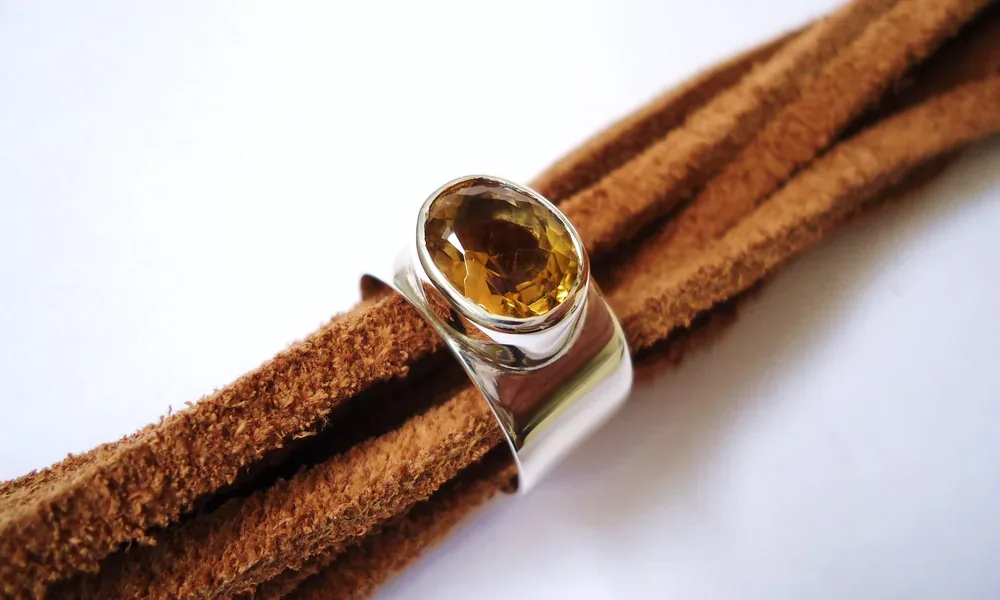
The finest citrines are vivid golden yellow to orange, with an even colour across the whole face. Watch out for the brown trap: too much brown pushes the colour toward a muddy shade, and a stone that looks rich gold under warm shop lighting can look flat and brownish in daylight.
Colour also decides how the ring wears with your other jewellery. A golden citrine is at its best in yellow gold, while a paler lemon stone looks fresh in white gold or platinum.
The three colours of citrine: lemon, golden and Madeira
Citrine is sold under three trade names that describe depth of colour, not origin. Lemon citrine is the lightest, a pale, fresh, cool yellow. Golden citrine is the warm medium yellow to yellow-orange most people mean by citrine. Madeira citrine is the deepest, a rich reddish-orange named after Madeira wine.
Here is the catch: natural citrine is usually pale. The soft lemon and champagne shades are most likely to be genuinely natural, while deep golden-orange and Madeira shades are almost always heat-treated amethyst. Heated citrine is still real quartz with stable, permanent colour. It simply means a deep orange stone should be priced as treated material, not as a rare natural gem.
Choose the shade against your skin rather than chasing the deepest colour. Lemon flatters fair skin and looks fresh with silver and white gold. Golden is the most versatile. Madeira is dramatic and suits evening wear, but check it in dim light, since the darkest stones can look almost brown indoors. If you are still deciding, our guide to the best non-diamond engagement rings of 2027 compares citrine with sapphire, emerald, ruby, morganite and moissanite.
Natural or heat-treated: the question that changes the price
This is the most important question to ask about any citrine ring, because it is where the money is. Natural citrine forms when iron-bearing quartz is heated by natural geological processes deep in the earth, and it is genuinely uncommon. The vivid golden and orange citrine filling shop windows is overwhelmingly heated amethyst, kiln-fired to roughly 470 to 560 degrees Celsius until the purple turned yellow or orange.
The treatment changes nothing about how the stone wears: same hardness of 7, same chemistry, same durability, and stable, permanent colour. The only thing it changes is the price: natural citrine retails at several times the price of heat-treated citrine of comparable size and quality.
Telling the two apart by eye is difficult, and no home test settles it. Natural citrine tends to be paler and more evenly coloured, while heated stones tend toward a reddish or burnt-orange tone. These are hints, not proof. If a seller charges a natural premium, ask for a lab report. If there is no report, assume heated and pay the heated price.
Where citrine comes from, and why origin matters
Brazil is the main source of citrine, supplying most of the amethyst that is heated to make commercial citrine as well as much of the natural material. Brazilian stones are the trade benchmark: clean, well-coloured and affordable. Madagascar is another important source, known for pale to medium yellow stones.
Bolivia contributes something unusual: the Anahi mine produces ametrine, a single crystal that is amethyst at one end and citrine at the other. Origin matters less for citrine than for sapphire or ruby, because citrine is not priced by mine. What it tells you is treatment: a deep orange stone from a Brazilian amethyst deposit is almost certainly heated, while a pale lemon stone from Madagascar is more plausibly natural.
Clarity and cut: what to look for
Fine citrine is eye-clean, and there is more than enough clean material that you should never pay for visible inclusions. Look with the naked eye in good light: tiny inclusions seen only under magnification are acceptable, but any cloudiness, crack or dark speck visible without help is a poor buy.
Cut matters more with citrine than with most stones, because citrine is often cut for weight rather than beauty. A stone cut too deep looks dark and sleepy, while one cut too shallow shows a pale window in the centre where light leaks through and the colour disappears. Hold the ring at arm’s length: the colour should be even across the whole face, with no washed-out centre and no dead, dark corners. Oval and cushion cuts are classic; step cuts suit paler lemon stones. Our diamond buying guide explains the same cut principles, and they apply to coloured stones too.
Settings and metals that suit a citrine
Citrine is a friendly stone to set, because its hardness of 7 and lack of cleavage mean it does not need the protective armour softer stones demand. A classic four-prong solitaire suits it well and lets maximum light in. A bezel setting, where a rim of metal wraps the stone’s edge, gives more protection and a clean, modern look.
A halo of small diamonds around a citrine centre stone flatters a paler stone, because the white diamonds make the yellow look deeper by contrast. For deep Madeira, a plain solitaire or three-stone setting is often better. Yellow gold is the natural partner for golden and Madeira citrine, while white gold, platinum and silver suit lemon citrine. For everyday wear, choose a low profile so the ring does not snag; our guide to the best gold jewellery for everyday wear covers the metals and finishes that hold up best.
Size, carat and what a citrine ring should cost
Citrine is one of the cheapest fine coloured stones, and large stones are affordable. That is also why size is the wrong place to spend your money. A vivid, well-cut two-carat stone beats a pale five-carat stone every time.
Loose citrine trades at modest per-carat prices, set by colour and treatment rather than size. Standard heated citrine in lemon to golden shades often runs from around $10 to $30 per carat, deep Madeira shades from around $20 to $60 per carat, and documented natural citrine, usually pale yellow, from around $30 to $80 per carat. Large clean stones of ten carats or more are realistic on a modest budget.
For a finished ring, a one- to two-carat golden citrine solitaire in 14k gold often runs from around $300 to $900, while a fine three- to five-carat vivid stone in a diamond halo can run from around $1,000 to $3,000 or more, with most of the price in the metal and setting. A documented natural citrine, or a fine Madeira stone in a precision cut, commands a real premium by citrine standards.
Citrine at a glance
| Quality | What to look for |
|---|---|
| Mineral | Quartz, coloured yellow to orange by trace iron |
| Hardness | 7 on the Mohs scale, no cleavage, good for everyday wear |
| Colour | Lemon, golden, deep Madeira orange; even, no brown cast |
| Treatment | Most is heat-treated amethyst; stable, must be disclosed |
| Clarity | Eye-clean is normal; reject visible inclusions or cracks |
| Cut | Even colour across the face, no pale window, no dead corners |
| Sources | Brazil the main source, plus Madagascar, Bolivia, Spain and Russia |
| Care | Warm soapy water; avoid prolonged strong sun and heat |
Certificates, sellers and the paperwork that protects you
For an ordinary citrine ring, a full lab report is rarely necessary, because the stone is inexpensive and the report would be a large part of the price. Always get the treatment disclosure in writing: natural or heat-treated. A reputable seller states this on the receipt without being asked.
For an expensive stone — a documented natural citrine, a fine Madeira stone, or any stone priced on a claim of rarity — ask for an independent lab report from a recognised laboratory such as GIA, confirming natural quartz and stating its treatment. Buy from a seller with a clear return policy, and check the ring on arrival: the stone should be secure, the prongs even and smooth, and the colour should match what you saw in the shop.
Checklist: what to look for in a citrine ring
- Judge the colour in daylight: vivid, even golden yellow to orange, strong saturation, no brown cast.
- Ask the treatment question first: natural or heat-treated, in writing, and pay the heated price unless a lab report proves natural.
- Check the clarity: eye-clean, no cloudiness, visible inclusions or surface-reaching cracks.
- Check the cut: no washed-out window in the centre, no dead dark corners, even colour across the face.
- Choose the shade for your skin: lemon for fair skin and cool metals, golden for versatility, Madeira for evening.
- Choose the setting for how you will wear it: low-profile solitaire or bezel for everyday wear, a halo to deepen a paler stone.
Frequently asked questions
What is the most important thing to look for in a citrine ring?
Colour, judged in daylight, and treatment. A vivid, even golden yellow to orange with no brown cast matters most, and you should know whether the stone is natural or heat-treated before paying.
Is citrine a real gemstone?
Yes. Citrine is the yellow to orange variety of quartz, and heat-treated citrine still counts as citrine. Heat-treated citrine is real quartz whose colour was changed by heating amethyst, and the treatment is stable and accepted when disclosed.
Is a citrine ring durable enough for everyday wear?
Yes. Citrine scores 7 on the Mohs scale and has no cleavage, so it is hard and tough enough for daily wear. A low-profile setting protects it further, and removing the ring for rough work keeps it looking its best.
How can you tell a real citrine from a fake one?
By a lab report and by the price. Real citrine is quartz, while glass imitations are softer, often contain round bubbles, and feel warmer to the touch. Natural versus heat-treated is harder, and only a gemmologist’s instruments settle it.
How much should a citrine ring cost?
A one- to two-carat golden citrine solitaire in 14k gold often runs from around $300 to $900, while a fine three- to five-carat vivid stone in a diamond halo can run from around $1,000 to $3,000 or more.
How do you care for a citrine ring?
Clean it with warm soapy water and a soft brush, then rinse and dry. An ultrasonic cleaner is generally safe, but avoid prolonged strong sunlight or intense heat, which can fade the colour over time.
The bottom line
A good citrine ring is bought in a clear order: judge the colour first, in daylight, then ask the treatment question and get the answer in writing, then check clarity and cut, then choose a setting and metal to suit the shade. Pay a premium only for a stone with a lab report behind it.
Note: Prices here are indicative 2027 ranges, not quotes, and vary with colour, size, origin, treatment and seller. Confirm the treatment, identity and price of the exact stone in writing before you pay.