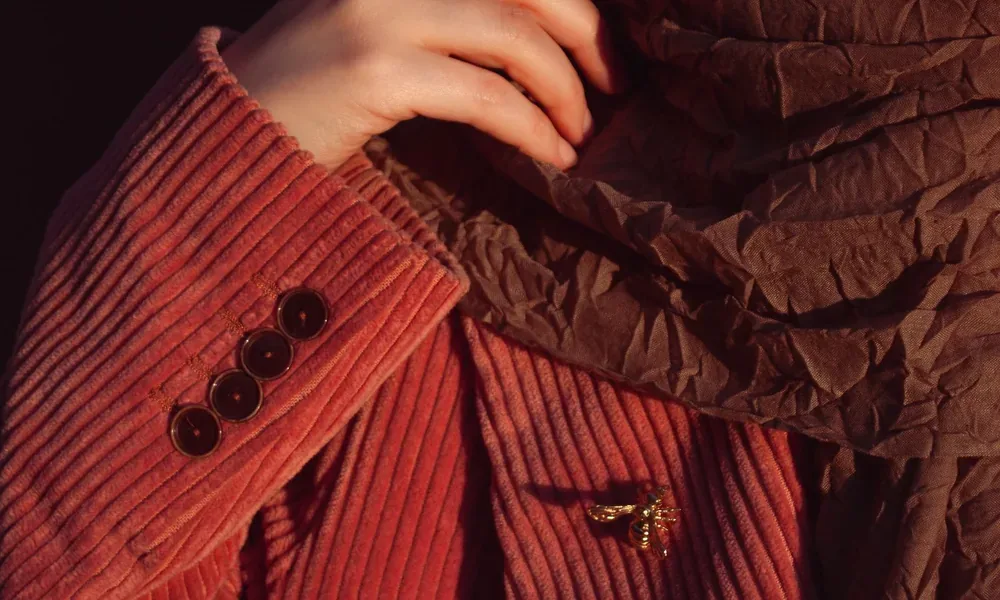
A corduroy blazer is the smartest way to wear corduroy: the warmth and texture of the fabric in a tailored shape, with notched lapels, a defined shoulder, a buttoned front and a hip-length hem. It works where a corduroy trucker jacket would feel too casual, from a client meeting to a smart dinner, while feeling softer than a wool blazer.
Treat the blazer as the tailored half of the outfit and let everything else stay simple. The ribs already add texture and the cut already adds structure, so the pieces underneath can be plain: a smooth shirt, a fine knit, straight trousers. When the rest is quiet, the blazer reads as polished.
This guide stays strictly on the blazer: its cut, the wale and weight, the colours that work hardest, seven outfit formulas, what to wear under it, occasions and seasons, and the fit and care habits that keep it looking sharp.
Key takeaways
- A corduroy blazer is a tailored piece: style it with a shirt or fine knit underneath and trousers that hold a clean line.
- Fine wale reads smarter, suiting work and evening; wide wale reads bolder, so save it for weekends.
- Let the corduroy be the only strong texture; keep everything else smooth.
- Brown, camel, navy and olive are the easiest colours to build around.
- Fit makes it look expensive: flat shoulders, a sleeve showing a sliver of cuff, and a length that covers the seat.
What makes a corduroy blazer different
A blazer is defined by its tailoring. Unlike a trucker jacket, which is boxy with a button front and chest pockets, or an overshirt, which hangs like a shirt, a corduroy blazer has a shaped body, notched lapel, chest pocket and one or two buttons. It sits on the shoulders and follows the waist, so it can carry a shirt and tie and sharpen jeans in a way a looser corduroy jacket cannot.
The fabric does two things a wool blazer does not. First, the ribs catch the light, so a plain brown or navy blazer never looks flat. Second, corduroy is soft and warm without the stiffness of worsted wool, so the blazer drapes gently and feels comfortable worn open all day. An unstructured blazer with no padding can collapse into a cardigan shape, so check the shoulders hold their line.
Choose the blazer cut first
The single-breasted, two-button blazer is the safest first buy. It suits most body shapes, buttons cleanly over a shirt or thin sweater, and works open or closed. Look for a medium-width notched lapel: very wide lapels look seventies, very narrow ones get lost against the ribs. A double-breasted version is bolder and suits taller frames, worn buttoned with plain trousers.
The unstructured blazer, with little or no shoulder padding, is the relaxed end of the range. It feels like a cardigan but looks like a blazer, ideal for creative offices and long days. Pair it with a T-shirt or a fine roll neck and straight trousers. Our guide to the best blazers for women in 2027 covers these cuts in more detail, from sharp single-breasted shapes to softer unstructured styles.
Wale and weight: the two numbers that matter
Corduroy is measured by its wale, the number of ribs per inch, and the wale decides how formal the blazer looks. Fine wale looks smooth from a distance and reads as smart, the right choice for work and dinners. Medium wale is the versatile middle: visible texture without shouting. Wide wale is a statement; wonderful at the weekend but too loud for a formal office.
Weight matters just as much. A lightweight corduroy blazer, often blended with a little cotton or elastane, works from early autumn into spring and layers easily over a shirt. A heavier, pure-cotton blazer is a proper cold-weather piece, better over a knit. If your winters are mild, one medium-weight blazer in a fine or medium wale covers most of the year.
The colours that work hardest
Dark brown is the classic corduroy blazer colour. It pairs with cream, white, navy, olive and denim, and looks richer as the fabric ages. A chocolate-brown blazer with a white shirt and dark jeans is one of the most reliable smart-casual outfits there is; the same blazer over a cream roll neck works for dinner.
Camel and tan brighten an autumn wardrobe and look best with navy, charcoal, burgundy and cream. Keep the trousers darker than the blazer, and avoid pairing camel corduroy with beige trousers, which washes the look out. Navy is the most formal option. Olive and forest green are the quiet fashion choice. Rust and burgundy are accent colours; buy one only after owning a neutral.
Seven corduroy blazer outfits that always work
These seven formulas are built around the blazer itself, using pieces most people already own. Each one changes the mood of the blazer with a single swap underneath or below.
| Occasion | Blazer | Underneath | Bottoms | Shoes |
|---|---|---|---|---|
| Smart-casual office | Navy fine-wale, single-breasted | White or pale-blue shirt | Charcoal tailored trousers | Dark leather loafers |
| Client meeting | Dark brown fine-wale | White shirt, muted tie | Navy tailored trousers | Polished Oxford shoes |
| Autumn weekend | Camel medium-wale | Cream crew-neck knit | Dark straight-leg jeans | Suede Chelsea boots |
| Dinner out | Burgundy or rust medium-wale | Black fine roll neck | Black slim trousers | Black leather boots |
| Creative workplace | Olive unstructured | White T-shirt | Stone chinos | Clean white trainers |
| Smart daytime event | Tan single-breasted | Silk blouse or shirt | High-waisted wide-leg trousers | Pointed flats or heels |
| Winter layering | Chocolate heavyweight | Fine turtleneck, scarf | Dark smooth wool trousers | Leather ankle boots |
Notice what the table never does: it never pairs the blazer with corduroy trousers. A matching corduroy suit can work, but only in the same fabric and dye lot; mixing two different corduroys almost always looks like an accident. Keep the bottoms smooth, and the blazer owns the texture.
What to wear under a corduroy blazer
A crisp cotton shirt is the most versatile layer. White works with every colour of corduroy, pale blue softens navy and brown, and a subtle stripe adds interest without competing with the ribs. Keep the shirt tucked in when the blazer is buttoned; an untucked tail under a tailored blazer looks unfinished.
A fine-gauge roll neck or crew-neck knit is the cold-weather answer: warmth without bulk, since a chunky sweater under a tailored blazer strains the buttons and ruins the shoulder line. Choose a smooth merino or cashmere-blend knit in cream, black, navy or charcoal. A T-shirt works only with an unstructured or oversized blazer: plain, good quality, no logos. A knitted tie in a muted colour suits the blazer; skip wide, shiny ties, which fight the matte corduroy.
Styling the blazer for different occasions
For work, the formula is simple: fine wale, dark colour, shirt, tailored trousers, leather shoes. Button the blazer when you stand and unbutton it when you sit, so the fabric does not crease across the waist. In a formal office, keep it buttoned for meetings and choose navy or dark brown.
For evenings, let the blazer dress up rather than down. A dark corduroy blazer over a black roll neck with slim black trousers and polished boots reads as evening-appropriate without a suit, and a burgundy or rust blazer adds colour without a tie. For weekends, wear it open over a knit or a T-shirt, with jeans or chinos and boots or trainers. For daytime events such as a lunch or a gallery visit, a camel or tan blazer with a silk blouse and wide-leg trousers strikes the right note. If you want to build a full tailored wardrobe around pieces like this, our guide to the best power suits for women in 2027 shows how a strong blazer anchors a suit as well as one outfit.
How to wear it through the seasons
Autumn is the corduroy blazer’s home season: wear it as your main outer layer over a shirt, with a scarf on colder mornings. Winter is about layering underneath rather than over the top: a fine roll neck, a thin thermal if needed, and a wool overcoat outside. Never force a heavy knit underneath; if the blazer will not button, the layer is too thick.
Spring is the shoulder season where the blazer earns its keep: a lightweight blazer over a T-shirt or a linen-blend shirt works on cool spring days, especially in camel or tan. Summer is the one season to rest it: corduroy is warm, and linen or cotton is more comfortable. If a summer evening turns cool, a lightweight unstructured blazer over a simple dress is the exception: keep it open and the colours light.
Fit and care that keep it looking sharp
Fit is checked in four places. The shoulders should end at your shoulders, with no droop and no pulling. The button should close without strain and without a gap. The sleeve should end at the wrist bone, showing about a centimetre of shirt cuff. The hem should cover the seat and end around mid-hip. Between sizes, choose the larger one and have the waist taken in: a tailor can fix a loose body, but not shoulders that are too tight.
Care is simple. Brush the blazer with a soft clothes brush after wearing, and hang it on a wide, shaped hanger so the shoulders keep their line. Spot-clean small marks, and dry-clean only when truly needed, because repeated dry cleaning flattens the pile. Never iron corduroy directly: steam it from a distance, or press it inside out with a cloth between iron and fabric. Do not pair it with another strong texture on top: one texture per outfit is the rule, and the blazer gets the slot.
Your corduroy blazer checklist
- Shoulders sit flat, with no droop or pulling across the chest.
- Wale matches the occasion: fine for work and evening, wide for weekends.
- Only one strong texture in the outfit, and it is the blazer.
- Underneath is smooth and slim: a shirt, a fine knit or a plain T-shirt.
- Bottoms are smooth, darker or contrasting, never matching corduroy.
- Blazer is brushed, hung on a wide hanger, steamed, never ironed directly.
Frequently asked questions
Can you wear a corduroy blazer to work?
Yes, in most offices. Choose a fine-wale blazer in navy, dark brown or charcoal, with a shirt and tailored trousers, and keep the rest of the outfit smooth and plain. In a very formal office, a wool blazer is still safer.
What is the difference between a corduroy blazer and a corduroy jacket?
The blazer is tailored: shaped shoulders, notched lapels, a buttoned front and a hip-length hem. A corduroy jacket is a looser category: trucker jackets and overshirts, boxier, shorter and more casual.
Can you wear a corduroy blazer with jeans?
Yes, and it is one of the best pairings. Choose dark, straight-leg jeans in a smooth wash with no rips, and let the blazer be the textured piece. Light-wash jeans suit dark brown; dark jeans suit camel or tan.
How do you stop a corduroy blazer looking dated?
Keep everything else modern and simple: current shapes such as straight-leg trousers, a clean white shirt or a fine roll neck, and minimal accessories. The dated look comes from head-to-toe vintage styling.
Should a corduroy blazer be single or double-breasted?
Single-breasted is the safer first buy: it suits most body shapes and most occasions. Double-breasted is bolder and looks best on taller frames, worn buttoned with plain trousers.
How do you clean a corduroy blazer without ruining it?
Brush it after wearing, spot-clean small marks, and dry-clean only when necessary, since repeated dry cleaning flattens the ribs. Steam rather than iron, hang it on a wide hanger, and store it out of direct sunlight.
The bottom line
A corduroy blazer earns its place by doing two jobs at once: it brings the warmth and texture of corduroy into rooms where a casual jacket would not belong, and it softens tailoring so a smart outfit never feels stiff. Choose the cut first, match the wale to the occasion, keep everything else smooth, and let the blazer be the one texture. For a looser take, our guide to how to style an oversized blazer shows how a relaxed blazer shape changes the same rules.
Note: Styling is personal, and the best outfit is the one you feel comfortable in. Use these formulas as a starting point, try them with pieces you already own, and keep the blazer that fits your shoulders, your climate and your everyday life.