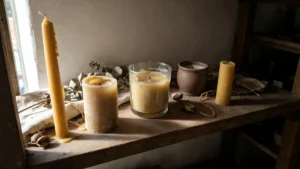
A luxury candle is one of the easiest small luxuries to buy and one of the easiest to get wrong. The jars are beautiful, the scent descriptions are tempting, and the price feels like a promise. The difference between a candle you love and a candle you regret is rarely the brand. It is the choice.
The problem is that candle shopping gives you very little to go on. You cannot test a candle properly in a shop, because a cold sniff from a jar is not the same as an hour of burning in your own room. The label tells you the scent notes and the burn time, but not whether the scent will fill a small bedroom or disappear in a large living room, and not whether the wax will burn evenly or tunnel after a week.
This guide walks through the nine decisions that matter, in the order you should make them, from the room itself to the first burn. If you want a shortlist of names to start from, our guide to the best luxury candle brands is a good companion, but the steps below matter more than any single recommendation.
Key takeaways
- Start with the room, not the scent: size, airflow and purpose decide the candle before you smell anything.
- Soy, coconut and vegetable wax blends usually burn more cleanly than paraffin, and a single cotton wick suits most rooms.
- Read the scent notes like a menu, and choose a scent family that fits the room and the season, not just the prettiest name.
- Check the burn time against the jar size, and remember the first burn decides whether the candle tunnels or burns evenly.
- No candle fixes a damp, stuffy or poorly ventilated room, and a candle that smokes, gives you a headache, or smells wrong at home should be returned or replaced.
What choosing a luxury candle actually involves
Choosing a candle is really choosing a scent for a specific room, at a specific time of day, for a specific purpose. Once you see the choice that way, the shelf stops being overwhelming, because most candles can be ruled out in seconds.
That is the first shift to make. A small, quiet bedroom needs a soft, low-throw candle. A large living room with high ceilings needs a bigger candle, or two, with a stronger throw. A bathroom needs a fresh, clean scent that cuts through steam. A dining room needs something subtle, because a strong scent competes with food. The room is the brief. The candle is the answer.
The second shift is to treat the label as a starting point, not a verdict. Scent notes are a guide to what you might smell, but they do not tell you how strong the candle is, how long the scent lasts, or how it changes as the wax melts. The only honest test is burning the candle in your own room, which is why the steps below end with a test burn and a clear rule for what to do if the candle does not suit the room.
How to judge a candle before you buy it
Judge a candle in four places: the wax, the wick, the jar, and the scent. The wax tells you how cleanly it will burn. Soy, coconut and vegetable wax blends are the usual choice for a luxury candle, because they burn slowly and evenly, with less soot than paraffin.

The wick tells you how the flame will behave. A single cotton wick suits a small or medium candle. A large candle needs two or three wicks to melt the wax evenly across a wide jar, but it also throws more scent, so it is better for a large room.
The jar tells you about the burn and the afterlife. A heavy, thick-walled glass jar holds heat well and is less likely to crack, and it can be reused as a pen pot, a vase, or a storage jar when the wax is gone. A thin or uneven jar is a warning sign. The scent, finally, should be judged with the lid on first, then with the lid off, and never after smelling five other candles in a row, because your nose stops telling the truth after the third or fourth.
9 steps to choosing a luxury candle
Start with the room, not the scent
What to do: Measure the room in your head before you shop. A small bedroom or bathroom needs a small, soft candle. A large living room needs a large candle, or two smaller ones at opposite ends.
What to avoid: Do not buy a candle because it smells wonderful in a large, airy shop. Best for: Every buyer, before anything else. Time needed: Five minutes of thinking before you leave the house. Standout tip: Write down the room and its size before you shop, and do not buy a candle that does not match it.
Choose the wax
What to do: Look for soy, coconut, or a vegetable wax blend on the label. These waxes burn slowly and evenly, with less soot, and they hold scent well. If you want to understand the differences properly, our guide to soy wax candles and what to know before buying explains what the wax does to the burn.
What to avoid: Do not assume a candle is soy just because the label says natural. Best for: Anyone who burns candles often, or in a small room. Time needed: Two minutes reading the label. Standout tip: A candle that names its wax is usually made by a house that cares about the burn, not just the scent.
Check the burn time honestly
What to do: Compare the burn time to the size of the candle.
What to avoid: Do not trust a burn time without checking the wax weight. Best for: Anyone comparing candles at different prices. Time needed: Three minutes with a calculator. Standout tip: Cost per hour, not the price on the jar, is the honest way to compare luxury candles.
Read the scent notes like a menu
What to do: Read the top, heart and base notes as a description of how the scent changes over time.
What to avoid: Do not buy a candle for a single note you love if the rest of the blend does not suit you. Best for: Anyone who has been disappointed by a candle that smelled different at home. Time needed: Five minutes reading and smelling. Standout tip: The heart note is the real scent; the top note is only the first impression.
Match the scent strength to the room size
What to do: Ask how strong the throw is, and match it to the room. A small room needs a soft or low-throw candle. A large room needs a stronger throw, a bigger candle, or two candles.
What to avoid: Do not put a strong, multi-wick candle in a small bedroom, and do not expect a small, soft candle to scent a large living room. Best for: Small rooms and open-plan spaces, where the wrong strength is most obvious. Time needed: Two minutes of smelling at a distance. Standout tip: If you can smell it from the doorway, it is strong enough for that room.
Check the wick
What to do: Look at the wick before you buy. It should sit straight in the centre of the jar, and it should be cotton, wood, or a clean-burning blend. A wick that leans to one side means the candle will burn unevenly and leave wax stuck to one side of the jar.
What to avoid: Do not buy a candle with a wick that is bent, off-centre, or buried in wax. Best for: Anyone who has had a candle tunnel or burn to one side. Time needed: One minute of looking. Standout tip: A straight, centred wick is the single best sign of a well-made candle.
Look at the vessel and what happens after
What to do: Choose a jar you would be happy to keep. A heavy, well-made glass jar becomes a pen pot, a small vase, or a storage jar long after the wax is gone, and that reuse is part of the value of a luxury candle.
What to avoid: Do not pay a premium for a jar you dislike, or for a vessel so thin it feels fragile. Best for: Anyone who keeps beautiful objects, and anyone buying a candle as a gift. Time needed: Two minutes of handling the jar. Standout tip: If you would not keep the empty jar, the candle is probably not worth its price.
Test it in your own room before committing
What to do: Burn the candle in the room it is meant for, for one to two hours, and pay attention to how the scent behaves. The answers tell you whether the candle suits the room, and no shop test can replace them.
What to avoid: Do not judge a candle on the first ten minutes. Give it a full hour before you decide. Best for: Every candle, every time. Time needed: One to two hours of burning, once. Standout tip: Keep the receipt and the box until you have done the test burn, so you can return a candle that does not suit the room.
Plan the burn routine
What to do: Learn the three habits that make any candle last longer and burn better. First, let the first burn last one to two hours, until the wax melts all the way to the edge of the jar. Second, trim the wick to about five millimetres before each burn. Third, never burn a candle for more than three to four hours at a time, and never leave it unattended.
What to avoid: If wax spills on fabric, our guide to removing candle wax from fabric will help, but prevention is easier than cleaning. Best for: Anyone who wants the full value from a luxury candle. Time needed: Two minutes per burn. Standout tip: The first burn decides the whole life of the candle, so do not rush it.
Which candle is right for which room
A bedroom needs a soft, calming candle. Lavender, cedar, sandalwood, vetiver and soft amber are the most reliable choices, because they are gentle and low-key, and they suit the last hour of the day. A hallway or entrance needs a welcoming scent that is noticeable for a moment and then fades, so a fresh, green candle works well there.
A bathroom needs a clean, fresh scent that can stand up to steam, so citrus, eucalyptus, or a light floral works better than a heavy amber or a rich vanilla. A dining room needs the subtlest candle of all, because a strong scent competes with food, and a candle that smells wonderful on its own can ruin a meal.
The season matters too. Warm, woody and spiced candles suit autumn and winter, when rooms are closed and the air is still. Fresh, green and citrus candles suit spring and summer, when windows are open and the room is already warm. A candle that feels perfect in December can feel heavy in July, and the honest answer is to have two or three candles for different seasons, rather than one candle for the whole year.
The caveats that matter
Candles are simple, but they are not risk-free, and the most common mistakes are easy to avoid. Never leave a burning candle unattended, never burn one for more than three to four hours, and never place one near curtains, bedding, books, or anything that can catch fire.
| Detail | What is known |
|---|---|
| First decision | The room: size, airflow, and purpose come before the scent |
| Best wax | Soy, coconut, or vegetable wax blends, which burn cleanly |
| Burn time, large candle | 45 to 60 hours; small candles around 25 to 35 hours |
| First burn | One to two hours, until the wax melts to the edge of the jar |
| Maximum burn per session | Three to four hours, then let the candle cool before relighting |
| Wick care | Trim to about five millimetres before each burn |
| Who should be cautious | People with asthma, allergies, or fragrance sensitivity |
| What a candle does not do | It does not fix a damp, stuffy, or poorly ventilated room |
If a candle makes you cough, gives you a headache, or makes your eyes sting, stop using it. That is not a sign that all candles are bad for you, only that this scent, this strength, or this room is a poor match. And if you have asthma, allergies, or a strong sensitivity to fragrance, a candle may not suit your home at all. An unscented candle for light, or no candle, is the honest answer, and your home will be better for it.
Checklist: choosing a luxury candle honestly
Use these checks before you buy, and again after the first test burn at home.
- Check the room first: size, airflow and purpose decide the candle before you smell anything.
- Check the wax: soy, coconut, or vegetable wax blends usually burn more cleanly than paraffin.
- Check the wick: it should sit straight in the centre, and the wax surface should look smooth and even.
- Check the burn time: a large candle should offer roughly 45 to 60 hours, and the first burn should reach the edge of the jar.
- Check the scent at home: burn for one to two hours in the room it is meant for, and keep the receipt until you have done the test.
- Check how you feel: if it gives you a headache or makes you cough, stop using it and try a gentler scent or a smaller candle.
Frequently asked questions
How much should I spend on a luxury candle?
A good luxury candle usually costs between £35 and £85, depending on the house and the size. Divide the price by the burn time to get the cost per hour, and you will often find that a dearer candle with a long burn is cheaper per hour than a cheaper one that burns away quickly.
Why does my candle smell different at home than in the shop?
Shops are large, airy rooms, and your home is smaller, warmer, and full of other scents. A candle that smells gentle in a shop can feel strong in a small room, and a candle that smells strong in a shop can disappear in a large living room.
How do I stop my candle from tunnelling?
Let the first burn last one to two hours, until the whole wax surface is liquid and reaches the edge of the jar.
Is soy wax better than paraffin?
Usually, yes, for a home candle. Soy and vegetable wax blends burn more slowly and evenly, with less soot, which suits small rooms well.
How long should I burn a candle each time?
One to two hours is ideal for most candles, and never more than three to four hours. An hour before bed, or an hour in the evening, is enough for most rooms.
Can I burn a candle if I have asthma or allergies?
It depends on the person. Some people with asthma or fragrance sensitivity find candles irritating, while others are fine with a small, clean-burning soy candle in a ventilated room. If in doubt, choose an unscented candle for light, or skip candles in that room.
The bottom line
Choosing a luxury candle is not about finding the most expensive jar or the prettiest scent description. It is about matching a candle to a room, a season, and a purpose, and then burning it properly. Start with the room, choose a clean-burning wax, read the scent notes like a menu, match the strength to the space, and test the candle at home before you decide it is the right one.
Burn it for an hour in the room it is meant for, trim the wick, and judge it on how the room feels after a week, not on how it smells in the shop. That is the honest way to choose a luxury candle, and it is how a small luxury becomes a real part of your home, rather than another beautiful jar you never light.