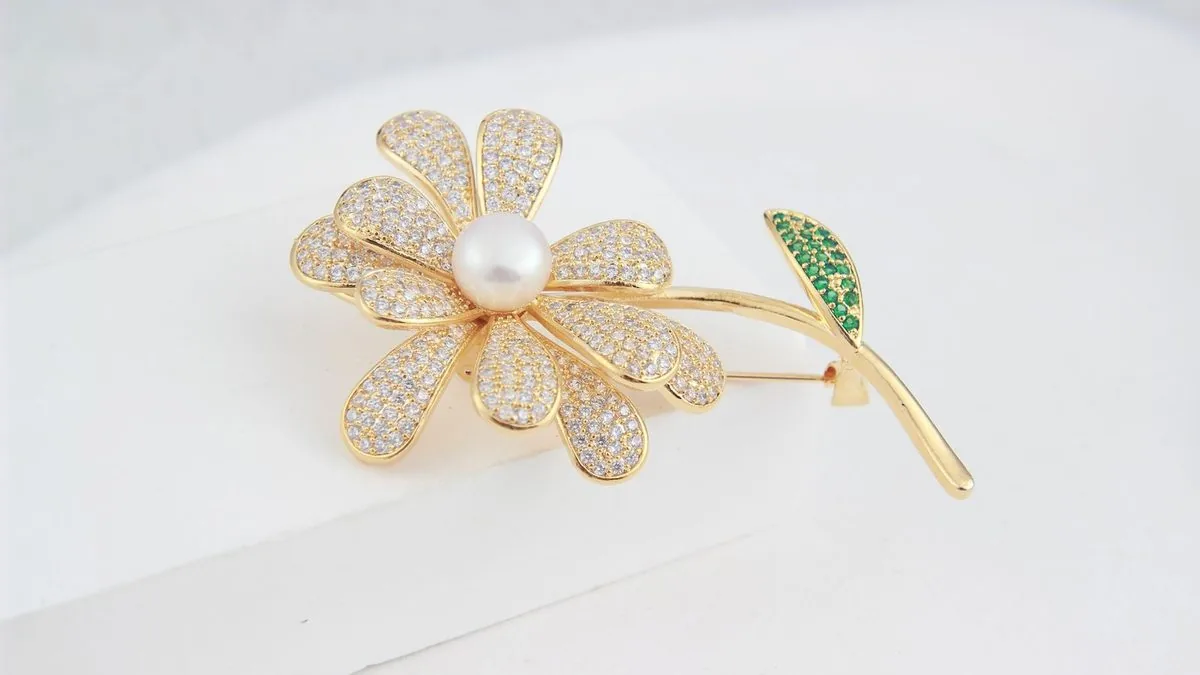

A pearl brooch is the most forgiving piece of pearl jewellery you can buy. Unlike a ring, it never knocks against a door handle. It sits on fabric, in full view: one bright pearl, held by a pin you can barely see.
That is why the details matter more than the size. A dull pearl looks flat from across a room, however large the stone. A weak pin droops, spins, or falls off a coat in a crowd. The right brooch goes from a blazer to a scarf to a handbag without a second thought.
This guide covers pearl type, lustre, nacre, size, setting, metal, the pin and clasp, and styling, so you can judge a brooch in five minutes.
Key takeaways
- Lustre comes first: a bright, sharp reflection beats a larger, duller pearl every time.
- On a brooch, the pin and clasp matter as much as the pearl: a stiff pin and a secure catch keep it on.
- Freshwater pearls offer the best value, while Akoya pearls give the brightest, most classic lustre.
- Choose 8 to 12 millimetres for a single-pearl brooch, and check the weight on the fabric you actually wear.
- Test the brooch on a lapel before you pay: it should sit flat, point the right way, and stay put when you walk.
Start with the pearl type, not the price tag
The four types you will meet are freshwater, Akoya, South Sea and Tahitian. Freshwater pearls are nearly solid nacre, which makes them hard-wearing and good value. Akoya pearls are smaller and rounder, with the sharpest, brightest lustre of any pearl. South Sea pearls are the largest, with a soft satin glow. Tahitian pearls are dark, with grey, green and peacock overtones.
For a brooch, freshwater is the sensible default: it does not need the mirror lustre of an Akoya to look good at lapel distance, and freshwater pearls come in the baroque and drop shapes that suit brooch designs best. A single round freshwater pearl of 9 or 10 millimetres, well chosen, looks expensive and wears for decades. Akoya suits a classic, formal brooch. South Sea and Tahitian pearls belong in statement brooches: one fine pearl, rather than a whole matched strand. Be wary of prices that look too good: a brooch advertised as a South Sea pearl for the price of a freshwater one is not one.
Lustre and nacre decide how long it glows
Gemologists judge pearls on seven factors. There is no single worldwide grading scale, so letter grades such as AAA are set by each seller. Of the seven, lustre matters most: the sharpness and brightness of the light a pearl returns. A high-lustre pearl shows a crisp, mirror-like reflection, while a low-lustre pearl looks milky, flat or chalky.
Judge lustre in daylight, not under shop spotlights. Hold the brooch near a window and tilt it: if your reflection stays clear and bright, the lustre is strong. If it smears or fades, the pearl is dull, and no setting will fix it. Nacre decides how long the beauty lasts: thick nacre keeps a pearl glowing for decades, while thin nacre turns chalky and can chip. Check the drill hole with a loupe: a clean, narrow hole with no flaking is a good sign. To compare the wider range, browse our guide to the best pearl jewellery of 2027.
Size, shape and colour for a brooch
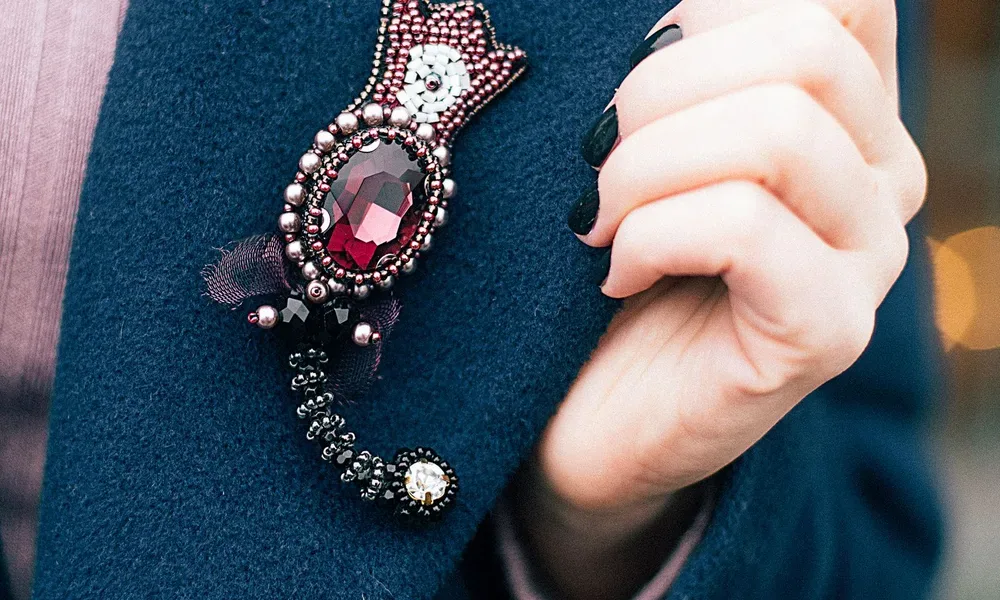
Size works differently on a brooch. A necklace pearl of 7 millimetres looks generous; on a brooch, the same pearl can look lost if the setting is large. For a single-pearl brooch, 8 to 12 millimetres suits most wearers. Below 8 millimetres, the pearl reads as a stud. Above 12 millimetres, the brooch gets heavy: a heavy pearl pulls the fabric forward and works the pin loose.
Shape is where brooches have the most freedom. Round pearls suit classic designs. Drop and pear shapes suit floral designs, where the pearl hangs like a petal. Baroque pearls suit modern brooches, and they are often the best value, because their irregularity is part of the design. Colour should flatter your wardrobe: white pearls with a pink overtone suit cool wardrobes, cream and golden pearls suit warm ones, and dark Tahitian pearls suit dark coats.
The setting and the metal
On a brooch, the setting has two jobs: to show the pearl and to hold it. A simple cup setting shows the most pearl and suits a single large stone. A bezel, a rim of metal around the pearl’s edge, protects it and suits everyday brooches. A halo of small diamonds adds sparkle and makes the pearl look larger, but it adds weight and cost. For a first pearl brooch, a slim cup or bezel is the safest choice: the pearl does the talking.
Check the setting the way a jeweller would. The pearl should sit straight, not tilted, and the prongs or rim should grip it evenly, with no gap you can see light through. Shake the brooch near your ear: a rattle means the pearl is loose. A well-made brooch has a finished back, smooth edges, and no rough solder or sharp points that snag knitwear. Yellow gold warms white and golden pearls; white gold and platinum suit cool pearls. Silver is light and affordable but tarnishes. Whatever the metal, check the hallmark, and make sure the pin is stiff, straight and rust-free. Our guide to buying pearl jewellery explains how to judge the same metals and settings on other classic pieces.
The pin, the clasp and the back
A brooch is only as good as its pin, and this is the check the other pearl guides do not have. The pin should be long enough to pass through your fabric and back out again with room to spare: at least 3 to 4 centimetres for a coat lapel, longer for thick wool. It should be stiff, not bendy: press it gently against a table edge and a good pin springs back straight, while a soft pin stays bent.
The clasp should close with a firm click and hold the point securely. The most common types are the C-catch, a simple hook, and the safety catch, which locks the pin in. A safety catch is worth paying for: it stops the pin from working free as you move. Avoid a clasp that feels loose in the shop. A good back has a hinge that moves smoothly, a pin that lies flat when closed, and no rough edges. For heavy brooches, a double pin spreads the weight, and a locking back behind the fabric holds it in place.
How to test a brooch before you buy it
Never buy a brooch without trying it on the fabric you will wear it with. Bring the jacket or scarf. Pin it on and walk around: does it sit flat, or lean forward? Does it spin so the pearl points sideways? Does the lapel droop? A brooch that looks perfect in the box and wrong on a lapel is the wrong brooch. Ask for the pearl type, origin, size and treatments in writing.
| What to check | Best choice | What to avoid |
|---|---|---|
| Pearl type | Freshwater for everyday, Akoya for classic lustre | South Sea or Tahitian at freshwater prices |
| Lustre | Sharp, bright reflection in daylight | Milky, flat or chalky surface |
| Nacre | Thick nacre, clean drill hole, no flaking | Thin nacre, chipped or peeling edges |
| Size | 8 to 12 millimetres for a single pearl | Over 12 millimetres on fine fabric |
| Setting | Slim cup or bezel, pearl sitting straight | Loose pearl, gaps, rough back |
| Pin and clasp | Stiff pin, safety catch, locking back | Bendy pin, loose C-catch, no lock |
| Metal | Gold or platinum, hallmarked, stiff pin | Unmarked metal, rusty or bent pin |
| Weight | Light enough that the lapel stays flat | Heavy brooch that drags fabric down |
Styling a pearl brooch in 2027
A pearl brooch is the easiest way to make an old coat look new. One pearl brooch on a black blazer does more than a whole set of matching jewellery, because it is unexpected: pearls are supposed to hang around the neck, and here is one, pinned to a lapel, catching the light. Wear it with the rest of your jewellery quiet.
Brooches are not only for lapels. Pin one at the waist of a dress, at the centre of a silk scarf to hold the knot, or on a handbag flap or a shirt collar, where a single pearl reads as a deliberate detail. In 2027, the most modern way to wear a pearl brooch is slightly off-centre, not pinned dead-centre like a badge. Light brooches suit spring silk and linen; heavier ones suit autumn wool and winter coats. To see how the rest of the family works together, read our guide to the best pearl necklaces of 2027.
Spotting fakes and caring for your brooch
Imitation pearls are common in brooches, because a brooch is seen from a distance and a fake can pass at arm’s length. Real pearls feel slightly gritty when rubbed gently against a tooth, while imitations feel smooth. Real pearls have slight surface variations and a deep glow; imitations are often too perfect and too evenly shiny. Look at the drill hole with a loupe: a real pearl shows layers of nacre, while a fake often shows a glass or plastic core, or paint flaking at the rim.
Care is simple, because a brooch never touches skin for long. Put it on last, after perfume and hairspray. Wipe the pearl with a soft, damp cloth after wearing, and store it in a soft pouch, separate from other jewellery. Never use ultrasonic cleaners or steam on a pearl brooch, and never soak it: water can loosen the glue that holds the pearl in place.
Your six-point checklist
- Lustre first: check the reflection in daylight, and choose the brightest pearl.
- Pearl type in writing: freshwater, Akoya, South Sea or Tahitian, with size and treatments stated.
- Setting checked: pearl straight, no gaps, no rattle, smooth finished back.
- Pin and clasp tested: stiff pin, firm safety catch, and a locking back for heavy brooches.
- Weight tested on real fabric: the lapel stays flat and the brooch does not spin or droop.
- Returns confirmed: a written returns policy, so you can try it at home.
Frequently asked questions
What size pearl is best for a brooch?
For a single-pearl brooch, 8 to 12 millimetres suits most wearers. Below that the pearl can look lost; above it, the brooch gets heavy enough to drag fabric.
Are freshwater pearls good enough for a brooch?
Yes. Freshwater pearls are nearly solid nacre, so they wear well, and they come in the baroque and drop shapes that suit brooches.
What is the best clasp for a pearl brooch?
A safety catch is best for any brooch you will wear out of the house: it locks the pin in place. For heavy brooches, add a locking back as well.
Can I wear a pearl brooch every day?
You can, with the right one: a freshwater or Akoya pearl of 8 to 10 millimetres in a bezel setting, on a stiff pin with a safety catch, handles daily wear well.
How do I stop my brooch from drooping or spinning?
Drooping means the brooch is too heavy for the fabric, so choose a lighter design or a sturdier coat. Spinning means a single pin on soft fabric: a double pin or a locking back holds it steady.
How can I tell if a pearl brooch is real?
Look for slight surface variations, a deep glow, and a clean drill hole. A real pearl feels slightly gritty against a tooth, while an imitation feels smooth.
The bottom line
What to look for in a pearl brooch comes down to a short list: bright lustre, thick nacre, a pearl type that suits your budget, a size and weight your fabric can carry, a setting that shows the pearl, and, above all, a stiff pin with a secure catch.
Take your time, look at the pearl in daylight, pin it to the coat you will wear, and walk around the shop. The right brooch sits flat, points the right way, and stays put.
Note: Prices and sizes here are broad 2027 guides, not quotes for a specific seller. Pearl grades such as AAA are set by individual sellers, not by an independent worldwide standard, so confirm the pearl type, treatments and returns policy in writing before buying.