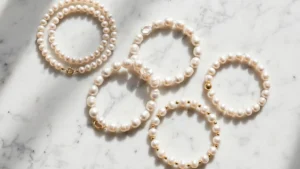
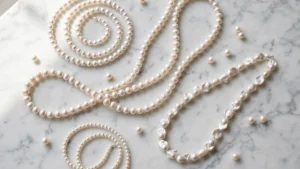
Pearl necklaces are the quiet luxury of 2027. They are not loud, they are not trying to be noticed from across the room, and they do not need a logo to do their work. A good strand sits close to the collarbone, catches the light with every turn of the head, and makes everything else you are wearing look considered. The problem is not finding a pearl necklace. It is finding one that is actually worth the price, with pearls that match, a clasp that holds, and a length that suits the necklines you really wear.
That is why this guide is organised by pearl type and use, not just by price. A classic Akoya strand is a different purchase from a baroque freshwater necklace, and a South Sea strand is a different purchase again. Lustre matters more than size, matching matters more than brand, and a necklace that is too long for your wardrobe will stay in its box no matter how beautiful it is. Price is a poor guide on its own. Some of the most wearable pearls are mid-priced, and some of the most expensive are the hardest to wear every day.
Below are nine pearl necklaces worth considering in 2027, from a classic white strand to modern baroque and pendant styles. Each one is described by what it is good at, what to watch for, and who it suits best, so you can choose with your wardrobe in mind, not just a bestseller list.
Key takeaways
- Lustre is the most important quality in a pearl necklace: look for a sharp, mirror-like reflection, not a dull or chalky surface.
- Akoya pearls are the classic white strand, South Sea pearls are the largest and most luxurious, and freshwater pearls offer the best value and the most variety.
- Match the length to your neckline: a 16 to 18 inch strand suits most collars, while a longer rope needs a plain top to work.
- Wear pearls last and take them off first, keep them away from perfume and hairspray, and wipe them with a soft cloth after wearing.
- No pearl necklace is an investment that will hold its purchase price, and a strand that is knotted badly, badly matched, or sold without a grading note should be returned.
What pearls actually are
A pearl is the only gem made by a living creature. When an irritant enters a mollusc, the animal coats it in layers of nacre, the same shimmering material that lines the inside of the shell. Over months or years those layers build into a pearl. Almost every pearl necklace sold today uses cultured pearls, which means a farmer started the process and the mollusc finished it. Natural pearls, formed without human help, are rare and priced accordingly, and they are not what this guide covers.
The four types you will meet most often are Akoya, freshwater, South Sea and Tahitian. Akoya pearls are small, round and very lustrous, the classic white strand. Freshwater pearls come from mussels, usually in China, and offer the widest range of shapes, colours and prices. South Sea pearls are the largest, grown in warm waters around Australia and Southeast Asia, with a soft satin lustre. Tahitian pearls are naturally dark, from grey to peacock green, and are the only dark pearls that are not dyed.
What matters when you buy is lustre first, then surface, then shape, then size. A smaller pearl with high lustre will always look better than a larger pearl with a dull surface. Minor blemishes are normal and honest; a perfectly clean pearl at a low price is a warning sign. Pearls are soft, around 2.5 to 4.5 on the Mohs scale, so they scratch and chip more easily than most gems, and they need gentle care.
How we chose these necklaces and what to look for
Look first at lustre. Hold the strand under a light and look for a crisp reflection of the bulb or window in each pearl. A sharp reflection means thick, healthy nacre. A hazy or chalky reflection means thin nacre, and the pearl will look tired within a year or two. Look next at matching. The pearls in a strand should be close in size, colour and lustre from end to end, with the largest pearls at the centre and the smallest near the clasp.
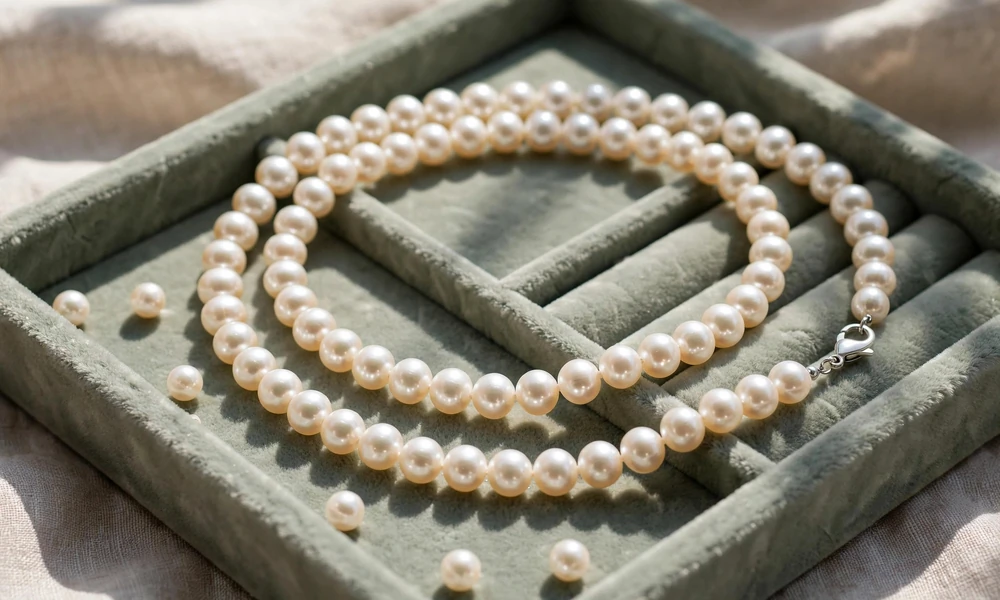
Look next at the stringing. A well-made strand is knotted between every pearl on silk thread, so if the thread breaks you lose one pearl, not the whole strand. The clasp should close firmly and feel secure, and the knots should be even and tight. A strand with no knots, or with gaps between the pearls, is a sign of cheap work, whatever the brand name on the box.
Finally, look at the length and the clasp. Sixteen inches sits at the base of the neck, eighteen inches sits at the collarbone, and twenty inches and above falls onto the chest. Try the length against the necklines you wear most often before you buy. Our guide to diamond necklaces explains the same length logic, because a necklace that fights your wardrobe is a necklace you will not wear.
The 9 best pearl necklaces of 2027
Tiffany & Co. Akoya Pearl Strand
What we like: A classic 18 inch Akoya strand with high lustre, tight matching and a signature gold clasp, in the brand’s familiar blue box. What to consider: Premium price for the name, and the classic length suits collars better than high necklines. Stone: Akoya pearls, 7 to 7.5 mm. Setting: 18k yellow gold clasp, silk knotted. Best for: Weddings, formal occasions, a first classic strand. Price range: $2,500 to $4,000.
Cartier Pearl Pendant Necklace
What we like: A single South Sea pearl on a fine gold chain, understated and easy to wear daily, with the brand’s clean finishing. What to consider: One pearl rather than a strand, so it reads as a pendant, not a classic necklace. Stone: South Sea pearl, 11 mm. Setting: 18k yellow gold chain and bail. Best for: Everyday wear, layering, a first luxury pearl. Price range: $1,800 to $3,000.
David Yurman Pearl Strand Necklace
What we like: A modern take on the classic strand with a sculptural gold clasp, good lustre, and a slightly longer 18 inch fall that sits well on the collarbone. What to consider: The designer clasp adds cost, and the pearls are smaller than some rivals at this price. Stone: Freshwater pearls, 8 to 9 mm. Setting: 18k gold clasp, silk knotted. Best for: Smart occasions, gifting, a modern classic. Price range: $1,200 to $2,200.
Mejuri Pearl Strand Necklace
What we like: A well-matched freshwater strand at a fair price, with good lustre for the money and a simple gold vermeil clasp. What to consider: Freshwater pearls are slightly less round than Akoya, and the clasp is vermeil rather than solid gold. Stone: Freshwater pearls, 7 to 8 mm. Setting: Gold vermeil clasp, silk knotted. Best for: Everyday wear, a first pearl necklace, bridesmaids. Price range: $250 to $450.
Monica Vinader Pearl Pendant Necklace
What we like: A single baroque freshwater pearl on a fine chain, modern and relaxed, with a price that invites daily wear. What to consider: Baroque pearls are irregular by nature, so no two pendants look alike. Stone: Baroque freshwater pearl, 10 to 11 mm. Setting: 18k gold vermeil chain. Best for: Daily wear, casual outfits, layering. Price range: $150 to $300.
If a full strand feels too formal, this is the easy alternative. It reads as modern jewellery first and a pearl second, which is exactly why it gets worn so often.
Missoma Pearl Strand Necklace
What we like: A fresh, slightly irregular freshwater strand with a contemporary feel, good lustre, and a gold vermeil toggle that is easy to fasten. What to consider: The pearls are not perfectly round, which suits the style but not a classic look. Stone: Freshwater pearls, 6 to 7 mm. Setting: Gold vermeil toggle, silk knotted. Best for: Younger wearers, casual styling, gifting. Price range: $200 to $400.
A friendly, wearable strand that works with a white shirt and jeans as well as it does with a dress. It is the least formal option in this guide, and that is its strength.
Maria Black Pearl Choker Necklace
What we like: A short, modern choker with small pearls and a clean gold clasp, designed to sit high on the neck and layer with longer chains. What to consider: The short length suits some necks and necklines better than others, so try it on first. Stone: Freshwater pearls, 5 to 6 mm. Setting: 14k gold clasp. Best for: Layering, evening looks, a modern edge. Price range: $300 to $550.
This is the necklace for people who find a classic strand too formal. Worn alone it is a clean, modern line; layered with a longer chain it adds texture without fuss.
Astrid & Miyu Pearl Drop Necklace
What we like: A fine chain with a single pearl drop, delicate and affordable, with a clasp that adjusts to two lengths. What to consider: Very delicate, so it needs gentle handling and is not an everyday workhorse. Stone: Freshwater pearl drop, 8 mm. Setting: Gold plated chain, adjustable length. Best for: Delicate styling, weddings, first pearls. Price range: $90 to $180.
The most affordable entry point in this guide, and a good one. It is light, pretty and easy to wear, and the adjustable length makes it more versatile than it looks.
Thomas Sabo Pearl Strand Necklace
What we like: A classic freshwater strand with a sterling silver clasp, solid value, and a length that suits most collars. What to consider: The silver clasp will need occasional polishing, and the pearls are mid-grade rather than top-grade. Stone: Freshwater pearls, 7 to 8 mm. Setting: Sterling silver clasp, silk knotted. Best for: Everyday wear, gifting, a first strand on a budget. Price range: $180 to $350.
A sensible, well-made strand at a fair price. It will not compete with a top Akoya for lustre, but on the neck it looks classic and correct, and that is what matters.
Which pearl necklace is right for you
Start with the occasion. A classic Akoya strand is the right choice for weddings, formal events and anyone who wants one necklace that will always be appropriate. A freshwater strand is the right choice for everyday wear, because it offers good lustre at a price you will not be afraid to wear. A single pearl pendant is the right choice if you find a full strand too formal, or if you want to layer.
Consider your neckline next. A 16 inch strand suits a high collar or a crew neck. An 18 inch strand suits a V-neck or a shirt collar. A longer strand or a rope suits a plain top with no collar at all. If you wear mostly high necklines, a pendant on a fine chain will be more useful than a strand. Our guide to pearl jewellery covers earrings and bracelets too, because pearls work best as a small, considered set rather than a single piece.
Skin tone matters less than people think. White pearls suit most skin, warm cream pearls flatter warm skin, and grey or Tahitian pearls suit cool skin and darker hair. The honest test is to hold the strand against your neck in daylight. If the pearls look bright and your skin looks healthy, the colour is right.
The caveats that matter
Pearls are soft and need gentle care. They scratch easily, they dislike perfume, hairspray and cosmetics, and they should be put on last and taken off first. Wipe them with a soft, damp cloth after wearing and store them in a soft pouch, not loose in a jewellery box where harder gems can scratch them. Never put pearls in an ultrasonic cleaner or a steam cleaner.
| Detail | What is known |
|---|---|
| Most important quality | Lustre: a sharp, mirror-like reflection means thick, healthy nacre |
| Classic white strand | Akoya pearls, 7 to 8 mm, 16 to 18 inches, silk knotted |
| Best value | Freshwater pearls: good lustre, wide shapes and colours, fair prices |
| Largest and most luxurious | South Sea pearls, 10 to 13 mm, soft satin lustre, premium price |
| What to avoid | Dull or chalky pearls, unknotted strands, and strands with no grading note |
| Daily care | Wear last, remove first, wipe with a soft cloth, keep away from perfume |
| Restringing | Every one to two years for a strand worn often, or when the silk looks loose |
| What they are not | An investment: pearls do not hold their purchase price, so buy to wear |
Restringing is part of owning a pearl strand. Silk stretches and weakens with wear, and a strand worn often should be restrung every one to two years. A good jeweller will knot between every pearl and check the clasp at the same time. That small cost is what keeps a strand safe for decades.
Checklist: choosing a pearl necklace honestly
Use these checks before you buy, and again when the necklace arrives.
- Check the lustre: look for a sharp, mirror-like reflection in each pearl, not a dull surface.
- Check the matching: pearls should be close in size, colour and lustre, largest at the centre.
- Check the stringing: knots between every pearl, even and tight, with a secure clasp.
- Check the length against your necklines: try it on with the tops you wear most often.
- Check the grading note: the seller should state the pearl type, size, lustre and origin.
- Check the care: buy a soft pouch, plan to wipe the pearls after wearing, and budget for restringing.
Frequently asked questions
Are freshwater pearls real pearls?
Yes. Freshwater pearls are real cultured pearls grown in mussels, usually in China. They are not imitation pearls, and they are not lesser in any honest sense. They are simply more varied in shape and colour, and much better value than Akoya or South Sea pearls of the same size.
How long should a pearl necklace be?
Sixteen inches sits at the base of the neck, eighteen inches sits at the collarbone, and twenty inches falls onto the chest. Eighteen inches suits most people and most collars, which is why it is the most common length. If you are unsure, try the length against your favourite neckline before you buy.
Can I wear pearls every day?
Yes, with care. Pearls are soft, so they scratch more easily than most gems, but a well-made strand worn with care will last for years. Put pearls on last, take them off first, keep them away from perfume and hairspray, and wipe them after wearing. Our guide to gold jewellery for everyday wear follows the same logic, because daily jewellery needs to be practical as well as pretty.
Do pearl necklaces need restringing?
Yes, every one to two years if the strand is worn often. Silk stretches and weakens with wear, and a strand that is not restrung can break. A good jeweller will knot between every pearl and check the clasp, which is a small cost for keeping a strand safe.
Are pearl necklaces still in style in 2027?
Yes. Pearls have moved from formal-only to everyday, with baroque shapes, short chokers and single pendants now as common as the classic strand. The classic strand itself has not gone out of style, and it is unlikely to, because it suits so many occasions.
Can I wear a pearl necklace with a gold chain?
Yes, layering pearls with a fine gold chain is one of the easiest ways to make a classic strand feel modern. Keep the lengths different, so the chains do not tangle, and keep the gold fine rather than chunky, so the pearls stay the focus.
The bottom line
The best pearl necklace in 2027 is not the most expensive or the largest. It is the one with high lustre, good matching and honest stringing, in a length that suits the necklines you actually wear. For a classic strand, Akoya is the right choice. For everyday value, freshwater is the right choice. For a single statement pearl, a South Sea pendant is the right choice.
Choose one necklace, wear it often, care for it gently, and restring it when the silk loosens. Pearls reward regular wear and simple care, and a strand that is worn is worth far more than a strand that stays in its box.