
A gold tennis bracelet is one of the few pieces of jewellery that works almost everywhere. It is a single line of stones, set in gold, that catches the light with every movement of the wrist, and it looks as right with a white shirt and jeans as it does with an evening dress. The name comes from tennis: in 1987, Chris Evert lost her diamond line bracelet mid-match at the US Open and asked officials to stop play until it was found. The style has been called a tennis bracelet ever since.
The problem is not finding one. It is finding one that is well made, honestly priced, and built to survive daily wear. A tennis bracelet lives on the wrist, which means it takes more knocks than a necklace or a pair of earrings. A weak clasp, a thin setting, or stones that are poorly matched in colour and clarity will show within months. The difference between a bracelet you wear for decades and one you stop wearing is usually in details you cannot see in a product photo.
Below are nine gold tennis bracelets worth considering in 2027, from classic diamond lines to more affordable lab-grown options. Each one is described by what it does well, what to watch for, and who it suits best, so you can choose with your wrist and your budget in mind, not just a brand name.
Key takeaways
- A gold tennis bracelet is a single line of matched stones in a gold setting, and the clasp is the most important part of the design.
- Four-prong settings show more sparkle; bezel settings protect the stones better and suit everyday wear.
- Lab-grown diamonds are chemically identical to mined diamonds and usually cost 60 to 80 percent less for the same size and quality.
- Look for a box clasp with a safety catch or figure-eight safety, and a total carat weight that suits your wrist, not just your budget.
- No bracelet is unbreakable, and a tennis bracelet with a weak clasp or stones set in very thin gold will not survive daily wear.
What a gold tennis bracelet actually is
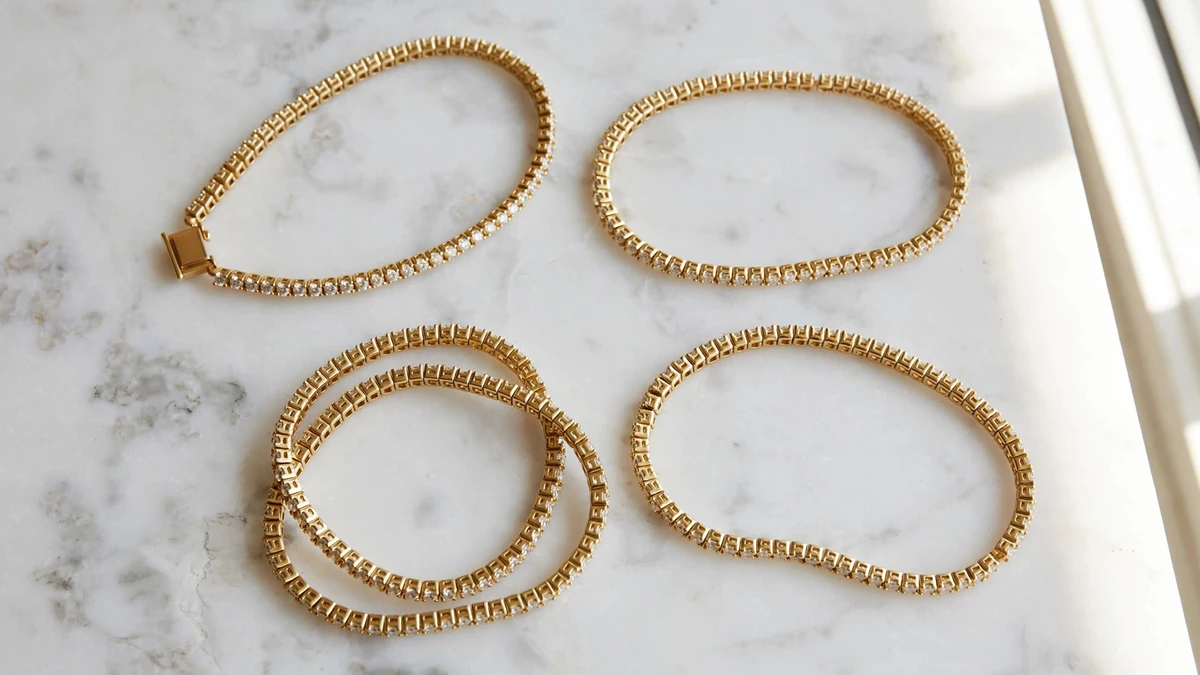
A tennis bracelet is a flexible line of individually set stones, usually round brilliant diamonds, linked together and fastened with a clasp. The classic version is a continuous row of the same size stone, but modern versions graduate in size, mix stone shapes, or alternate diamonds with coloured gems. The gold can be yellow, white, or rose, in 14 karat or 18 karat, and the choice changes both the look and the price.
The setting matters more than most buyers expect. In a four-prong setting, each stone is held by four small claws, which lets in the most light and gives the most sparkle, but leaves the stone more exposed. In a bezel setting, a rim of gold wraps around each stone, which protects the edges and suits an active life, but shows slightly less brilliance. A shared-prong setting, where neighbouring stones share prongs, is a middle ground and is common in finer lines.
Size is measured in total carat weight, which is the combined weight of all the stones, not the size of any single stone. A 2-carat bracelet with forty small stones looks very different from a 2-carat bracelet with twenty larger ones. Small stones are cheaper per carat and give a delicate, continuous shimmer. Larger stones cost more and give a bolder, more visible line. Neither is better in the abstract. It depends on your wrist, your style, and how much attention you want the bracelet to draw.
How we chose these bracelets and what to look for
Look first at the clasp. A tennis bracelet should have a box clasp with a safety catch, or a tongue-and-groove clasp with a figure-eight safety chain. If a bracelet has only a simple spring-ring or lobster clasp, it is not secure enough for a line of stones worth hundreds or thousands of pounds. Ask the seller what happens if a prong fails, and whether the bracelet is covered by a warranty that includes stone loss.

Look next at the stones. For diamonds, the four Cs still apply, but in a tennis bracelet, cut and colour matter most, because small stones are seen together as a line. A well-cut stone returns light evenly, so the bracelet sparkles as a whole rather than in patches. Colour grades of G to H look white in gold, while lower grades can look warm or yellow against the metal. Clarity of VS2 or SI1 is usually eye-clean in stones this small, so paying for flawless clarity rarely adds visible benefit.
Finally, look at the gold itself. A 14-karat gold bracelet is harder and more scratch-resistant than 18-karat, which makes it a practical choice for daily wear. An 18-karat bracelet has a richer colour and a higher gold content, but it is softer and will show wear sooner. Our guide to gold jewellery for everyday wear explains how to choose between the two, because the right karat depends on how often you plan to wear the piece and how much maintenance you are willing to do.
The 9 best gold tennis bracelets of 2027
Tiffany & Co. Diamond Tennis Bracelet
What we like: A classic line of round brilliant diamonds in 18-karat yellow gold, with a secure box clasp and safety catch, and Tiffany’s long-standing quality control on stone matching. What to consider: Premium price, and the stones are natural diamonds, so the cost is far higher than a lab-grown equivalent. Stone: Natural round brilliant diamonds. Setting: Four-prong, 18-karat yellow gold. Best for: A milestone gift or a once-in-a-lifetime purchase. Price range: £5,000 to £15,000 and above, depending on total carat weight.
Cartier Diamond Tennis Bracelet
What we like: A refined line of diamonds in 18-karat gold with Cartier’s precise setting work, a discreet box clasp, and a slim profile that layers well with a watch. What to consider: Very premium pricing, and the slim design suits smaller wrists best. Stone: Natural round brilliant diamonds. Setting: Four-prong, 18-karat gold. Best for: Someone who wants a house-name piece with a slim, elegant line. Price range: £6,000 to £20,000 and above.
David Yurman Diamond Tennis Bracelet
What we like: A well-made line of diamonds in 14-karat or 18-karat gold, with a sturdy clasp and a design that sits comfortably flat on the wrist. What to consider: Still a luxury price, and the range of total carat weights is narrower than at some specialists. Stone: Natural round brilliant diamonds. Setting: Four-prong, 14-karat or 18-karat gold. Best for: Everyday luxury with a designer name. Price range: £2,500 to £8,000.
Mejuri Lab-Grown Diamond Tennis Bracelet
What we like: Lab-grown diamonds in 14-karat gold at a fraction of the price of mined stones, with a secure box clasp and a clean, modern line. What to consider: Lab-grown diamonds have very little resale value, and the stones are smaller at the entry price. Stone: Lab-grown round brilliant diamonds. Setting: Four-prong, 14-karat gold. Best for: A first tennis bracelet on a realistic budget. Price range: £500 to £2,500.
Monica Vinader Lab-Grown Diamond Tennis Bracelet
What we like: A delicate lab-grown diamond line in 14-karat gold vermeil or solid gold, with a neat clasp and a light, comfortable feel. What to consider: The vermeil version is gold-plated silver and will need replating with heavy wear, so choose solid gold for daily use. Stone: Lab-grown round brilliant diamonds. Setting: Four-prong, 14-karat gold or gold vermeil. Best for: A light, everyday bracelet at an accessible price. Price range: £300 to £1,500.
Missoma Lab-Grown Diamond Tennis Bracelet
What we like: An affordable lab-grown diamond line in 14-karat gold vermeil or solid gold, with a simple, elegant design that layers well with other bracelets. What to consider: The entry version is vermeil, not solid gold, and the stones are small. Stone: Lab-grown round brilliant diamonds. Setting: Four-prong, gold vermeil or 14-karat gold. Best for: Stacking and everyday wear on a modest budget. Price range: £200 to £800.
Maria Black Lab-Grown Diamond Tennis Bracelet
What we like: A modern, slightly edgier take on the tennis bracelet, with lab-grown diamonds in solid 14-karat gold and a secure clasp. What to consider: The design is less traditional, so it suits a contemporary wardrobe better than a classic one. Stone: Lab-grown round brilliant diamonds. Setting: Four-prong, 14-karat gold. Best for: A contemporary take on a classic. Price range: £250 to £900.
Astrid & Miyu Lab-Grown Diamond Tennis Bracelet
What we like: A slim, affordable lab-grown diamond line in solid gold or gold vermeil, with a delicate profile that suits smaller wrists. What to consider: The stones are small and the bracelet is delicate, so it is not the best choice for very active wear. Stone: Lab-grown round brilliant diamonds. Setting: Four-prong, gold vermeil or solid gold. Best for: A first, delicate tennis bracelet. Price range: £150 to £600.
This is the most delicate bracelet in this list, and that is its appeal. It reads as a fine line of light on the wrist rather than a bold statement, and it works well layered with a plain gold bangle.
Thomas Sabo Diamond Tennis Bracelet
What we like: A well-priced lab-grown diamond line in 14-karat gold, with a secure clasp and a classic, even stone line. What to consider: The brand is better known for silver, so the gold range is smaller and less widely stocked. Stone: Lab-grown round brilliant diamonds. Setting: Four-prong, 14-karat gold. Best for: A classic look at a mid-range price. Price range: £200 to £700.
Thomas Sabo’s tennis bracelet is a straightforward, honest piece. The stones are evenly matched, the clasp is secure, and the price sits in a sensible middle ground between fashion jewellery and high jewellery.
Which gold tennis bracelet is right for you
Start with how often you will wear it. If the bracelet is for every day, choose a bezel or shared-prong setting in 14-karat gold, with a box clasp and a safety catch. The stones will be better protected, the gold will resist scratches, and the clasp will give you a second layer of security. If the bracelet is for occasions, a four-prong setting in 18-karat gold will give you more sparkle and a richer colour.
Next, decide between natural and lab-grown diamonds. A natural diamond bracelet holds more resale value and carries the traditional appeal of a mined stone. A lab-grown diamond bracelet looks identical on the wrist and costs far less, which means you can buy a larger total carat weight for the same money. There is no wrong answer, but the choice should be made deliberately, not discovered later. A pair of diamond earrings in the same style is a useful comparison, because the same natural-versus-lab-grown question applies there too.
Finally, get the length right. A tennis bracelet should sit flat on the wrist with a little movement, usually about 1 to 1.5 centimetres of slack. Too tight, and it will feel uncomfortable and the stones will rub against each other. Too loose, and it will slide around and catch on things. Most brands offer several lengths, and a jeweller can usually remove or add a link for a small fee.
The caveats that matter
A tennis bracelet is not a low-maintenance piece. The clasp should be checked every few months, because a worn clasp is the most common reason a bracelet is lost. Prongs can loosen with knocks, especially on a bracelet that is worn while exercising, gardening, or doing housework. A yearly check by a jeweller, where prongs are tightened and the clasp is tested, is the cheapest insurance you can buy for a piece like this.
| Detail | What is known |
|---|---|
| Most important feature | The clasp: a box clasp with a safety catch or figure-eight safety is essential |
| Best setting for sparkle | Four-prong, which lets in the most light |
| Best setting for daily wear | Bezel or shared-prong, which protects the stone edges |
| Natural vs lab-grown | Lab-grown diamonds look identical and cost 60 to 80 percent less, but hold little resale value |
| Best gold for daily wear | 14-karat gold, which is harder and more scratch-resistant than 18-karat |
| Best gold for colour | 18-karat gold, which has a richer colour and higher gold content |
| When to check it | Clasp and prongs checked by a jeweller at least once a year |
| What it does not do | It does not hold its value like a solitaire ring, and it is not suitable for rough, hands-on work |
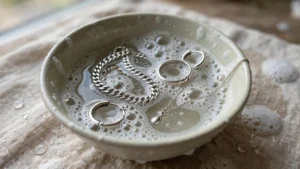
If you swim, shower, or exercise in a tennis bracelet, be aware that chlorine, soap, and sweat can dull the gold and loosen settings over time. Take it off for the gym and the pool, and clean it in warm soapy water with a soft brush. Never use an ultrasonic cleaner on a bracelet with many small stones unless a jeweller has checked the prongs first.
Checklist: choosing a gold tennis bracelet honestly
Use these checks before you buy, and again after a month of wear.
- Check the clasp: it should be a box clasp with a safety catch, and it should close with a firm click.
- Check the stones: they should match in size, colour and sparkle, with no dull or cloudy stones in the line.
- Check the gold: confirm whether it is 14-karat or 18-karat, and whether it is solid gold or vermeil.
- Check the length: it should sit flat with about 1 to 1.5 centimetres of slack, not slide to your hand.
- Check the warranty: ask whether stone loss and clasp failure are covered, and for how long.
- Check the paperwork: natural diamonds should come with a grading report; lab-grown stones should be labelled as such.
Frequently asked questions
How much should a gold tennis bracelet cost?
It depends on the stones and the gold. A lab-grown diamond tennis bracelet in 14-karat gold can cost from around £200 to £2,500. A natural diamond version in 18-karat gold from a high jewellery house can cost £5,000 to £20,000 or more. Total carat weight is the biggest driver of price.
Are lab-grown diamonds real diamonds?
Yes. Lab-grown diamonds are chemically, physically, and optically identical to mined diamonds. They are grown in a laboratory rather than formed underground, and they should always be sold as lab-grown, at a much lower price than a natural stone of the same size and quality.
Can I wear a tennis bracelet every day?
Yes, if it is well made. Choose a bezel or shared-prong setting in 14-karat gold, with a secure clasp, and have the prongs checked once a year. Take it off for the gym, swimming, and heavy manual work.
What is the best clasp for a tennis bracelet?
A box clasp with a safety catch is the standard for a good tennis bracelet. A figure-eight safety chain is a useful extra layer of security. Avoid a bracelet that relies on a simple spring-ring or lobster clasp alone.
How do I clean a gold tennis bracelet?
Soak it in warm water with a drop of mild dish soap, then brush gently with a soft toothbrush and rinse. Dry it with a soft cloth. Avoid ultrasonic cleaners unless a jeweller has checked the prongs, and keep it away from chlorine and harsh chemicals.
What should I pair a tennis bracelet with?
A tennis bracelet pairs well with a simple watch, a plain gold bangle, or a matching line of stones. A diamond necklace in a similar style completes the set without competing with the bracelet, and a single bracelet usually looks better than two competing lines on the same wrist.
The bottom line
The best gold tennis bracelet in 2027 is not the most expensive one. It is the one with a secure clasp, evenly matched stones, and gold that suits how often you will wear it. For daily wear, a lab-grown diamond line in 14-karat gold is the most sensible choice. For a milestone or a piece you hope to keep for decades, a natural diamond line in 18-karat gold from a house with strong aftercare is worth the extra cost.
Choose one bracelet, check the clasp and the prongs before you buy, and have it checked once a year after that. A tennis bracelet looked after properly is a piece you can wear for decades, and the right one will still catch the light the same way in ten years as it does on the day you buy it.