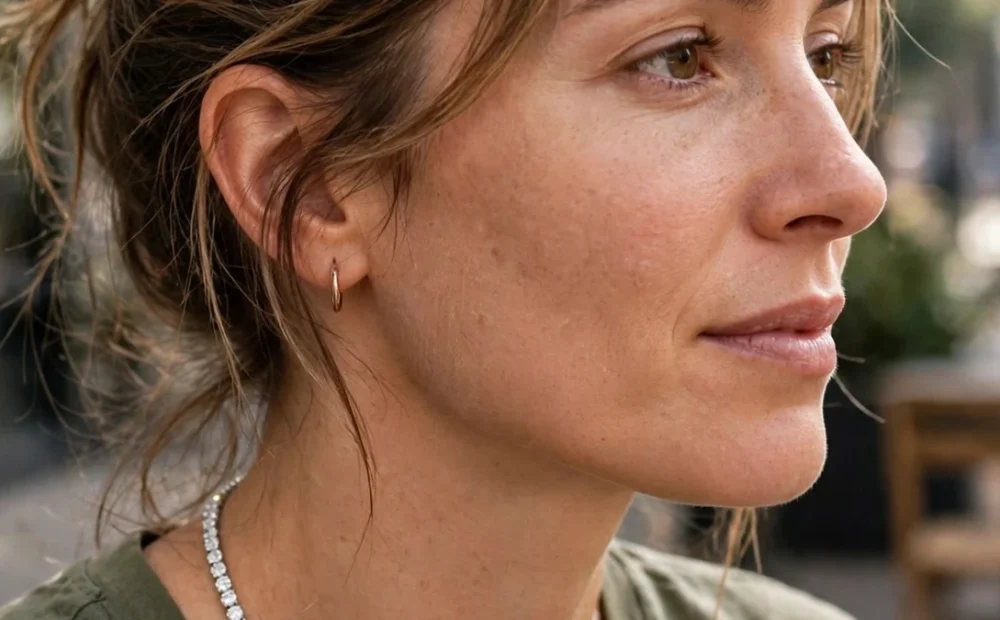
A tennis necklace is the one piece of jewellery almost everyone recognises, even if they have never owned one. It is a single, unbroken line of individually set stones that sits close to the neck, catching the light with every small movement. It looks effortless, but that simplicity is the whole point. There is nowhere for a weak stone, a sloppy setting or a cheap clasp to hide.
The name comes from tennis, and the story behind it is true enough to have stuck. At the 1987 US Open, Chris Evert lost her diamond line bracelet mid-match, asked officials to stop play while she searched for it, and the piece became known as the tennis bracelet. The necklace version followed naturally. A line of stones around the neck, made to be worn rather than stored, with the same clean, continuous look.
This guide explains what a tennis necklace actually is, how the good ones are made, what to look for before you buy, and where the money really goes. It covers diamonds and their alternatives, the settings and clasps that decide whether a necklace lasts, and the lengths and styles that suit different necklines and occasions, so you can choose one with confidence rather than guesswork.
Key takeaways
- A tennis necklace is a continuous line of individually set stones, usually diamonds or diamond alternatives, in a single row around the neck.
- The clasp and the setting matter as much as the stones, because a weak clasp is the most common reason a tennis necklace is lost.
- Lab-grown diamonds and stones such as moissanite and white sapphire have made the look far more affordable without changing the design.
- Length, stone size and metal colour change the look completely, so the right tennis necklace depends on your neckline, your wardrobe and your budget.
- No tennis necklace is indestructible, and a necklace that is never checked, cleaned or insured is the one most likely to disappoint.
What a tennis necklace actually is
A tennis necklace is a flexible chain of stones, each one held in its own setting, linked together so the whole piece moves with the neck. The classic version uses round brilliant-cut diamonds, all the same size, set in a prong or bezel setting in white gold or platinum. The effect is a single, even line of light. There is no pendant, no centrepiece and no break in the pattern.
The length is usually between 14 and 18 inches, which puts the necklace at the base of the neck or just below the collarbone. A 16-inch tennis necklace is the most common choice, because it sits neatly above most necklines without competing with them. Shorter lengths look more formal and work well with high necklines, while longer lengths read as softer and more relaxed, and suit open necklines and evening dresses.
What separates a tennis necklace from other diamond necklaces is the uniformity. Every stone is meant to match its neighbours in size, colour and cut, so the line looks continuous rather than patchy. That is also what makes a good one expensive. Matching forty or fifty stones takes time and skill, and a single stone that is visibly yellower or duller than the rest will stand out every time the necklace is worn. A diamond tennis necklace roundup shows how that even line looks in practice, and why the matching matters more than any single stone.
How to tell a good tennis necklace from a poor one
Start with the stones. Hold the necklace under good light and look along the line. The stones should be the same size and the same colour, with no single stone looking cloudy, yellow or dull next to the others. The settings should be even too. Each prong should grip its stone firmly, with no prong bent, missing or visibly different from the rest. A necklace that looks perfect from the front and rough from the back is a warning sign.

Look next at the clasp. A tennis necklace should have a secure box clasp with a safety latch, sometimes called a figure-eight safety catch, that keeps the necklace on even if the main clasp opens. This is the single most important detail on the whole piece. A necklace that falls off a neck is usually lost because the clasp was weak, not because the chain broke. Ask the seller to show you how the clasp works, and to open and close it several times. It should feel firm, not loose or gritty.
Finally, check the flexibility and the weight. A good tennis necklace drapes smoothly and bends easily in your hand, because each link is set to move. A stiff necklace, or one that kinks in one place, has a problem in the links. The weight should feel substantial but comfortable. Very light can mean thin metal and weak settings, while very heavy can mean the necklace will pull and tire your neck over an evening. Comfort matters, because a tennis necklace is made to be worn, not admired in a box.
The 9 tennis necklace facts that matter
The name comes from a tennis match
What it shows: The tennis necklace takes its name from Chris Evert’s diamond bracelet at the 1987 US Open, when play was paused while she looked for it. What to consider: The story is about a bracelet, not a necklace, but the name stuck to both, because the design is the same. Best For: Anyone who likes a piece with a story behind it. Material: Diamonds, traditionally. Price Range: Varies with the stones. Standout Feature: A real sporting story behind a classic design.
The continuous line of stones
What it shows: Every stone in a tennis necklace is individually set in a single, unbroken row, so the light runs evenly around the neck. What to consider: The stones must match in size, colour and cut, or the line will look patchy. Best For: Clean, classic styling. Material: Diamonds, moissanite or white sapphire. Price Range: From a few hundred pounds for alternatives to tens of thousands for large diamonds. Standout Feature: An even, uninterrupted line of light.
The clasp matters more than it looks
What it shows: A box clasp with a safety latch keeps the necklace secure, even if the main catch opens. What to consider: A necklace with a simple spring-ring clasp is easier to lose, and a clasp that feels loose or gritty needs attention before the necklace is worn. Best For: Everyday wear and peace of mind. Material: Usually the same metal as the rest of the necklace. Price Range: Included in the price of a well-made piece. Standout Feature: A safety catch that does the quiet work of keeping the necklace on.
The setting style changes the sparkle
What it shows: Prong settings let the most light into the stones, while bezel settings protect the stones better and give a smoother, more modern look. What to consider: Prongs can catch on clothing and need checking, while bezels can make small stones look smaller. Best For: Prongs for maximum sparkle, bezels for active wear. Material: White gold, yellow gold or platinum. Price Range: Bezel settings can cost slightly more to make. Standout Feature: The setting decides how the light reaches the stones.
The metal sets the tone and the budget
What it shows: White gold and platinum give a cool, bright frame that makes diamonds look whiter, while yellow gold gives warmth and a more vintage feel. What to consider: Platinum is heavier, harder and more expensive, while white gold needs re-plating every few years to keep its bright finish. Best For: Platinum for a lifetime piece, white gold for a bright look at a lower price, yellow gold for warmth. Material: Platinum, 18k white gold or 18k yellow gold. Price Range: Platinum costs the most, then white gold, then yellow gold. Standout Feature: The metal colour changes the whole character of the necklace.
The length changes the whole look
What it shows: A 14-inch tennis necklace sits high and formal, a 16-inch length sits at the collarbone, and an 18-inch length sits lower and softer. What to consider: The right length depends on your neck, your neckline and what you wear it with, not on a single standard size. Best For: Shorter lengths for high necklines, longer lengths for open necklines. Material: Any. Price Range: Longer necklaces use more stones and cost more. Standout Feature: A small change in length makes a large change in how the necklace sits.
Lab-grown stones changed the price
What it shows: Lab-grown diamonds are chemically the same as mined diamonds, but cost far less, which has made tennis necklaces affordable at sizes that were once out of reach. What to consider: Lab-grown diamonds do not hold their value the same way mined diamonds do, and some buyers still prefer a mined stone for a milestone piece. Best For: A larger look on a smaller budget. Material: Lab-grown diamond, moissanite or white sapphire. Price Range: Often a third to a half of the mined equivalent. Standout Feature: The same look, at a very different price.
The everyday versus occasion divide
What it shows: Smaller stones, usually under 0.25 carats each, read as everyday jewellery, while larger stones read as evening and occasion wear. What to consider: A very large tennis necklace can look out of place with a plain shirt, while a small one can disappear under a bold neckline. Best For: Small stones for daily wear, larger stones for weddings and evenings. Material: Any. Price Range: Total carat weight is the main driver of price. Standout Feature: Stone size decides whether the necklace is quiet or dramatic.
Care is simple but not optional
What it shows: A tennis necklace needs regular cleaning, a yearly check of the prongs and clasp, and safe storage, because its many small settings are also many small points of failure. What to consider: Ultrasonic cleaners are fine for most diamond tennis necklaces, but not for every stone, so check before you use one. Best For: Anyone who wants the necklace to last. Material: Any. Price Range: Cleaning and checks are usually inexpensive, and often free from the seller. Standout Feature: A little maintenance protects a large investment.
Which tennis necklace is right for you
Start with the occasion. If you want a necklace for everyday wear, choose smaller stones, a bezel or sturdy prong setting, and white gold or platinum. It will sit comfortably under a shirt or a jumper, it will not catch on clothing, and it will not look out of place at work. If you want a necklace for weddings and evenings, choose larger stones and a prong setting, which shows the stones at their brightest. A tennis bracelet is a useful comparison here, because the same decisions about stone size, setting and metal apply, and many people buy the two pieces together.
Then think about your neckline. A high, close neckline suits a shorter tennis necklace, while a deep or open neckline suits a longer one. Skin tone matters too, though less than people think. Cool skin tones usually suit white gold and platinum, warm skin tones usually suit yellow gold, and rose gold sits in between. The honest test is to try the necklace on in daylight, with the clothes you will wear it with, and to look at it from a normal distance, not pressed against a mirror.
The caveats that matter
A tennis necklace is a well-understood piece of jewellery, but it still has real risks. The stones are small, the settings are many, and the clasp is the one part that can fail without warning. None of this should put you off, but all of it should shape how you buy, wear and care for the piece.
| Detail | What is known |
|---|---|
| What it is | A single, continuous line of individually set stones around the neck |
| Usual length | 14 to 18 inches, with 16 inches the most common choice |
| Most important detail | The clasp, which should be a box clasp with a safety latch |
| Best setting for sparkle | Prong settings, which let the most light into the stones |
| Best setting for durability | Bezel settings, which protect the edges of the stones |
| What changed the price | Lab-grown diamonds and alternatives such as moissanite |
| How often to check it | Prongs and clasp checked at least once a year |
| What it does not do | It does not hold its value like a single large diamond, and it is not maintenance-free |
Buy from a seller who will check the necklace for you, who explains the clasp and the setting clearly, and who offers a written description of the stones. A seller who rushes you, or who cannot explain what the stones are, is a seller to walk away from. Insuring a valuable tennis necklace is also worth considering, because a lost necklace is rarely found, and a home insurance policy does not always cover jewellery worn outside the house.
Checklist: choosing a tennis necklace honestly
Use these checks before you buy, and again after a year of wearing the necklace.
- Check the stones: they should match in size, colour and cut, with no single stone looking dull or yellow.
- Check the clasp: a box clasp with a safety latch, firm to open and close, with no looseness or grit.
- Check the settings: every prong should grip its stone, with none bent, missing or uneven.
- Check the length: try it on with the necklines you will actually wear it with, in daylight.
- Check the paperwork: a written description of the stones, the metal and the total carat weight.
- Check the care plan: a yearly prong and clasp check, safe storage, and insurance if the necklace is valuable.
Frequently asked questions
What is a tennis necklace?
A tennis necklace is a flexible line of individually set stones, usually diamonds, in a single continuous row that sits close to the neck. It is named after the tennis bracelet, which became famous when Chris Evert lost hers during a match at the 1987 US Open.
How much does a tennis necklace cost?
It depends almost entirely on the stones. A necklace with moissanite or white sapphire can cost a few hundred pounds, a lab-grown diamond necklace often costs a few thousand, and a mined diamond necklace with large stones can cost tens of thousands. Total carat weight, stone quality and metal are the main drivers.
Can you wear a tennis necklace every day?
Yes, if it is well made. Choose smaller stones, a secure box clasp with a safety latch, and a sturdy setting, and have the prongs checked once a year. A very large, delicate necklace is better kept for occasions, but a modest tennis necklace is designed for daily wear.
Are lab-grown diamonds good for a tennis necklace?
Yes. Lab-grown diamonds are chemically the same as mined diamonds and look the same when worn. They cost far less, which makes a larger tennis necklace affordable, though they do not hold their resale value the same way. A gold tennis necklace is a good example of how the same design can be made at very different prices, depending on the stones and the metal.
What length tennis necklace should I choose?
16 inches is the most common choice, sitting at the collarbone. Choose 14 inches for a high, formal look with high necklines, and 18 inches for a softer look with open necklines. Try it on with your usual clothes, in daylight, before deciding.
How do I clean a tennis necklace?
Warm water, a drop of mild washing-up liquid and a soft brush will clean most diamond tennis necklaces. Rinse well and dry with a soft cloth. Avoid ultrasonic cleaners for stones other than diamond unless a jeweller confirms they are safe, and never clean a necklace with a loose stone, because the stone can come out.
The bottom line
A tennis necklace is a simple idea done well. A single line of matching stones, a secure clasp, and a length that suits the wearer. The details that matter are not the ones in the advertisement. They are the evenness of the stones, the strength of the clasp, and the setting that fits how the necklace will actually be worn.
Choose the stones you can afford, the metal that suits your skin and your wardrobe, and a seller who will check the piece for you. Then wear it. A tennis necklace is at its best in motion, catching the light as you move, and that is what it was made for.