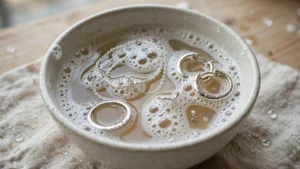
Gold jewellery looks simple to care for, and that is exactly why so many pieces lose their shine. A gold ring, chain or pair of earrings picks up skin oils, hand cream, perfume and everyday dust, and the thin layer of grime dulls the metal long before the gold itself is worn.
Cleaning gold at home is a gentle job, not a deep one. Warm water, a drop of mild soap, a soft brush and a lint-free cloth will bring back the shine of solid gold, gold-filled and gold-plated pieces alike, as long as you know which kind of gold you are holding. The steps below work for the gold jewellery most people actually own, and they are written so you can follow them at the kitchen sink in about fifteen minutes.
The one rule that matters more than any other is to check the piece before you clean it. A loose stone, a worn clasp or a thin plated layer changes everything, and a piece with any of those problems belongs with a jeweller, not in a bowl of soapy water.
Key takeaways
- Warm water, mild soap and a soft brush are enough to clean most gold jewellery at home, and they are safer than any strong chemical or abrasive cleaner.
- Always check for loose stones, worn clasps and thin plating before cleaning, because a piece with any of those problems needs a jeweller, not a home clean.
- Soak solid gold for about ten minutes, brush gently, rinse under lukewarm water, and dry it fully with a soft, lint-free cloth.
- Gold-plated and gold-filled pieces need a lighter touch: a quick wipe, no soaking, no brushing, and no ultrasonic cleaner.
- No home method restores worn plating, removes deep scratches, or repairs a loose setting, and harsh cleaners such as bleach or toothpaste can damage gold permanently.
What cleaning gold jewellery actually means
Cleaning gold jewellery means removing the film that builds up on the surface, not changing the metal itself. Gold does not tarnish the way silver does, because pure gold is chemically stable, but the alloys mixed into 9, 14 and 18 carat gold do react with air, moisture and skin chemistry over time. The result is a dull, slightly cloudy surface that makes even a well-made piece look tired, and that is what a gentle clean fixes.
It also means knowing what kind of gold you own. Solid gold is gold all the way through, and it can take a soak and a soft brush without worry. Gold-filled jewellery has a thick layer of gold bonded to a base metal, so it is sturdier than plating but still vulnerable to hard scrubbing. Gold-plated jewellery has only a very thin layer of gold over a base metal, and that layer can wear through if you soak it, brush it, or polish it too firmly.
Cleaning also has limits, and knowing them saves you from making things worse. A home clean will not bring back worn plating, it will not remove a deep scratch, and it will not tighten a loose stone. Those are repair jobs, and the right move is to take the piece to a jeweller rather than scrubbing harder at home.
What you need and what to look for
You need very little: a small bowl, lukewarm water, a few drops of mild washing-up liquid or plain hand soap, a soft toothbrush or a soft jewellery brush, and a clean, lint-free cloth. A second bowl of plain lukewarm water is useful for rinsing, and a jewellery polishing cloth is worth having for the final step.

What to look for before you start is more important than the supplies. Hold the piece up to the light and check the setting of any stone, the clasp, the links of a chain, and the posts of earrings. Look for a stone that moves, a prong that looks bent, a clasp that does not close firmly, or a patch where the colour looks different from the rest of the piece, which can mean the plating has worn thin. Our guide to gold nose studs shows how much difference a clean, well-kept piece of gold makes, because a small stud is easy to keep bright when it is checked and cleaned regularly, and just as easy to neglect.
Also check what is attached to the gold. Pearls, opals, turquoise, emeralds and other soft or porous stones should not be soaked, brushed or put in an ultrasonic cleaner, and neither should glued settings. If your piece has any of these, clean only the gold parts with a damp cloth and leave the stone alone, or take it to a jeweller.
The 9 steps to clean gold jewellery properly
Step 1: Gather your supplies first
What to do: Lay out a small bowl, lukewarm water, a few drops of mild soap, a soft brush and a lint-free cloth on a clean towel, so nothing can roll away or fall down a drain. What to avoid: Do not work over an open sink without a plug or a strainer, and do not use hot water, which can loosen glue in settings. Best for: Every piece, every time. Time needed: 2 minutes. Standout tip: Put a towel in the bottom of the sink as well, so a dropped earring lands softly.
Step 2: Check the piece before it touches water
What to do: Inspect the setting, clasp, links and posts under a good light, and gently test any stone with a fingertip to see if it moves. What to avoid: Do not clean a piece with a loose stone, a bent prong, a broken clasp or visible wear through the plating. Best for: Rings, necklaces, earrings and bracelets with stones or clasps. Time needed: 2 minutes. Standout tip: If you can see a gap between a stone and its setting, stop and see a jeweller.
Step 3: Mix a gentle soap solution
What to do: Fill a small bowl with lukewarm water and add two or three drops of mild washing-up liquid or plain hand soap, then stir gently. What to avoid: Do not use bleach, ammonia, toothpaste, baking soda paste, or any cleaner labelled for ovens, bathrooms or heavy grease. Best for: Solid gold, gold-filled and gold-plated pieces. Time needed: 1 minute. Standout tip: If the soap has a strong fragrance or added moisturiser, use a plainer one instead.
Step 4: Soak solid gold for ten minutes
What to do: Place solid gold pieces in the soapy water and leave them for about ten minutes, so the dirt loosens on its own. What to avoid: Do not soak gold-plated pieces, glued settings, pearls, opals, turquoise or enamel, and do not leave anything soaking for hours. Best for: Solid gold rings, chains, bangles and earrings without delicate stones. Time needed: 10 minutes. Standout tip: Set a timer, because ten minutes is enough and longer adds nothing.
Step 5: Brush softly, never scrub
What to do: Lift each piece out and brush it gently with a soft toothbrush, working into the grooves, the back of settings and the links of a chain. What to avoid: Do not press hard, do not use a stiff brush, and do not brush gold-plated pieces at all. Best for: Solid gold with engraved detail, textured finishes and settings with hard stones such as diamonds and sapphires. Time needed: 2 minutes per piece. Standout tip: Use a brush you keep only for jewellery, so it stays clean and soft.
Step 6: Rinse under lukewarm running water
What to do: Rinse each piece under lukewarm running water, turning it so the water reaches every side, and check that no soap remains in grooves or settings. What to avoid: Do not rinse over an open drain, and do not use very hot water. Best for: Every piece you have soaked or brushed. Time needed: 1 minute. Standout tip: Hold the piece over the plugged sink or a strainer, so a slip does not become a loss.
Step 7: Dry with a soft lint-free cloth
What to do: Pat each piece dry with a clean, lint-free cloth, then lay it on a dry towel for a few minutes so any water in the settings evaporates. What to avoid: Do not use paper towels, tissues or rough fabric, and do not put a damp piece straight back into a closed box. Best for: Every piece, especially chains and earrings with small parts that trap water. Time needed: 2 minutes. Standout tip: A microfibre cloth is ideal, because it leaves no fibres behind.
Step 8: Polish with a jewellery cloth
What to do: Give each dry piece a gentle polish with a jewellery polishing cloth, using light, even strokes along the surface. What to avoid: Do not polish gold-plated pieces firmly, and do not use a cloth treated with strong chemicals on plated or filled gold. Best for: Solid gold that looks clean but still a little dull. Time needed: 1 minute per piece. Standout tip: A plain untreated microfibre cloth is the safest choice for plated pieces.
Step 9: Store it clean and dry
What to do: Put each clean, dry piece away separately, in a soft pouch or a lined compartment, away from other jewellery that could scratch it. What to avoid: Do not throw clean pieces loose into a drawer or a shared box, and do not store them in a damp bathroom. Best for: Every piece you have just cleaned. Time needed: 1 minute. Standout tip: A small silica gel packet in the box helps keep moisture away.
Which cleaning method is right for your gold
Solid gold is the easiest to care for: it can be soaked, brushed and polished, and it comes back bright every time, because the gold runs all the way through. Higher carat gold is softer, so 22 and 24 carat pieces deserve a lighter touch, but the method is the same.
Gold-filled jewellery sits in the middle. It has a thick bonded layer of gold, so it is much tougher than plating, and a short soak and a gentle brush are usually fine. The rule is to be careful rather than fearful: no hard scrubbing, no ultrasonic cleaner unless a jeweller says it is safe, and no strong chemicals. The difference between gold and silver jewellery matters here too, because silver tarnishes and needs different care, while gold mainly needs dirt removed, so do not use a silver dip or silver polish on gold.
Gold-plated jewellery needs the lightest touch of all. Wipe it with a damp, soft cloth and a little mild soap, rinse it quickly, pat it dry, and stop there. No soaking, no brushing, no polishing cloth with chemicals, and no ultrasonic cleaner, because any of those can wear through the thin gold layer. Plating wears with time no matter how careful you are, and when it does, a jeweller can re-plate the piece, which is a repair, not a cleaning job.
The caveats that matter
Gold jewellery is durable, but it is not indestructible, and the most common mistakes are made with good intentions. Bleach is the worst of them: even a small amount, from a swimming pool or a household cleaner, can weaken gold alloys and cause cracking, especially in white gold. Toothpaste, baking soda paste and abrasive creams scratch the surface. Ultrasonic cleaners are useful in a jeweller’s hands, but at home they can shake loose stones and damage delicate settings.
| Detail | What is known |
|---|---|
| Best home method | Lukewarm water, a few drops of mild soap, a soft brush, and a lint-free cloth |
| How often to clean | Every few weeks for everyday pieces, less often for pieces worn rarely |
| Soaking | About ten minutes for solid gold only; never soak plated pieces, pearls or glued settings |
| What never to use | Bleach, ammonia, toothpaste, baking soda paste, abrasive creams and silver dips |
| Soft and porous stones | Pearls, opals, turquoise and emeralds should not be soaked, brushed or put in an ultrasonic cleaner |
| Ultrasonic cleaners | Safe in a jeweller’s hands for many solid pieces, but risky at home for set or delicate jewellery |
| When to see a jeweller | Loose stones, bent prongs, worn clasps, worn plating, deep scratches or any valuable piece |
| What cleaning cannot fix | Worn plating, deep scratches, loose settings and metal that has thinned with wear |
Clean when the piece needs it, not on a fixed schedule, and store it well in between, which is where our guide to luxury jewellery brands is useful, because the best-kept pieces are the ones stored properly and cleaned gently, whatever the brand.
Checklist: cleaning gold jewellery honestly
Use these checks before you clean, and again before you put a piece away.
- Check the piece first: look for loose stones, bent prongs, a worn clasp and thin plating, and take it to a jeweller if anything is wrong.
- Check the stones: pearls, opals, turquoise, emeralds and glued settings should not be soaked or brushed.
- Check your supplies: lukewarm water, mild soap, a soft brush and a lint-free cloth, and nothing harsh or abrasive.
- Check the drain: plug the sink or use a strainer, and work over a towel so a dropped piece lands softly.
- Check the rinse: make sure no soap remains in grooves or settings, because dried soap leaves a cloudy film.
- Check the drying: pat dry with a soft cloth and let the piece air dry fully before storing it away separately.
Frequently asked questions
How often should I clean my gold jewellery?
Every few weeks for pieces you wear daily, and only when they look dull for pieces you wear rarely. Everyday rings, chains and earrings pick up skin oils and creams quickly, so a regular gentle clean keeps them bright. Over-cleaning, especially with polishing, wears gold down over time, so clean when the piece needs it rather than on a strict schedule.
Can I use toothpaste to clean gold jewellery?
No. Toothpaste contains abrasives that leave fine scratches on gold, and those scratches build up and dull the surface permanently.
Is it safe to put gold jewellery in an ultrasonic cleaner?
It can be, in a jeweller’s hands, for solid gold without delicate stones. At home it is risky, because vibration can loosen stones and crack soft stones such as pearls and opals. If you are unsure, clean by hand or ask a jeweller.
Can I clean gold-plated jewellery the same way as solid gold?
No. Gold-plated pieces have only a very thin layer of gold, so they should be wiped with a damp soft cloth and a little mild soap, rinsed quickly and patted dry. Do not soak them, brush them or polish them firmly, because that can wear through the plating. When plating wears, a jeweller can re-plate the piece.
What should I do if a stone is loose?
Stop cleaning and take the piece to a jeweller. Do not soak or brush it, because water and movement can work the stone free, and do not wear it until it has been checked. A loose stone is a repair job, and a jeweller can usually tighten the setting quickly and cheaply if it is caught early.
Does bleach damage gold jewellery?
Yes. Bleach and chlorine can weaken the alloys in gold and cause cracking, especially in white gold, and the damage is not always visible straight away. Take gold jewellery off before swimming, cleaning with bleach, or using strong household chemicals, and rinse it with plain water if it does come into contact with chlorine.
The bottom line
Cleaning gold jewellery at home is a simple, gentle job, and the best method is also the mildest: warm water, a drop of soap, a soft brush and a lint-free cloth. Check the piece first, soak only solid gold, brush softly, rinse well, dry fully, and store each piece separately. That routine will keep most gold jewellery bright for years, without the risk that comes from harsh cleaners and hard scrubbing.
The pieces that last longest are the ones that are looked after lightly and regularly, not the ones that are cleaned aggressively once in a while. If a piece is valuable, has delicate stones, or shows any sign of damage, a jeweller is the right call, and a quick professional clean and check is worth far more than any home remedy.