White gold jewellery has a quiet, cool shine that suits almost every skin tone, which is why it shows up in engagement rings, wedding bands, necklaces and everyday studs. The trouble is that white gold is not naturally white. It is yellow gold mixed with white metals and finished with a thin layer of rhodium, and that finish is what gives it its bright, silvery look. Cleaning it the wrong way can dull the rhodium, scratch the surface, or loosen the stones it holds.
The good news is that cleaning white gold at home is simple when you know what the metal can and cannot take. Warm soapy water, a soft brush and a gentle cloth will handle almost every everyday mark, from hand cream and makeup to the light film that builds up after weeks of wear. The mistakes people make are almost always the same: harsh chemicals, rough scrubbing, ultrasonic cleaners used on the wrong piece, and soaking stones that should never be soaked.
This guide walks through nine steps for cleaning white gold jewellery properly in 2027, from the first look at the piece to drying it and putting it away. Each step explains what to do, what to avoid, who it suits best, how long it takes, and one tip that makes the difference. Nothing here needs special equipment, and nothing here risks the rhodium finish when it is followed as written.
Key takeaways
- White gold is yellow gold alloyed with white metals and coated in rhodium, so gentle cleaning protects the finish rather than wearing it away.
- Warm water with a few drops of mild dish soap, a soft brush and a soft cloth handle almost all everyday dirt.
- Never use bleach, chlorine, toothpaste, baking soda paste or abrasive cloths on white gold.
- Check prongs, clasps and settings before and after cleaning, because a loose stone is easier to catch early.
- No home cleaning restores worn rhodium plating; when the warm yellow tone shows through, a jeweller needs to re-plate the piece.
What cleaning white gold jewellery actually means
Cleaning white gold is mostly about removing the film that sits on top of the metal, not about polishing the metal itself. Skin oils, lotion, soap residue, dust and makeup collect in the small spaces around settings and along chain links, and that film is what makes a bright ring look grey or a necklace look tired. A gentle wash lifts that film away and lets the rhodium finish do its work again.
The rhodium layer is very thin, measured in microns, and it wears down slowly with normal wear. That is normal, and it is why white gold jewellery is usually re-plated every one to three years depending on how often it is worn. Cleaning does not replace re-plating, and no cleaning method can bring back a finish that has already worn through. What cleaning can do is keep the remaining finish bright and stop dirt from grinding into the surface.
It also helps to know what white gold is made of. Most white gold is 14k or 18k gold mixed with palladium or nickel and sometimes silver or zinc, then plated with rhodium. Pieces with nickel can bother very sensitive skin, and the alloy underneath is slightly softer than platinum. That softness is another reason to avoid anything abrasive: a rough cloth or a gritty paste leaves fine scratches that catch dirt faster next time.
What you need and what to look for
You need very little. A small bowl, lukewarm water, a few drops of mild dish soap without added moisturisers or antibacterial agents, a soft-bristled toothbrush that has never been used for teeth, and a soft lint-free cloth are enough. A second bowl of clean lukewarm water is useful for rinsing, and a soft towel gives the piece somewhere safe to dry.
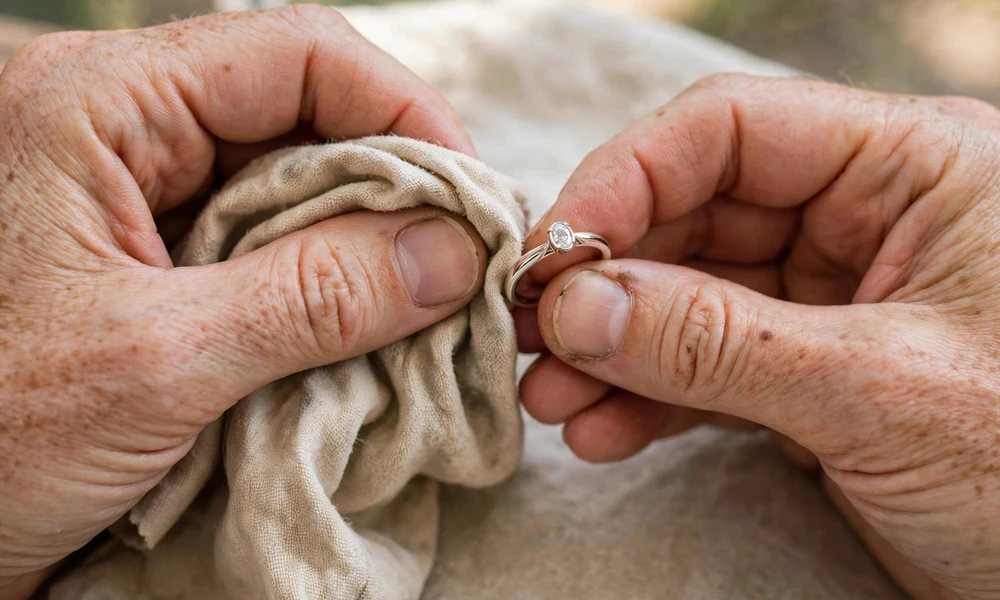
Before you start, look at the piece under good light. Check that every stone is secure by giving it a gentle nudge with a fingertip, look at the prongs for bent or worn tips, and check clasps and chain links for weakness. If a stone moves, a prong looks thin, or a clasp does not close firmly, skip the home clean and take the piece to a jeweller first. Cleaning a damaged piece can finish the job the damage started.
The same gentle approach works for most gold jewellery, and our guide to cleaning gold jewellery covers the shared basics in more detail. White gold adds one extra rule on top of those basics: protect the rhodium. That means no harsh chemicals, no hard scrubbing, and no long soaks for pieces with glued or delicate settings.
The 9 steps to clean white gold jewellery properly
Look at the piece before it touches water
What to do: Hold the piece under a bright light and inspect every stone, prong, clasp and link. Gently nudge each stone to check it is secure, and look for cracks, bent prongs or a clasp that does not snap shut. What to avoid: Do not skip this step, and do not clean a piece with a loose stone or a broken clasp. Best for: Every white gold piece, every time. Time needed: Two minutes. Standout tip: Do this over a towel, not a sink, so nothing is lost if a stone comes free.
Wash your hands and lay out a soft cloth
What to do: Wash and dry your hands, then lay a soft, lint-free cloth or towel on a flat surface. Keep the bowl, brush and cloth within reach before the piece leaves its box. What to avoid: Do not handle jewellery with hands covered in lotion, sunscreen or cleaning products. Best for: Anyone cleaning more than one piece at a time. Time needed: One minute. Standout tip: Plug the sink or work over the towel, so a dropped ring has nowhere to go.
Mix a gentle soap solution
What to do: Fill a small bowl with lukewarm water and add two or three drops of mild dish soap, then stir until it is lightly sudsy. The water should feel warm on your wrist, never hot. What to avoid: Do not use hot water, bleach, chlorine, ammonia or antibacterial soap, and do not add vinegar or lemon juice. Best for: Solid white gold rings, necklaces, bracelets and earrings. Time needed: One minute. Standout tip: If the soap has added moisturisers or scents, choose a plainer one, because additives leave their own film behind.
Soak solid white gold for ten minutes
What to do: Lower the piece into the soapy water and leave it for about ten minutes so the solution can loosen the film in settings and chain links. What to avoid: Do not soak pieces with glued stones, pearls, opals, turquoise or other soft or porous stones, and do not soak for longer than fifteen minutes. Best for: Rings, chains and bracelets with securely set diamonds or sapphires. Time needed: Ten minutes. Standout tip: Soak one piece at a time so pieces cannot scratch each other in the bowl.
Clean the details with a soft brush
What to do: Lift the piece out and brush gently with a soft-bristled brush, working around the setting, under the stones and along chain links with short, light strokes. What to avoid: Do not press hard, do not use a stiff brush or a toothbrush with worn, splayed bristles, and never use toothpaste or baking soda as a scrub. Best for: Rings with detailed settings and chains that trap dirt between links. Time needed: Two to three minutes. Standout tip: Brush under running water only if the sink is plugged and the piece is held firmly.
Polish with a soft jewellery cloth
What to do: After rinsing, wipe the piece gently with a soft, lint-free jewellery cloth, using long strokes along the metal rather than circles. What to avoid: Do not use a silver polishing cloth with chemical treatments, a paper towel, or any cloth that feels rough or gritty. Best for: Restoring shine to rings, bangles and pendants after washing. Time needed: One to two minutes. Standout tip: Keep one cloth only for white gold, so it never picks up grit from other metals.
Rinse under lukewarm running water
What to do: Rinse the piece under lukewarm running water, turning it slowly so every side is washed clean of soap. What to avoid: Do not rinse over an open drain, and do not use hot water, which can stress glued settings. Best for: Every piece after brushing. Time needed: One minute. Standout tip: Use a small sieve or a plugged sink as a safety net, even when you are sure of your grip.
Dry it completely, never leave it damp
What to do: Pat the piece dry with a soft lint-free cloth, then lay it on a dry towel for a few minutes so water can escape from settings and chain links before it goes back in a box. What to avoid: Do not use a hairdryer on high heat, do not rub hard, and do not store the piece while it is still damp. Best for: Every white gold piece, especially chains and rings with enclosed settings. Time needed: Five minutes. Standout tip: A gentle puff of air from a cool hairdryer setting can clear water from tight settings.
Store it clean, dry and separate
What to do: Put the clean piece in its own soft pouch or a lined compartment, away from other jewellery, and keep the box somewhere cool, dry and dark. What to avoid: Do not toss white gold in with harder stones such as diamonds or sapphires, and do not store it in a damp bathroom. Best for: Every piece between wears. Time needed: One minute. Standout tip: Fasten chains before storing so they cannot tangle and kink.
Which cleaning method is right for your white gold
For most white gold pieces, the soapy water method above is the right one. It is gentle, it works on rings, necklaces, bracelets and earrings, and it does not touch the rhodium finish. Clean solid pieces with secure stones this way every few weeks if they are worn daily, and less often for pieces that only come out for occasions.
Ultrasonic cleaners are the method people ask about most, and the answer is cautious. A jeweller’s ultrasonic cleaner is fine for a solid white gold ring with securely set diamonds, but a home ultrasonic cleaner can loosen stones, damage glued settings, and crack soft or porous stones. If you are not sure what your stones can take, do not use one at home, and ask a jeweller instead.
Steam cleaning is best left to professionals for the same reason. It is effective, but the heat and pressure are too much for delicate settings. For anything with pearls, opals, emeralds or glued stones, a barely damp soft cloth is the whole cleaning method, and anything more belongs to a jeweller. Once the piece is clean, our guide to storing jewellery properly explains how to keep it that way between wears.
The caveats that matter
White gold jewellery is durable, but it is not indestructible, and the rhodium finish is the part that needs the most care. Harsh chemicals are the biggest risk. Chlorine from pools and hot tubs, bleach from household cleaning, and even the chemicals in some perfumes and hair sprays can dull or damage the finish over time. Take white gold rings off before swimming, cleaning, or applying heavy sprays, and put them on last when getting dressed.
The other honest caveat is that cleaning cannot fix wear. If the band looks warm or yellowish at the edges, the rhodium has worn thin, and only a jeweller can re-plate it. That is normal maintenance, not damage, and most pieces need it every year or two with daily wear. A home clean keeps the piece looking its best between those visits, but it is not a substitute for them.
| Detail | What is known |
|---|---|
| Best everyday method | Lukewarm water with a few drops of mild dish soap, ten minutes, soft brush, rinse and dry |
| What to avoid | Bleach, chlorine, ammonia, toothpaste, baking soda paste, abrasive cloths and hot water |
| How often to clean | Every few weeks for daily-worn pieces, less often for occasional pieces |
| Rhodium wear | Normal with wear; re-plating every one to three years restores the bright white finish |
| Ultrasonic cleaners | Safe for solid pieces with secure hard stones, risky for glued or soft stones; ask a jeweller first |
| Stones to treat gently | Pearls, opals, turquoise and emeralds should only be wiped with a barely damp soft cloth |
| When to see a jeweller | Loose stones, bent prongs, weak clasps, or a yellow tint that cleaning does not remove |
| What cleaning cannot do | It cannot restore worn rhodium, repair scratches, or tighten a loose setting |
If a stone is loose, a prong is bent, or the piece has sentimental or high value, skip the home clean and let a jeweller handle it. That is not overcautious. It is the right call for a piece that cannot be replaced easily.
Checklist: cleaning white gold jewellery honestly
Use these checks before you clean, and again after the piece is dry.
- Inspect first: check every stone, prong and clasp under good light before the piece touches water.
- Use mild soap only: lukewarm water and a few drops of plain dish soap, never bleach, chlorine or toothpaste.
- Keep it short: ten minutes of soaking is enough, and never soak glued or soft-stone pieces.
- Brush lightly: a soft brush with gentle strokes, never hard scrubbing or a stiff brush.
- Rinse and dry fully: rinse away all soap, then pat dry and let the piece air for a few minutes.
- Store it separate: its own pouch or compartment, away from harder stones and damp places.
Frequently asked questions
Can I clean white gold jewellery with toothpaste?
No. Toothpaste is mildly abrasive and designed for teeth, not metal. It leaves fine scratches in the rhodium finish, and those scratches catch dirt and dull the shine faster. Warm soapy water and a soft brush clean better and do no damage.
Why does my white gold ring look yellow?
The rhodium plating has worn thin, usually on the edges of the band where it rubs most. The yellow tone underneath is the gold alloy showing through. Cleaning will not fix it, but a jeweller can re-plate the ring and restore the bright white finish in a single visit.
Is it safe to wear white gold in a swimming pool?
It is best to take it off. Chlorine can weaken the alloys in white gold over time and dull the rhodium finish, and cold water can shrink fingers slightly, making a ring easier to lose. The same applies to hot tubs, which add heat to the chemical exposure.
How often should white gold be re-plated?
Most daily-worn pieces need re-plating every one to three years, depending on wear. Rings wear fastest because they rub against everything. A jeweller can check the finish during a routine clean and advise whether it is time.
Can I use an ultrasonic cleaner on white gold at home?
Only for solid pieces with securely set hard stones such as diamonds or sapphires, and even then with care. Never use one on pieces with glued stones, pearls, opals, emeralds or turquoise, or on any piece with a loose stone. When in doubt, ask a jeweller first.
Is white gold better than silver for everyday wear?
For most people, yes, because white gold is harder and holds its shape and stones more securely than silver. The trade-off is maintenance: silver tarnishes and needs polishing, while white gold needs occasional re-plating. Our comparison of gold versus silver jewellery explains how the two metals differ in durability, upkeep and long-term value.
The bottom line
Cleaning white gold jewellery properly comes down to one idea: be gentle, because the rhodium finish is thin and the stones are held by small prongs. Warm soapy water, ten minutes of soaking, a soft brush, a careful rinse and a full dry will keep almost any piece bright between jeweller visits. The expensive mistakes are all avoidable, and they all come from reaching for something harsh when something mild would have worked.
Clean your white gold every few weeks if you wear it daily, check the stones each time, and let a jeweller handle anything loose, damaged or yellowed. That routine costs almost nothing, takes about twenty minutes, and keeps a piece you love looking the way it did when you first bought it.