Elemi is one of those perfume ingredients that most people have smelled without knowing its name. It is the fresh, lemony lift in a classic Dior, the sparkling top of a Hermès bestseller, and the quiet bridge that holds citrus notes steady in dozens of well-known perfumes. It is a resin, like frankincense and myrrh, but it behaves like a citrus, and that contradiction is exactly why perfumers value it.
The confusion is understandable. Elemi rarely appears on a bottle or in an advert. It is almost always a supporting note, listed in the middle of a note pyramid, doing structural work rather than taking a bow.
This guide explains what elemi is, where it comes from, what it smells like, how perfumers use it, and how it differs from the other resins it is often confused with.
Key takeaways
- Elemi is a resin from the Canarium luzonicum tree, a relative of the frankincense tree, harvested by tapping the bark in the Philippines.
- It smells fresh, lemony and lightly peppery, with a woody, balsamic warmth, and sometimes a faint green or dill-like nuance.
- Perfumers use elemi mainly as a bridge note, connecting bright citrus openings to deeper woods, spices and resins, and as a fixative that helps citrus last.
- Elemi is not the same as frankincense, myrrh or opoponax: it is fresher and lighter than all three, and it sits higher in a perfume’s structure.
- No single note tells you whether a perfume will suit you, and a perfume that lists elemi can still smell sharp or chemical on your skin, so always test before you buy a full bottle.
Where elemi comes from
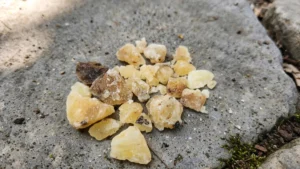
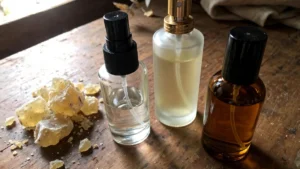
Elemi comes from the Canarium luzonicum tree, a tall evergreen in the Burseraceae family, the same family that gives us frankincense and myrrh. The tree grows mainly in the Philippines, with related Canarium species across South-East Asia. Harvesters tap the bark, and the tree releases a pale, slightly sticky resin that hardens into tears. The resin is then steam-distilled to produce elemi essential oil, or processed into an absolute for use in perfumery.
Supply is modest but stable. Elemi is not a rare material, and it is not threatened in the way some perfume naturals are, but it is produced in much smaller quantities than citrus oils or lavender.
What elemi smells like and how perfumers use it
Elemi smells fresh, tart and peppery-lemon, with a woody, balsamic character underneath. The first impression is citrus-like, close to lemon peel or grapefruit, but greener and slightly resinous, with a hint of pine and a faint dill or herb nuance that some people notice and others miss entirely.

Perfumers use elemi in three main ways. First, as a top-note lift, where it adds sparkle and freshness to a citrus opening without the sharpness of pure lemon oil. Second, as a bridge, where it connects a bright opening to a woody or resinous base, so a perfume does not feel as if it has two separate halves. Third, as a fixative for citrus, where its heavier resin molecules help lighter citrus oils last longer on skin. Our guide to how to make perfume last longer explains why that kind of fixing matters, because citrus is the fastest-fading part of most perfumes.
Elemi also blends well with a wide range of materials. It sits happily with labdanum, cinnamon, lavender, rosemary and sage, and with woods such as cedar and sandalwood. It is often found in fougère and aromatic compositions, in fresh colognes, and in amber perfumes where it lightens the base.
9 facts about elemi in perfume
Elemi comes from the Canarium luzonicum tree, not from amber
What it shows: Elemi is a plant resin, harvested from a living tree in the Philippines, and it has nothing to do with fossilised amber, despite often appearing in amber-style perfumes.
What to consider: The word amber in perfumery usually means a warm, sweet accord, not a material, so an elemi perfume can smell amber-like without containing amber at all. Best for: Anyone curious about where perfume ingredients actually come from. Material: Canarium luzonicum resin, steam-distilled. Price range: Elemi oil is moderately priced, not rare. Standout feature: A real tree resin with a citrus-like smell.
Knowing the source matters, because it explains the scent.
It is a resin, harvested by tapping the bark
What it shows: Like frankincense and myrrh, elemi is collected by cutting the bark and letting the resin flow out and harden, a method that has changed little in centuries.
What to consider: Tapping must be done carefully, because over-tapping can damage the tree, and sustainable harvest matters more for resins than for farmed flowers. Best for: Lovers of traditional perfume materials. Material: Raw elemi resin tears. Price range: Raw resin is inexpensive; the distilled oil costs more. Standout feature: One of the oldest harvesting methods in perfumery.
Elemi is a working material, and its price reflects steady supply rather than scarcity.
It smells sweet, warm and vanilla-like at first
What it shows: Some descriptions of elemi mention a sweet, honeyed or vanilla-like quality, especially in the resin itself before distillation, which surprises people who expect only lemon.
What to consider: The sweetness is subtle and sits underneath the citrus, so it is easy to miss, and it varies between batches and suppliers. Best for: Anyone who finds pure citrus too sharp. Material: Elemi resin, with honeyed and balsamic facets. Price range: No premium for the sweet facet; it is part of the same oil. Standout feature: A resin that smells both fresh and gently sweet.
The sweetness is quiet, but it is there, and it helps elemi blend into warm bases without clashing.
It is a fixative, which is why amber perfumes last so long
What it shows: Elemi’s heavier molecules slow down the evaporation of lighter notes, especially citrus, which is why perfumes that contain it often feel more stable and longer-lasting in the opening.
What to consider: A fixative helps, but it cannot rescue a weak base, and longevity still depends on the whole composition and on your skin. Best for: Anyone who loves citrus perfumes but wishes they lasted longer. Material: Elemi essential oil and absolute. Price range: No extra cost; it is a functional ingredient. Standout feature: The quiet reason many citrus openings last past the first hour.
Think of elemi as scaffolding rather than decoration.
Elemi and myrrh are cousins, not the same thing
What it shows: Both are resins from the Burseraceae family, but myrrh comes from Commiphora trees and smells warm, medicinal and slightly bitter, while elemi comes from Canarium and smells fresh, lemony and peppery.
What to consider: They are often used together, and a perfume can contain both, so do not assume that a resinous smell is one or the other. Best for: Anyone building a sense of the resin family. Material: Elemi resin vs myrrh resin. Price range: Both are moderately priced; myrrh is usually a little dearer. Standout feature: Two cousins with opposite characters.
If you enjoy warm, medicinal resins, our roundup of myrrh perfumes is the natural next read, because it shows how the same family can produce a completely different mood.
It pairs best with woods, spices and vanilla
What it shows: Elemi’s most reliable partners are cedar, sandalwood, vetiver, cinnamon, cardamom, pink pepper and vanilla, all of which give its freshness something solid to lean on.
What to consider: Pairings change the character completely. With vanilla it smells warm, with vetiver it smells dry, and with pepper it smells energetic, so read the full note list. Best for: Anyone learning to read note pyramids. Material: Elemi with woods, spices and vanilla. Price range: Varies with the partners, not the elemi. Standout feature: One of the most versatile resins in a perfumer’s palette.
This versatility is why elemi appears in so many different kinds of perfume.
It can smell powdery, smoky or medicinal depending on the blend
What it shows: Elemi is a chameleon. In a powdery composition it can smell soft and dry, in an incense perfume it can read as smoky, and alongside myrrh or frankincense it can take on a medicinal edge.
What to consider: Do not judge elemi from a single perfume. The same material can smell quite different in two bottles, and your skin chemistry changes it further. Best for: Patient testers who try a note in more than one perfume. Material: Elemi in different accords. Price range: No pattern; the blend decides the price. Standout feature: A note that changes its character with its company.
If your first elemi perfume smells too smoky or too medicinal, try a different one before deciding you dislike the note.
Real elemi absolute costs more than synthetic copies
What it shows: Natural elemi absolute, produced from the resin, costs more than synthetic terpenic blends that imitate its fresh, lemony character, and many modern perfumes use the synthetic version for clarity and consistency.
What to consider: Synthetic does not mean bad. It can smell cleaner and last more predictably, and most wearers cannot tell the difference, but natural elemi has more depth and variation. Best for: Anyone interested in natural versus synthetic ingredients. Material: Elemi absolute vs synthetic elemi accords. Price range: Natural absolute costs several times more than synthetic blends. Standout feature: The hidden cost behind a natural-smelling fresh opening.
Both can smell good, and the choice is about character and budget, not about one being honest and the other fake.
How to test an elemi perfume before buying
What it shows: The right way to test an elemi perfume is to spray it once on your wrist, wait an hour, and smell it again, because the fresh opening fades and the resinous base is the part you will actually wear.
What to consider: Test on skin, not paper, and test on a second day if you can, because weather, mood and skin condition all change how a resinous perfume smells. Best for: Anyone about to spend money on a full bottle. Material: The finished perfume, not the raw resin. Price range: Samples cost little; a full bottle is the commitment. Standout feature: The one-hour test that tells you the truth about an elemi perfume.
That answer is worth more than any review. Our roundup of benzoin perfumes uses the same testing approach, because benzoin is another resin that changes a lot between the first spray and the drydown.
Elemi vs frankincense, myrrh and other resins
Frankincense is the resin most people think of first, and it is the easiest to compare with elemi. Frankincense smells smoky, incense-like and slightly lemony, but its smoke dominates. Elemi smells lemony first and smoky hardly at all, which makes it the fresher, lighter choice. In a perfume, frankincense usually sits in the heart or base and gives depth and a church-like warmth. Elemi sits higher, in the top or heart, and gives lift.
Myrrh is warmer and more medicinal than either, with a slightly bitter, earthy quality that some people love and others find too much. Elemi is cleaner and more transparent by comparison. Opoponax is sweeter and more amber-like, closer to vanilla and warm spice, while benzoin is the sweetest of the common resins, with a clear vanilla and balsamic character. Elemi sits apart from all of them because it is the only one that smells primarily fresh.
Labdanum is the closest partner to elemi in practice, and the two appear together often, for example in Dior’s Eau Sauvage Parfum, where elemi bridges the citrus and labdanum holds the base. Labdanum smells warm, leathery and amber-like, and it gives a perfume weight. Elemi gives it lift. Together they are a classic pairing, and they explain why so many amber and woody perfumes feel both warm and fresh at the same time.
The caveats that matter
Elemi is a safe, well-established perfumery material, but there are three honest caveats. First, it is a supporting note, so a perfume that lists elemi may not smell obviously of it, and that is not a flaw. Second, elemi essential oil can irritate skin in high concentration, and people with resin or terpene sensitivities should patch-test before wearing a new resinous perfume all day. Third, because elemi is uncommon, it is easy to overpay for a bottle on the strength of the note alone, when a mainstream perfume at an ordinary price uses it just as well.
| Detail | What is known |
|---|---|
| Source | Resin from the Canarium luzonicum tree, mainly in the Philippines |
| Scent | Fresh, lemony and lightly peppery, with a woody, balsamic warmth |
| Role in perfume | Bridge note and citrus fixative, usually top to heart |
| Closest relatives | Frankincense and myrrh, from the same Burseraceae family |
| Best pairings | Citrus, vetiver, cedar, labdanum, cinnamon, lavender, vanilla |
| Who should try it | Anyone who finds frankincense too smoky or myrrh too medicinal |
| What to watch for | Skin sensitivity to resins; a sharp opening that may not suit your skin |
| What it is not | Not amber, not frankincense, and not a guarantee of longevity on its own |
The other caveat is about expectations. Elemi will not transform a perfume you dislike into one you love, and it will not make a weak perfume last all day. It is a structural ingredient, and its contribution is subtle.
Checklist: testing an elemi perfume honestly
Use these checks before you buy, and again after a week of wearing.
- Spray once on your wrist, not on paper, and wait a full hour before judging it.
- Notice the opening: fresh lemon and pepper means the elemi is doing its job.
- Notice the drydown: it should smell clean and woody, not heavy, sharp or chemical.
- Compare it with a frankincense perfume: if you prefer the fresher one, elemi suits you.
- Test it on a second day, because weather and skin condition change how resins smell.
- Buy a sample first: a full bottle is a commitment, and elemi perfumes vary widely in character.
Frequently asked questions
What does elemi smell like?
Fresh, lemony and lightly peppery, with a woody, balsamic warmth underneath and sometimes a faint green or dill-like nuance. It smells like a resin that behaves like a citrus, which is why it is used to lift openings and hold citrus notes in place.
Is elemi the same as frankincense?
No. Both are resins from the Burseraceae family, but frankincense comes from Boswellia trees and smells smoky and incense-like, while elemi comes from Canarium luzonicum and smells fresher, more lemony and less heavy. They are related but not interchangeable, and they are often used together.
Why is elemi used in perfume?
Mainly as a bridge note and a fixative. It connects bright citrus openings to deeper woods and resins, and its heavier molecules help lighter citrus oils last longer on skin. It also adds a fresh, transparent quality that stops warm, resinous bases from feeling too dense.
Which perfumes contain elemi?
Hermès Eau des Merveilles, Dior Eau Sauvage Parfum, Dior Sauvage Parfum, Viktor & Rolf Spicebomb, Chanel Allure Homme Sport, Diptyque Eau Duelle and Amouage Portrayal all list elemi among their notes. In most of them it works as a supporting or bridging note rather than the main accord.
Is elemi safe for sensitive skin?
Usually yes in a finished perfume, which contains only a small amount, but elemi essential oil can irritate skin in high concentration. Patch-test any new perfume on your inner arm, wait a day, and stop using it if you notice redness or itching. If you have a known resin sensitivity, ask a dermatologist first.
Does elemi make perfume last longer?
It helps, especially in the opening, because it slows down the evaporation of citrus notes. But longevity depends on the whole composition, the concentration and your skin, so elemi alone does not guarantee a long-lasting perfume. A rich parfum with elemi will last longer than a light eau de toilette with elemi.
The bottom line
Elemi is the fresh resin in perfumery, and it earns its place by doing a job no other resin does as well. It lifts citrus, bridges the top and the base, and keeps a perfume feeling clean and transparent while the deeper notes arrive. It is not famous, and it rarely leads a composition, but once you know what it smells like, you start noticing it everywhere, from a Dior classic to a Hermès bestseller.
The best way to understand elemi is to smell it in context. Try Hermès Eau des Merveilles for the clearest version, Dior Eau Sauvage Parfum for the classic version, and Diptyque Eau Duelle for the warm, spicy version.